Sprayed, Not Glued
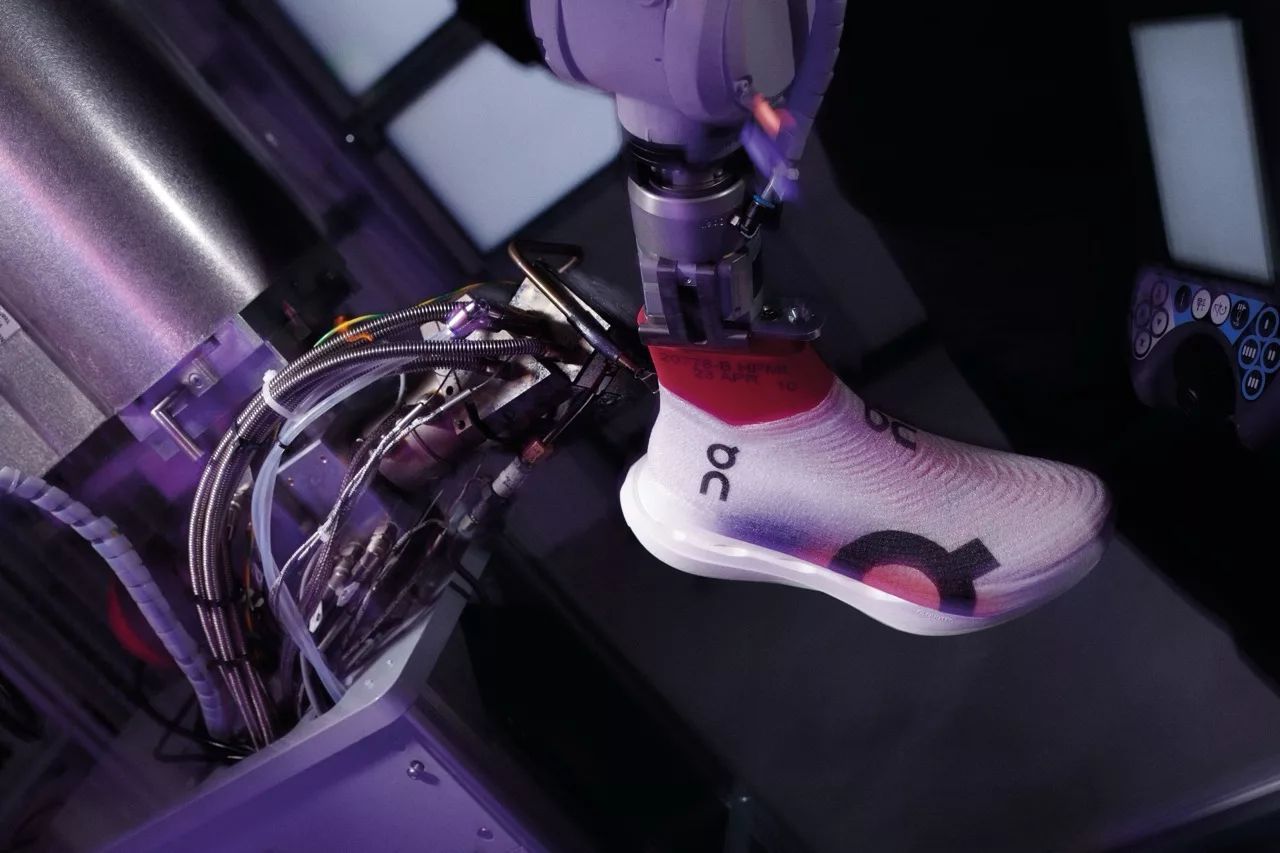
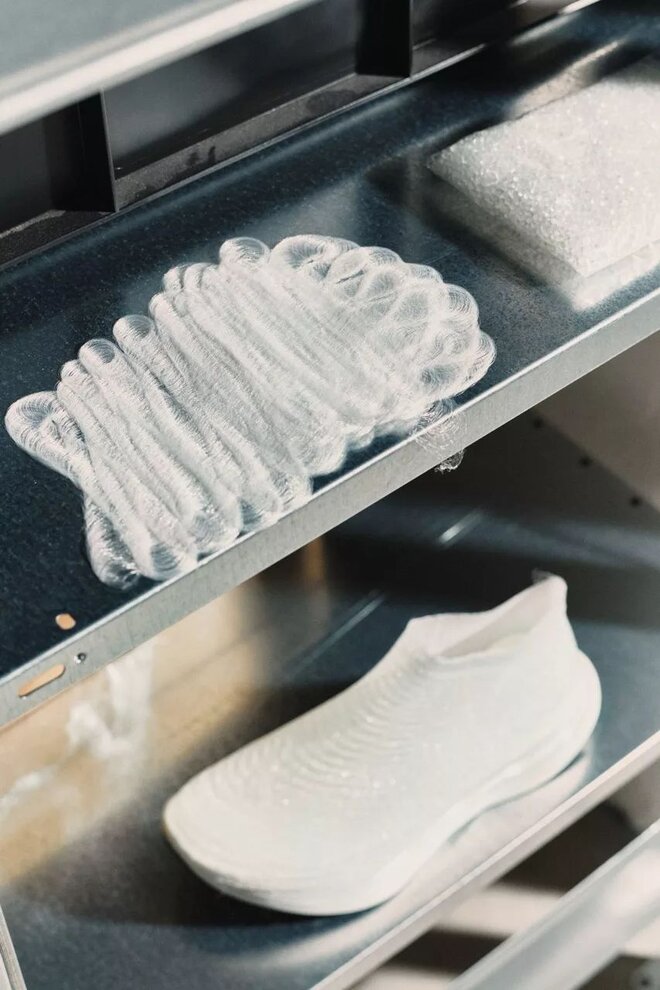
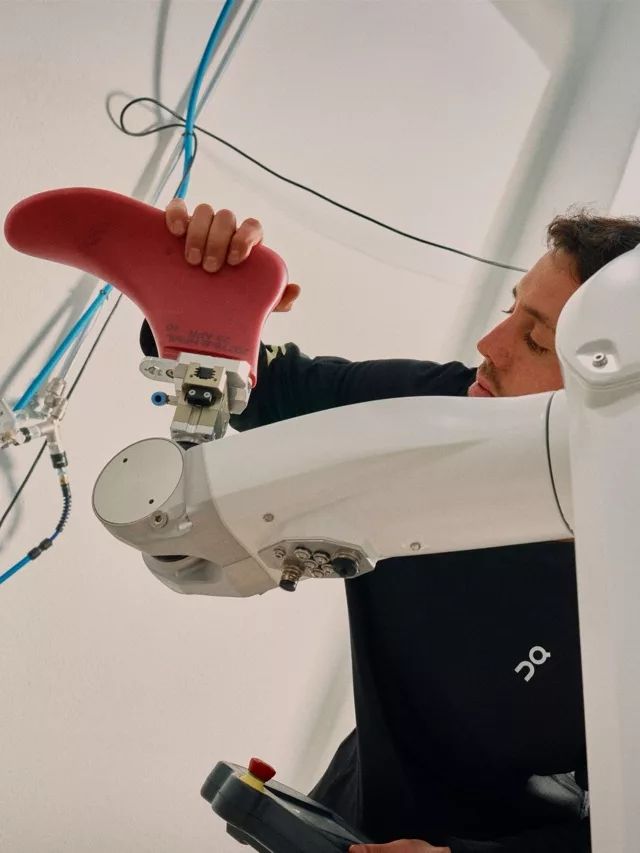
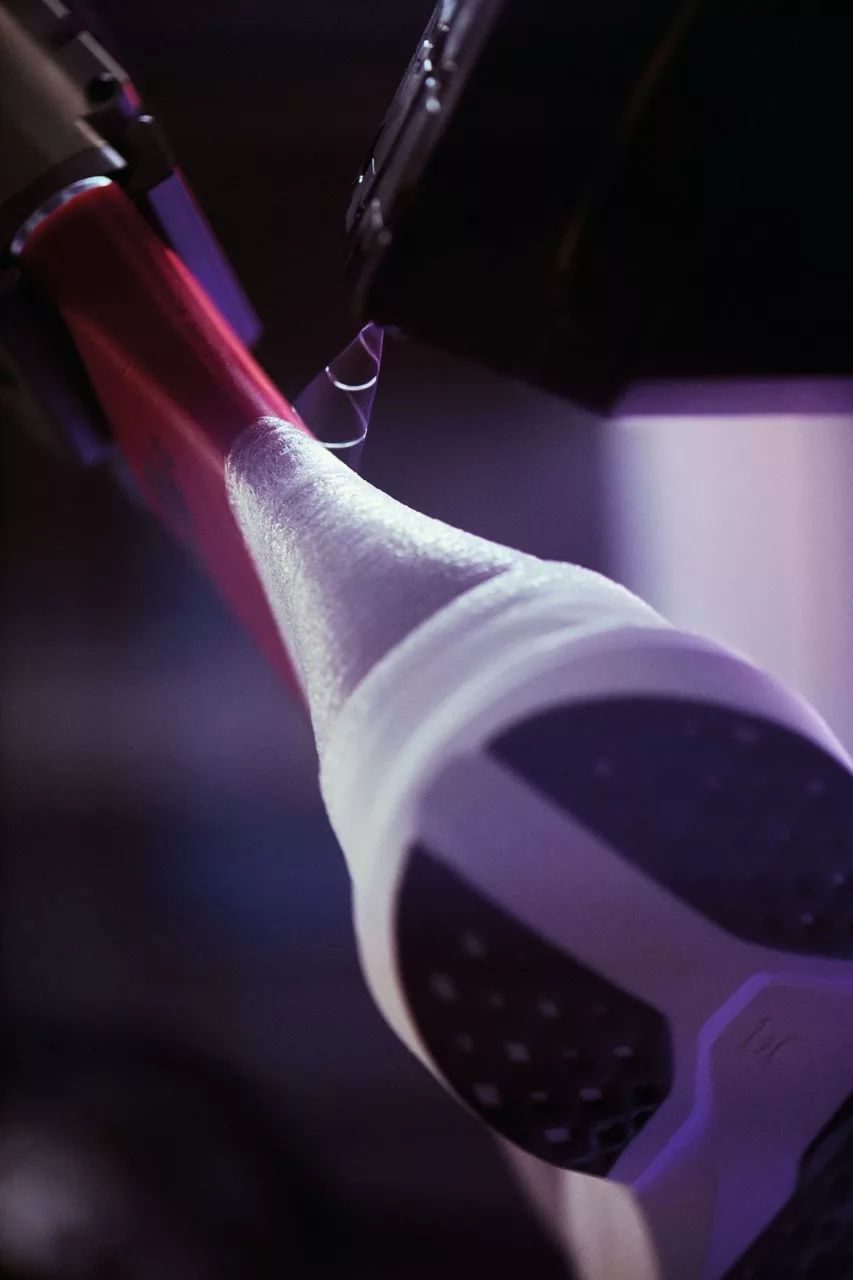
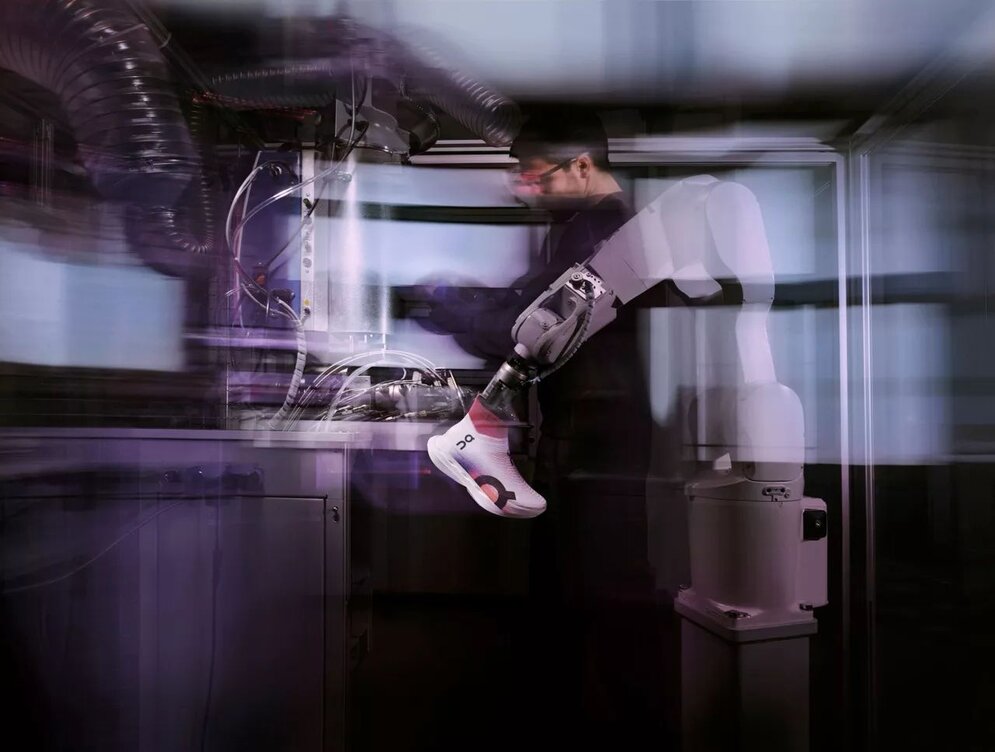
The video is three minutes long - an eternity for our minds wired for instant gratification. But it's worth watching to the end, as the robot arm carefully steers a red shoe last past a spray nozzle in precise, measured movements. Layer by layer, a white polymer fabric builds up on the last. As well as being a fascinating demonstration of the beauty and elegance of industrial processes, the video offers a glimpse of the future of shoe manufacturing: fully automated, local and using a single material.
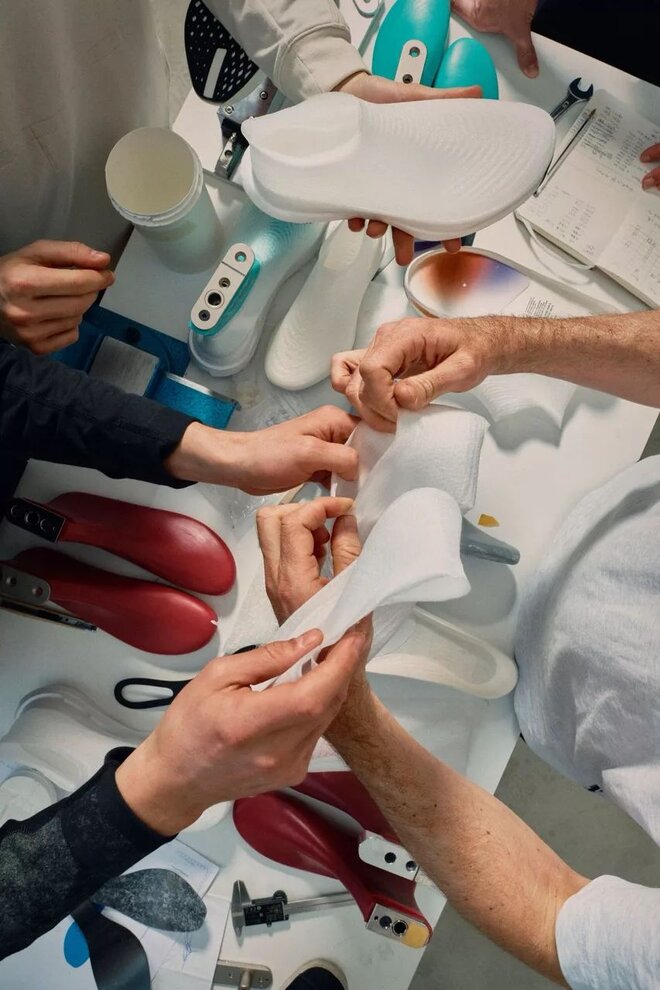
Thanks to its patented LightSpray™ technology, On can produce a running shoe upper and fuse it to the sole in just three minutes. While this may seem like an eternity in today's terms, it is astonishingly fast by the standards of footwear production. The LightSpray™ manufacturing process was developed by Johannes Voelchert, an innovative concept designer at On. The concept originated from his 2018 bachelor thesis 'Pressure-made' at the Hochschule für Kunst und Design Burg Giebichenstein Halle, where he repurposed a hot glue gun to create a mono-material textile for shoe uppers.
Steps Towards Sustainability
The potential of LightSpray™ goes beyond its production speed when it comes to addressing the environmental impact of footwear production. Sports shoes are notoriously unsustainable, consuming significant resources, emitting high levels of CO₂ and requiring long transport routes. At the end of their typically short life, most are incinerated due to the complexity of recycling their multi-material, glued construction. In Germany alone, an estimated 380 million pairs of trainers are discarded each year.
So it's no surprise that many design students have turned their attention to the 'sneaker' in recent years. Max Böhm, for example, developed a 3D-printed, recyclable sneaker (‘Bela’) for his bachelor project 2023 in collaboration with Studio F. A. Porsche at Bauhaus University Weimar. Similarly, Emilie Burfeind's 2020 diploma project ‘Sneature’ at the Hochschule für Gestaltung in Offenbach, Germany, explored 3D-printed and knitted sneakers made from recycled waste and natural materials.
Fresh From University and Straight Into Industry
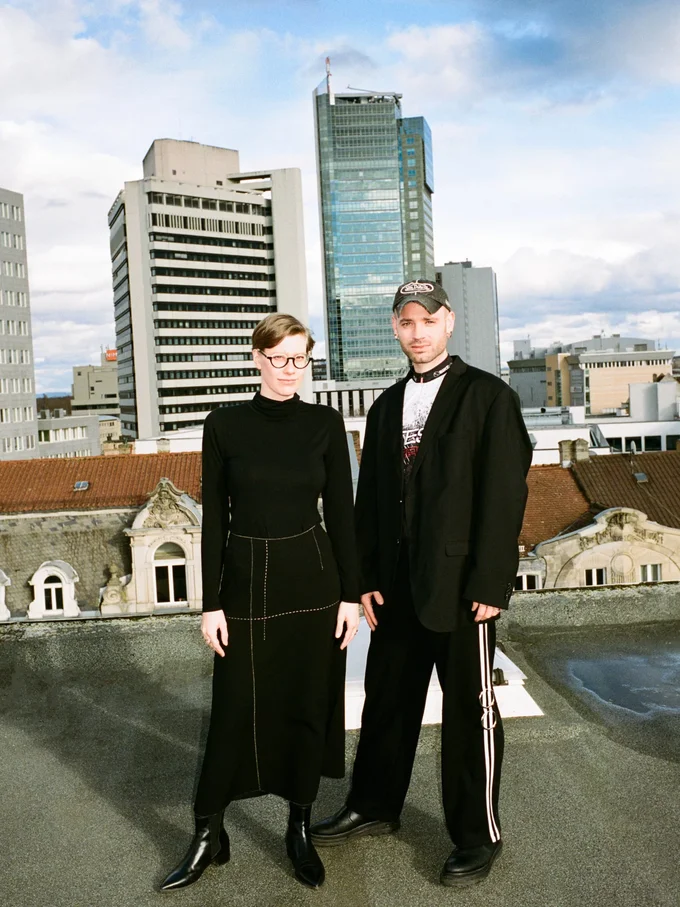
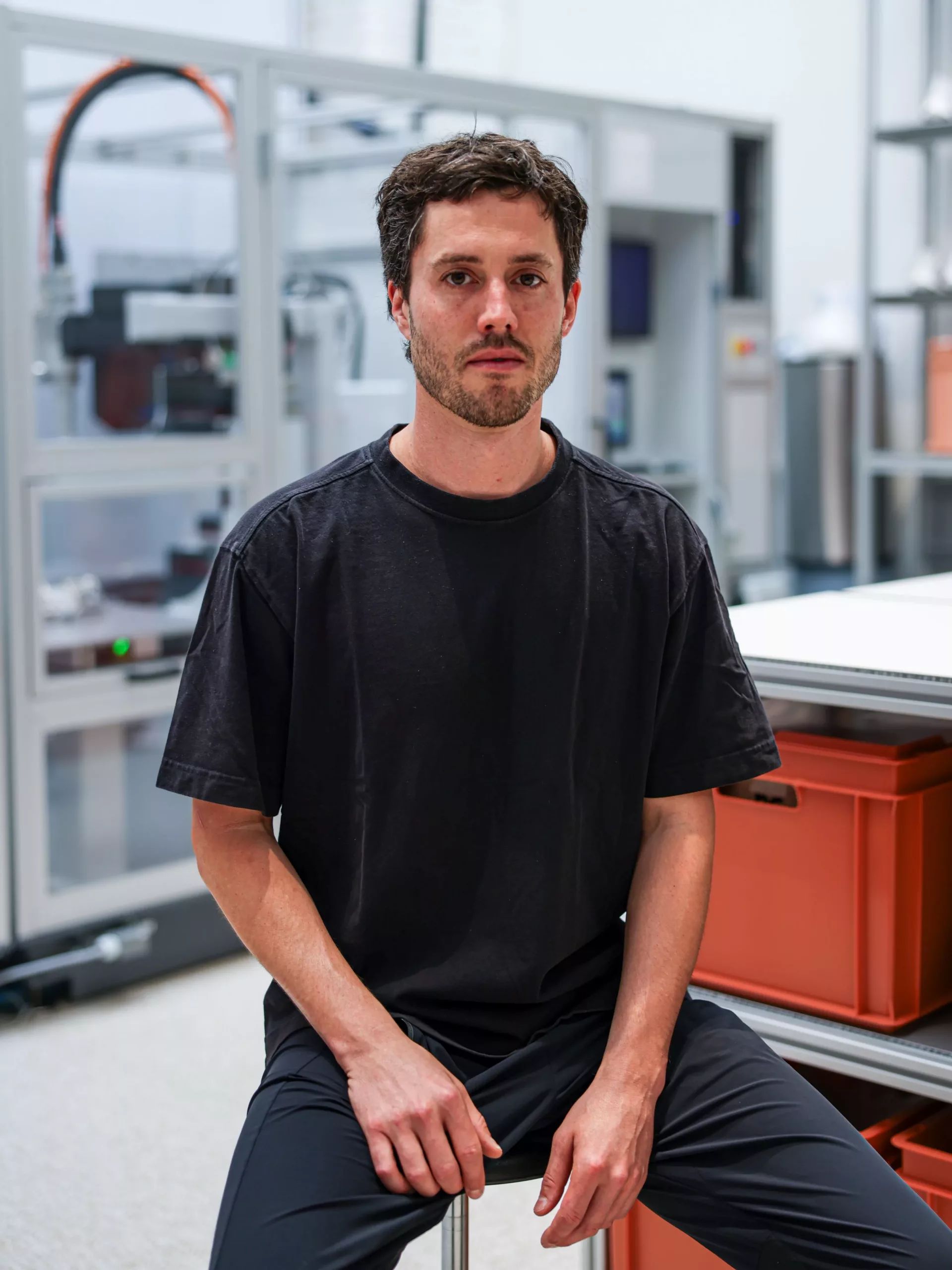
Turning a bachelor's thesis into a marketable product is the dream of many design students. For Johannes Voelchert, the journey started in Halle, passed through Milan and ended in Zurich. His university presented his bachelor's thesis 'Pressure-made' at the 2019 Salone del Mobile in Milan, where it caught the attention of the On team. A few months later, Voelchert demonstrated his concept to them in Zurich, hand spraying a shoe upper with his repurposed glue gun.
'The last slide of my presentation showed a robot with the glue gun Photoshopped onto it,' Voelchert recalls during a video call. 'That was my vision of the future'. The presentation earned him a position on On's innovation team and the task of bringing the concept to market. After four years of development, the technology was unveiled in 2024 with the 'Cloudboom Strike LS'. Earlier this year, Hellen Obiri won the Boston Marathon wearing a LightSpray™ prototype. The Cloudboom Strike LS is not yet available to the public, but will be soon.
Innovation in Design
The design journey has been challenging due to the need to refine the original concept. Voelchert's initial method produced a chaotic, candyfloss like material that lacked precision. You end up with a fuzzy, candyfloss material where you can't clearly define different zones," explains Voelchert. The breakthrough came from using air currents to control and twist the filament, allowing the elasticity and stiffness to be precisely adjusted in different parts of the shoe.
As a result, the LightSpray™ shoe does away with traditional elements such as laces. The material is flexible around the toe, while areas such as the heel are reinforced for stability. The thermoplastic elastomer filament melts instantly when sprayed, creating a durable structure.
A Marathon for Circularity
On is currently expanding production capacity in Zurich to enable higher volumes of 'LightSpray™'. Voelchert's next goal is to create a completely mono-material shoe. Currently, soles are produced conventionally in Asia and fused to uppers during the spraying process.
'Achieving true circularity remains a major challenge. Circularity means creating a second life cycle after the first,' explains Voelchert. Key questions remain: How can products be returned to the manufacturer? How many resources are required? How to avoid downcycling? On is actively working to address these challenges. 'In an industry dominated by global supply chains, making products circular is a complex and challenging process. It is a long road that requires a lot of energy and patience,' concludes Voelchert.