

What exactly was the Design Report?
Readers interested in design will certainly be familiar with the Design Report print magazine. Published by the German Design Council for over three decades, it significantly influenced design in German-speaking countries. While the publisher and name always remained the same, the focus, appearance and editorial team underwent repeated changes during the magazine's history.
Foundation and Realignment
The Design Report was first published in 1987, last appearing in February 2019. Its themes and aspirations have continued in a new form, initially on the ndion platform and now on Design Perspectives, alongside an accompanying podcast. With Design Perspectives, we are building on the legacy of the Design Report as a platform for in-depth insights, debates, and perspectives on design, brands, and innovation, offering up-to-date digital content with an international reach.
Forerunner
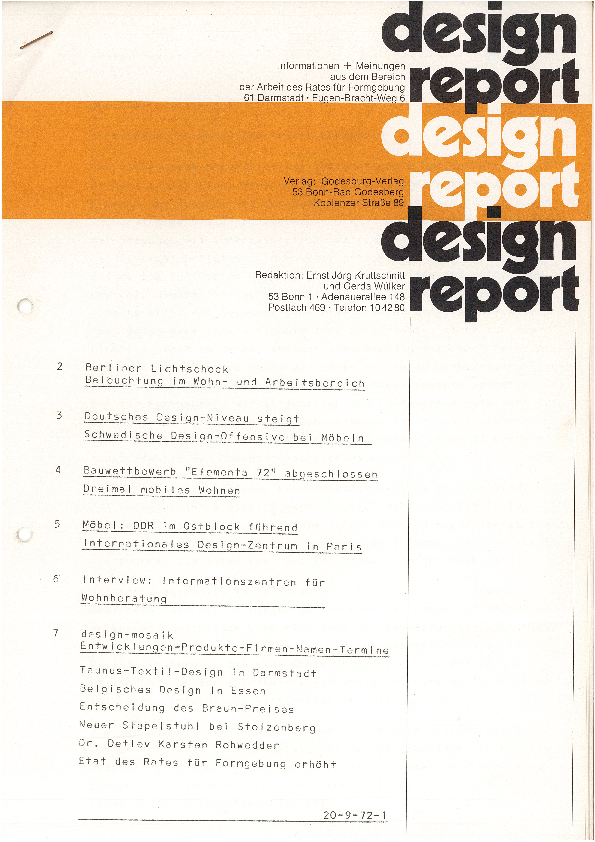
Design Report was founded in 1972 as a DIN A4 media service. It was created by the German Industry and Trade Council (DIHT) in Bonn and the German Design Council in Darmstadt to inform German-language media outlets about design in the Federal Republic of Germany and beyond. Initially targeting the editorial offices of daily newspapers and trade journals, its audience was later expanded to include institutions, authorities, and designers. Current topics were covered in short articles. After three years, the DIHT withdrew. The information service was discontinued in 1984 due to financial issues.
Relaunch as a Magazine
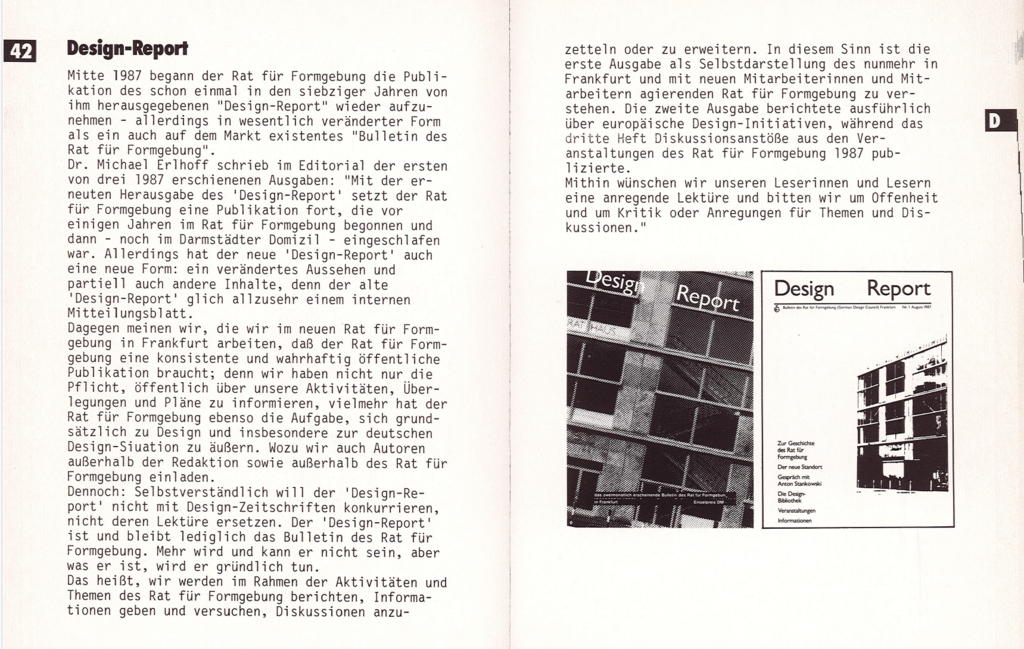
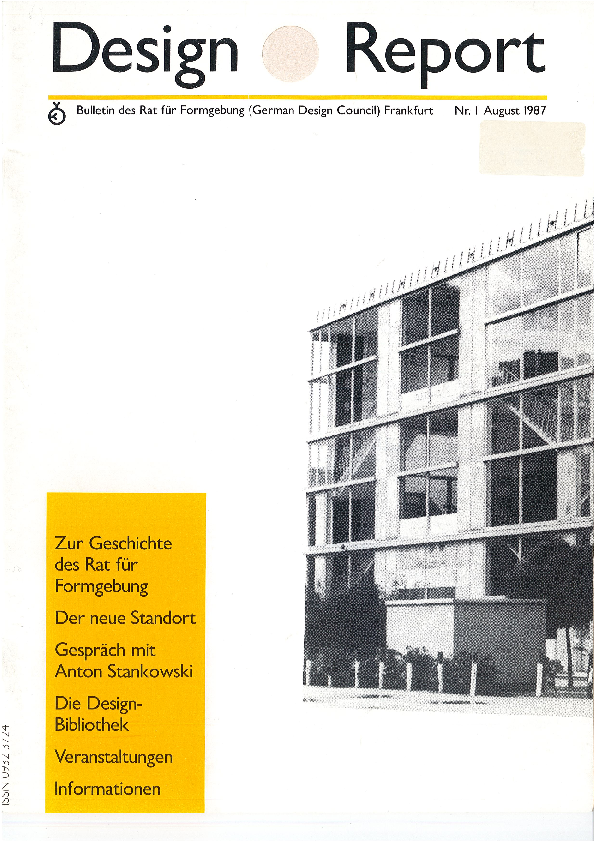
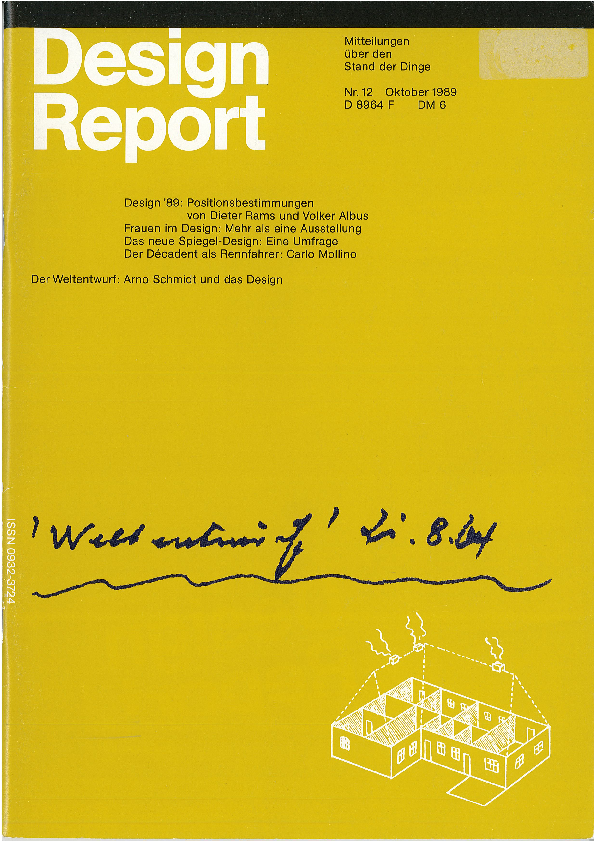
In 1987, when the German Design Council relocated to the Frankfurt fairgrounds, Michael Erlhoff (1946–2021) took on the roles of technical and managing director. He strengthened the Council's profile and expanded its activities. Focusing on broadening the concept of design, he revived the title Design Report and established the eponymous magazine as a 'consistent and truly public publication'. Elisabeth Budde, Erlhoff’s deputy at the time, was responsible for the design. Initially titled the 'Bulletin of the German Design Council', the project featured the Council building on the cover. Erlhoff entrusted the editorial work to two aspiring journalists, Fabian Wurm and Thomas Edelmann, who had recently had their first articles on architecture and design published. Jörg Stürzebecher supported the editorial team as an external author and contributor of ideas.
The magazine now appeared with the subheading 'News on the state of affairs'. The late 1980s were a time of change for design, a period that embraced individuality and diversity. Although the Design Report brought design professionals together, overcoming disciplinary boundaries, the magazine did not reflect the scene of those years. Instead of colourful pictures, it contained texts and statements.
New Impulses
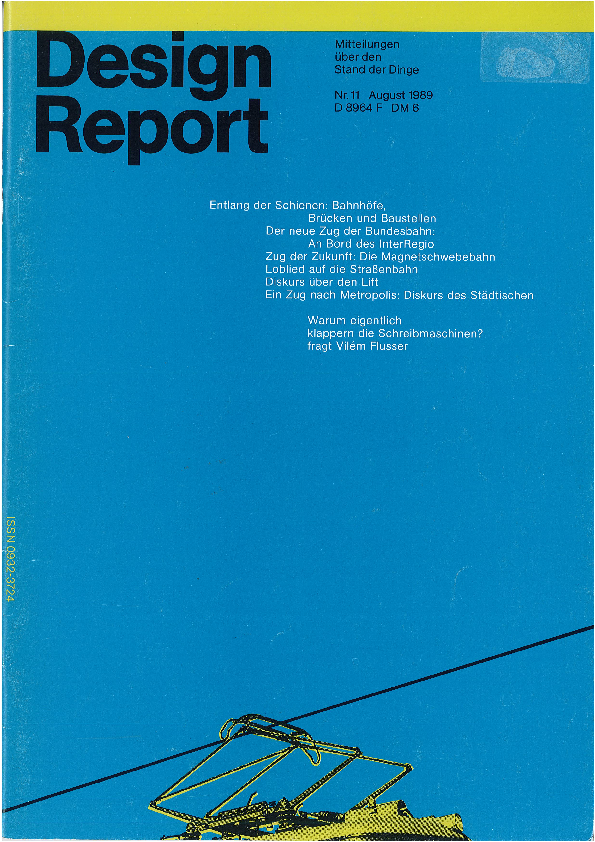
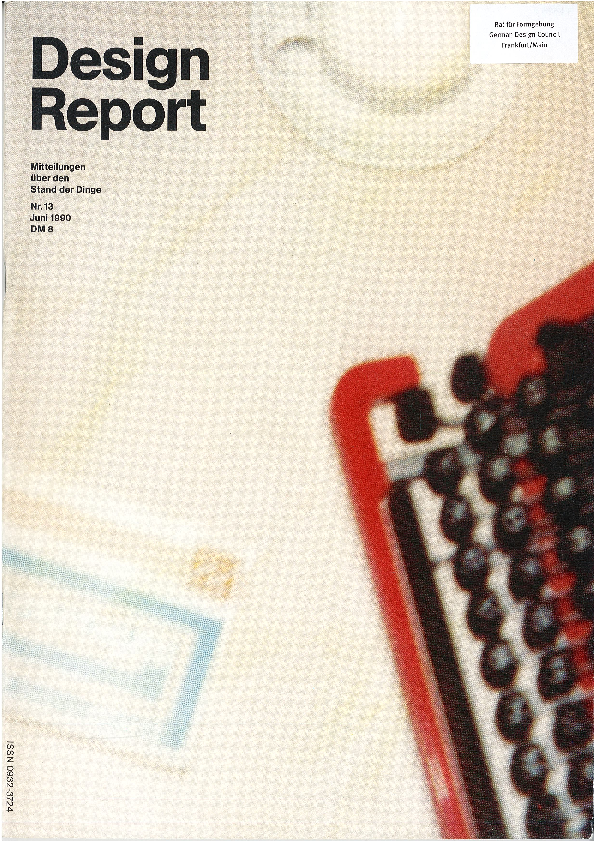
The first relaunch of the magazine took place in 1988. Achim Heine introduced graphic designer Michael Lenz, who took over the design of the magazine. Heine, Lenz and Peter Zizka later went on to found the company Heine/Lenz/Zizka, which continues to produce exceptional work in branding, book design and publications. Each issue was based on a paste-up layout with precisely calculated image sizes within a grid system that was both strict and playful. This system was implemented at the printing and publishing house of Gerhard Steidl in Göttingen. From an editorial perspective, design marketing was critically examined and German and Italian design was discussed by entrepreneurs and designers. The series Diskurs des Städtischen (Discourse on the Urban) examined the relationship between design, urban planning, architecture and sociology.
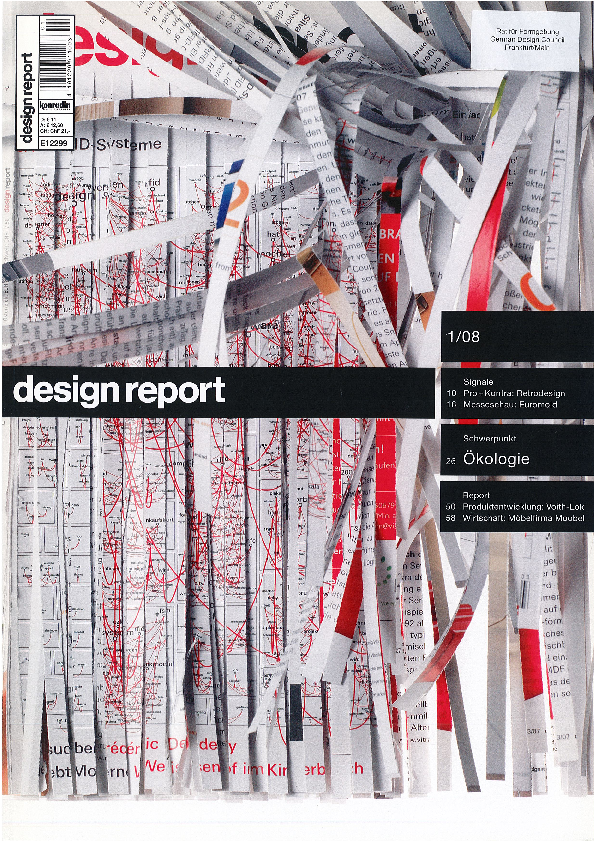
In the vibrant design landscape of the 1980s, the magazine, printed entirely in black and white, provided a serene contrast; only the cover illustration incorporated elements in colour. In 1988, the philosopher Vilém Flusser was recruited as a columnist. His articles dealt with the meaning of design concepts and were written in clear language, which readers initially found somewhat challenging. The issues published between 1987 and 1992 were numbered from 1 to 23. Following Erlhoff's departure from the German Design Council to establish the KISD (Cologne International School of Design), editors Fabian Wurm and Thomas Edelmann continued the magazine. Double issues were dedicated to Otl Aicher (18/19, 1991) and Jean Prouvé (20/21, 1992). Following German reunification, developments in the 'new states' of the former GDR came into focus.
For Experts and the General Public
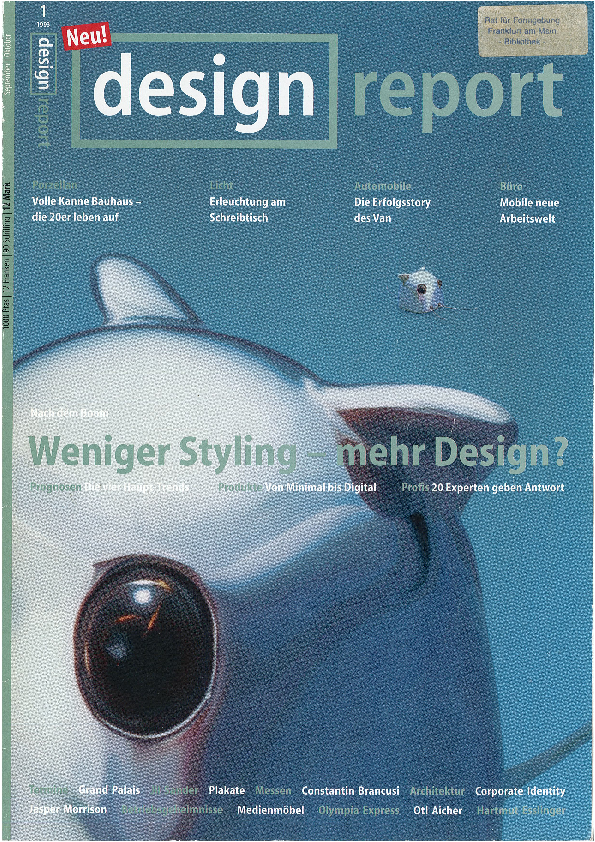
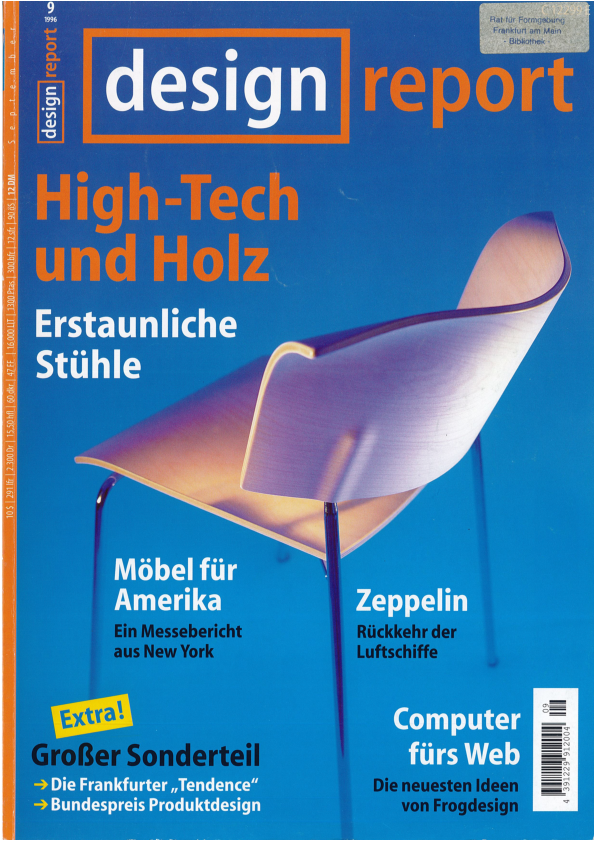
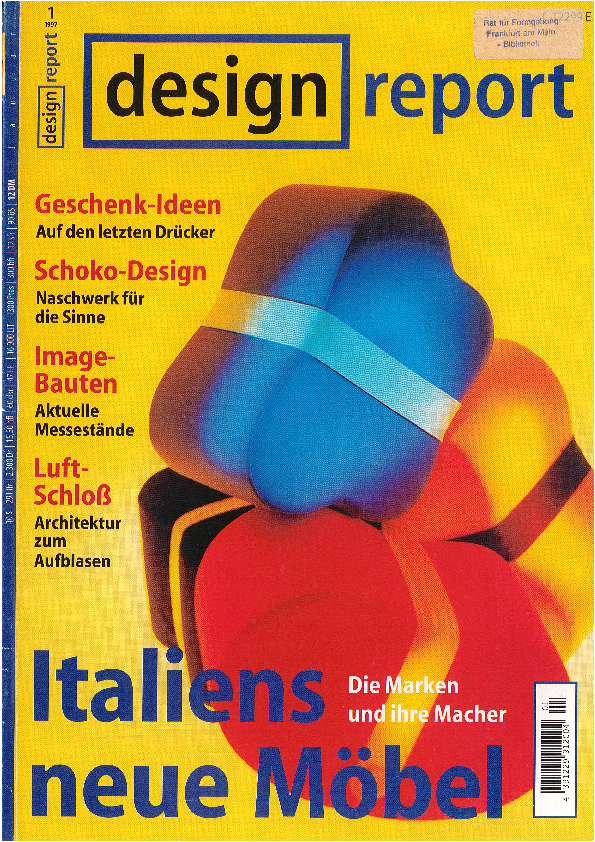
Could Design Report reach a larger readership? One option was to publish it as a complimentary magazine alongside an advertising publication, which would have given the German Design Council a stronger journalistic presence. This was one option. However, Michael Peters, the managing director of Media Frankfurt GmbH at the time, opted for a different approach: the magazine was put out to tender nationwide under licence. Three of the fifty publishing houses that were contacted made it to the final round. In 1993, the contract was awarded to MACup-Verlag in Hamburg, a publisher of computer magazines and the graphic design magazine Page, which was founded in 1986. Editor-in-chief Petra Schwab, a designer and journalist, worked with Thomas Edelmann to create a magazine that retained the title but otherwise had little in common with its predecessors. The magazine was intended to reach the design community and also appeal to a wider audience who expected more from design than could be found in home décor magazines. This required a multi-perspective approach.
Redesigned by art directors Gabriele Günder and Arne Kluge, the magazine offered valuable insights into the latest consumer trends. A wide range of new products, including automobiles, furniture and household items, were examined in terms of their design. Editors-in-chief Klaus Meyer and Ulrich Schmid ensured the articles appealed to a broad readership. Regular columnists Heinz Hirdina (1942–2013) and Volker Albus (born 1949) took turns to write about design history and their observations of everyday life.
In 1996, Thomas Edelmann took over as editor-in-chief. His deputy was Klaus Schmidt-Lorenz (1957–2023), whose thematic focus, clear language and well-founded approach significantly influenced the magazine. Producing a monthly print magazine, similar to the design process, requires the collaboration of many dedicated individuals. Key figures from the Hamburg phase of Design Report include Uta Abendroth, Birgit Gebhardt (née Müller), Kristina Deselaers (née Kirschke), Kristina Raderschad, and Nikola Wohllaib. Later phases also saw significant contributions from Pauline Klünder, Armin Scharf and Nicolas Uphaus.
A Larger Audience
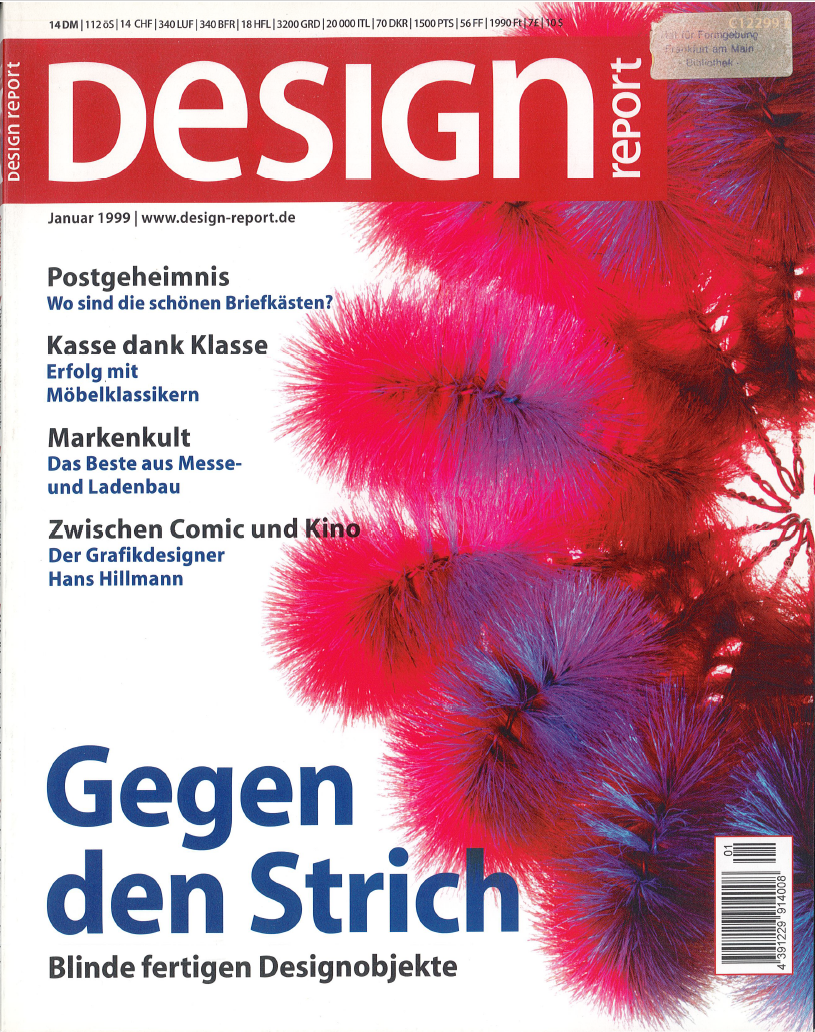
In 1998, the publishing role was transferred to Deutsche Verlagsanstalt in Stuttgart. The editorial office remained in Hamburg. Art director Oliver Lohrengel redesigned the magazine, giving it a wider format. In the modified lettering, 'Design' was moved to the front. The lowercase letters 'e' and 'n' were raised to the same height as the uppercase letters, making the design change visible. Targeting a broader audience, the magazine was enriched with its own photo productions. From 2000 onwards, art director Christine Rampl created a series of striking issues that remain in circulation today. A new series of interviews and portraits was introduced to offer a more international perspective. Young designers received the Design Report Award in Milan.
The Scene
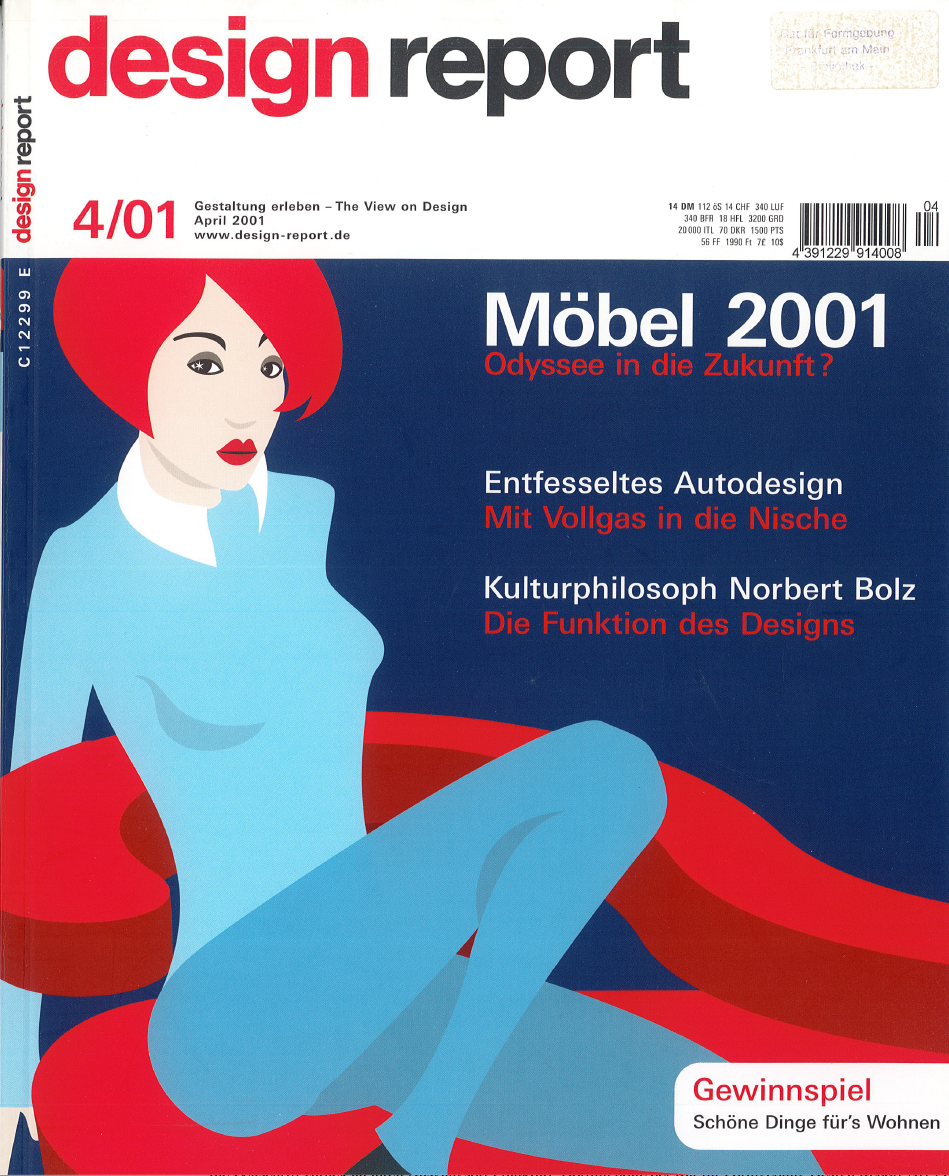
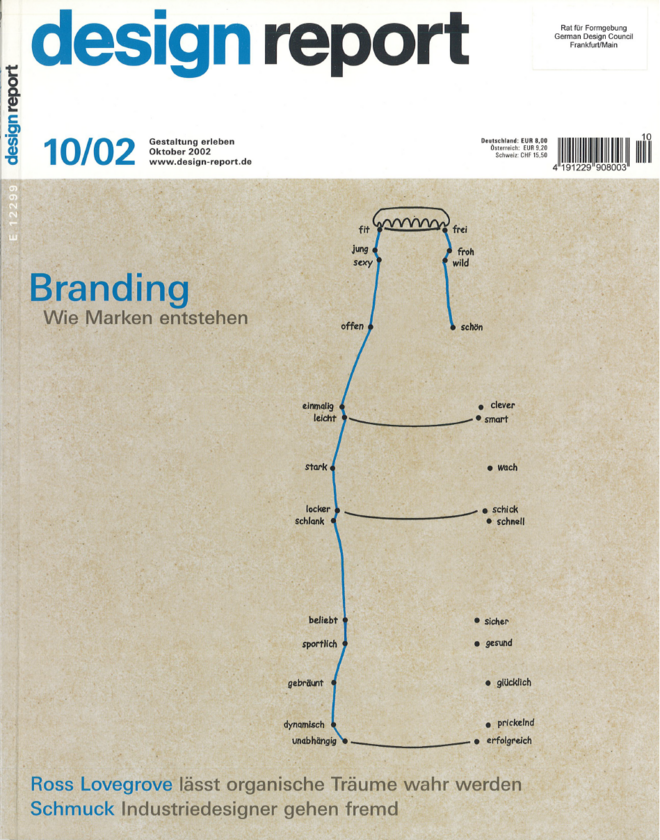
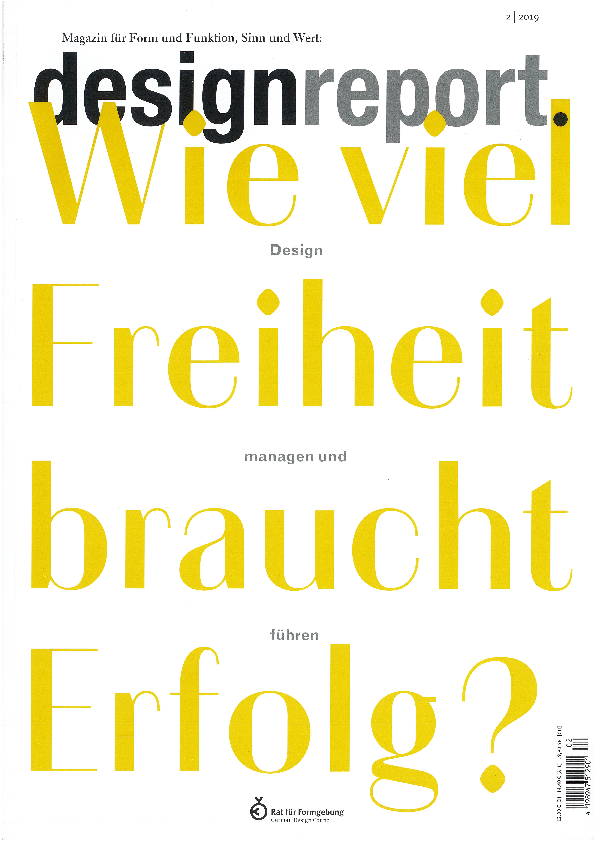
Further conceptual and design changes were made to the magazine in subsequent years. In 2001, the publisher brought together a new editorial team in Stuttgart. Otto Geberzahn served as editor-in-chief for just under a year. He was succeeded by Martin Zentner, a graphic designer who had previously overseen the magazine's relaunch. From then on, the magazine focused more strongly on Germany's industrial designers. Shortly afterwards, Konradin Verlag in Leinfelden-Echterdingen took over Design Report. Zentner was soon succeeded as editor-in-chief by cultural scientist Lars Quadejacob, who calmly and decisively led the magazine through changing conditions until 2014. Design agencies and designers took turns designing the magazine's cover. Quadejacob then steered the magazine back to its place of origin in Frankfurt. In 2015, the German Design Council took over again. When designer Wiebke Lang became editor-in-chief, she inherited a magazine that had been elegantly designed by Groothuis Hamburg. Lang focused even more strongly on the business needs of the specialist readership and prepared a relaunch. However, with issue 2/2019, the story of Design Report came to an end. As advertising and reader markets disappear into the digital media spaces of international tech companies, this was in line with a global trend: the disappearance of printed design magazines. Since then, new media have emerged that convey the future prospects of design.
Publications on the Design Report
- Vilém Flusser: Vom Stand der Dinge. Eine kleine Philosophie des Design (Hrsg. Fabian Wurm), Steidl Verlag, Göttingen, 2022, ISBN 978-3-96999-069-8, 12,80 Euro
- Heinz Hirdina: Am Ende ist alles Design. Texte zum Design 1971–2004, (hrsg. von Dieter Nehls, Helmut Staubach, Achim Trebeß) form+zweck Verlag, Berlin, 2008, ISBN 978-3-935053-15-0, only available second-hand
- Jörg Stürzebecher: designreportagen (Hrsg. Ursula Wenzel) Brinkmann & Bose, Berlin 2025, ISBN 978-3-940048-48-6, 52 Euro