Adress
Our library is open to anyone interested in design and creativity. It is located on the Media Campus of Darmstadt University of Applied Sciences.
Building F25
Max-Planck-Straße 2
64807 Dieburg

Our Design Library has been a key resource for research and inspiration as well as contemporary and historical design topics since the 1960s. We make knowledge accessible, support in-depth inquiries and help everyone who wants to understand, study or advance design.
Our library is one of the most significant knowledge hubs for design in Germany. Since the 1960s, it has grown continuously, providing open access to international design knowledge – with approximately 20,000 books, audiovisual media, and around 40 international design journals. The historical periodical collection includes an additional 400 titles and documents key developments in design history.Thanks to careful cataloguing, rare publications from the 1950s and 1960s, and ongoing updates, the library is an essential resource for research, teaching, and anyone exploring design practice, theory, or history. Our location on the Media Campus of Hochschule Darmstadt strengthens our collaboration with universities, students and the wider research community.
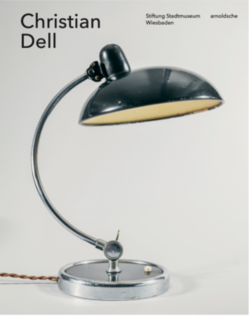
Stuttgart, arnoldsche Art Publishers, 2026, 280 pages, numerous illustrations
Accompanying publication to the exhibition on Christian Dell (1893–1974) in Wiesbaden. Until now, relatively little was known about Christian Dell, and very little had been published about his work. This publication helps to fill a gap in the literature on a designer whose work and significance have received comparatively little attention.
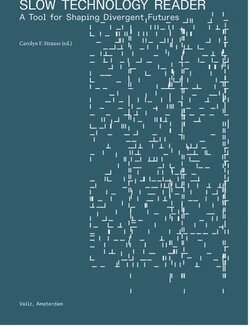
Amsterdam, Valiz Publishers, 2025, 480 pages
Contributions from a wide range of disciplines seek to examine technology from a ‘slow’ perspective. The aim is to explore alternative potentials for technology to enable alternative forms of progress, while remaining mindful of technology’s own interests and possibilities.
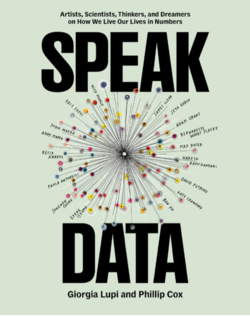
New York, Princeton Architectural Press, 2025, 271 pages, numerous illustrations
Data has become one of the most powerful forces in our society. The visualisation of data also plays a role in harnessing and extending this power. Contributions from international experts in this book explore where and how data visualisations can manipulate people, as well as how they can empower them.
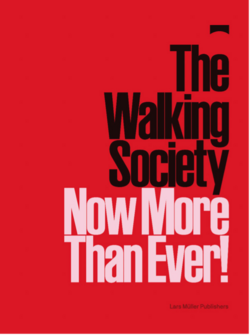
Basel, Lars Müller Publishers, 2026, 452 pages, numerous illustrations
Since its foundation in 1975, Camper has continually evolved. This publication takes a documentary approach to this ongoing process, exploring the development of both the company and a design practice that moves between tradition and experimentation.
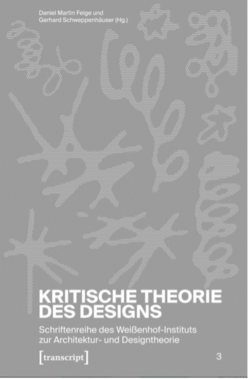
Bielefeld, transcript Verlag, 2026, 324 pages
Addressing the fundamental question of what constitutes critical design theory, this volume brings together a wide range of contributions that explore design criticism in relation to various aspects of the discipline, as well as engaging with the theories of prominent figures in the field.
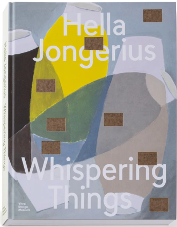
Weil am Rhein, Vitra Design Museum, 2026, 208 pages, numerous illustrations
The publication not only accompanies the exhibition dedicated to Hella Jongerius’s work to date, but also provides an introduction to the designer’s archive, which was transferred to the Vitra Design Museum in 2024. For the first time, sketches, studies, prototypes and other materials created by Jongerius in the process of developing the final products are presented alongside numerous projects. The accompanying essays seek to contextualise the designer and her work within the international design landscape.
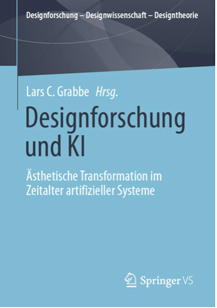
Wiesbaden, Springer Fachmedien, 2025, 232 pages, illustrations
Current contributions on the significance of artificial intelligence in the context of design research. The focus is less on technical capabilities and more on the influence exerted on meanings and value systems in design.
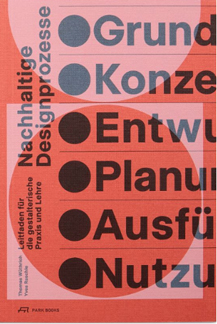
Park Books, 2025, 256 pages, numerous illustrations
A practice-oriented guide to the implementation of sustainability strategies within organisations, ranging from fundamental strategic business decisions to product development, with concrete and actionable recommendations.
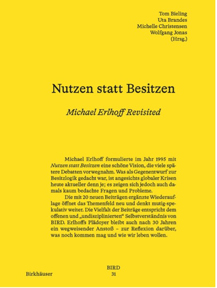
Basel, Birkhäuser Verlag, 2025, 292 pages
The text “Nutzen statt Besitzen”, formulated by Michael Erlhoff in 1995, may have been ahead of its time and remains highly relevant today. This new volume revisits the topic with 20 new contributions addressing both present and future perspectives.
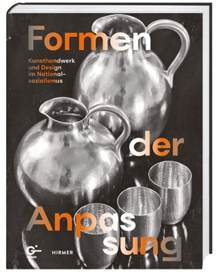
Hirmer Verlag, 2025, 336 pages, numerous illustrations
In addition to contextualising the significance of design under National Socialism, the catalogue primarily examines the role of the Grassi Museum itself and its exhibitions during this period, presenting numerous exhibits from its own collection.
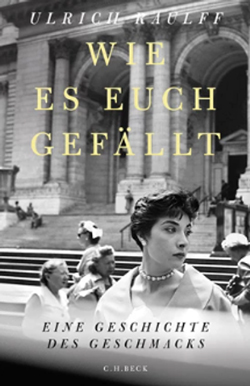
C.H. Beck Verlag, 2025, 479 pages, illustrations
A nuanced journey through the history of taste, from Meissen to Victoria’s Secret, which also takes into account the economic, political, and social contexts.
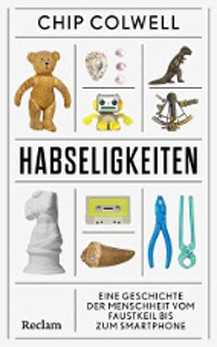
Reclam Verlag, 2025, 428 pages, illustrations
There were times when objects were valued above all for one thing: their importance to survival. With industrialisation and the accompanying rise of mass production, many new objects emerged—very many of them of little or no practical use, then as now—yet we nevertheless believe we must possess them. This book seeks to explore and explain the nature of our relationship to the things with which we surround ourselves.
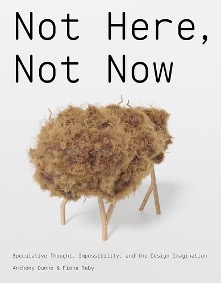
Cambridge, MIT Press, 2025, 284 pages, illustrations
The authors, known for their research and publications in the field of speculative design, expand on this approach by moving design away from solution-driven thinking and towards understanding design as a medium for critical thought — a serious method for engaging with the crises of our time.
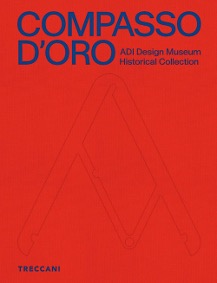
Rom, Treccani Libri, 2025, 1.040 pages, numerous illustrations
A comprehensive overview of the history of the Compasso d’Oro, Italy’s most important design award since 1954. With extensive illustrations, detailed information on awarded products, and numerous new essays by renowned authors, the volume becomes an essential reference on Italian design.
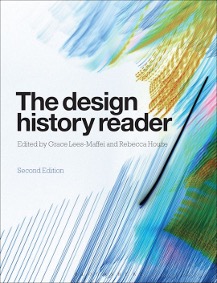
2nd edition, London, Bloomsbury, 2025, xxiii, 493 pages, illustrations
This revised and expanded edition brings together key texts from the history of design and design practice from the 17th century to the present. Organised thematically, the texts offer insights into design history and practice that remain relevant today. Questions of sustainability, gender, globalisation and decolonisation were already addressed in earlier design discourses.

München, Verlag C.H. Beck, 2025, 297 pages
In machines and technologies we project ideals of perfection, while perceiving ourselves in comparison as inherently “deficient” beings. The history of assigning superiority to machines over humans began as early as the 19th century – and overcoming this mindset is long overdue.
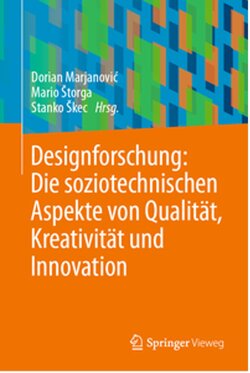
Springer Vieweg, 2025, 211 pages, graphics
This edited volume offers a solid overview of the current state of design research, particularly in engineering design, while also providing perspectives on future developments. The discussions focus on issues of creativity, quality, emerging technologies and human-centred methods.
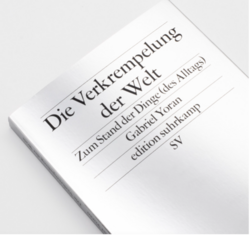
Berlin, Suhrkamp Verlag, 2025, 185 pages
When products are optimised, even in minor details, strange solutions sometimes emerge that do not necessarily make them easier to use—the author calls this “clutter.” He examines this phenomenon in a form of consumer critique and also raises questions about the role of consumers in these processes.
The library also houses a number of publications that are of interest not only to researchers of design history. These include, for example, Olivetti’s „Corporate Design Manual“ and the catalogue „Deutsche Warenkunde“ from the 1930s.
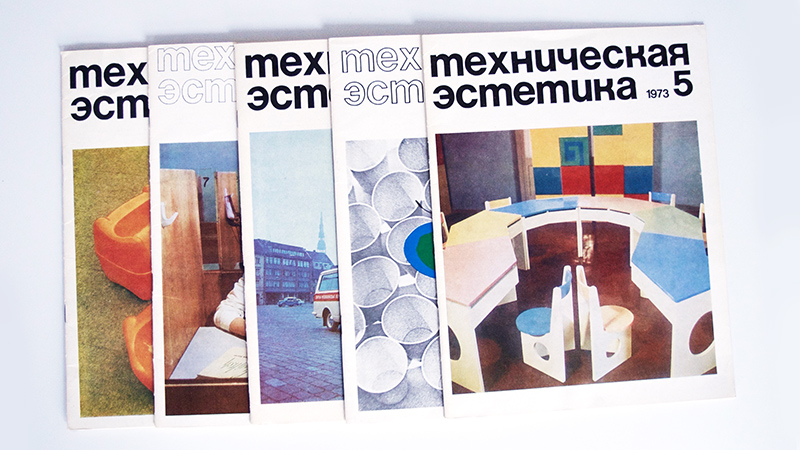
A particular highlight of the collection is the design journal „Techničeskaja ėstetika“ from the former Soviet Union. The library holds issues published between 1965 and 1988. In 2017, Yves Vincent Grossmann published an insightful article about the journal and the library of the German Design Council.
Not all design knowledge is available online. Many important sources – books, specialist magazines and historical materials – exist only in printed form. They offer perspectives that remain vital for today’s cultural, creative and economic questions. Specialised digital databases for design are also not always freely accessible. That’s why on-site research remains essential, particularly for academic work or more specialised design questions.
Design research can be wide-ranging. And at times complex. We help identify relevant sources and access design knowledge effectively:
Our library is open to anyone interested in design and creativity. It is located on the Media Campus of Darmstadt University of Applied Sciences.
Building F25
Max-Planck-Straße 2
64807 Dieburg
Monday, Wednesday and Thursday, 9:00–17:00
>> Please schedule a visit in advance to ensure optimal use of the collection and personalised support.