Beyond Boundaries: Recap of the Service Design Global Conference 2026
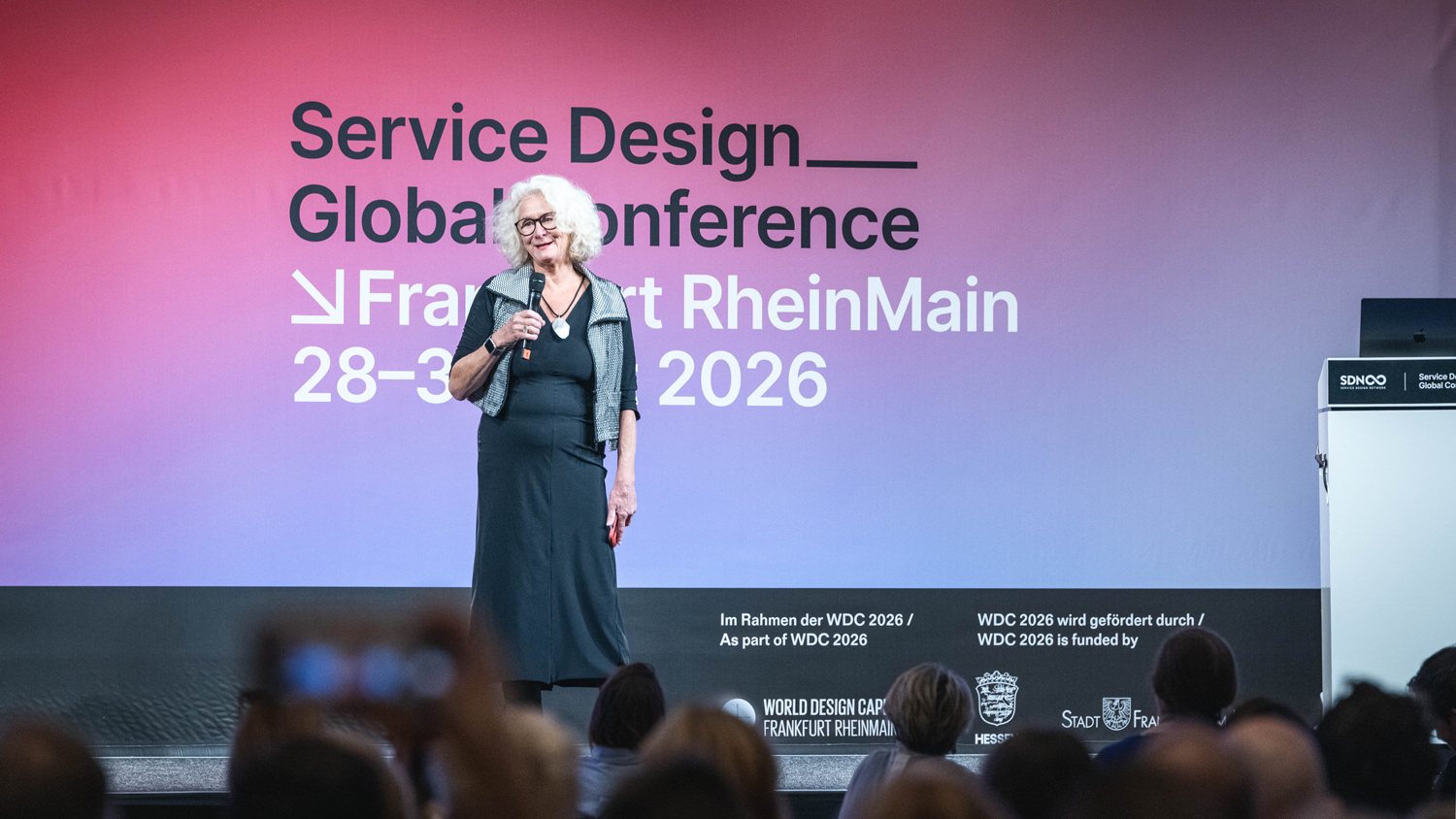
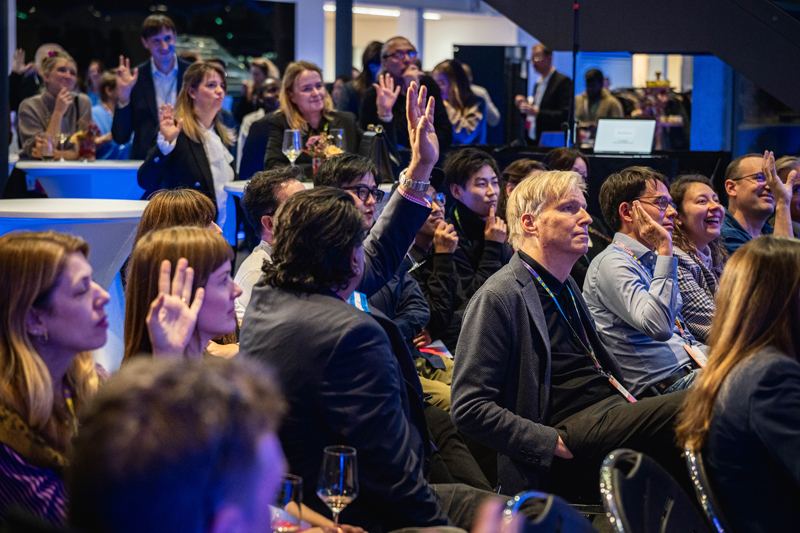
Three days, many perspectives: at the conference in Wiesbaden, organised by the Service Design Network, speakers and participants from around the world discussed the future of Service Design. The motto “Beyond Boundaries” was more than a conference theme. It captures a shift that is central to the role of design in business and society.
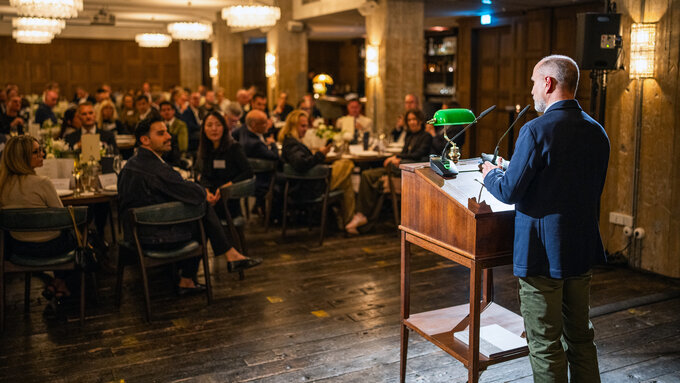
At the pre-event at Frankfurt Airport, Lutz Dietzold (CEO, German Design Council) stressed the strategic importance of design. It is about far more than aesthetics. It is about decisions at the intersection of business, culture and politics.
Service Design Is a Strategic Capability
The conference continued this theme in talks, panels and conversations. Four takeaways stay with us:
- Organisations do not solve their challenges by optimising individual touchpoints alone. Service Design makes sense of complex relationships, breaks down silos and creates the conditions for better services and new value.
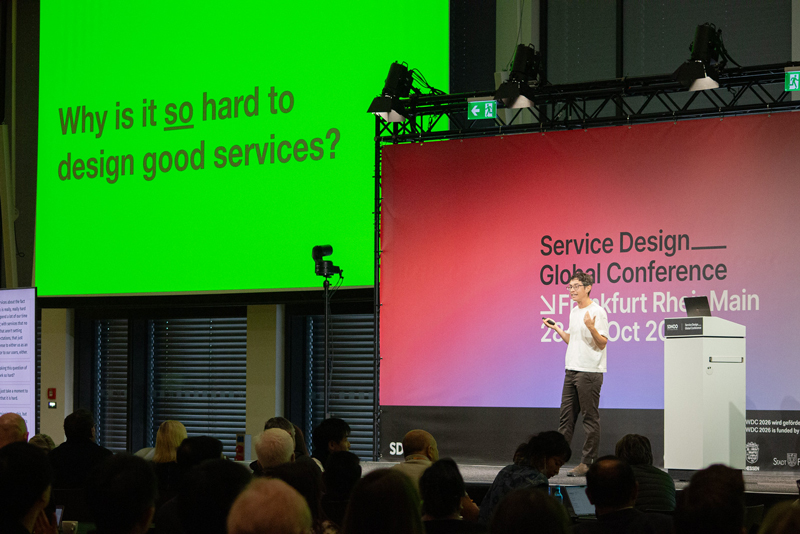
- Good Services Remain a Strategic Issue. Lou Downe (founder and director, The School of Good Services) gave the keynote “Bad Services”, exploring how the British administration handles care support and showing how poor services burden people. The talk also contrasted 15 principles of good services with those of bad services, such as “Is easy to find” or “Requires no prior knowledge to use”. According to the talk, the causes of poor service design include a lack of purpose, unknown users, a poor understanding of the materials used, risk aversion and rigid structures.
From Individual Services to Whole Systems
3. Good services emerge from the interplay of people, organisations, technologies and processes. Service Design connects these perspectives and enables holistic transformation. Several talks focused on government services. They showed how complex these systems are and why they require holistic thinking. Futurist Sinéad Bovell (founder, WAYE) was also referenced. She argued that an era is emerging that will reward systems thinkers: people who recognise feedback loops and anticipate how decisions in one area affect others. Education and vocational training have so far left little room for this.
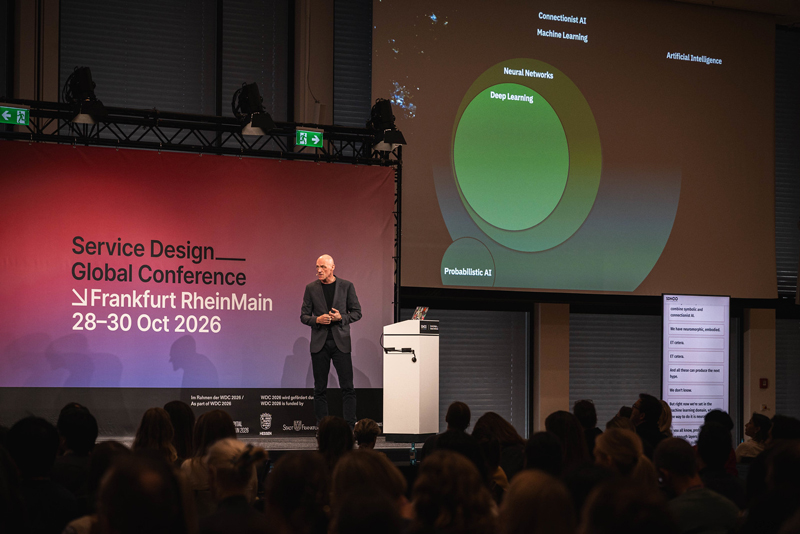
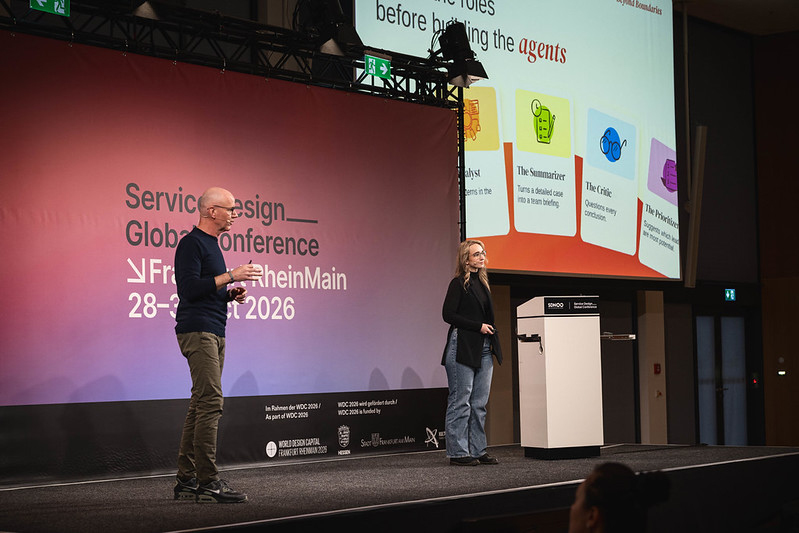
4. Artificial intelligence was a recurring theme, and opinions on it differed. Part of the community already works with AI as a team member to draft concepts, enabling more iterations with less effort. Another talk, however, cautioned against treating the prompt as the first step or as a process solution. Anyone who starts with a prompt and likes the answer skips the part of the process where original thinking happens. That is why it is essential to tolerate uncertainty, gain insights, and develop judgement and clarity. This is how a result emerges that is complete and well considered. That is where the added value lies, and an AI-supported process cannot guarantee it, because such processes are often incomplete and do not explore every process step or variable.