How Strategic Design Strengthens Infrastructure and Global Competitiveness
Infrastructure Design: Why Design Matters for Airport Performance
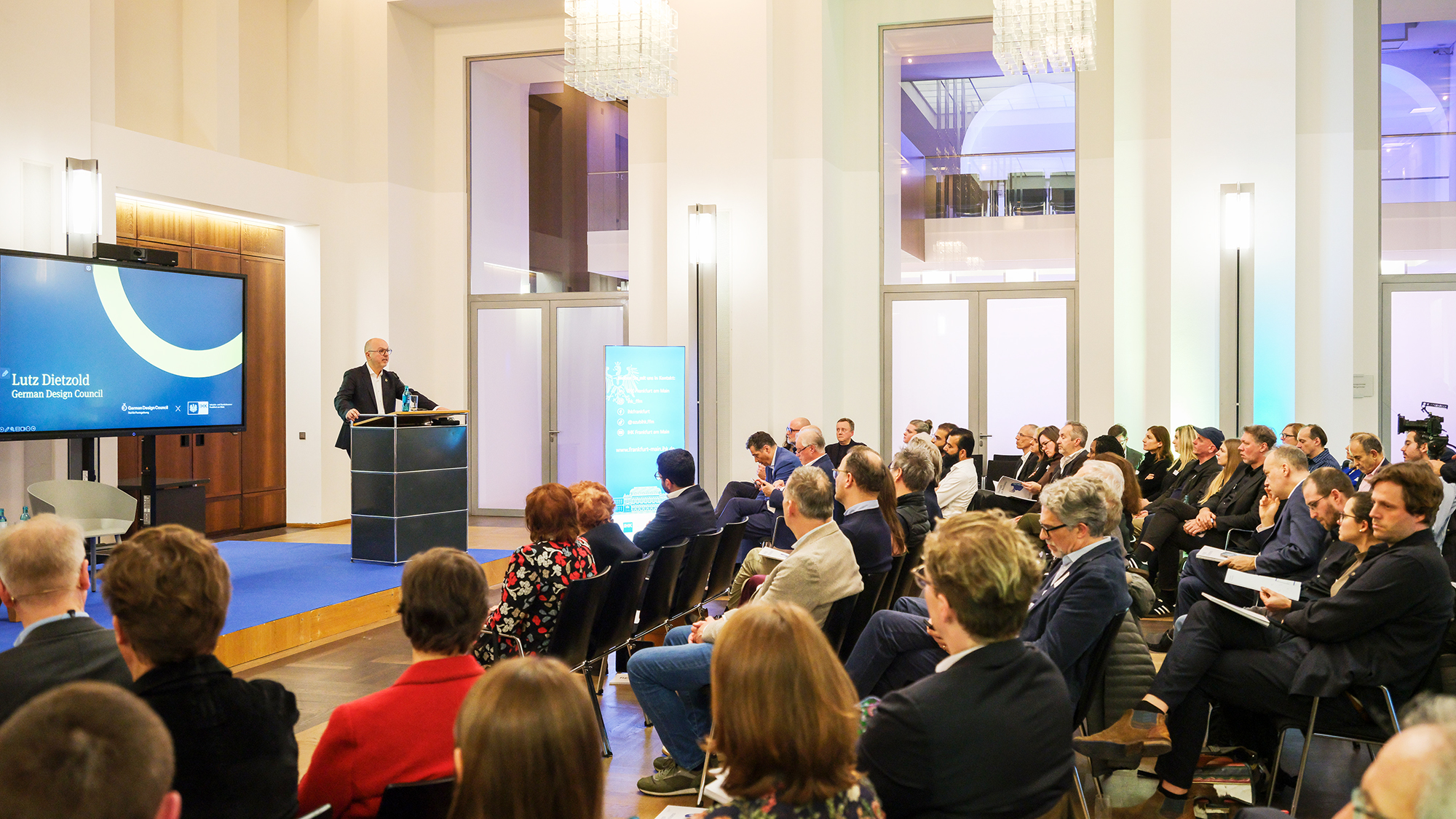
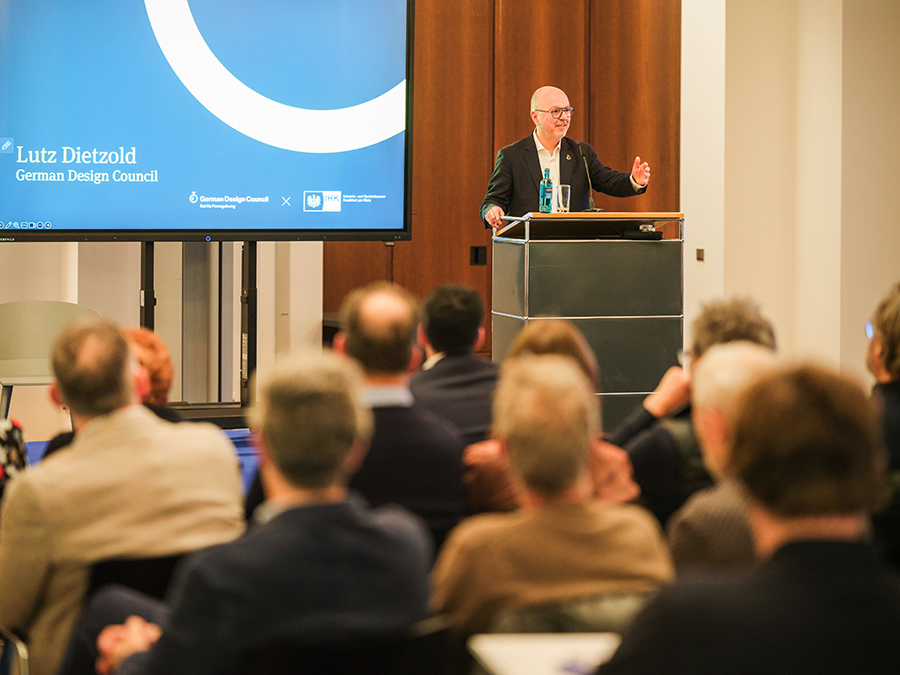
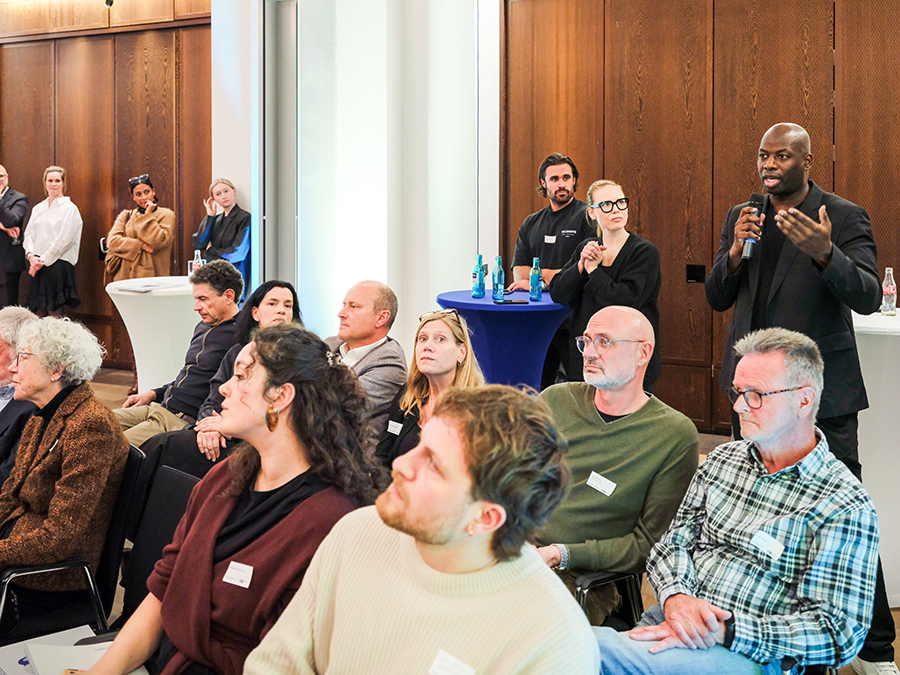
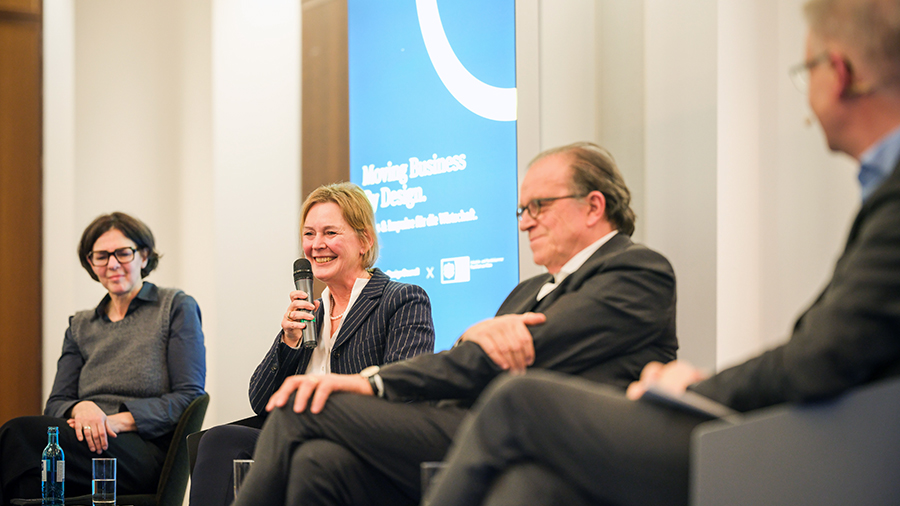
On 26 February 2026, the German Design Council and the Frankfurt Chamber of Commerce and Industry (IHK Frankfurt am Main) launched the joint talk series “Moving Business by Design” as part of World Design Capital Frankfurt RheinMain 2026.
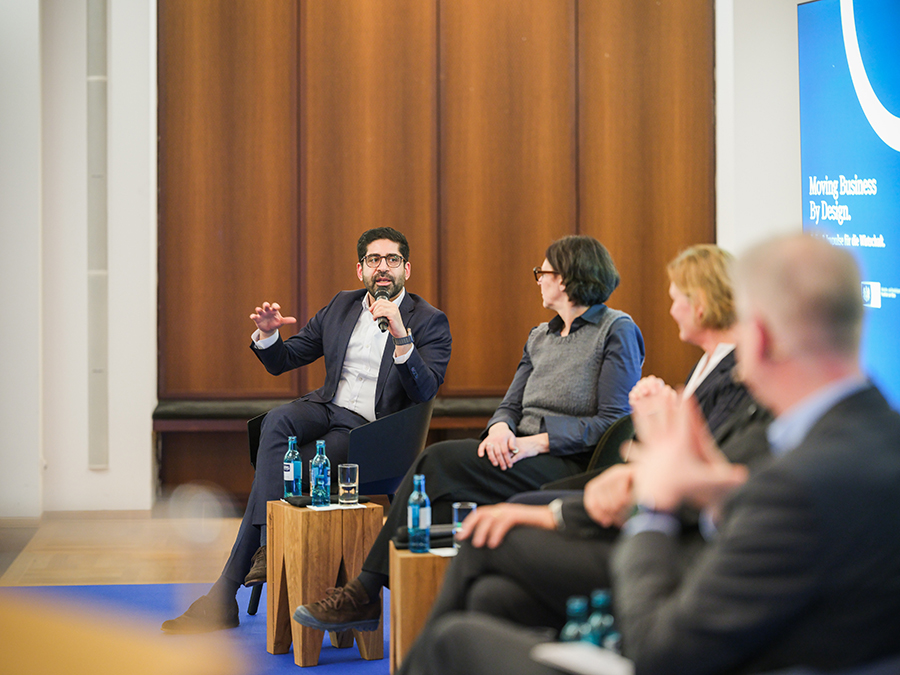
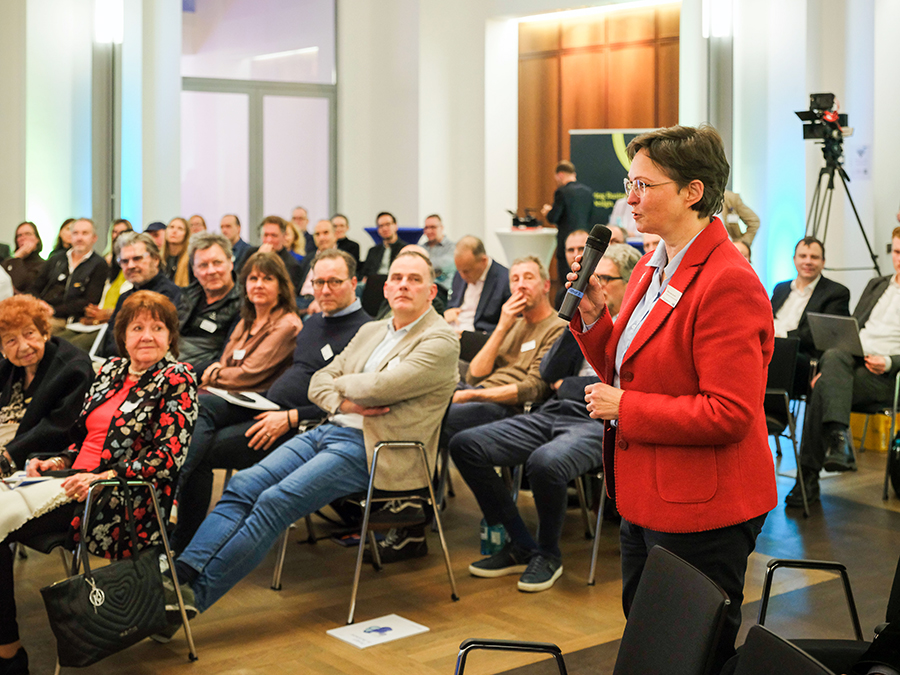
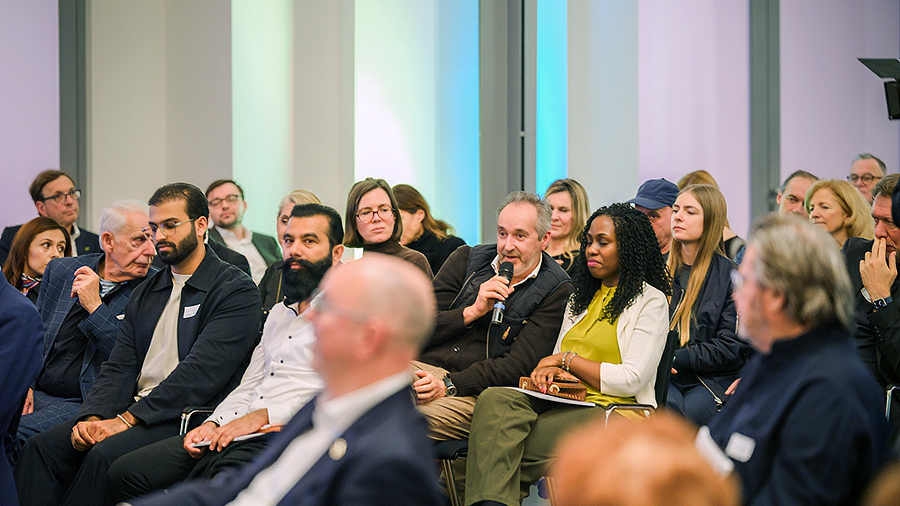
The opening event brought together representatives from architecture, design, business and politics to discuss the role of design in major infrastructure projects and its relevance for economic development.
Terminal 3: Why Good Design Does Not Need to Be Spectacular
At the centre of the discussion was Terminal 3 at Frankfurt Airport, one of the largest infrastructure projects in Europe. The project illustrates how architecture, orientation systems, operational processes and economic requirements interact when design is integrated into planning from the outset.
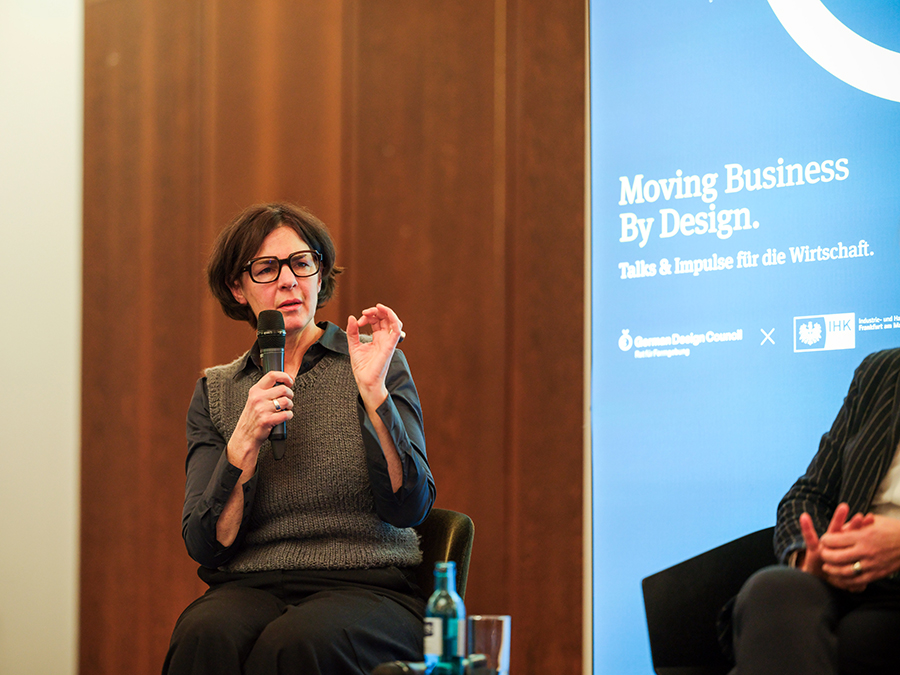
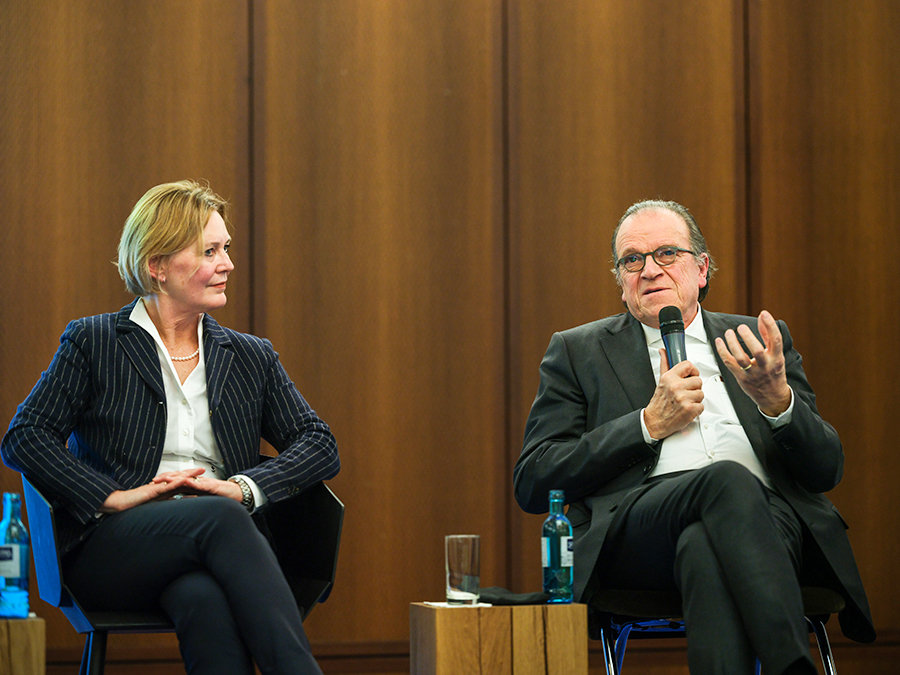
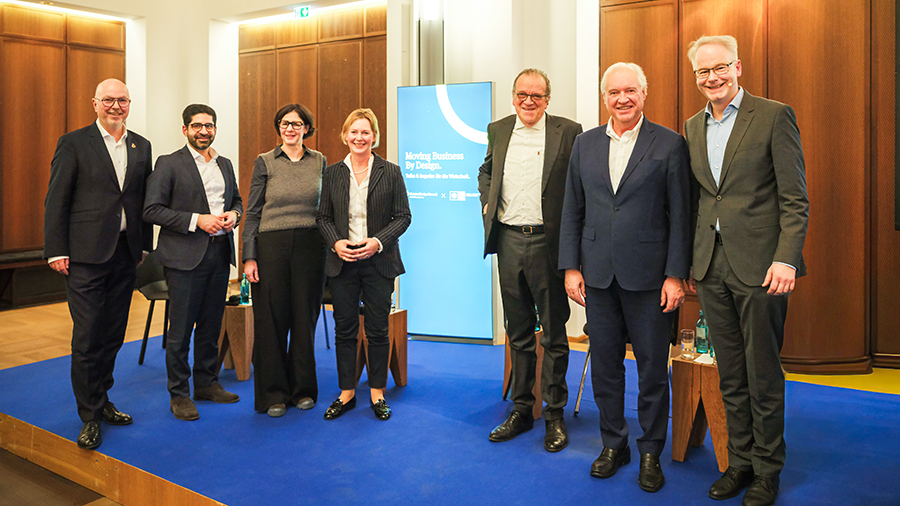
The panel featured Terminal 3 architect Prof Christoph Mäckler, Stefanie Pudwitz (Chief Commercial Officer, Fraport AG), Sibylle Schlaich (Managing Partner at design agency Moniteurs) and Hesse’s Minister for Economic Affairs Kaweh Mansoori. The discussion was moderated by Carsten Knop, publisher of the Frankfurter Allgemeine Zeitung.
Design Between Architecture, Operations and User Experience
The discussion highlighted that airports are highly complex systems in which design has a direct impact on usability, efficiency and the overall passenger experience.
Architect Christoph Mäckler explained that the design concept for Terminal 3 focuses on creating calm, legible spaces that enable intuitive orientation. Materials such as natural stone, steel, wood and glass shape the architecture and establish a coherent spatial identity.
“A terminal is a building for people. What matters is that the technology works – not that it is staged.”
Prof Christoph Mäckler, Architect of Terminal 3
For this reason, the project deliberately avoids an expressive high tech aesthetic. Instead, clarity, timelessness and orientation define the design. The aim was to create a terminal that functions reliably over the long term while offering passengers a clear spatial structure within a complex environment.
Wayfinding as a Core Element of Design
Another key focus of the evening was the importance of information design and wayfinding systems. Wayfinding expert Sibylle Schlaich emphasised that “a guidance system is always a combination of signs, colours, typography and pictograms that guides people through a building.”
At Frankfurt Airport, the well known pictograms designed by Otl Aicher form part of the orientation system across all three terminals. The system has been carefully further developed by the Frankfurt-based studio unit-design.
Alongside physical signage, digital displays, apps and self-service systems are playing an increasingly important role. Together, they enable millions of passengers to navigate the terminal efficiently.
Design and Economic Performance
From the airport operator's perspective, design also has direct economic relevance. Stefanie Pudwitz (Fraport) explained that operational processes, passenger flows and commercial areas were planned in close coordination with architecture and spatial design. Terminal 3, therefore, combines efficient processes with a high-quality passenger environment.
For transfer passengers in particular, factors such as transfer time, orientation and the quality of stay play a decisive role when choosing an international hub.
Infrastructure as a Driver of Regional Development
Hesse’s Minister for Economic Affairs, Kaweh Mansoori, highlighted the economic importance of the airport: “It is linked to the development of this region more closely than almost any other piece of infrastructure.” As one of the largest employment engines in the state of Hesse, the airport significantly shapes Frankfurt’s international position as a financial and trade fair hub.
Dialogue for Transformation
With the “Moving Business by Design”-series, the German Design Council and the Frankfurt Chamber of Commerce and Industry create a platform for dialogue between business, design and politics.
The discussion around Terminal 3 demonstrates how design contributes to the successful delivery of complex infrastructure projects. And how it connects economic competitiveness, user experience and regional identity.
Further events in the series will explore the role of design in innovation, technology and sustainable economic development within the context of World Design Capital Frankfurt RheinMain 2026, highlighting how design becomes a strategic factor for transformation and competitiveness.
The full press release with detailed statements from all speakers is available here: