Design Policy Days
The Design Policy Days, taking place from 11 to 14 November 2026, mark the final phase of the World Design Capital (WDC) Frankfurt RheinMain programme. Three conferences in Wiesbaden, Offenbach and Frankfurt will explore how design can improve public services, make societal positions visible and help shape political decision-making. The outcomes are intended to establish lasting structures for the region and provide impetus for a democratic future.
When Public Service Is Designed
The programme opens on 11 November with the conference “When Public Service Is Designed” at Heimathafen Wiesbaden. Experts from public administration, politics, business and service design will discuss citizen-centred services, digital government and innovation in the public sector. Case studies and prototypes from the WDC year will demonstrate how new approaches can be tested and embedded for the long term. Speakers include Sabine Junginger (Northumbria University), Birgit Mager (Service Design Network), Martin Jordan (DigitalService des Bundes) and urbanist Charles Landry. Workshops by CityLAB Berlin and the EU Policy Lab will offer practical insights into digital public services, AI processes and the future of Europe. An evening event in collaboration with the German Design Council will officially launch the Design Policy Days and set the scene for the following days of conferences.
When Form Becomes Attitude
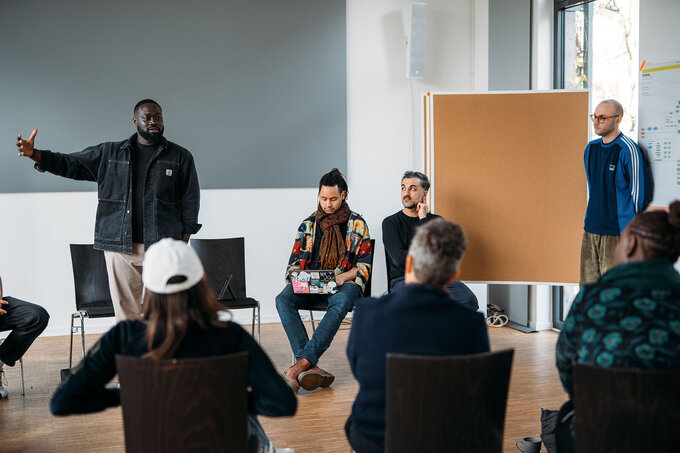
On 12 November, the symposium “When Form Becomes Attitude” at the Offenbach University of Art and Design (HfG) will focus on design as a social and political stance. Organised in collaboration with the HfG and the Board of International Research in Design (BIRD), the event will explore the responsibilities designers can assume in public spaces and the limits of their discipline. Project presentations on interventions in urban spaces will be complemented by international perspectives from Tatjana Schneider, Noemi Biassetton and Silvio Lorusso. The symposium will examine design at the intersection of social engagement, critical practice and the precarious conditions of creative work.
When Design Gets Political
On 13 November, the third day of the conference at Goethe University Frankfurt will focus on how design can be incorporated into political decision-making and to what extent politics itself can be understood as a design task. Under the title “When Design Gets Political”, the event, organised in collaboration with the German Design Day and the Research Centre “Normative Orders”, will explore how design can be embedded methodologically and structurally within political institutions. Three tracks – DEBATE, REFLECT and ACT – will combine discussions and academic reflection with practical workshops. The focus will be on the institutional conditions required for design to support democratic participation.
Design Action Plan
The outcomes of the conferences will feed into the Design Action Plan Frankfurt RheinMain. As the political legacy of World Design Capital 2026, the plan aims to establish the framework needed to translate the momentum of the WDC year into lasting structures for politics, public administration and the region.
On 14 November, the Design Action Plan will be presented at Frankfurt’s Paulskirche and handed over to political representatives and society. At the same time, the World Design Capital title will pass from Frankfurt RheinMain to the next host city, Busan in South Korea.