Sustainable Products as a New Cultural Experience?
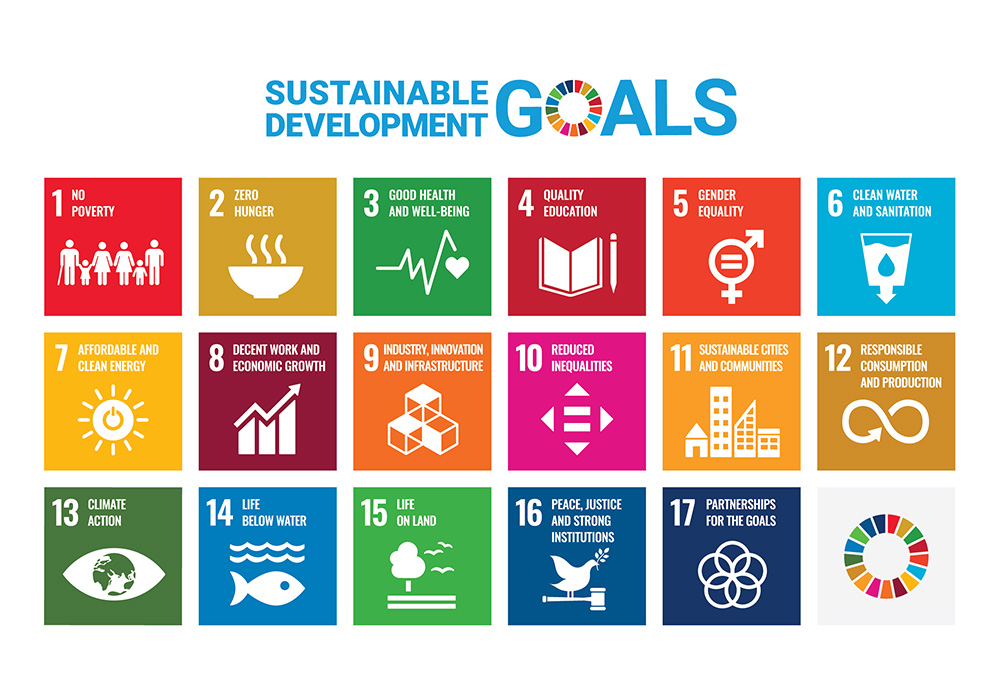
When businesses offer sustainable products, what knowledge do customers need to have in order to gauge, understand and appreciate this offering? There are numerous initiatives that promote the development of the knowledge needed. In one of its programmes, UNESCO has defined the term “Education for Sustainable Development” (ESD). In Germany, the Federal Ministry of Education and Research coordinates its implementation. ESD stands for an education that aims to empower people to think and act for the future, with approaches that are taught in different contexts by different institutions.
Another related approach even closer to the field of design is the “New European Bauhaus” initiative, through which the European Union wishes to create a forum for new, sustainable and inclusive spaces and projects: “The New European Bauhaus has the ambition to make the Green Deal a cultural, human-centred and positive, tangible experience.”
The Role of Businesses
Then there are of course the brand companies themselves that create publicity for their products. Yet can it really be their duty to educate customers and consumers about sustainability-related topics? Must they now also use their marketing and corporate publicity to explain why sustainable products are better and what they can do? How credible can such communication ultimately be when it comes from a product maker or service supplier itself, and not a neutral authority? The term “greenwashing” is quite relevant here. It refers to saying rather than doing in relation to sustainability, and also refers to companies that put the spotlight on experimental, small-batch products with a green image while the other 98% of their products remain as normal and are hidden behind the major platform given to the green sister product.
Is it even possible to condemn this approach? Is it not logical for businesses to report on new, exciting developments that at least show a prospect? This motivation is understandable, but it does not justify such actions. Proportionality should apply here as a principle – a principle that strives for authentic brand communication and does not lead the message’s recipients into believing any incorrect points of emphasis. Credibility is one of the most important attributes that customers demand from corporate publicity, and it offers very new opportunities as well as possibilities for interaction. Brands that are serious about their sustainability strategy have credibility when they communicate content that poses a demand while simultaneously offering the solution.
A product’s design always references a cultural context and can realise a significantly deeper and further-reaching message than just the object’s appearance. Good brand communication that can establish values-based contact with customers plays a role in conveying this cultural context. If customers see themselves reflected in a company’s values framework, can identify with that framework or even expand their own values positively with it, this creates the basis for communication that can reach a new depth at a substantive level. If we reverse the question, what would prevent a company driven by values and content from publicising the drive that it has?
The Position of Design
Whether the influence of the design discipline is to be assessed rather positively, because it contributes to the development of high-quality and durable products, or rather negatively, because it skilfully drives up the sales of even superfluous products, is a discussion that has accompanied us for a long time and will continue to do so. Ultimately, we must also incorporate a specific understanding of design into the debate about these questions. Aesthetic education that aims to identify and value quality in the design and realisation of products may potentially lead to fewer, though better products being sold, which will then stay in use for a long period of time. An awareness of design sharpens the perception of an object’s value and empowers people to recognise attributes such as longevity, quality and timelessness.
This is an empowerment that the German Design Museum Foundation has been promoting intensively with “Discover Design”, a national education and culture initiative for children and adolescents.
Economic Pressure
It is no longer possible for brands to succeed without incorporating sustainability and climate protection. Dealing with these topics is not seen as an exotic, voluntary add-on, but rather an increasingly fundamental element of a modern and healthy company. The sustainability factor can still be used to a certain degree as a way to differentiate a brand, though this advantage will keep shrinking as it becomes more of a given, including through the forces of national and international legislation. However, the pressure on companies to act and do business sustainably is not only growing because of legal requirements and customer demand. Entities such as banks and financial markets are also recognising that sustainability is a current and, most importantly, future factor for doing business. Share prices and access to credit can be directly dependent on commitment to sustainability.
Let us return to the new European cultural experience. If Europe succeeds in becoming a pioneer for sustainable economic and social transformation, businesses will have the chance to take a leading role in this development. Major brands that are a step ahead of legal requirements in this cultural context will have the ability to publicise their success in these endeavours. Not only does sustainability benefit from this, but so too do the company and its customers.

About the Author
Lutz Dietzold (born 1966) has been the CEO of the German Design Council since 2002. Prior to this, he worked as a freelance design communicator and, as Managing Director of the Hessian Design Centre, was responsible for the strategic reorientation of design promotion.
Building on his studies in art history, classical archaeology and German language and literature in Frankfurt, Lutz Dietzold has many years’ expertise in the fields of design, branding and innovation. He is also committed to promoting design and supporting emerging designers. Since 2011, he has been a member of the advisory board of the Mia Seeger Foundation and a member of the board of the German Design Museum Foundation, of which he became chair in 2020. In the same year, he was appointed to the advisory board of the Diesel Kuratorium and is committed to strengthening the pioneering role of economically successful innovators.
Lutz Dietzold is also committed to enhancing the international focus of the German Design Council and its global network of leading companies from industry and business. This includes the establishment of a subsidiary in China.
Lutz Dietzold regularly publishes articles and gives lectures both nationally and internationally on a wide range of topics. He is also a member of numerous committees and juries, as well as a member of the project advisory board for the Federal Ecodesign Award organised by the Federal Ministry for the Environment.