


Lilith Jeanneaux
Consulting & Cooperations


Design was long part of the problem. Now it can be part of the solution. Circular Design lays the design foundation for materials, components and products to stay in the cycle for as long as possible and at the highest possible value. The German Design Council makes this approach visible and applicable for businesses.
Circular Design describes a design approach in which products, components and materials are conceived from the outset so that they remain in the economic cycle for as long as possible and at the highest possible value.
Circular Design is therefore more than sustainable design. It is the strategic prerequisite for keeping materials, components and products in the cycle for as long as possible, at the highest possible value. Concrete design decisions determine this: Which materials? Which connections? These decisions determine whether a product can be repaired, reused, resold or recycled (based on the principles of Design for Circular Economy). At the same time, they define which business models are possible along the value chain at all.
“If design can be part of the problem, then it can also be part of the solution.” Lutz Dietzold, CEO, German Design Council, in “The Major German Brands – pushing circular design.”
Find out more about the circular economy on the Circular Design topic page of our online magazine, Design Perspectives.
Recycling does not begin at the sorting plant but at the design table. Materials that can be separated by type, the avoidance of composites and clear material information, for example via the Digital Product Passport, determine whether a raw material can actually be recovered after use. This is also a key criterion for sustainable product design.
A product, component or material that can be reused directly needs neither energy nor effort for processing or recycling, and it loses no value in the process. To make this possible, reusability must be part of the design from the outset: in construction, in material choice and in the business model that enables return or resale.
Several EU regulations take effect in the coming years at once: the Ecodesign for Sustainable Products Regulation (ESPR), the Right to Repair (2026), the Packaging and Packaging Waste Regulation (PPWR, 2026) and the Empowering Consumers Directive against greenwashing (EmpCo). On top of this come new ISO and DIN standards. Those who do not design today will have to make improvements tomorrow, under significantly greater pressure and at a financial cost.
More than 90% of the materials used worldwide end up in landfill, in the oceans or in incinerators. The EU circularity rate has stagnated at just under 12%. Globally, it is only 8%, with a downward trend. Despite all initiatives, we are still at the beginning. For us, this is no reason for resignation, but an opportunity to shape the future.
In the linear economy, the highest value is generated at the point of sale, and after that only costs remain. In the circular economy, this shifts. Repair, rental, refurbishment and recycling become genuine business areas. Design for circularity is therefore not only an environmental responsibility, but also a corporate strategy.
Up to 80% of a product's environmental impact is determined at the design stage, long before recycling begins. Depending on the sector, up to 90% of a company's greenhouse gas emissions can arise in its upstream and downstream value chain stages. This is exactly where the most effective lever lies: in designing products, materials and processes. Germany has set itself the goal of doubling the share of recycled raw materials by 2030. Design determines whether this succeeds.
The German Design Council is not just an observer of developments. It is a driver and connector. It brings the right people together from design, industry and research, and creates the formats in which circular design moves from concept to practice. More than 300 companies have come together in the Foundation, committed to the strategic power of design. Many of them are already on the path to the circular economy.
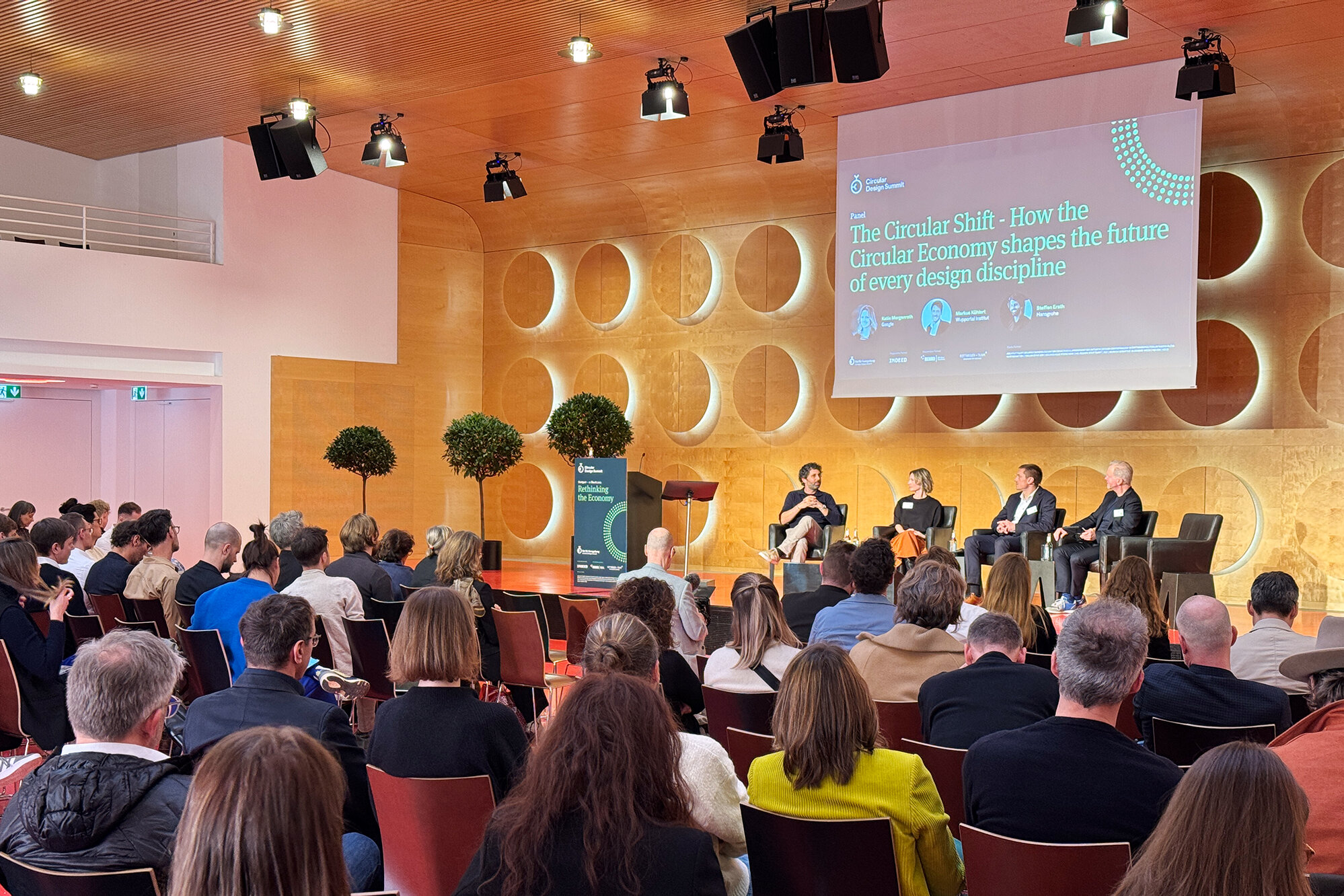
Decision-makers from business, industry, retail, construction, design and urban development come together at the Circular Design Summit to discuss circular design not as a sustainability term but as a strategic key to economic viability, resilience and new business models.

The Expert Circle on Design for Circular Economy brings decision-makers from manufacturing companies together in small groups. Each session has a thematic focus, is hosted by practitioners and is built around real discussion. The format is open only to members of the German Design Council Foundation.

The Circular Design Clinic is a workshop in which products, services or business models are analysed for their circularity and further developed, in the spirit of practical Circular Economy consultancy. So far, 23 companies have taken up the offer.
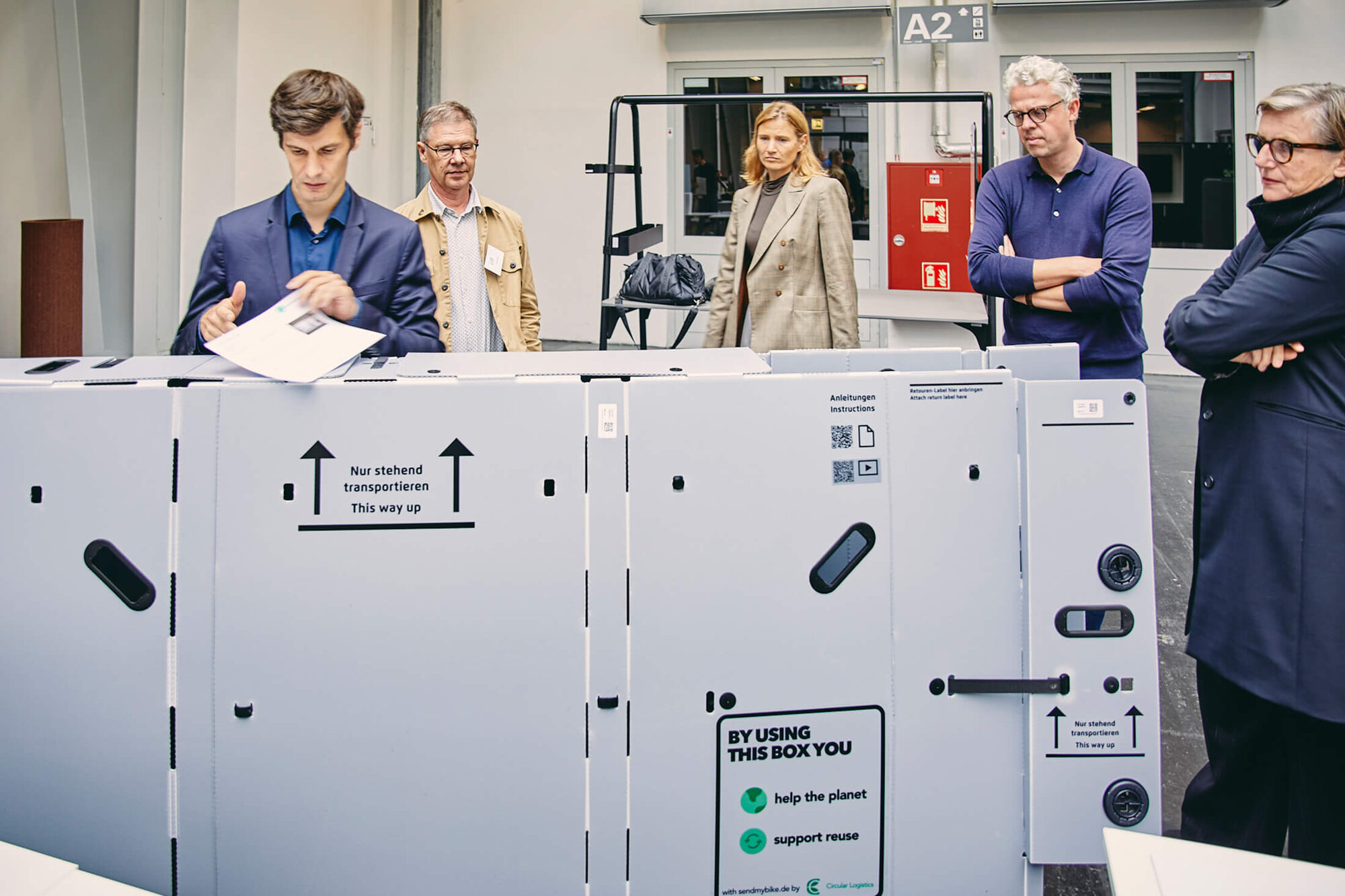
With the Circular Design category, the German Design Awards have set a clear benchmark since 2024. Which projects truly close the loop? Which products combine responsibility and design quality? The award highlights excellence in circular design.