

How a London exhibition shaped the self-Image of German design
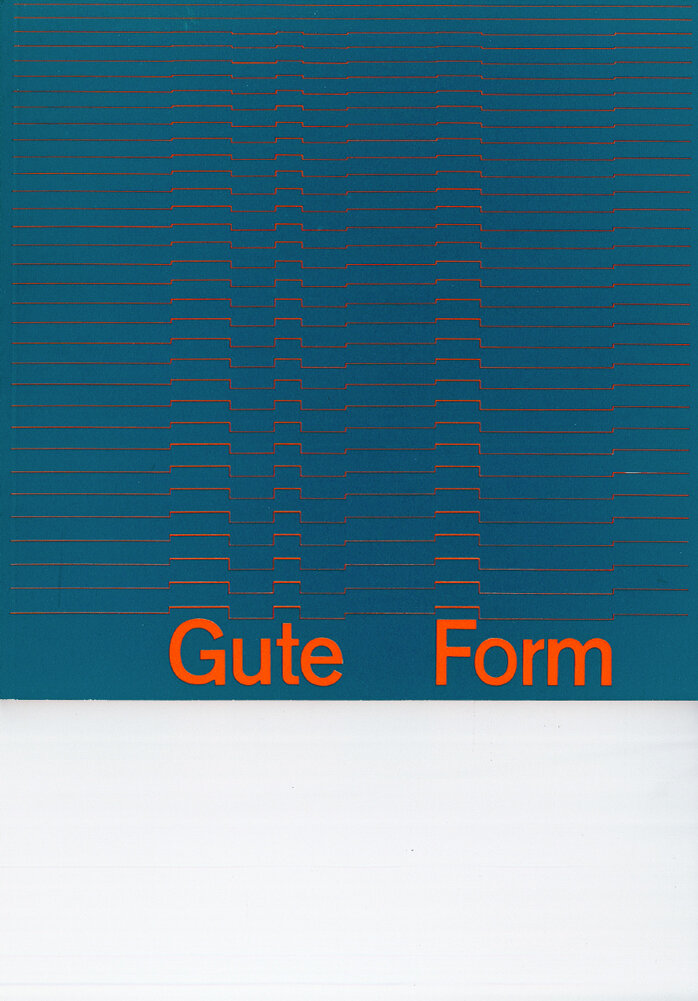
“In England, the layperson associates German design with internationally known names such as VW, Leica or Rosenthal. The connoisseur thinks of Braun and precision engineering, while the student values the high standards of German design schools,” says the 1965 activity report of the German Design Council – Rat für Formgebung. By 8 December 1965, this perception was to be shaped into a clear and unified understanding: the exhibition “Gute Form” opened at the Council of Industrial Design in London.
Under the Sign of Functionalism
The exhibition brought together highly relevant manufacturers and industrial designers from West Germany and was regarded as one of the most extensive foreign showcases ever organised by the Council, founded in 1953. Its aim: to present German design internationally as both an economic and cultural force. For London’s visitors, this created an “extremely favourable impression”, as Gillian Naylor later summarised in “form 33”.The 122 technical design objects on display conveyed a distinct image: timeless, objective, functional. At the host’s request – and due to import restrictions – the collection focused exclusively on household and office appliances, door handles, clocks, cassette players and cameras. Photographs represented the achievements of German mechanical engineering. The accompanying exhibition catalogue, also titled “Gute Form“ opened with a full-page image of the collective icon of German automotive design: the Porsche 911.


Modern, Exportable, Male-Dominated
In the words of the Council’s former managing director, Mia Seeger, the rigorously curated exhibition reflected the “high standing and authority” enjoyed by designers in Germany – and provided visitors with “something of a revelation
Renowned figures such as Tomás Maldonado, Gui Bonsiepe, Hans Gugelot, Erich Slany, Herbert Lindinger and Herbert Schultes, together with brands including Braun, AEG, Sartorius, Zeiss and Siemens, contributed to the unified image that, sixty years on, can still be traced in the fading collective memory: German designers operate close to industry, are export-oriented and driven by technology.

Despite its significance, the three-week exhibition went largely unnoticed by the British public. Around 12,000 visitors found their way to the London Design Council’s premises – considerably fewer than expected. Pre-Christmas “traffic congestion” in Haymarket was cited as the reason. Yet despite the modest public response, “Gute Form” contributed decisively to redefining the international perception of German design – in line with the founding mission of the German Design Council.
The exhibition catalogue, designed by Herbert Wolfgang Kapitzki and featuring 47 black-and-white images and a checklist of the 122 exhibits – along with the cited activity report and contemporary press releases – preserves this showcase. All materials are currently accessible in the foundation’s library at the Media Campus of Darmstadt University of Applied Sciences.