Ready for the Circular Economy? Turning Analysis into Action
What if you simply placed an existing product on the table – and rethought it from the ground up, together with experts and companies from entirely different industries? That is exactly the principle behind the Circular Design Clinic of the German Design Council. No abstract panels on the circular economy. No declarations of intent. Instead: a concrete product, circular methods, cross-industry exchange. And in the end, a realistic plan for the next steps.
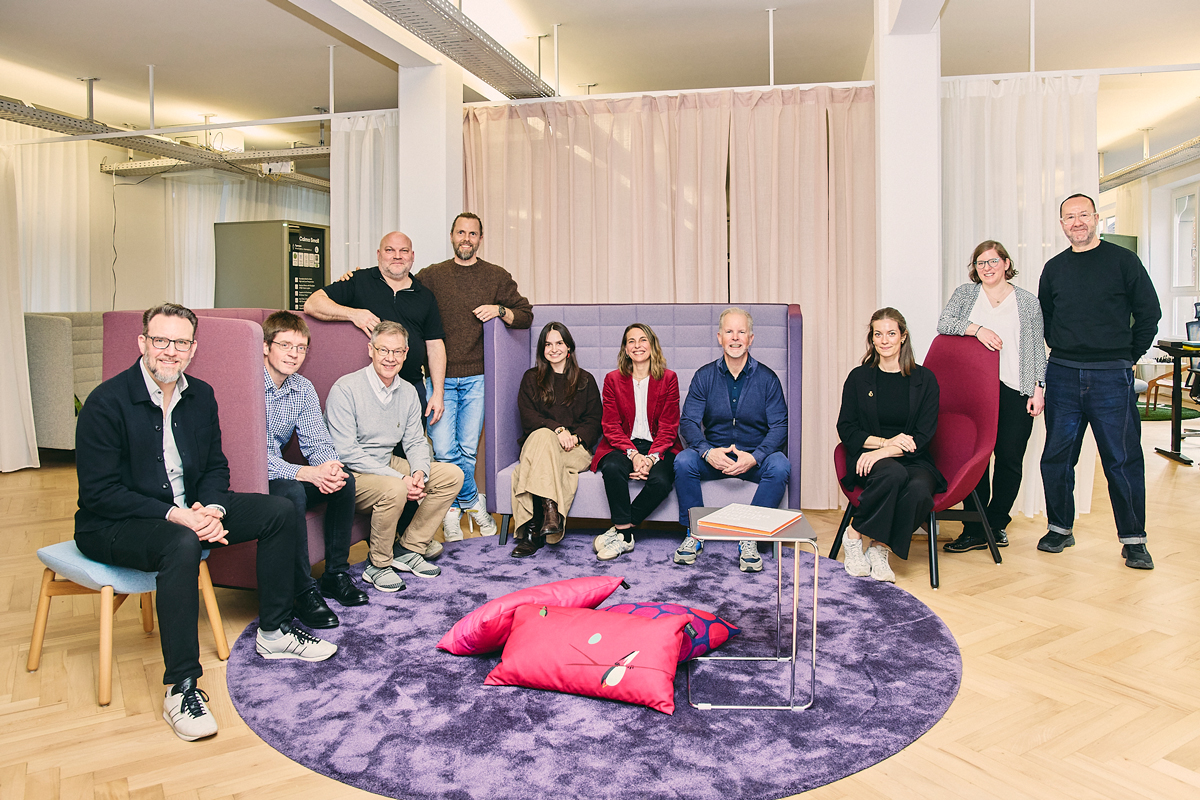
On 24 March 2026, the Circular Design Clinic took place in Stuttgart, hosted by furniture manufacturer Nurus and supported by the City of Stuttgart, Department of Economic Development/Creative Industries. Indeed Innovation is a partner of the format; overall responsibility lies with the German Design Council.
Who Can Take Part? And What Should You Bring?
The Circular Design Clinic is open to anyone with a product or service that is to be optimised according to circular design principles. Whether a physical product, a material system or a service: what matters is the willingness not just to talk about sustainability, but to actively work on it through your own offering.
In Stuttgart, seven companies and institutions brought their products – and with them seven very different challenges:
- Schneider Electric: frequency converter (Gerhard Felber)
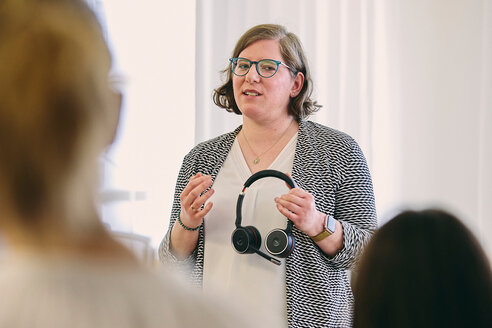
- ZVEI: Headset (Marion Laurentius)
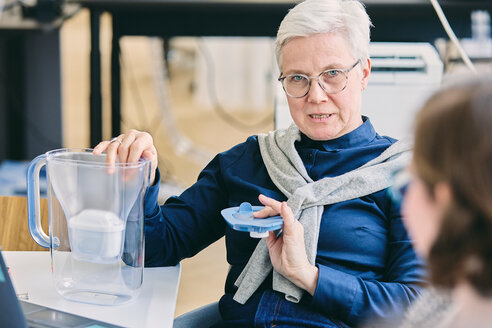
- BRITA: water filter jug (Marita Meinardus)
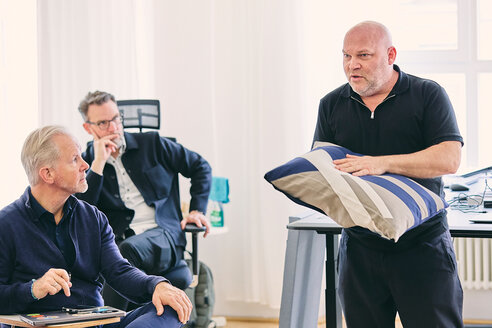
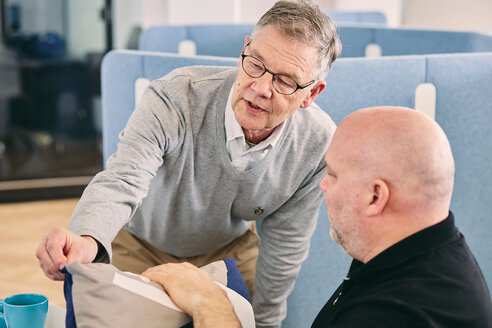
- deSter: textile cushion & ceramic bowl (Daniel Knies & Volker Klag)
- Helmut Schmidt University: memory box (Elisa Schneider)
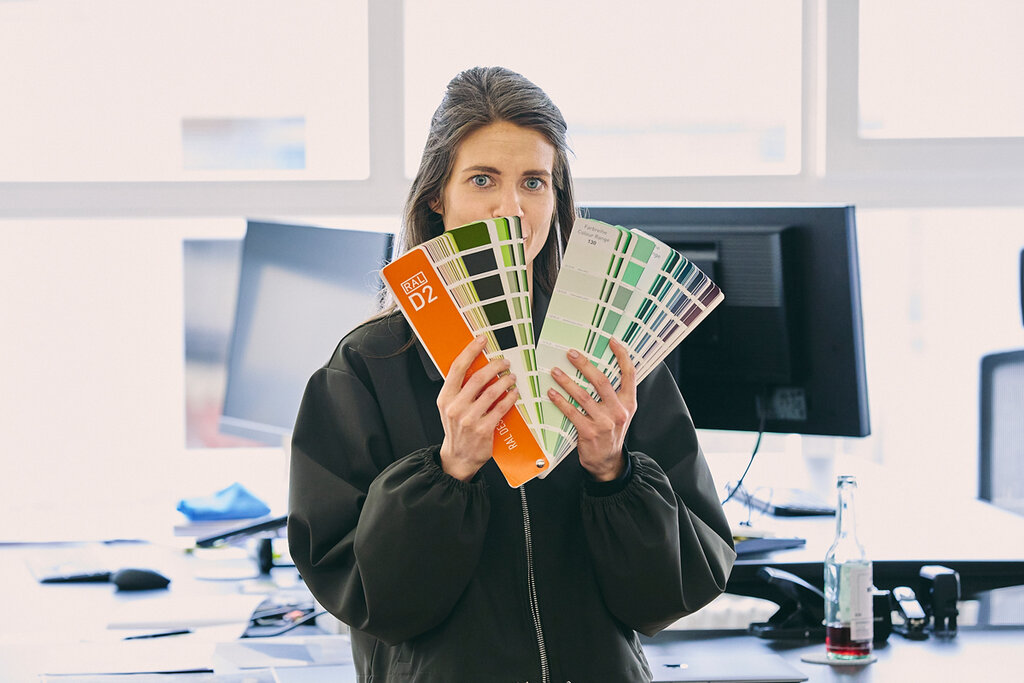
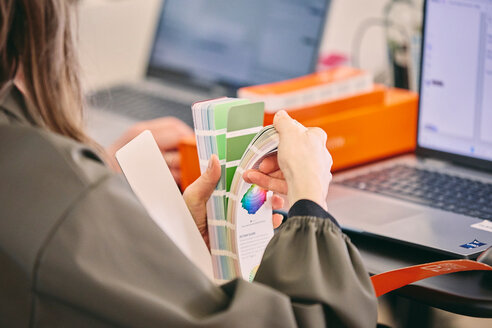
- RAL: colour fan (Silke Meißenburg & Laura Kilian)
- Robert Bosch Powertools: angle grinder (Isabelle Gola & Heiner Lukas)
How the Clinic Works
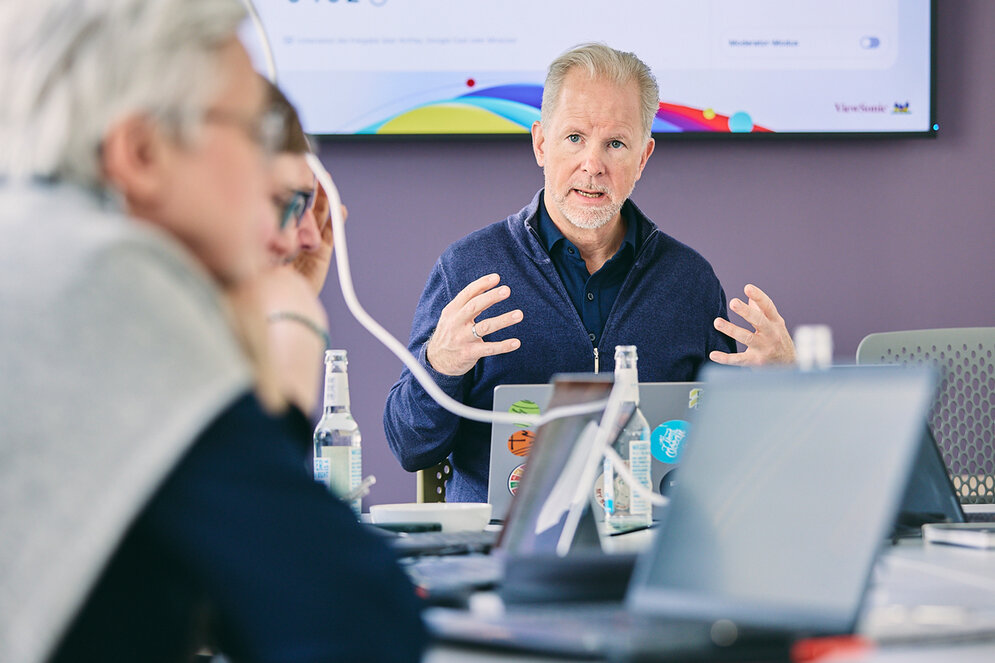
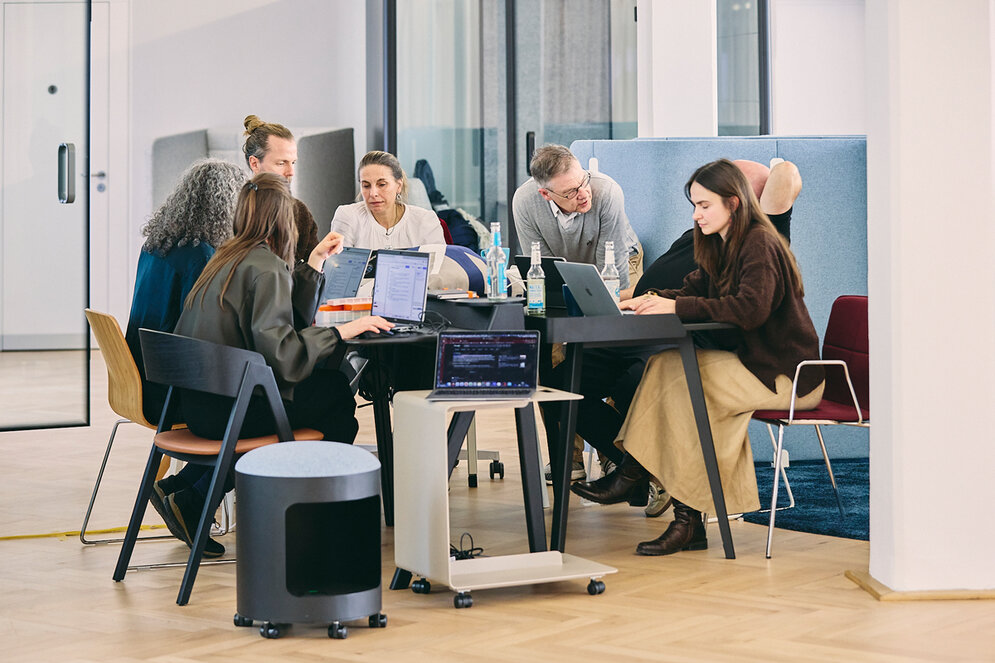
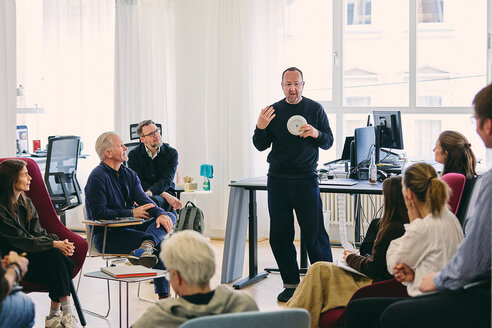
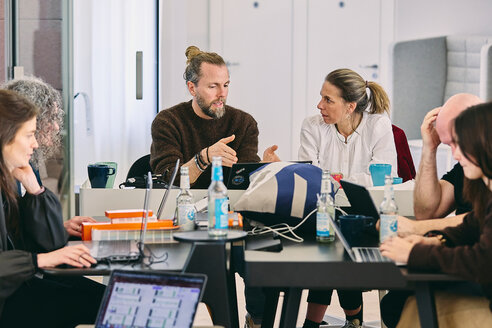
The day is structured in two phases. The morning focuses on analysis: participants examine their products along the value chain, identify weaknesses and potential – structured by methods such as the Value Hill and supported by digital collaboration tools. Circular design experts from Indeed Innovation and the German Design Council moderate the process, provide methodological input and actively coach the groups through the exercises.
In the afternoon, the solution phase follows: ideas are developed, evaluated and condensed into a concrete roadmap. The goal is not the perfect concept, but the first feasible step. “We create change by adapting the offering,” said Karel Golta (Indeed Innovation), capturing the mindset behind the format.
A key principle: it is explicitly encouraged to rethink from the ground up. What has always been done in a certain way does not have to remain so.
The Results: Concrete, Diverse, Actionable
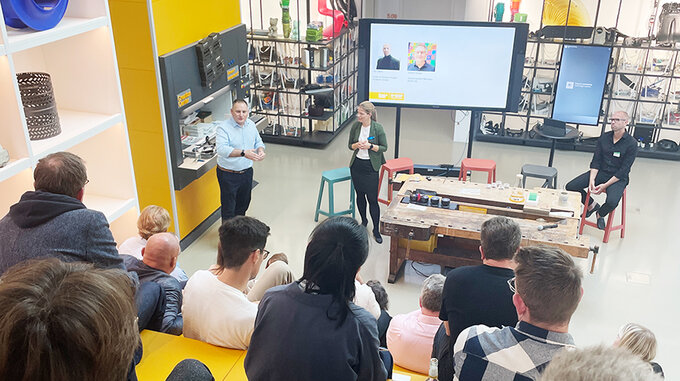
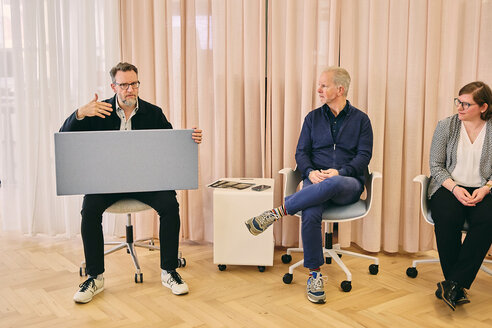
The final pitches by the seven teams made one thing clear: circularity is not a one-size-fits-all solution. Depending on the product, industry and value chain, entirely different levers lead to success – and that is precisely the strength of the format.
The approaches ranged from material choices and new manufacturing methods to rethinking business models. Some teams identified potential in the use of recyclates or mono-materials, others fundamentally questioned how products could be designed in the future to be easier to separate, repair or reuse. Others explored digital tools to create transparency across the entire product lifecycle – from first use to second life.
What all roadmaps had in common: they were not developed in isolation, but through dialogue. The cross-industry perspective – a core strength of the Clinic format – opened up new viewpoints that often remain invisible within one’s own organisation. Ideas that seem obvious in another product became triggers for one’s own.
What Companies Take Away
At the end of a Clinic day, participants do not leave with a final report, but with three concrete outcomes: a personal action plan with prioritised next steps, new business model ideas – often enabled by the cross-industry perspective – and a network of contacts and potential collaboration partners.
The feedback in Stuttgart was clear. “It’s often quick and easy to assess others, but much harder when it comes to your own product. The Clinic brought fresh momentum and a sense of ease,” said Heiner Lukas from Bosch. Marion Laurentius from ZVEI added: “The group is incredibly valuable with perspectives from different industries.” And Isabelle Gola summarised the overarching insight of the day: “It has to work for everyone: customers, companies and the environment.”
Bernd Müller (Director Sustainability, German Design Council) closed the day with an outlook: “Individual and diverse solutions, but based on simple principles. Implementation through new thinking. Today was the first step.”