
A Date Designers Should Know
Whether a product harms or protects the planet is not decided at the supermarket or in the recycling facility. It is decided at the design table. On 30 July 2026, humanity will already have consumed as many natural resources as the Earth can regenerate in an entire year. From 31 July onwards, the world will be living ecologically beyond its means: forests will be cleared faster than they can regrow, soils depleted more intensively, water systems used more heavily, and industry and consumption will emit more CO₂ than natural systems can absorb. Around 61 per cent of humanity’s ecological footprint comes from CO₂ emissions¹. The Earth Overshoot Day therefore makes the consequences of climate change particularly visible.
But it also reveals something else: the way we design products, services and systems determines how quickly we reach this date. Designers decide whether a product is durable or disposable, whether it can be repaired or must be thrown away, whether it is made from virgin materials or recycled resources – and how many emissions are generated throughout its entire lifecycle. The Earth Overshoot Day is therefore also a design issue. And that is where the greatest opportunity for change lies.
Nature Is the Foundation of the Economy
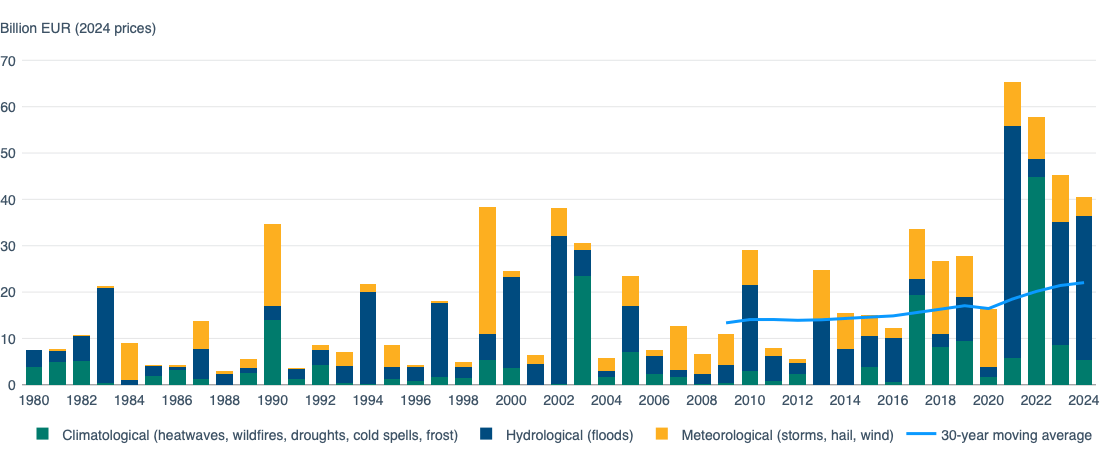
Global warming, resource overconsumption and environmental pollution are fundamentally changing the conditions in which economies operate. More than half of global economic output depends directly on healthy ecosystems – from soils that support harvests to forests that absorb CO₂. At the same time, economic activity is threatened by the destruction of these natural systems. The economic consequences are already significant: weather- and climate-related extreme events caused around €822 billion in damage in the European Union between 1980 and 2024² – almost twice Austria’s gross domestic product in 2023. Ignoring these risks endangers not only the environment and society, but also the future of businesses themselves. Sustainability is not a branding exercise; it is an economic necessity.
The Answer Begins With Design
The most effective lever lies in the design of products and services. Depending on the sector, up to 90 per cent of a company’s greenhouse gas emissions occur across its upstream and downstream value chains³. This is where decisions are made about how many raw materials are required, how long products can be used, whether they can be repaired and whether materials can return to the cycle after use.
Design determines far more than form and function. It determines resource consumption, climate impact and circularity. Anyone who wants to push back the Earth Overshoot Day must therefore consider the entire lifecycle from the very beginning: from material selection and production to use, repair, reuse and recycling.
Nature Needs a Place at the Design Table
To make this possible, nature itself must become a stakeholder – with its own voice in the development of products, services and business models. Those who consider nature automatically begin to think in cycles.
Designers are ideally positioned to drive this change. They connect user needs with economic requirements, understand materials and technologies, and create solutions that ensure products are valued, used and kept in circulation for as long as possible.
They work at the intersection of people, businesses, technology and the environment – and can therefore achieve far more than simply making products attractive. They can reduce resource consumption, avoid emissions and close material loops.
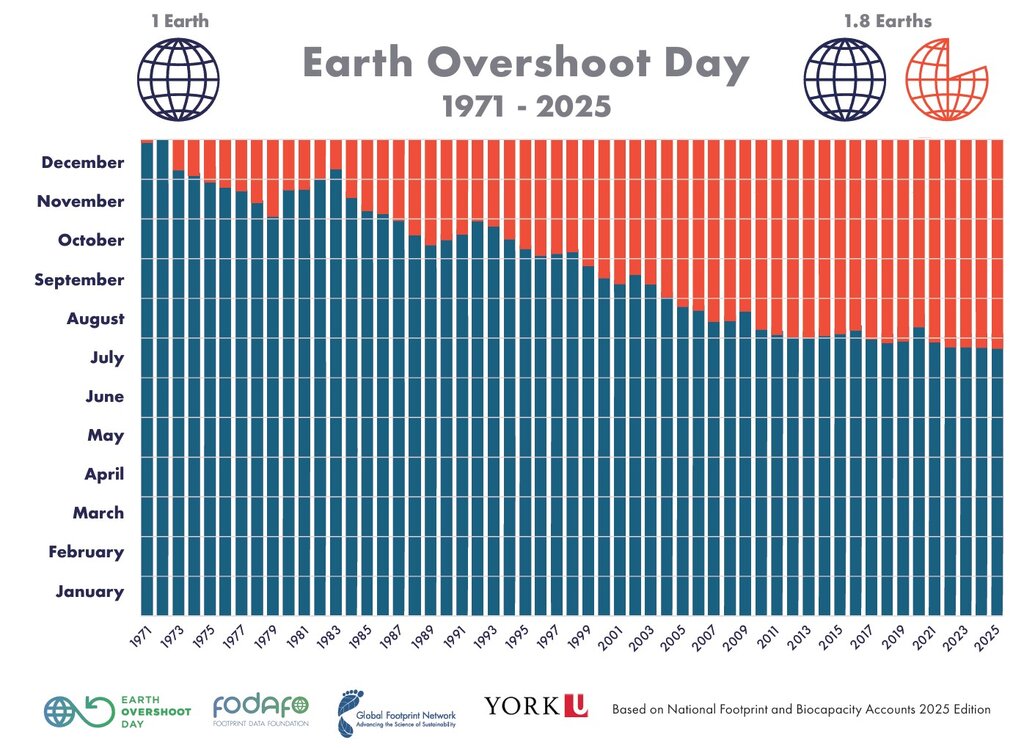
Global Earth Overshoot Day
The Overshoot Day has been calculated since 1973, and since then it has gradually moved to an earlier date. Over the past decade, the date has remained relatively stable, but it now falls as early as 30 July. For the remainder of the year, humanity lives at the expense of the planet’s ecological resources and continues to damage the biosphere. Even if the date remains unchanged, pressure on the planet continues to increase, as environmental damage accumulates over time.