
AI Is Learning to Design
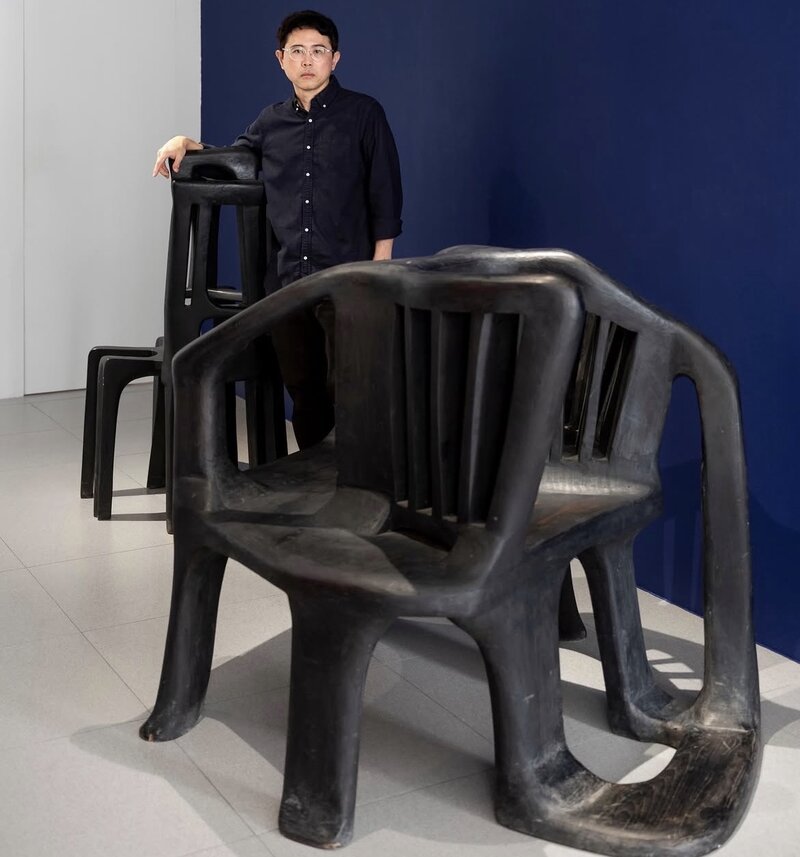
Immanuel, through your AI research, you have been working for years at the intersection of computer science, architecture and design. At the last Venice Architecture Biennale in 2025, you exhibited your project ‘Neural Monobloc Black’, which also won a German Design Award. What was that all about?
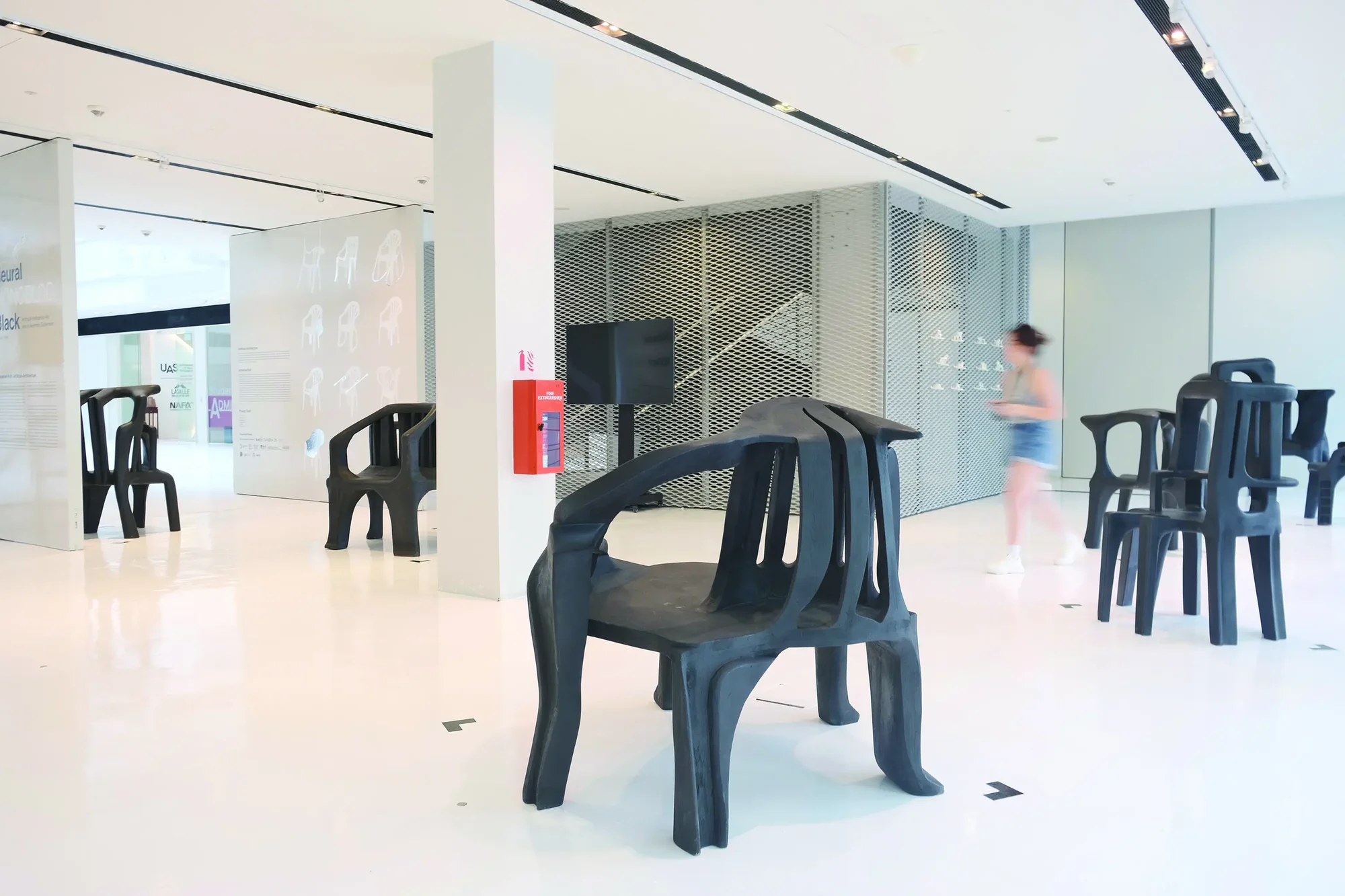
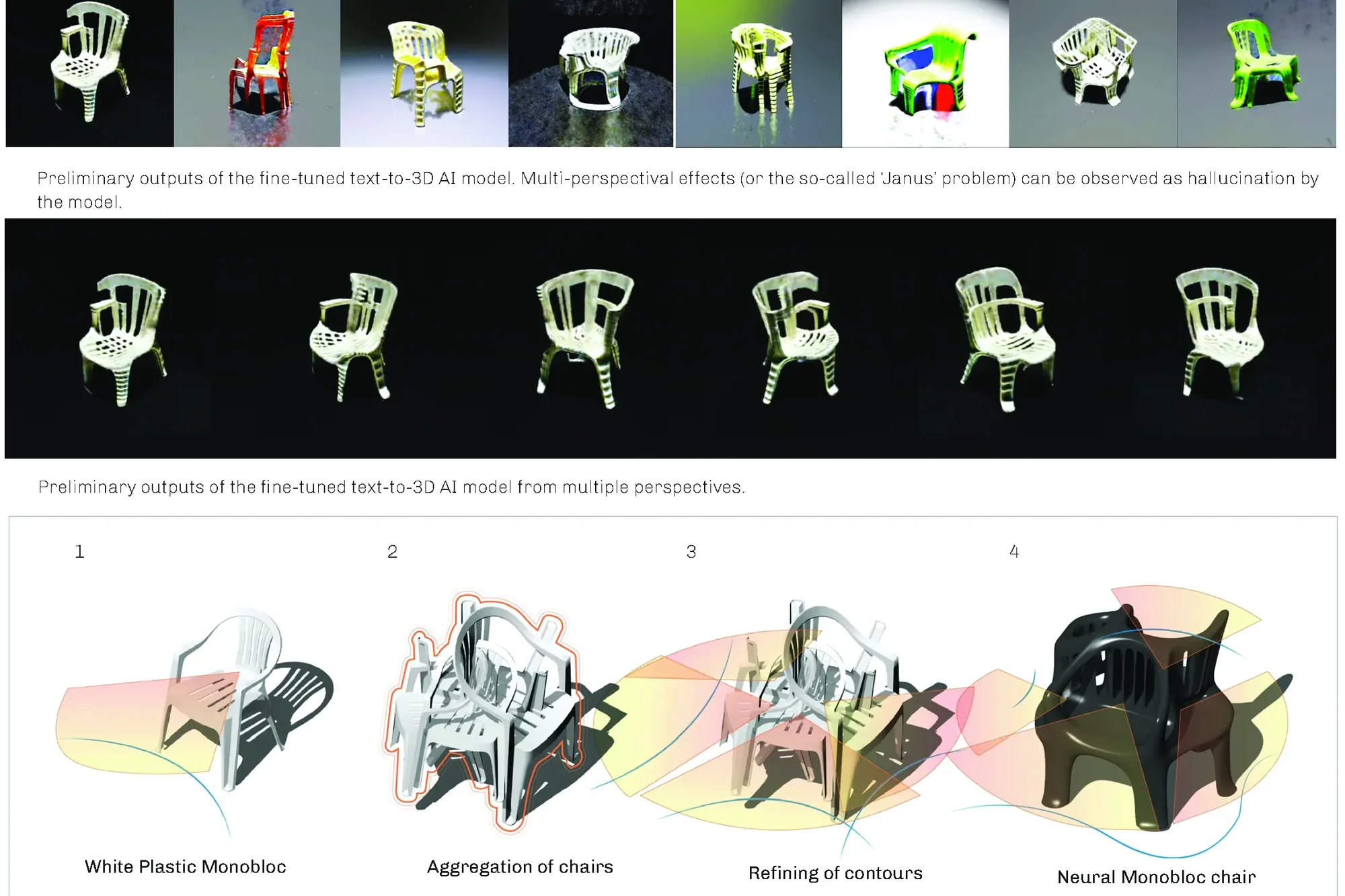
Immanuel Koh: It is a series of eight monoblock chairs made from upcycled, black-charred teak. The chairs’ forms were created by fine-tuning a pre-trained AI model (Editor’s note: such as ChatGPT or Claude) with my own, newly developed AI model. Pre-trained AI models can be used immediately without the need for further training. When I was conducting the design research for “Neural Monobloc Black” between 2023 and 2024, this technique was still quite new. The design process consisted of two parts: the first involved refining an existing, pre-trained text-to-image diffusion model so that it could generate images of a new monobloc design. The second was to develop a new AI model to translate the two-dimensional images generated in the first part into feasible digital 3D models. The resulting 3D designs were subsequently fabricated in 1:1 scale from wood and exhibited in Singapore’s Biennale pavilion.
What will be the next research step you’re tackling?
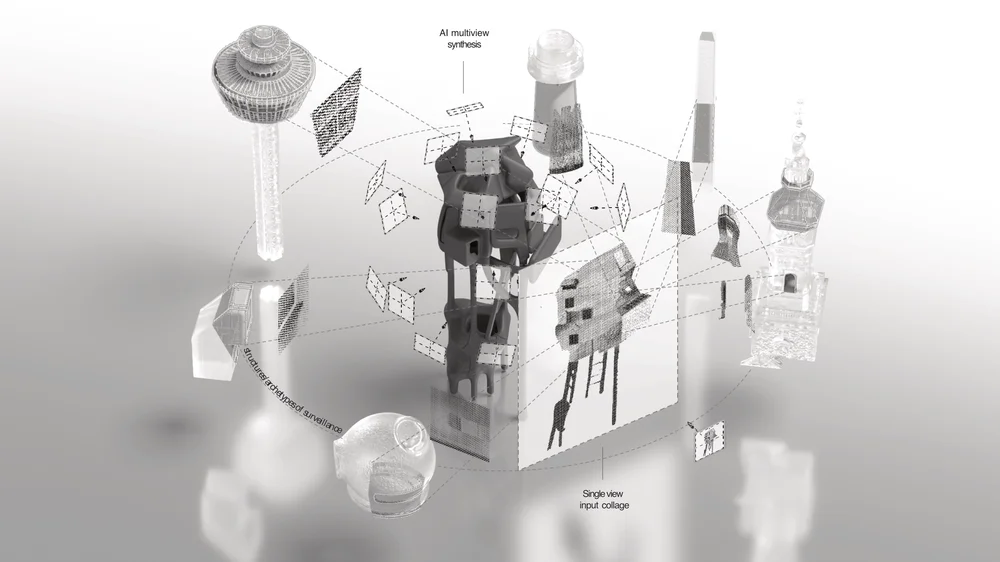
I’m currently working on a project that I hope to present at the end of this year. It’s a two-storey public pavilion that visitors can actually walk into. It’s being designed using a bespoke AI workflow that generates every single part of the pavilion like a 3D jigsaw puzzle. These parts are then produced using 3D printing with concrete. Among other things, I’m trying to find out to what extent the AI model can generatively establish a connection between what it perceives as external forms and what it imagines as interior spaces. Although several AI systems are currently used in the game design industry to generate 3D scenes, the virtual forms and spaces produced do not necessarily follow any real architectural logic and would be unusable by real people if they were physically built.
How will AI change the way we design in the future?
So far, many architects have viewed AI primarily as a tool for creating renderings and visualisations. However, the latest developments suggest that AI will actually be capable of producing three-dimensional, buildable parametric designs. Consequently, the digital creation of architectural designs in 3D may soon no longer require extensive knowledge of software programming or computer-aided design. It will then be possible to simply give instructions in plain English (or another language such as German) to generate 3D designs. These designs will then be converted by the AI into drawings and plans. The core competence of architects will therefore no longer lie in the design modelling of buildings and the creation of construction plans, but in other skills. One of my current research projects is examining the extent to which various innovative AI models are capable of thinking architecturally – whether in understanding construction plans or conceptual diagrams.

What do you think: will small or large architectural practices be the winners of this AI revolution?
Small practices have the advantage of having a more decentralised or flatter technology stack – or none at all. They can therefore respond more agilely to new technological developments. These new technologies could enable them to offset the competitive disadvantage they face due to a lack of resources. However, this is naturally limited to the design phase. Ultimately, it’s about constructing a building – and that is, of course, a far more complex process. The advantage of large firms lies in their ability to build systematically on years of knowledge and expertise. If large architectural firms are able to make a swift transition to AI, they can benefit from it far more than smaller firms.
Can you already spot signs of AI being used in new buildings?
In the nineties, there were buildings where you could clearly tell they’d been designed using programmes like Rhino Grasshopper or Autodesk Maya. However, that’s not comparable to the use of AI. AI uses various programmes as tools – and these offer far more diverse possibilities today than they did back then. To be more precise, today’s so-called agentic AI enables the designer to switch between several software applications as required (or even run them in parallel). For example, I could start a design in Blender and then continue in parallel using Rhino or Revit. In doing so, I wouldn’t have to interact or model manually across three 3D environments, but could simply do so using prompts via MCPs (Model Context Protocol). In theory, this allows me to erase all clearly recognisable visual traces of a particular product. Furthermore, architects are increasingly using AI applications for pragmatic tasks – such as boosting productivity – where stylistic considerations play no major role.
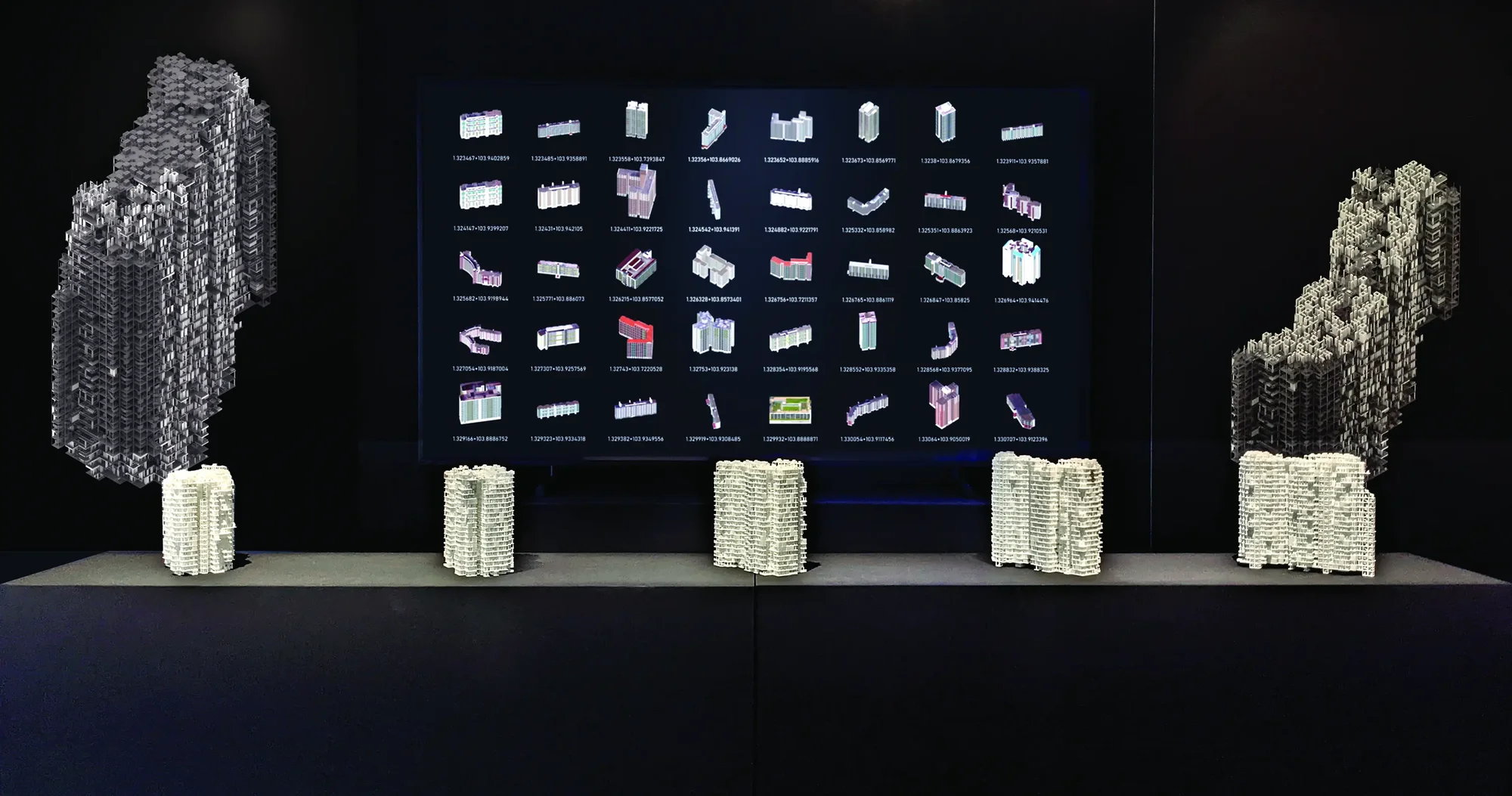
Will there eventually be such a thing as an ‘AI style’?
In theory, AI can simulate any conceivable style. There is no compelling need to commit to a particular direction or to develop a new architectural language. This could be seen as a problem. However, in my opinion, it can also be viewed as an opportunity to reflect on the fact that, ultimately, every architectural style is ‘artificial’.
Why do so many architects react so negatively to the topic of AI?
I believe this is linked to the ‘no alternative’ narrative put forward by the big tech firms. Many employees are currently being pressured by their superiors to use AI. A backlash seems entirely normal to me in this context. I actually consider this to be important and healthy! It’s a bit like the Arts and Crafts movement in the late 19th century, which emerged as a reaction to industrialisation. Even though the movement couldn’t halt industrial production, it did provide an invaluable impetus for critical reflection. Architecture is not purely an engineering discipline and should always critically question such developments.
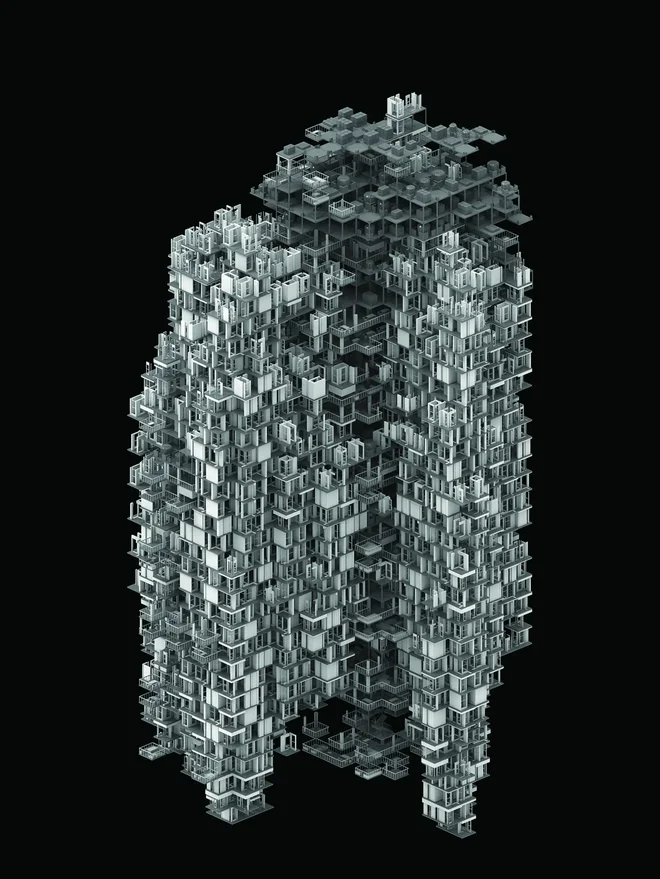
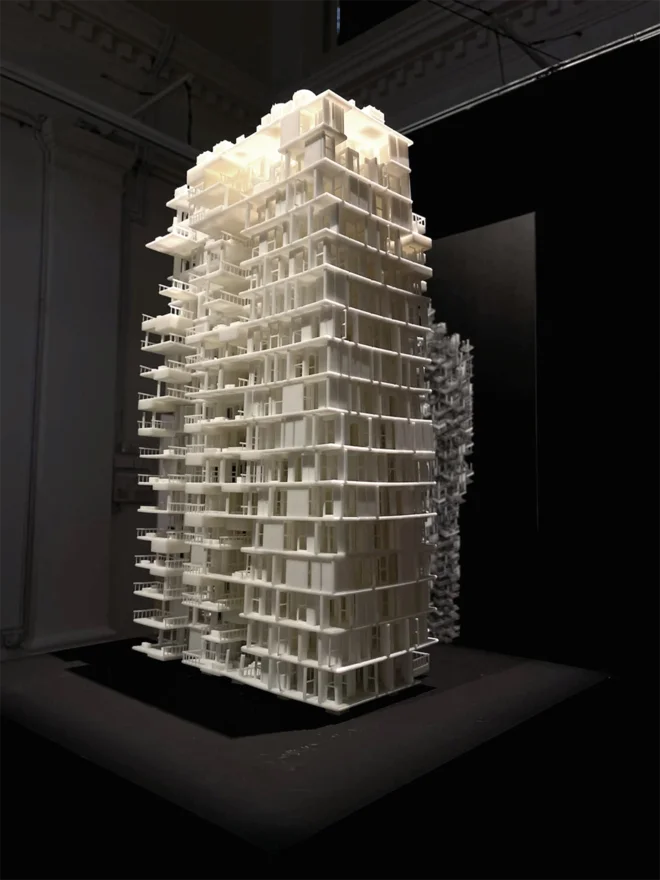
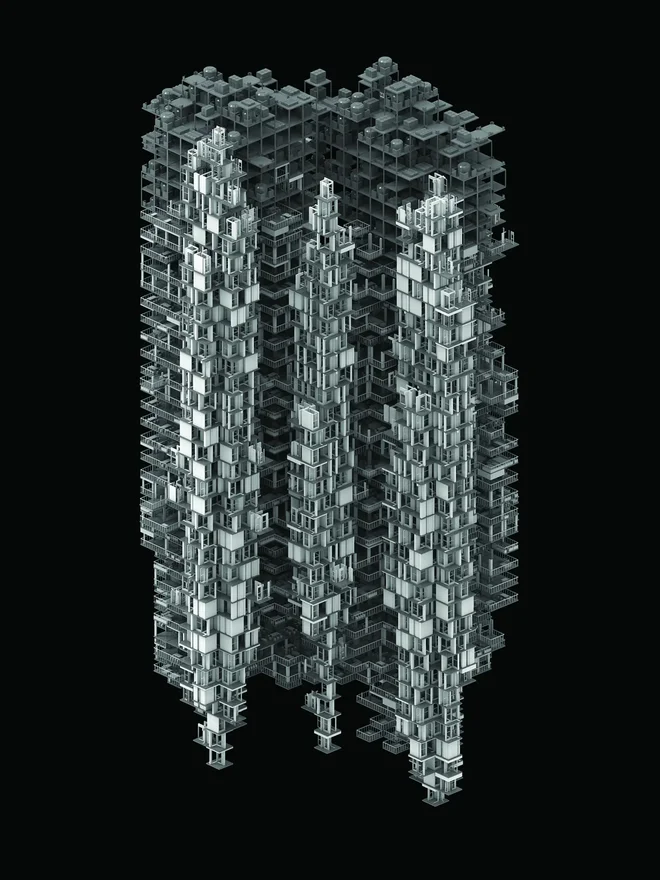
In Germany, movements such as ‘Einfach bauen’ reflect the desire amongst many architects to reduce complexity and the use of technology. What is the situation in Singapore?
In Singapore, such trends are not particularly pronounced. On the contrary: here, the Prime Minister has personally launched the “Smart Nation” initiative, in which a programme called “AI Singapore” (AISG) plays a key role. The general mood in the architectural sector in Singapore is very optimistic, particularly amongst young architects. Many AI companies have set up offices here because the government is promoting the technology. In my opinion, it has positioned Singapore very skilfully in the international arena.
How is this enthusiasm for AI manifesting itself in Singapore’s architectural scene?
Various large architectural firms in Singapore have started investing in AI. Some have even set up their own research departments to develop bespoke AI tools. Many of my students have joined such departments after graduating to deepen their knowledge of AI. The government actively promotes the use of AI in architecture and across the entire construction industry. One example of this is the annual Archifest AI hackathons organised by the Young Architects League (YAL) of the Singapore Institute of Architects, where I have served on the judging panel for the last three editions: these events have been generously supported not only by commercial companies such as Autodesk, but also by Singaporean government agencies such as the Building & Construction Authority (BCA).

Design has the power to change the world, and the German Design Award recognises this. This prestigious international award honours projects that drive innovation through design, embrace responsibility and offer new perspectives. Organised by the German Design Council, the German Design Award stands for design quality with attitude. With an interdisciplinary approach, a global network and strategic relevance, it is a truly unique award.