Christian Dell: Phantom of Design History
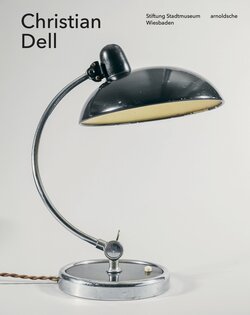
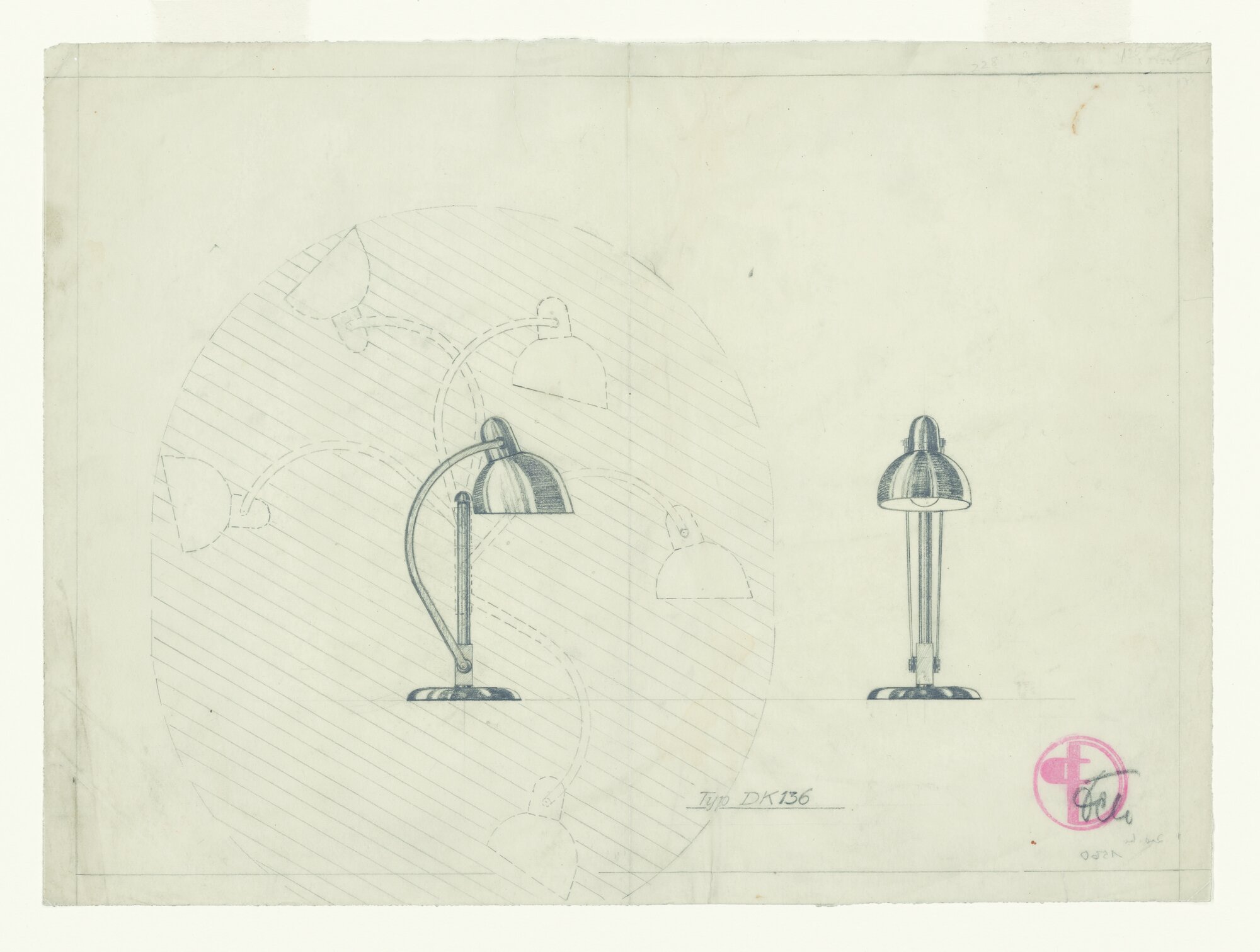
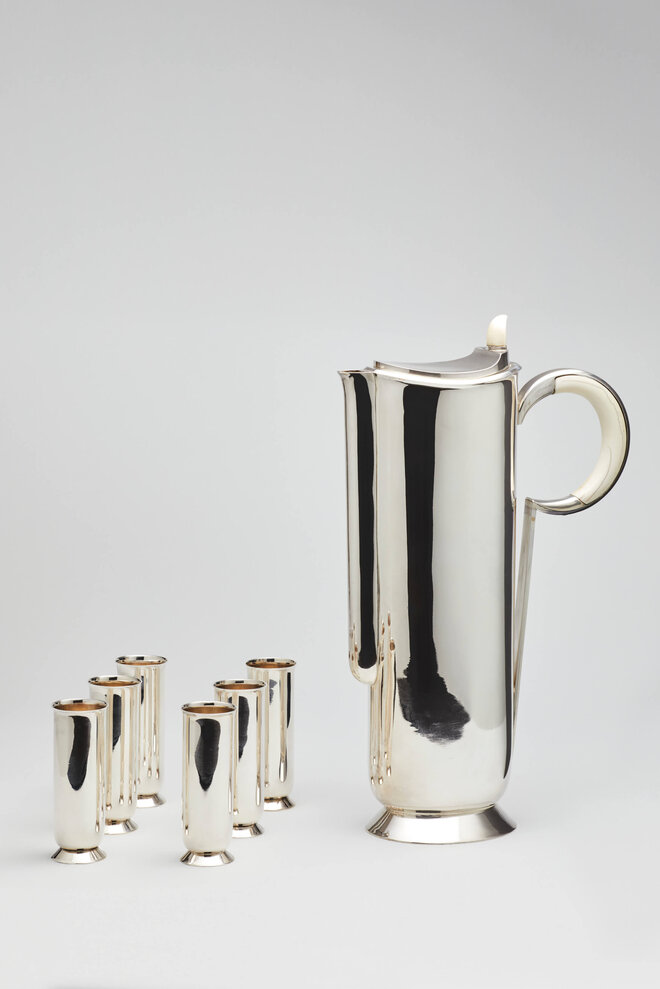
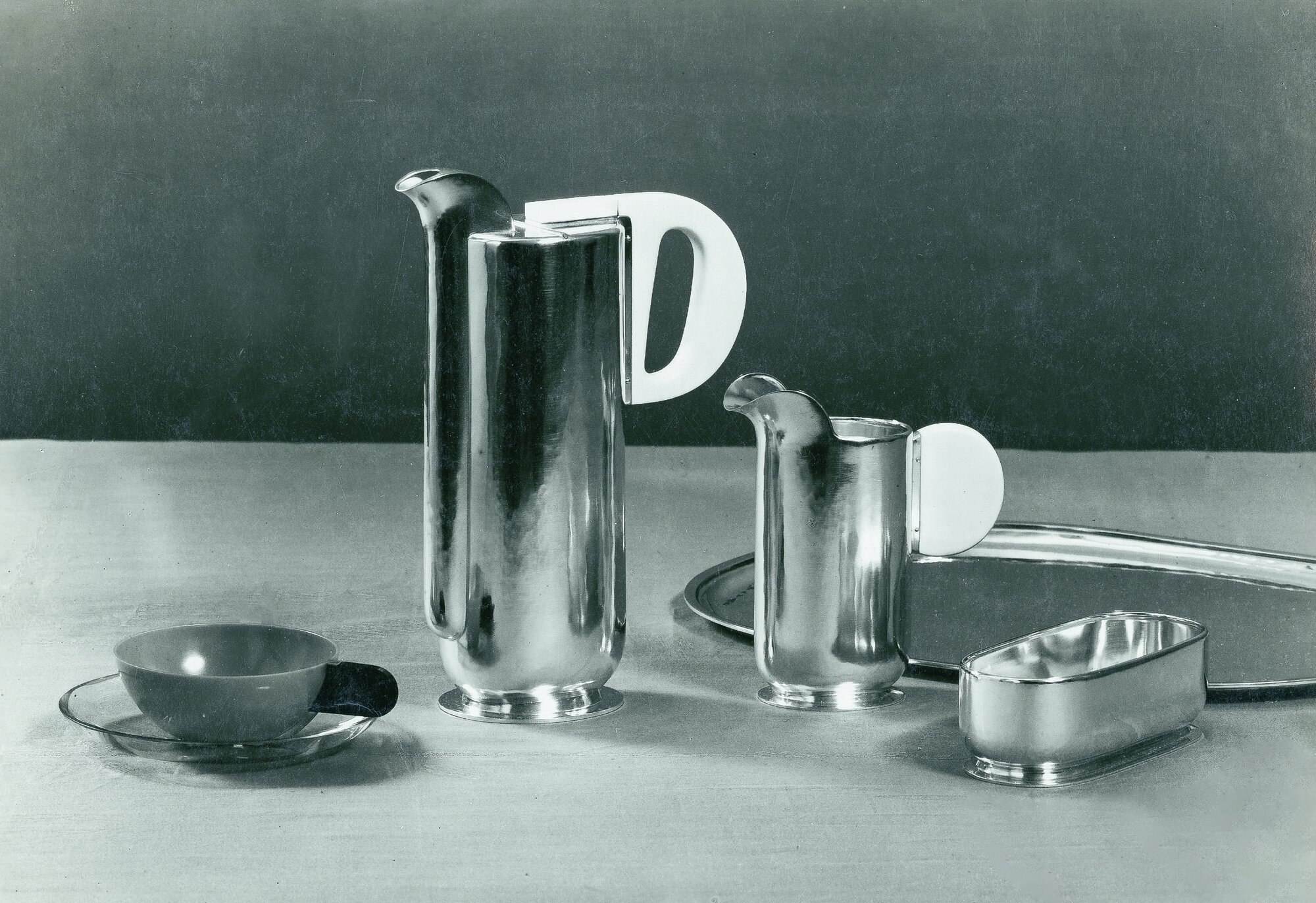
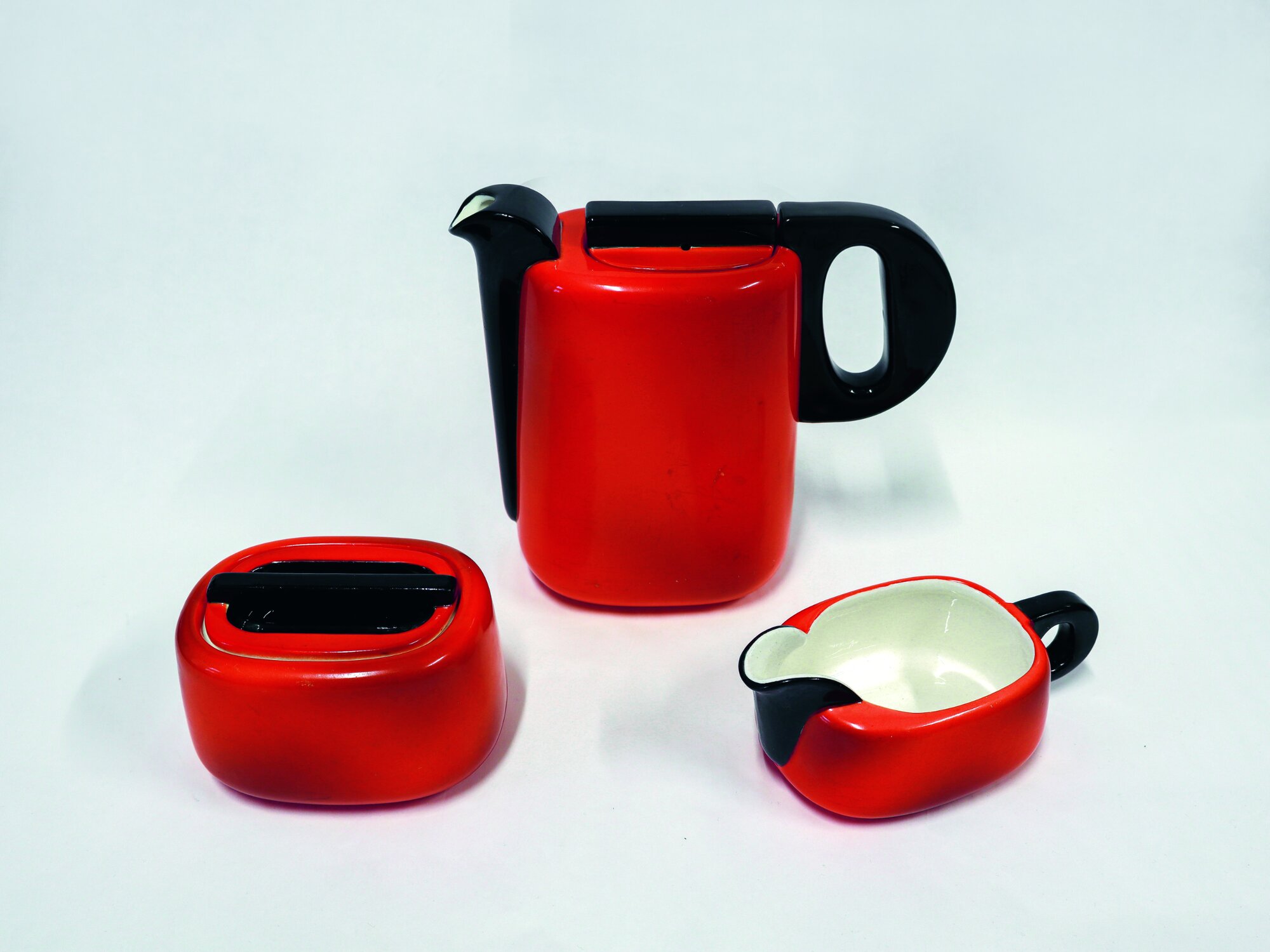
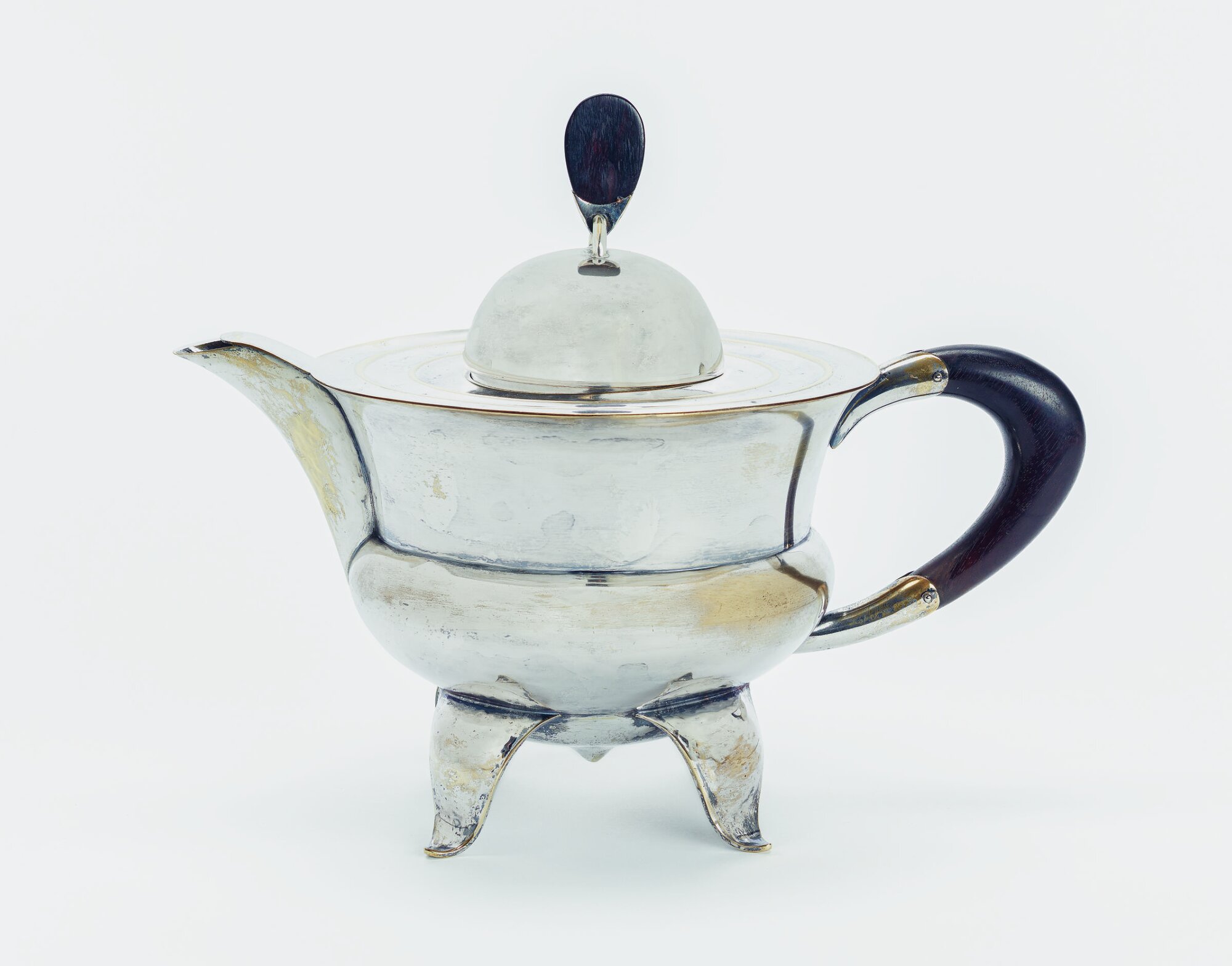
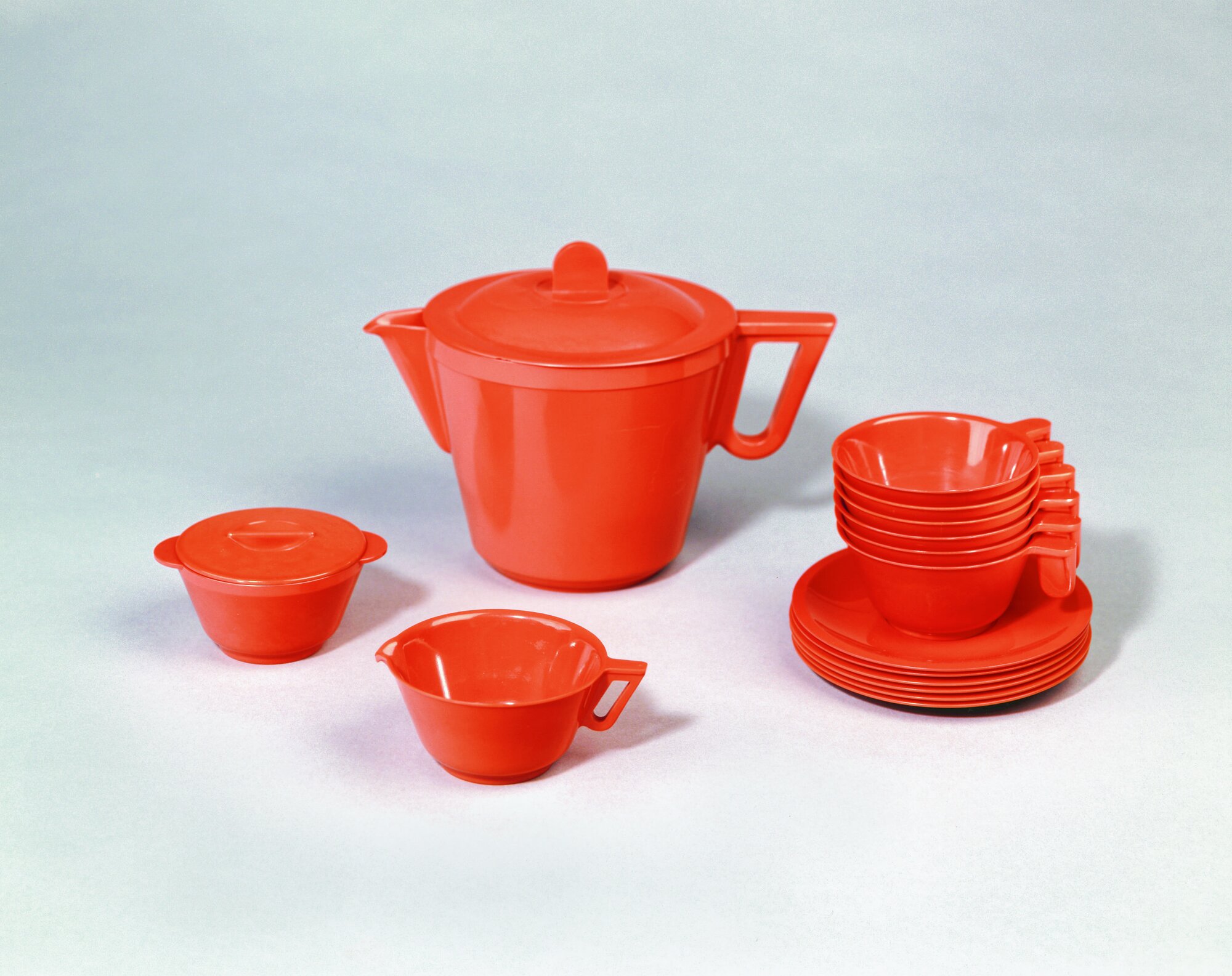
In 1992, Klaus Weber of the Bauhaus Archive concluded a first biographical study by stating that Christian Dell (1893–1974) had yet to be discovered by the history of twentieth-century industrial design. Decades later, this still holds true. A new effort is now underway to bring Christian Dell and his work to a wider audience with a large-format, richly illustrated book spanning 280 pages. The volume is aimed at anyone interested in the applied arts or early design history—worlds that seem incompatible, yet Dell embodied both. The designer’s career, which unfolded at the intersection of craftsmanship and design, is explored in 21 contributions by 13 authors. There is a great deal to read, often delving into highly specialised fields. Those familiar with Dell know him for his handcrafted objects in silver and nickel silver. His later designs, mostly created in Frankfurt am Main after 1926, include tableware made from coloured plastic, as well as desk and task lamps in metal.
A Workshop Master at the Bauhaus
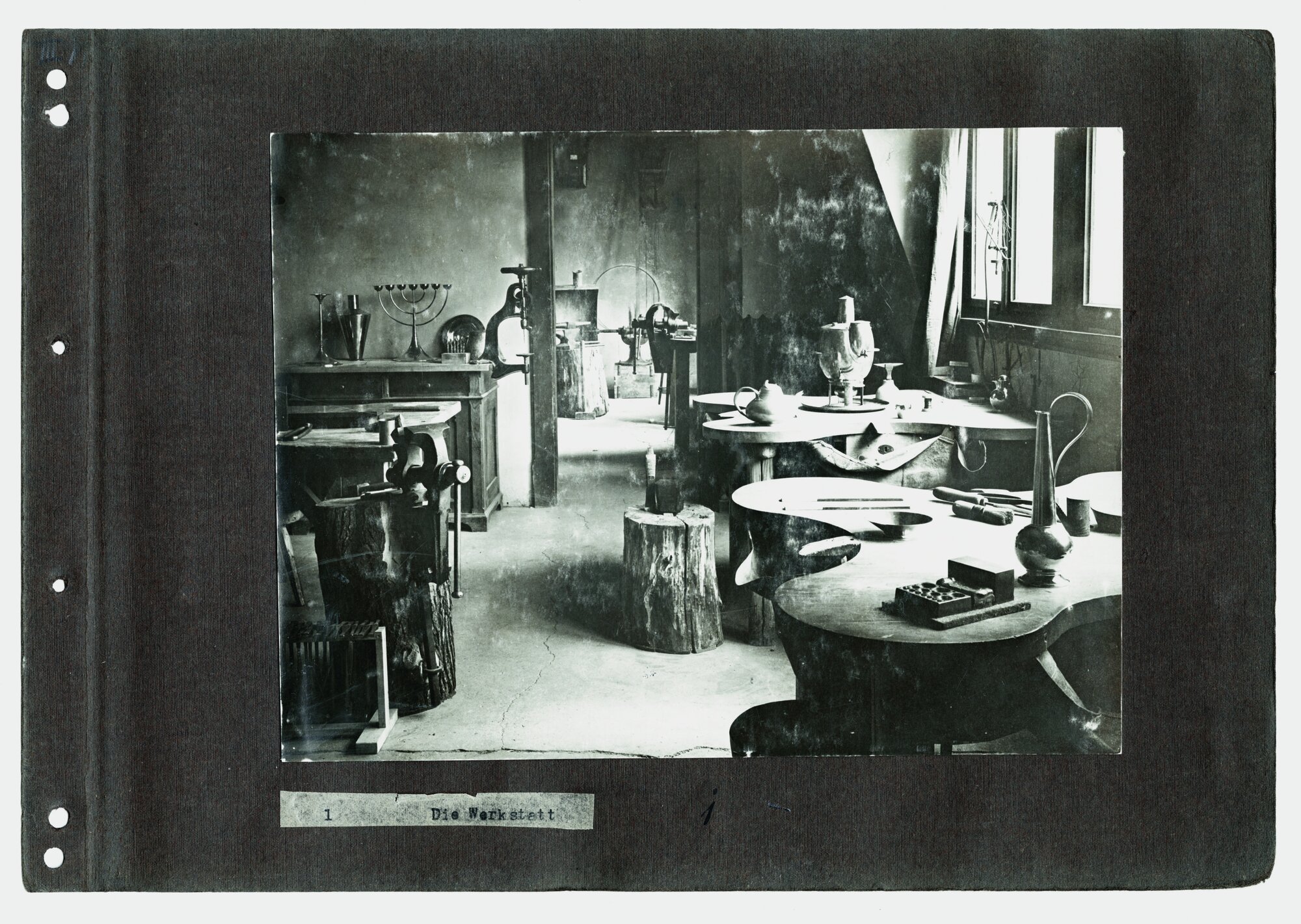
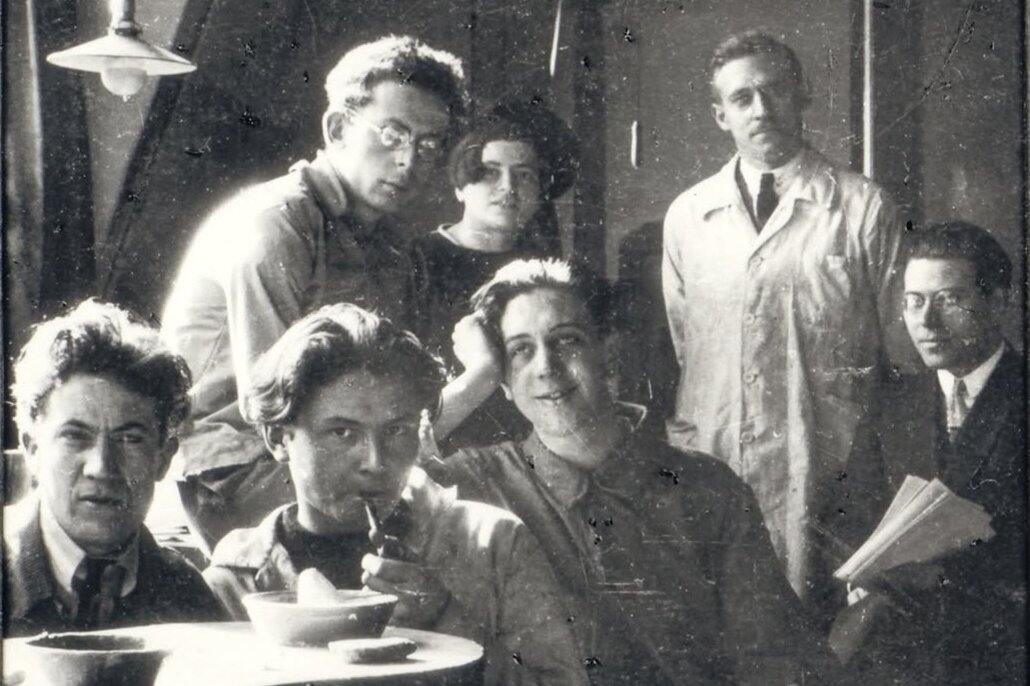
Dell worked at the Bauhaus in Weimar for only a few years, from 1922 to 1925, as a technical master, or “Werkmeister”, in the metal workshop. His time there was particularly fruitful when he worked alongside László Moholy-Nagy, who set the direction as “Formmeister” (master of form). Together, they trained a generation of designers who remain well known today, including Marianne Brandt, Wilhelm Wagenfeld and Gyula Pap. In his reference, Walter Gropius wrote that Dell had “brought the workshop from small beginnings to flourishing success”. However, he was unable to persuade Dell to join him in Dessau. Gropius was equally unsuccessful when, in the mid-1930s, he suggested that Dell follow him abroad.
Lamps Bearing His Name
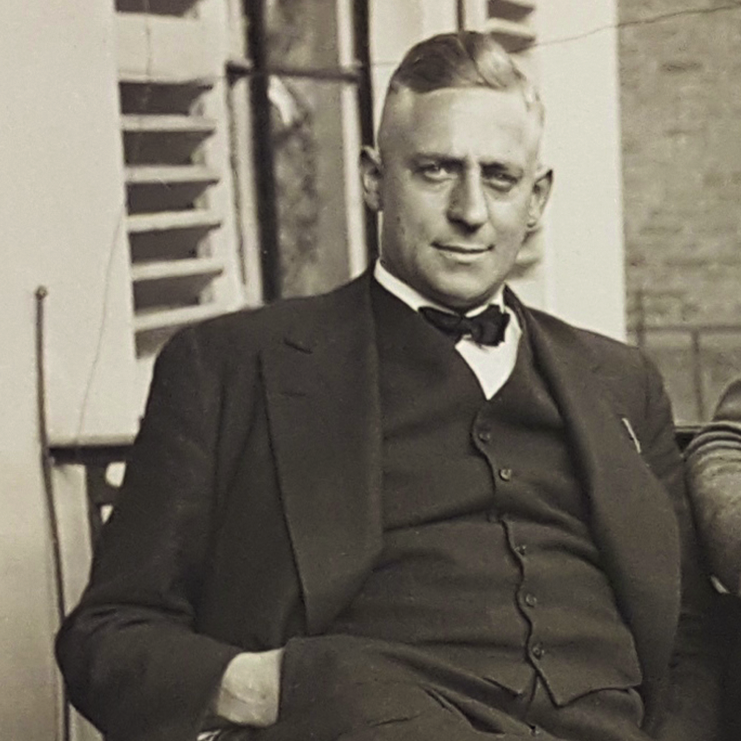
Dell initially moved to Frankfurt, where he headed the metal workshop at the School of Arts and Crafts. Like the Bauhaus, the school sought to unite the applied arts and fine arts in pursuit of new approaches. Dell now lent his name to new product lines of his own design. From 1927 onwards, these included his Rondella and Rondella Polo lamps, whose names immortalised him. Later came the foundational designs for the Kaiser Idell modular lighting range, which entered the market in 1935 in the form of numerous individual products, each optimised for a specific purpose. Neither venture made him financially independent or widely known beyond specialist circles. Another factor was that Christian Dell was not a man of words. Most surviving statements by him appear in official records. Only one monographic article about him was published during his lifetime, in the magazine Die Schaulade in 1926. In it, the author Wilhelm Necker praised Dell’s ability to give his work that “light, beautiful form” which “pleases wherever there is any appreciation of fine workmanship.” Dell learned his trade before the First World War, initially at an antique silverware factory in Hanau and through private lessons at the Drawing Academy. His teachers included August Bock and Hugo Leven. Dell worked as a journeyman in Dresden. In 1913, he spent a few months in Weimar working under Henry van de Velde, who not only designed the Grand Ducal Saxon School of Arts and Crafts there but also served as its director until 1914. After his military service during the war, Dell was drawn to Munich. His work with Emil Lettré in 1920 proved to be brief, possibly also due to the political instability of the Bavarian capital. Via Hanau, he eventually returned to Weimar.
Frankfurt: His Most Productive Period
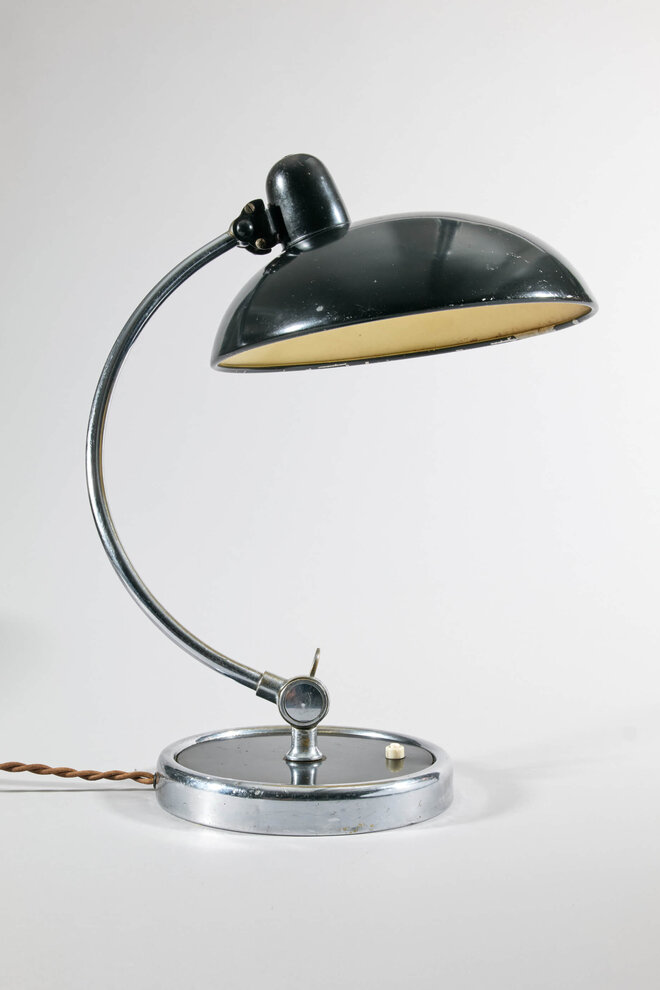
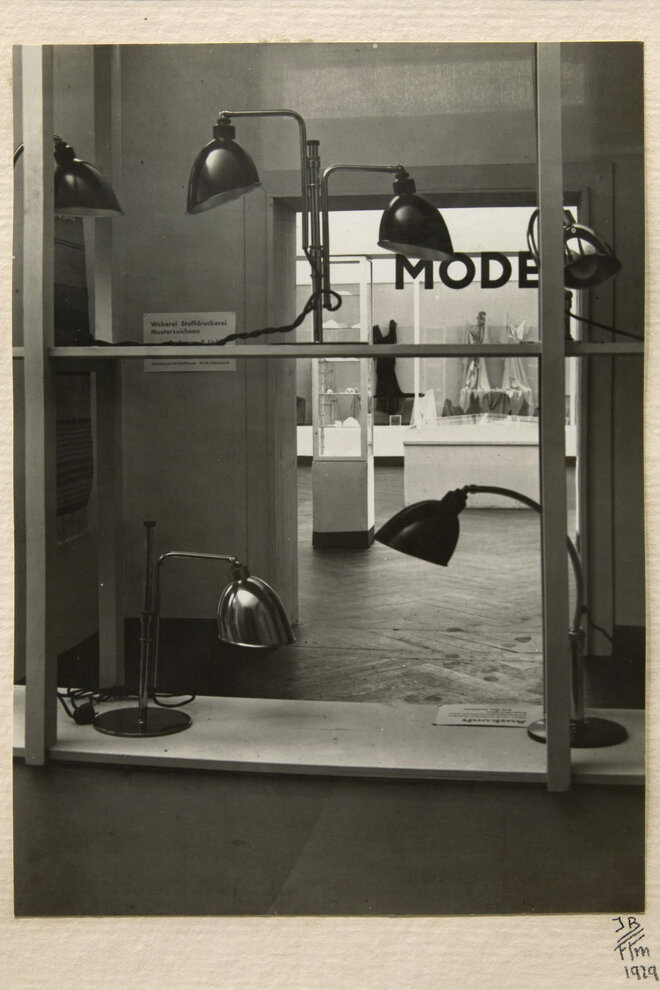
Under the direction of Fritz Wichert, the Frankfurt School of Arts and Crafts pursued reform objectives similar to those of the Bauhaus, albeit with less influence. Dell now headed the metal workshop on his own, marking the beginning of an exceptionally productive and stable period in his career. The design of a relatively conventional desk lamp for Frankfurt’s mayor, Ludwig Landmann, marked Dell’s entry into lighting design. From 1928 onwards, regional manufacturers produced his “Rondella” models, which were advertised in the magazine Das Neue Frankfurt and presented as exemplary designs in its supplement, Frankfurter Register. These were followed by the Rondella Polo and Polo Populär ranges, the latter produced by Bünte & Remmler, a Frankfurt manufacturer already known beyond the region. All these lamps possess a delicate elegance, thanks in part to the fine detailing of their components. A characteristic feature is the asymmetrically cut-off reflector, introduced by Dell and quickly adapted by numerous manufacturers for their own designs, in some cases amounting to plagiarism. At the same time, they offered a degree of adjustability rarely seen in task or work lamps before them, with the exception of Curt Fischer’s Midgard models. However, these joints are also delicate, which is why relatively few examples survive outside museums and private collections.
The much more robust Kaiser Idell series is quite different. Dell designed it from 1934 onwards, after his work as a teacher of applied arts had come to an end. Around 1929, Dell had designed a lamp made of “insulating material” for Kontakt, a manufacturer based in Frankfurt-Rödelheim. The company soon merged with Stotz of Mannheim, which used plastic manufactured by the Römmler company in Spremberg, Brandenburg, for the lamp’s housing. From 1930, Stotz-Kontakt held the patent for the “Sigma” lamp, although Dell’s name did not appear in connection with it. Once again, several conjectures are needed to attribute this lamp to Dell with any degree of certainty.
The End of the Reform Era
With the Nazi seizure of power in 1933, Dell’s most innovative and successful period of work came to an abrupt end. The reform school was dismantled, and his small metal workshop, which by then had only one student left, was no longer wanted. The details that emerge here are based on municipal records and denazification and compensation proceedings that were not covered in earlier art-historical accounts.
Dell suffered from asthma and tuberculosis for decades. He attributed these conditions to his workplace in Frankfurt, a damp basement room housing the metal workshop of the Frankfurt School of Art. Dell secured a settlement, but his teaching and design work came to an end.
Kaiser Idell stands the test of time
He was given one more opportunity to create something fundamentally new. In 1934, he designed a modular system of task lights for the Gebrüder Kaiser company in Neheim-Hüsten. A clamp attached to the metal shade accommodates a ball joint, making it considerably more durable than those used in the earlier, delicate Rondella models. The series was launched under the name “Kaiser Idell”. With modifications, it continued to be manufactured for decades. Some models are still available from Fritz Hansen today. The range was already a success during the Nazi era. After the war, it provided an aesthetic continuity characteristic of the young Federal Republic of Germany. Did Dell make design modifications? Was he paid for them? Even expert Johannes Bergmann considers Dell’s possible involvement a matter of conjecture.
Berlin-based art historian Frank Werner, who was part of the team at the Grassi Museum in Leipzig that received the Art Curators Award for its exhibition “Forms of Adaptation” on art and design under National Socialism, presents Christian Dell as head of the metalworking department at the Frankfurt School of Art, while also examining his path under National Socialism.
A New Beginning Against the Odds
The Dell family now attempted to establish themselves by building a guesthouse in Bad Wiessee, and later in Hahnenklee near Goslar. Both projects failed because of opposition from local Nazi Party officials, according to Dell’s account in the records. Christian Dell regarded himself as an opponent of the Nazi regime. Although he had been a party member since 1933, he was classified as a Mitläufer (a nominal follower of the regime) during denazification. He sought compensation for his dismissal in 1933, but his claim was unsuccessful.
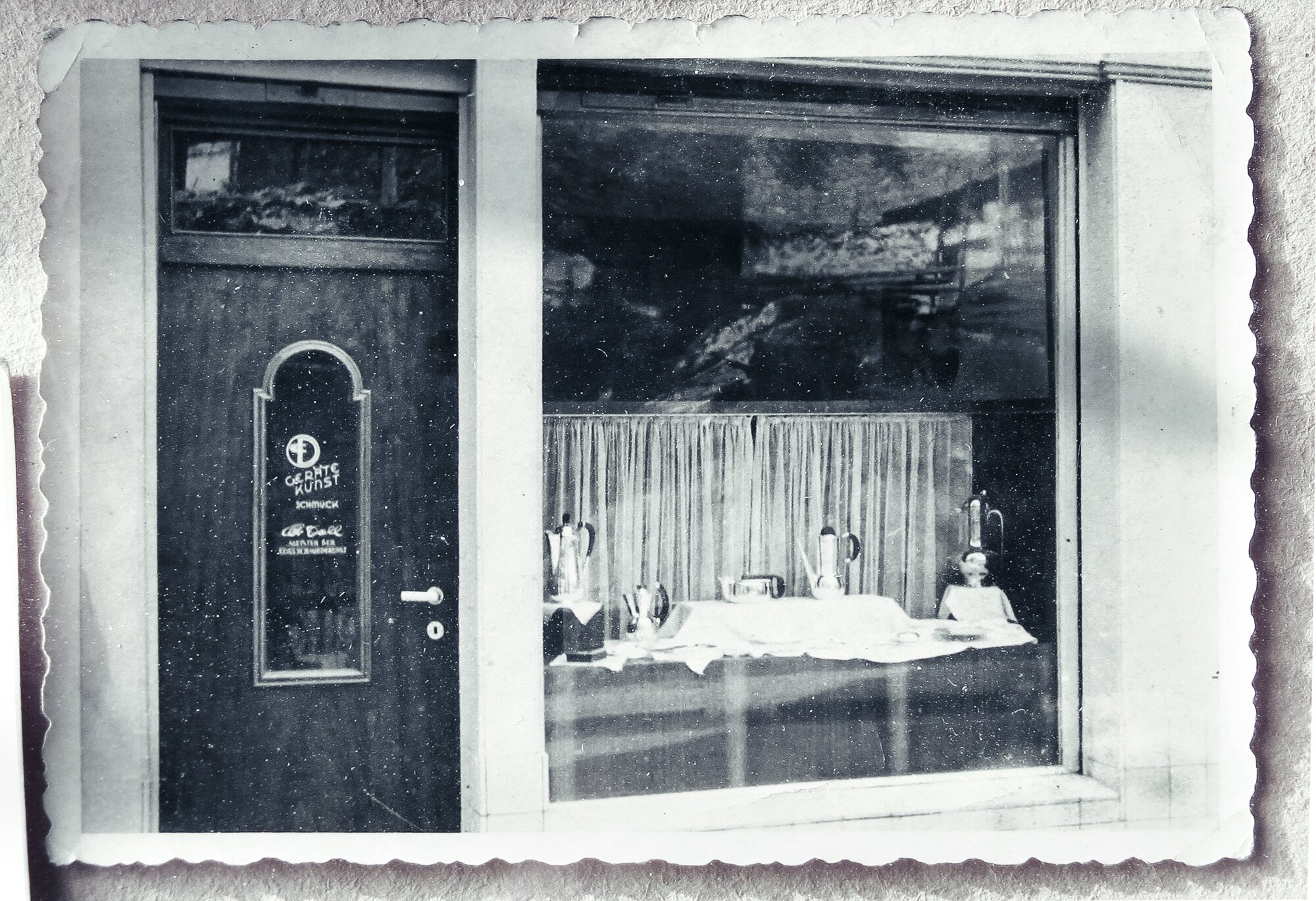
From 1948 onwards, he ran a silversmith’s and jewellery business in Wiesbaden with his son Sandro (1927–2003) for several years. Vera Klewitz recounts this period in the book’s concluding chapter. As the catalogue shows, the display once again featured his early silver objects, pots and jugs, while his “Kaiser Idell” scissor lamps illuminated the shop window next door. “Come and see my display” now read Dell’s business card. He sold cuckoo clocks to American soldiers, arranging for their manufacture himself. The telephone directory listed him as a “master craftsman in fine metalwork”, at Goldgasse 12. Christian Dell died in Wiesbaden in 1974. He remained largely forgotten until the 1990s.
The book “Christian Dell” has been designed by Silke Nalbach in a pleasantly unpretentious style. It offers many useful cross-references between images and text in both directions. Short biographies of individuals, companies and institutions are included, as is an index of people and companies – something that can no longer be taken for granted in contemporary book production. The structure could be clearer and the texts more concise. Some of the new dates are surprising, while certain errors in the text and image captions could have been avoided during editing.
After his early career under the German Empire, Dell established himself as a modernist during the Weimar Republic. He spent his final decades ill and broken. His work, which reached a remarkable level of mastery early on, can be rediscovered on many different levels.