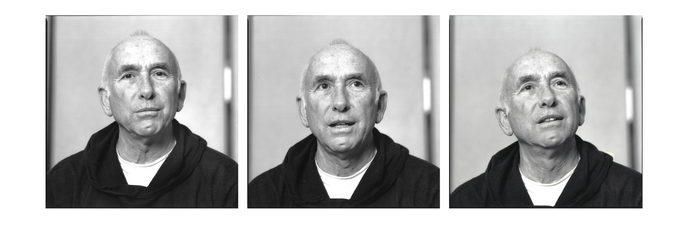
Hans (Nick) Roericht: Designer With Clarity and Consistency
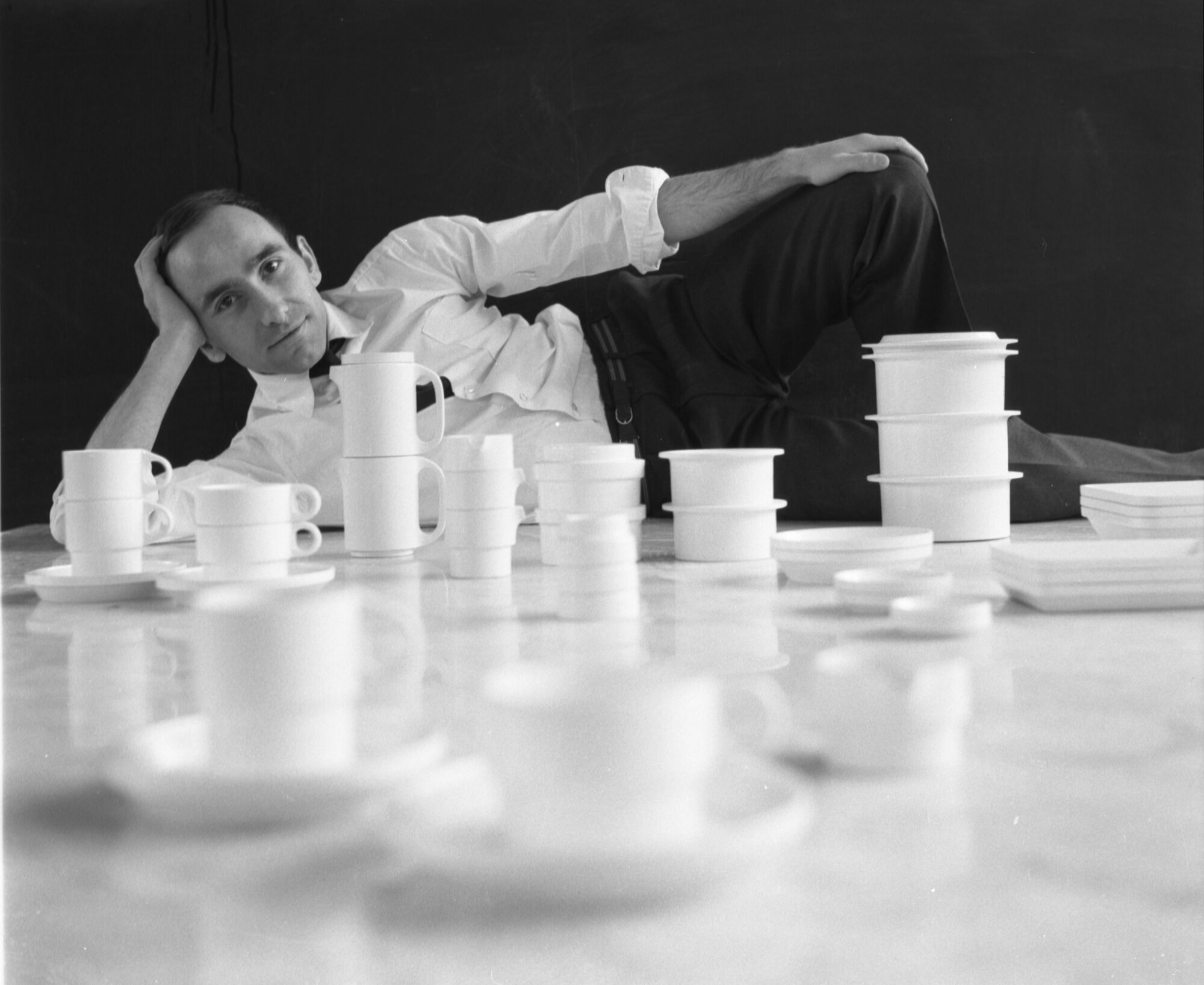
Roericht studied at the Ulm School of Design from 1955 to 1959 and set new standards with his diploma thesis: the TC 100 stackable tableware, developed in 1958 and produced from 1961 onwards, became an international success and was even included in the collection of the Museum of Modern Art, New York, in 1968. With its modular structure, it still exemplifies an understanding of functional and systemic design today.
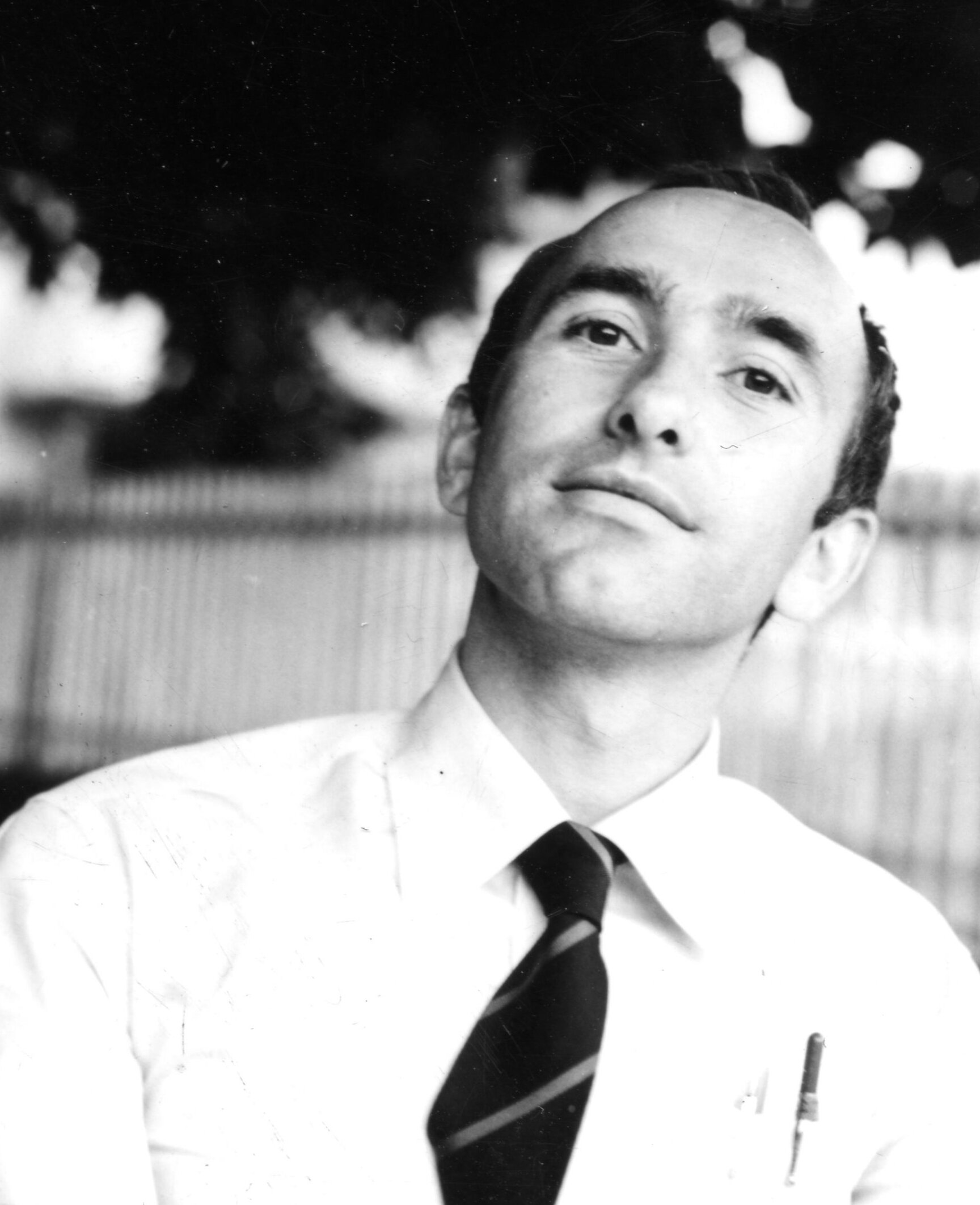
From Ulm to the world
After completing his studies, Roericht worked in Development Group 5 (E5) at the Ulm School of Design, led by Otl Aicher. There he designed the in-flight tableware for Deutsche Lufthansa – a project that exemplified functionality, clarity and logistical efficiency.
Aicher then asked him to come to Munich and help design the visual identity for the 1972 Olympic Games. Together with the team, Roericht developed key design elements, including the plastic shell seats in Munich's Olympic Stadium, which still characterise the image of the Games today.
With the founding of his office ‘Produktentwicklung Roericht’ in 1967, he further developed his working methods: projects for Wilkhahn, Siemens, Bosch, Rodenstock and Loewe were created from an approach that closely linked analysis and design. His ‘studies’ – interdisciplinary investigations of possible spaces – made the cultural environment of a task visible before formal solutions were developed. The ‘Stitz’ and the first recyclable office chair for Wilkhahn are expressions of this exploratory approach.
Teaching as a shared space for thought
From 1973 onwards, Roericht taught as a professor at the Berlin University of the Arts. He developed a curriculum that focused on conceptual design and shaped teaching through methods such as phenomenological analysis, participatory design and, ultimately, integrative study. Around twenty of his students later became professors themselves – an indication of how far-reaching his influence was.
The Roericht Archive, part of the HfG Archive in Ulm since 2014, brings together project materials, books and a collection of objects reminiscent of a cabinet of curiosities. Roericht used many of these finds as inspiration for students and colleagues – starting points for the close observation that he considered an essential part of design.