Design With Humour and Attitude
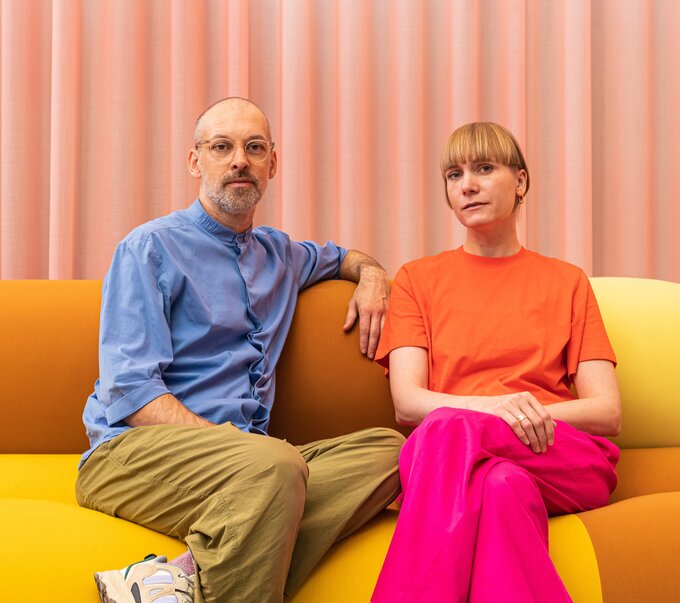
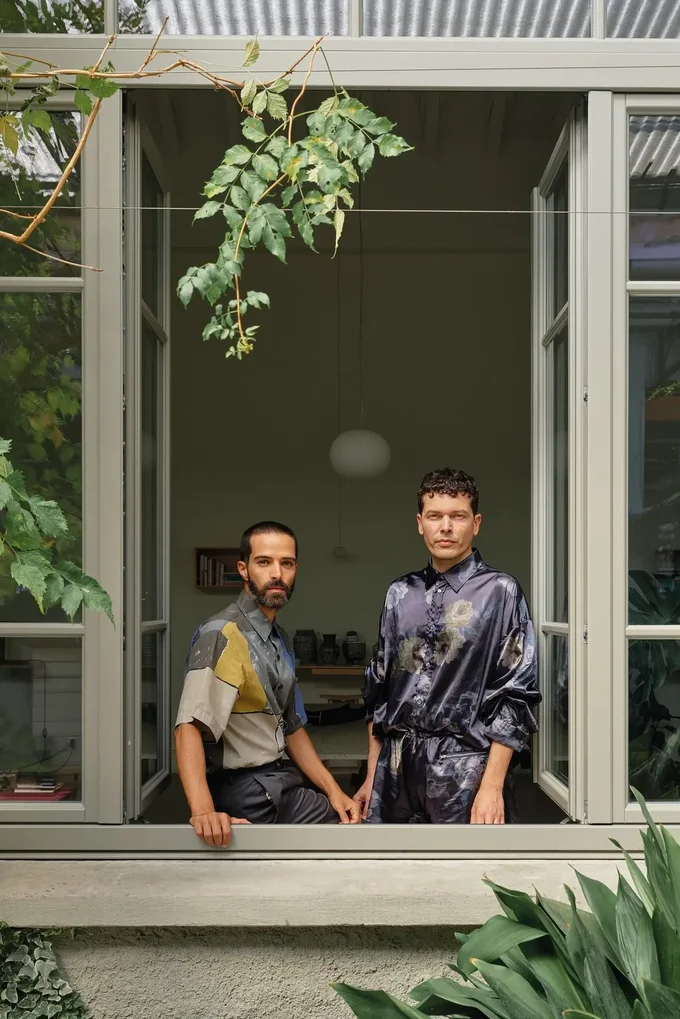
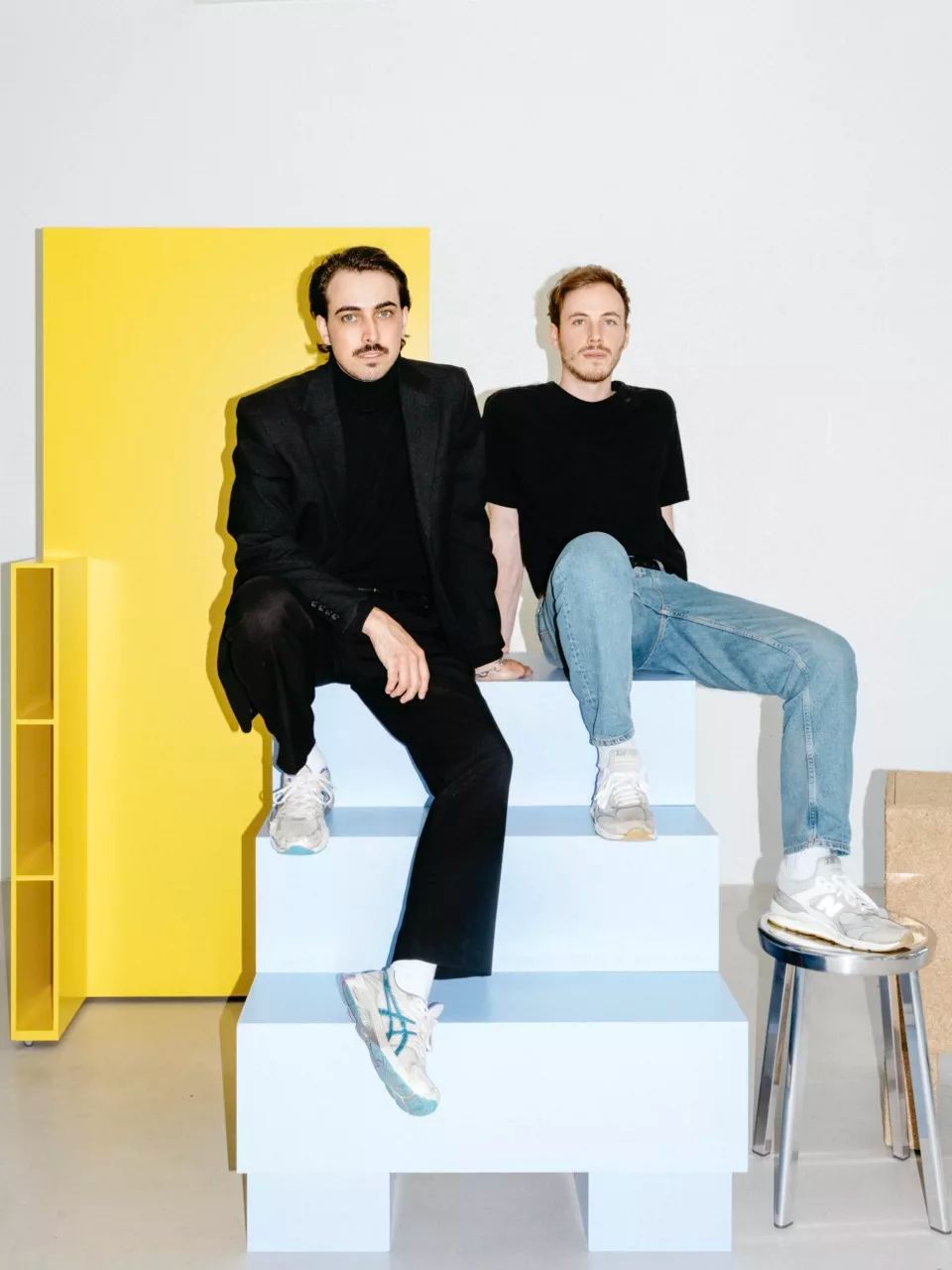
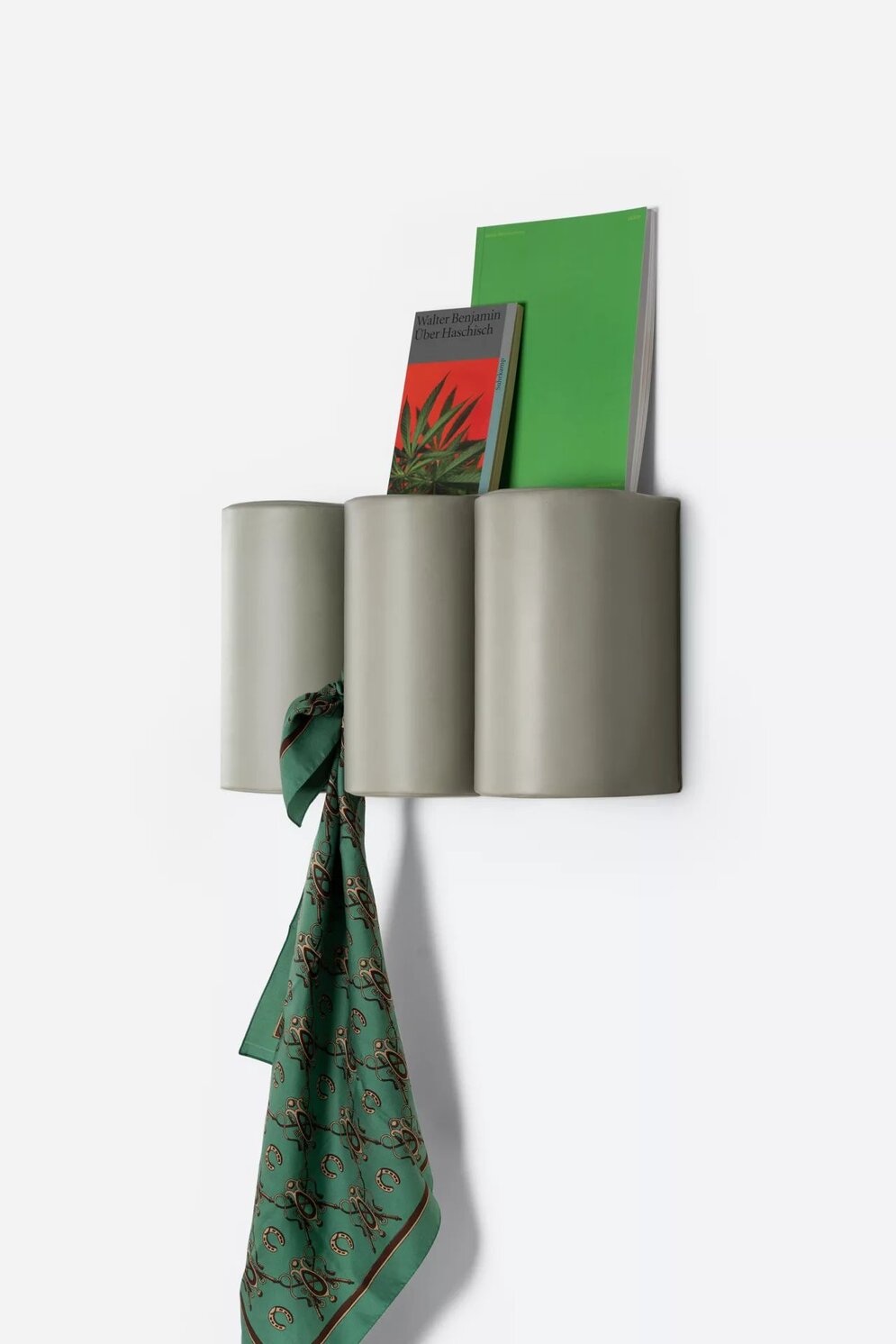
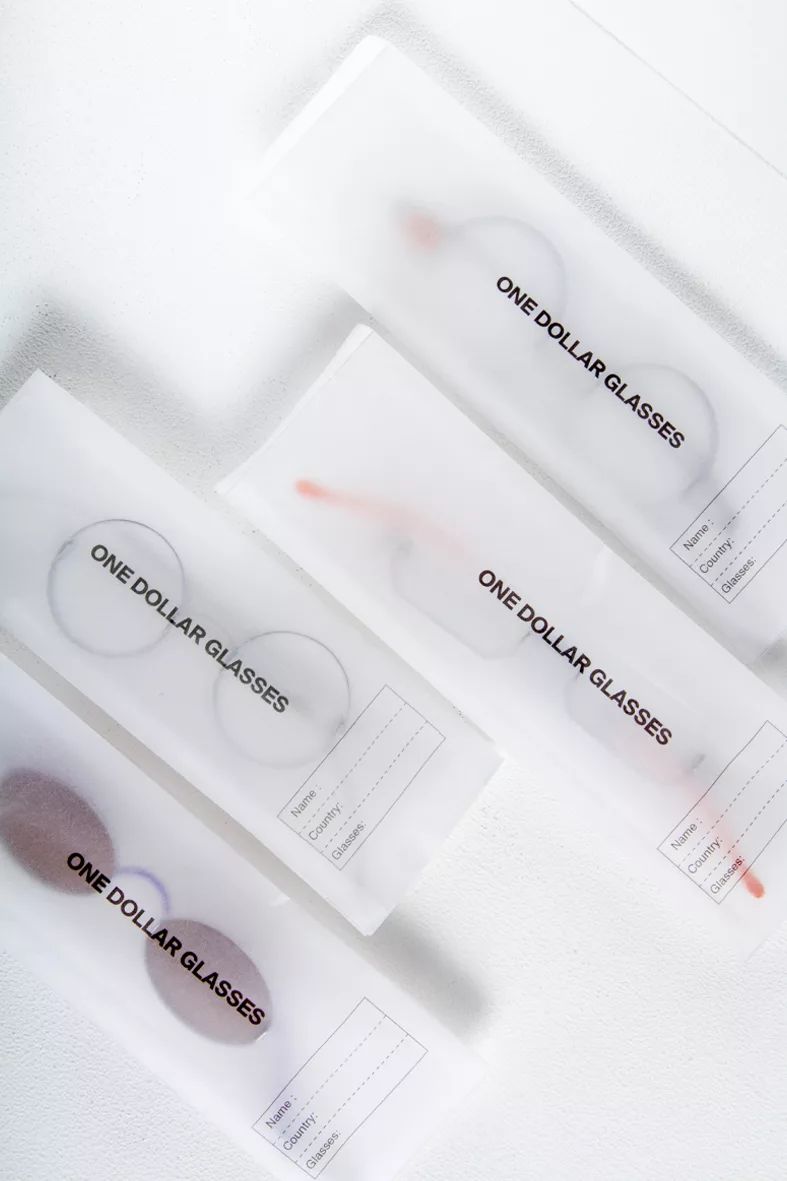
The name itself is a statement. Haus Otto sounds appealing and somehow fun. The two founders, Nils Körner and Patrick Henry Nagel, bring this to life with their fresh designs and contemporary ideas. Having graduated from the State Academy of Fine Arts in Stuttgart, they have already caused quite a stir with projects spanning object and interior design, as well as creative direction. In 2019, they upgraded the ‘One Dollar Glasses’ design, and in 2021 they presented ‘Hold On’, an original concept for wall-mounted organisation. That same year, they designed a concept office for 8 Minutes with adaptable furniture. They recently attracted attention with the ‘Farm Project’ and ‘Salone di Aschau’. They are now being honoured as ‘Rising Talent’ at Maison & Objet 2025 in Paris. Lutz Dietzold, Managing Director of the German Design Council and jury member, says, ‘Haus Otto combines visionary design with social responsibility, from sustainable furniture and agile working environments to life-changing projects such as ‘One Dollar Glasses’. Their designs tell stories, surprise with humour, and demonstrate the relevance of design for our future.’ Clearly, these two are worth keeping an eye on. But first things first.
Grandfather as Namesake
Their first office was set up in the attic of Nils’s grandfather’s house in Sindelfingen. His grandfather’s name was Otto, an interior decorator — hence the name. Since 2024, however, their office has been relocated in the Superoffices of the Dinkelacker brewery in Stuttgart — a co-working space for creative professionals. In the former boardroom, a massive, square, three-tiered spruce table takes up almost half the room. It easily seats eight people. Surrounding it are 1:1 models arranged as if for a photoshoot next to the office studio. “I need this so I can think,” says Nils. Everything looks fresh and is perfectly placed, including a light blue built-in cupboard which frames the entrance to the office.
Does a designer’s new product always have to be a chair? Haus Otto answers with a resounding ‘no’. Instead, they are interested in offering fresh approaches and perspectives. ‘We see ourselves at the intersection of art, which is permitted to be critical, and design, which tends to seek industrial solutions’, says Patrick Henry Nagel. ‘We are interested in ecosystems and the contexts in which processes and things are integrated.’ Both are also convinced that ‘Innovation usually arises from dialogue and does not always have to be object-based’.
Farm Project as a Platform for Dialogue
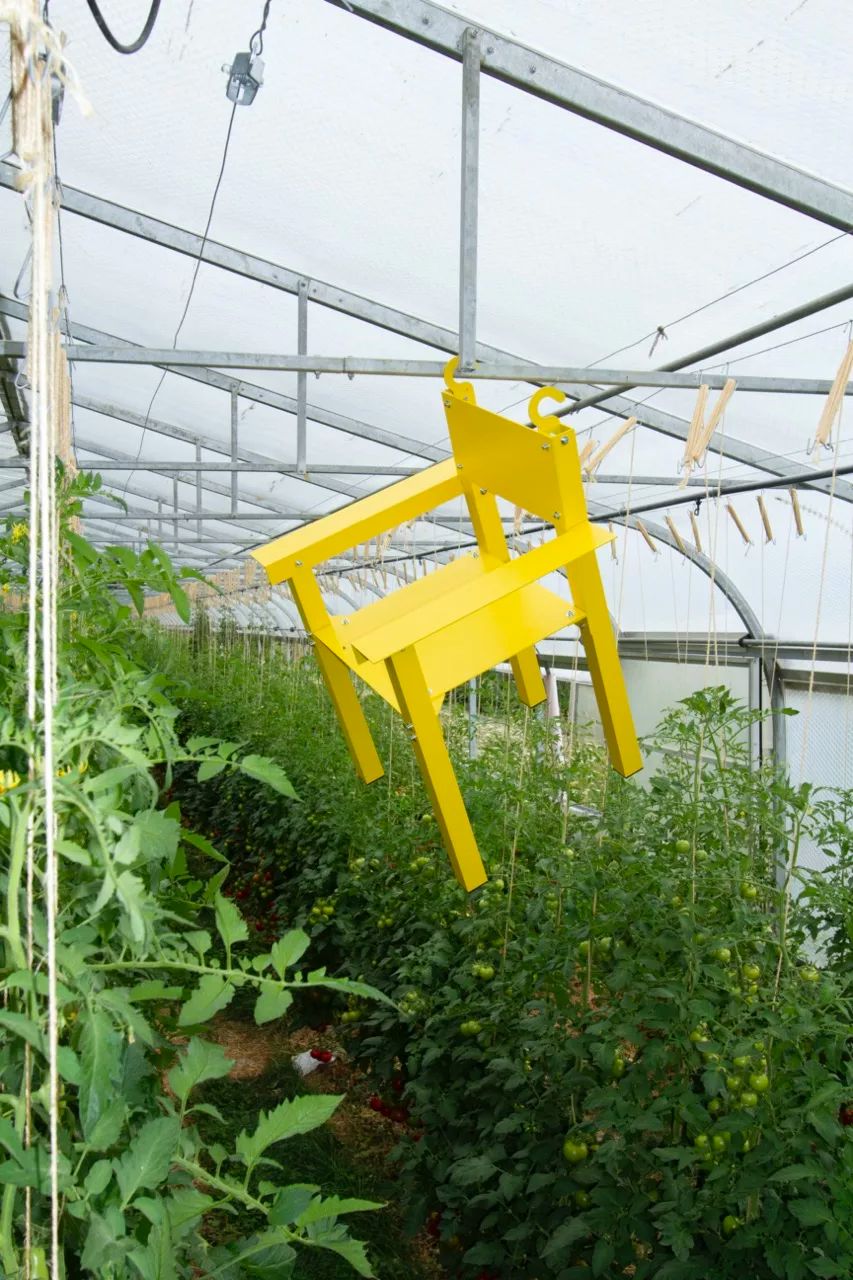
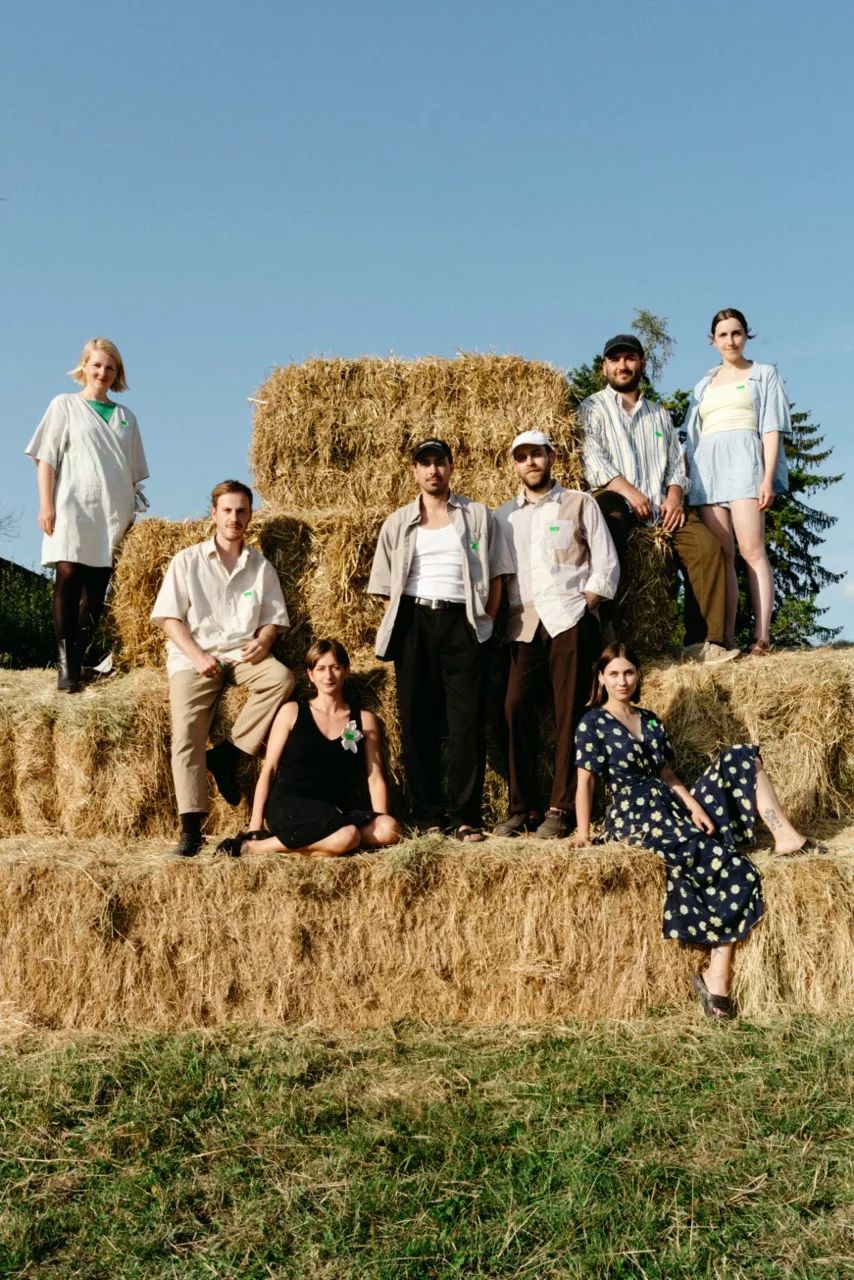
Körner and Nagel find the concept of sustainability both abstract and complex. For a pair of deep thinkers who go far beyond mainstream ‘Instagram-worthy’ design, it would also be too simplistic. ‘Just because a material appears sustainable, such as wood, does not mean that it is’, says Körner. ‘Depending on the context and requirements, we therefore look for the right material. Aluminium, for instance, is expensive to extract, but it can be recycled many times.’ Their ‘Tractor Chair’, created as part of their ‘Farm Project’, is made of aluminium. They implemented the project in 2022 together with eight other young designers over the course of a year on an eco-farm. Haus Otto came up with the idea during the pandemic. ‘We find agriculture quite exciting because it already deals with issues such as the circular economy, which is a key concern in our current design approach’ says Patrick Henry Nagel. They also wanted to escape to the countryside during the pandemic. They found a Demeter farm with around 80 employees at the Rimpertsweiler farm in Salem on Lake Constance. The farm has animals, arable land, a bakery and a café.
The Farm Group
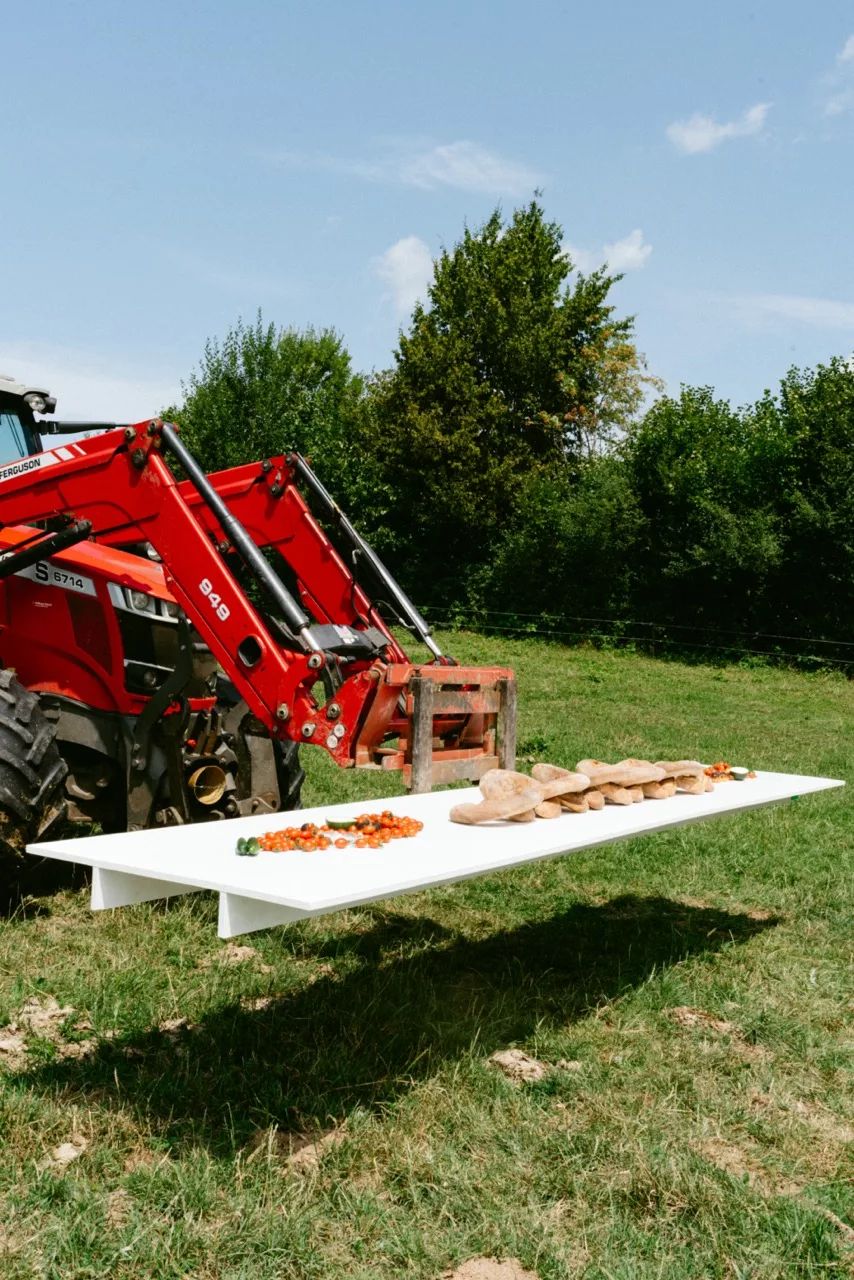
‘We wanted to see which approaches could be carried over into design’, explains Nils Körner. Keeping this in mind, Haus Otto invited a group of designers, including Johanna Seelemann, Lisa Ertel and Anne-Sophie Oberkrome from Studio Œ, and Hannah Kuhlmann, Lukas Marstaller and Oliver-Selim Boualam from BNAG, among others. Together, they organised on-site workshops with farm workers, local residents and participants from the nearby Siebenzwerge addiction clinic. The programme expanded to include installations, exhibitions, and communal festivities. The Farm Group started out with no fixed goal, instead focusing on open dialogue. ‘At first, there was some scepticism,’ recalls Patrick Henry Nagel. ‘The stereotype was that designers just make things look nice so they can be sold for more money.’ However, that perception quickly faded. What emerged were playful, experimental projects: These included Haus Otto’s ‘Endless Bread’, BNAG’s ‘Summloch’ (Buzz Hole), Which allows visitors to experience ‘bees’ using all their senses, and the transformation of an attic into a meeting space with unique chairs designed by each participant. Although the initiative demanded considerable organisational and planning effort, Haus Otto is keen to continue the Farm Project, which was originally funded by the state of Baden-Württemberg. For this to happen, though, a more sustainable framework, especially in financial terms, still needs to be established.
Working for Small Labels
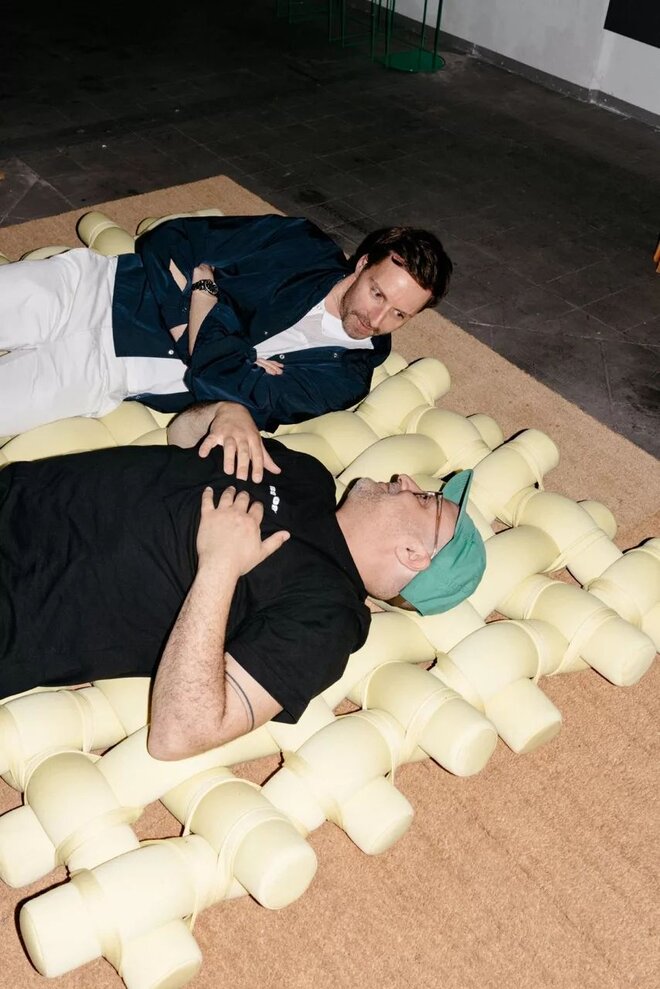
The project reflects a broader shift in the way young designers work today. Rather than competing solely for high-profile contracts, many are launching their own initiatives — ventures that may not generate immediate financial returns, but which help to raise their profile and push their practice forward. Although Haus Otto still takes on commissioned work, it is primarily with smaller, like-minded labels that share its ethos. In spring 2025, for instance, they created the ‘Zooom Rug‘ for the emerging brand Bottone — an oversized woven piece that serves as both a rug and a daybed. At around the same time, they developed modular furniture for the temporary concept office of the Leonberg-based consulting agency 8 Minutes. Designed in collaboration with Matter Off, a rising Stuttgart-based communication design studio, the system can be easily reconfigured using a hole-grid construction from just five differently shaped elements. Looking ahead, Haus Otto will also contribute to Stuttgart’s cultural landscape. At the end of 2025, they are set to install striking yellow steles across the city to mark exhibition sites for the International Building Exhibition (IBA 27).


Salone di Aschau as an Alternative
One of Haus Otto’s most cherished collaborators is the Bavarian label Moormann. For Nils Körner and Patrick Henry Nagel, the brand embodies the qualities they value most: uniqueness, an in-depth understanding of design, sustainability, a strong sense of local identity, a systematic approach to problem-solving and a touch of humour. “Their approach to consumption is different,” they explain. Their first design for Moormann, the ‘La-Dré’ lamp, captures this spirit. Its shade simply clicks onto the bulb, and the frame is made from a handful of laser-cut stainless steel parts that slot together without tools — no screws required. In 2024, Haus Otto collaborated with Moormann to bring the Salone di Aschau to life, offering an alternative to Milan Design Week. Rather than showcasing the usual flurry of exhibitions, the event invited retailers, manufacturers, and design enthusiasts to take things slowly, exchange ideas, and spend time together. Around 600 visitors attended the event, which was held at Moormann’s headquarters in Aschau in July 2024. The event also featured exhibitions by companies such as Tecta, Mono, Lörch, Bottone and Dante. The intention was never to critique Milan, but rather to shift the focus away from novelty and towards ‘the process’. The event’s success surprised even its organisers — guests travelled from as far as Paris. ‘It was a good dialogue, with less competition than usual at trade fairs and more of a sense of community,’ recalls Körner. Despite their growing recognition, both designers remain modest yet optimistic: ‘Design alone cannot save the world, but in combination with other disciplines and at their intersections, it can harness enormous power.’