‘Our Design Bridges the Gap Between the Present and the Future’
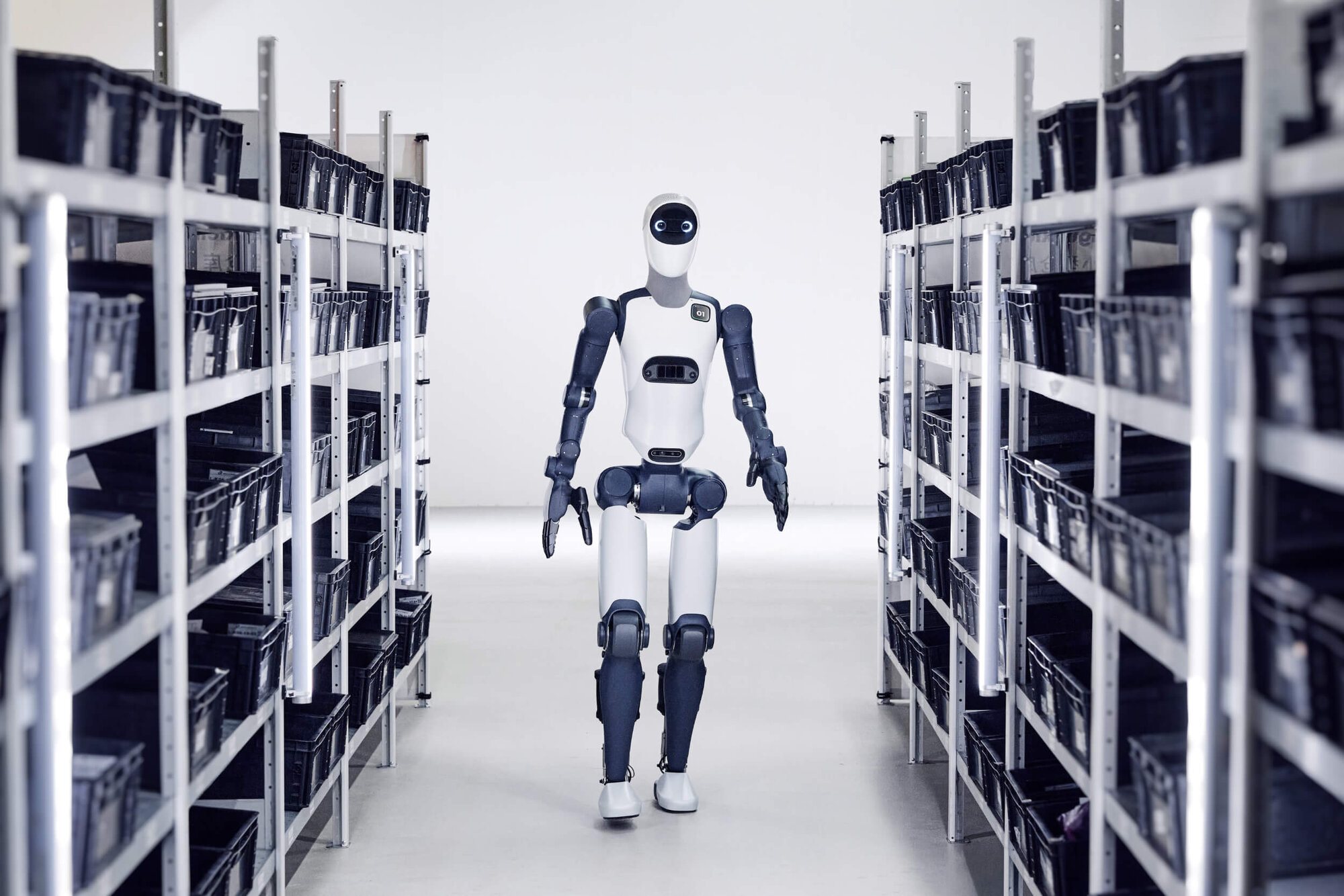
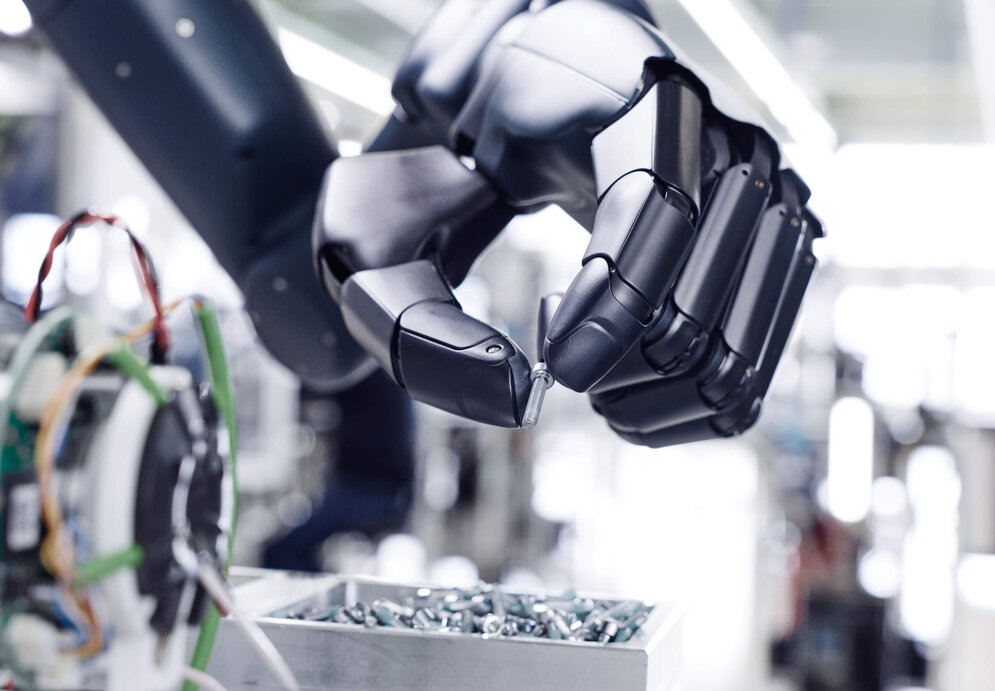
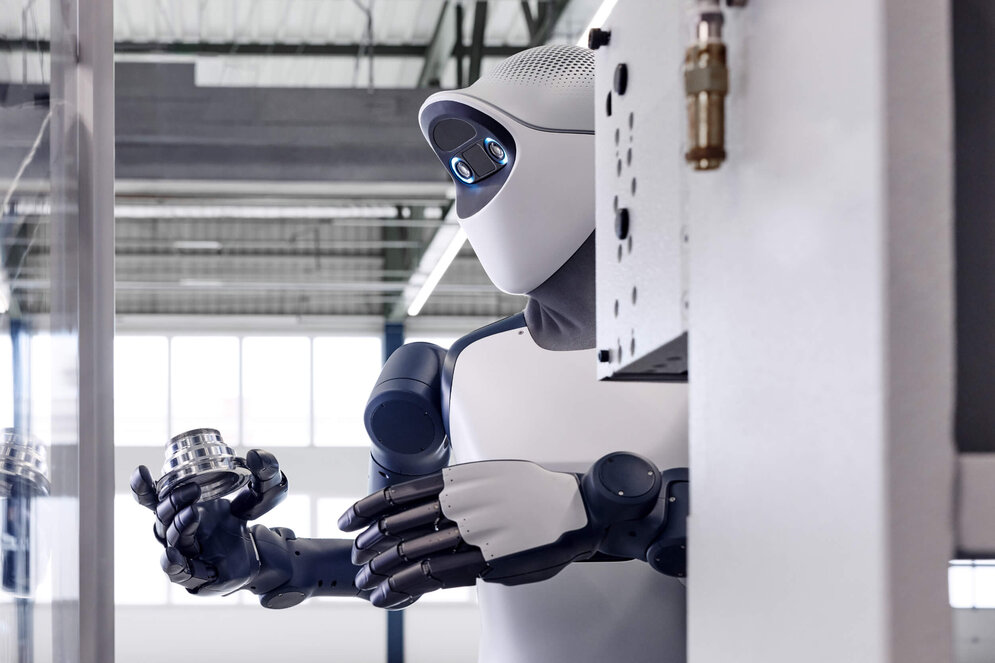
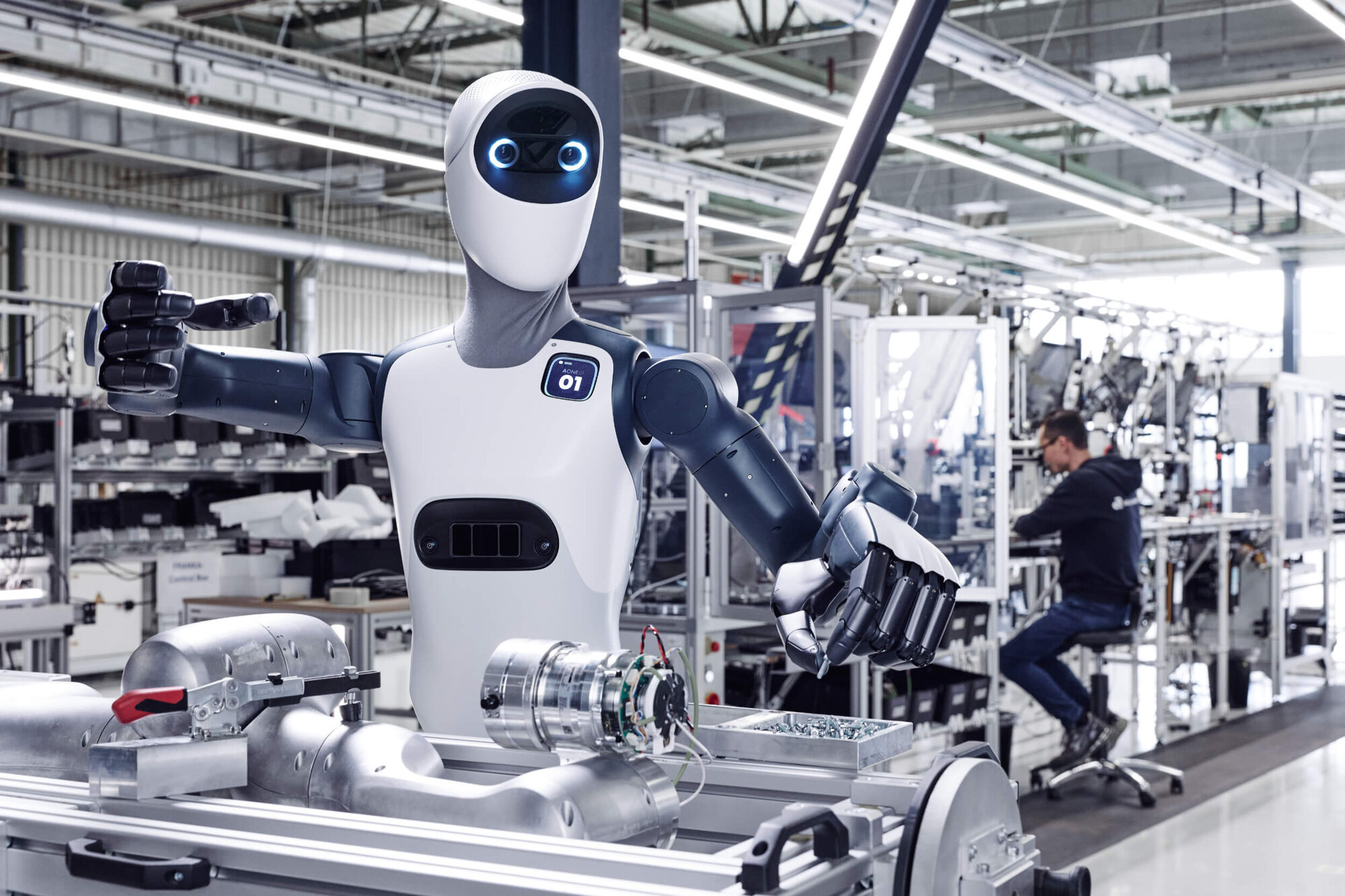
Agile Robots recently unveiled its humanoid robot, called Agile One. Unlike many other humanoids, it has been developed for use in industrial environments, where it is intended to work alongside people and other robotic systems. To achieve this, the company has focused on intuitive communication between humans and robots, an extremely precise robotic hand, and an AI model trained on real industrial data. As a result, the robots can transport materials in unstructured environments, perform pick-and-place operations, operate machinery and tools, and carry out highly precise manipulation tasks.
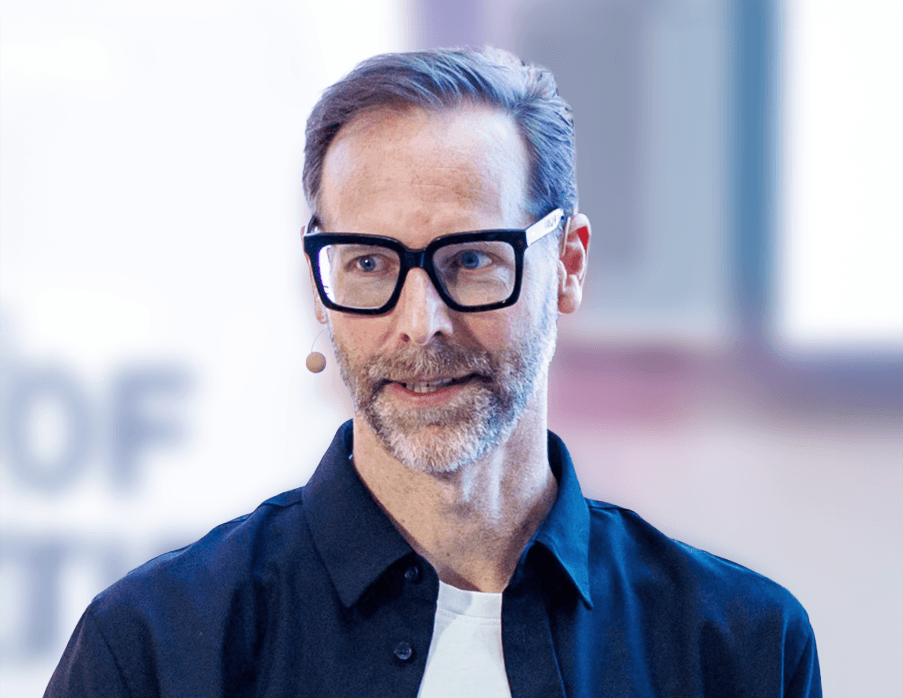
Agile Robots is a spin-off from the German Aerospace Center (DLR) based in Munich. Production takes place at a new manufacturing facility in Bavaria. Design is developed in-house under the leadership of Vincent Weckert.
Mr Weckert, you design machines that draw on human physiognomy. What is it about this task that fascinates you?
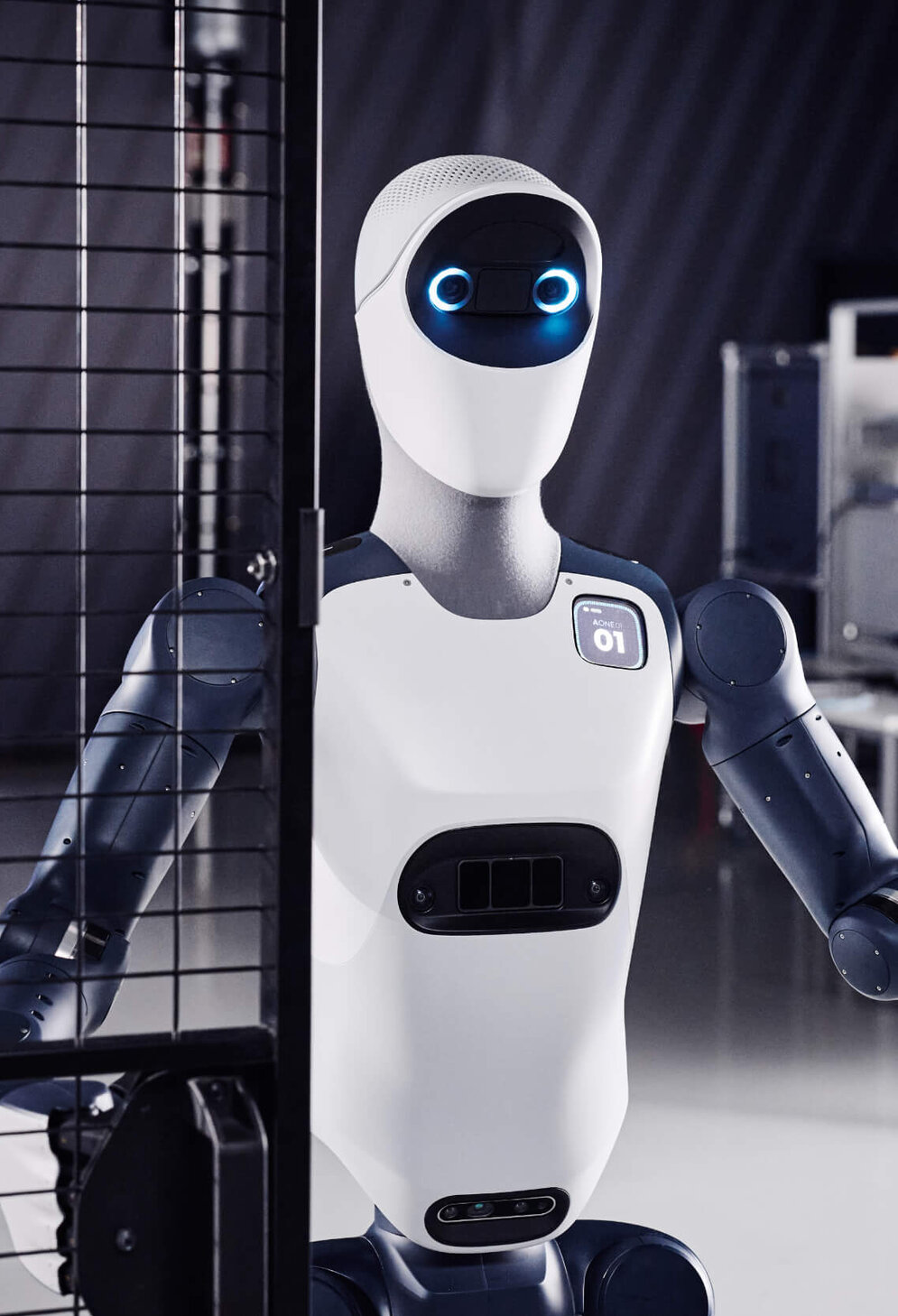
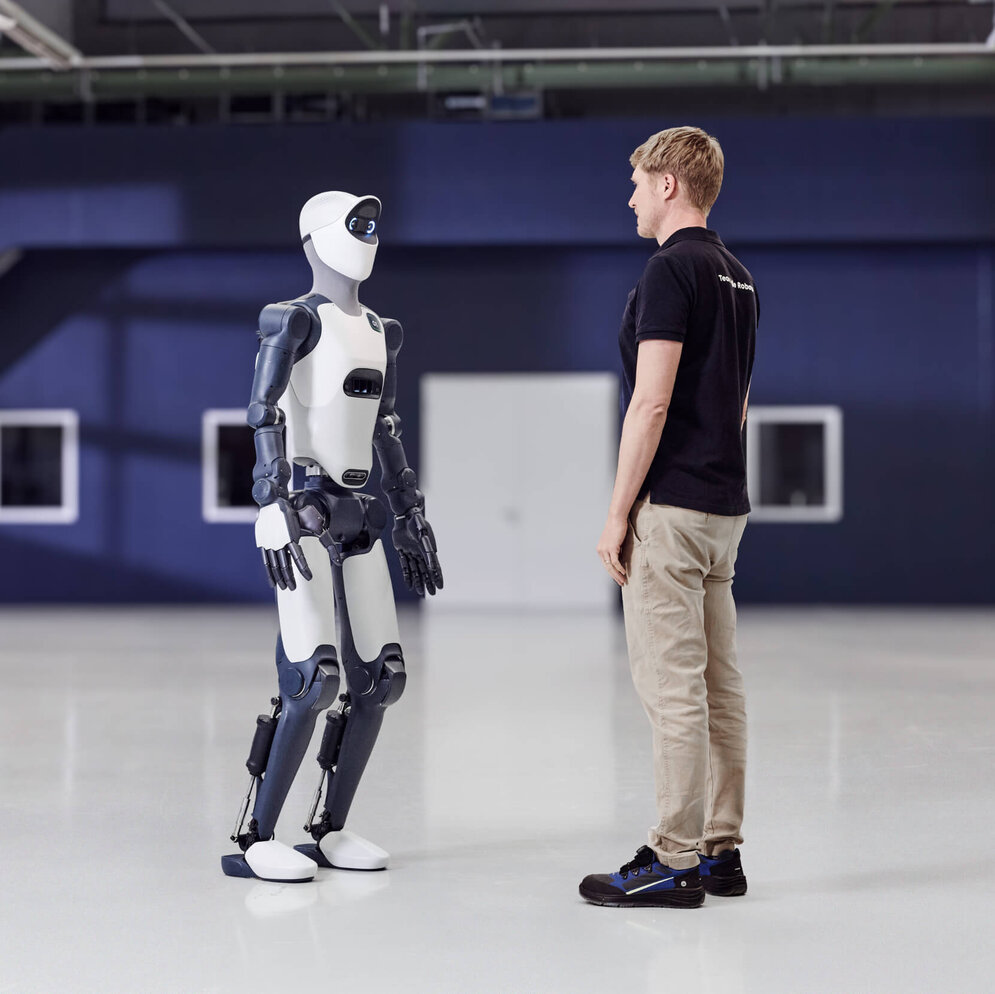
Vincent Weckert: It is about finding the balance between designing a high-tech machine and something that, through its proportions alone, strongly reminds us of ourselves. A humanoid robot is not only technologically complex; because of its visual similarity to humans, it is also emotionally challenging for people. Our design aims to be approachable and intuitive while at the same time communicating its technological nature.
Presumably, these machines should not become too human, as the uncanny valley effect tells us.
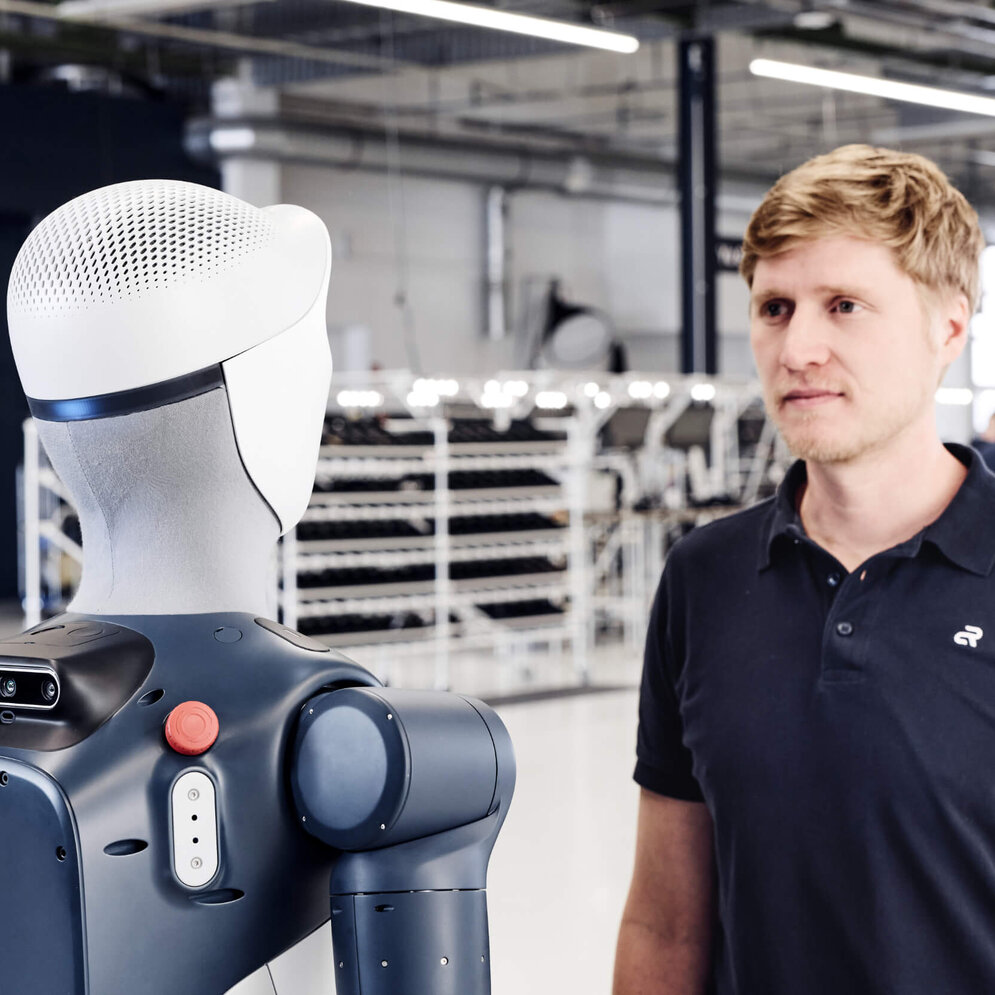
We have, of course, examined this issue in depth and therefore aim to introduce a certain degree of abstract humanity. One example of this is the ring-shaped LED eye element that we have created. This evokes the appearance of eyes while providing a visual point of connection, yet remains highly graphic. This helps us to avoid falling into the uncanny valley. The head is incredibly expressive: small details can quickly alter perception. This is why we deliberately decided against including a mouth, instead opting for a white surface — because a mouth can quickly trigger the uncanny valley effect. While the risk may be less pronounced in industrial contexts, it becomes much more relevant in domestic settings. We discussed all of this extensively within the company, gathering feedback from colleagues of different cultural backgrounds to ensure diversity.
Where do you begin when designing a humanoid?
The technical components are central: the batteries, the drives required for performance and, ultimately, the computing power needed to run AI models locally. We considered how these components could be arranged to create a human silhouette. We start relatively broadly with the overall product and then gradually work our way into the details. The process is similar to that of a sculptor continuously refining a block of marble.
You have already mentioned the technical requirements. To what extent is your work limited by engineering and physics? Where do you find unexpected freedoms?
Initially, we give ourselves the freedom to imagine anything we want. Our strength lies in visualising technologically challenging ideas that can inspire desire and ambition. This gives everyone involved an idea of what the final product could look like. We sometimes delve deeply into engineering topics and try to solve technical problems in different ways. There are certainly tough discussions over matters of millimetres, but when the focus is on finding the best solution, those debates move us forward. Ultimately, the result must be a product that can actually be built.
Humanoid robots are products without much precedent. Where do you find inspiration?
That is an interesting question. Science fiction is one of our main sources of inspiration. We also discuss the extreme technologies depicted in it. Our designs bridge the present and the future, creating a fascinating relationship between the two. Naturally, we also analyse the market and study our competitors closely.
So differentiation is important as well?
As humanoids are still a relatively new phenomenon, it will take time for brands and their design languages to become clearly recognisable. By the time our fifth generation reaches the market, distinctive brand characteristics will be much more apparent.
Currently, our main point of difference lies at a functional level. We deliberately position our application area within the industrial sector. We are not targeting the consumer market, but instead have a clear industrial focus that shapes product optimisation.
Would a robot designed for home use need to look different?
This is something we have considered. We believe it would need a different tactile quality. Currently, the product is designed for use in demanding environments and has robust, waterproof plastic shells. For domestic settings, however, I could see the benefit of using more textile-based surfaces.
And what about size?
If a robot is too large or bulky, it can appear threatening. We therefore tried to find dimensions that would be acceptable worldwide. The idea is that a humanoid robot should fit into infrastructure originally designed around the human body. At the same time, a humanoid operating in an industrial environment needs to appear capable. It needs to be a certain size and have stable proportions so that people trust it to work in a warehouse. This requires a minimum size. Additionally, to achieve a meaningful operating time, the machine needs a battery of a certain size, which in turn requires a corresponding torso volume. We work within the constraints of acceptance, industrial requirements and technical limitations.
How does a robot like Agile One communicate with its surroundings?
Interaction has always been a key issue for us. We concluded that communication must be multimodal. In industrial environments, communicating effectively through sound alone is often difficult, so information must be conveyed through other channels too. As well as verbal input and output, there is a display on the shoulder and various light signals, including an LED light strip on the back of the head. This enables people to see whether they are entering a danger zone and whether the robot has recognised them when approaching from behind. If several humanoids are in operation, a central control interface will show which robot is performing which task and display battery status information and much more. During the brainstorming phase, we collaborated with a UX/UI agency, and the implementation was carried out in-house. Nevertheless, I believe there is still much more to explore in terms of interaction.
Robots inevitably raise ethical questions. How do you address these questions?
We are very aware of the responsibility that comes with developing new technologies. This includes workplace safety, data security, and broader societal impacts. All of these issues are discussed internally. There are also clear boundaries: senior management has explicitly decided that we will not enter into partnerships with the military or position our products within that sector.
How advanced is the design of humanoid robots today, and what potential do you see for the future?
We are still at a very early stage. This is why I am excited to see how the design evolves in future generations of robots. Once they are more widely accepted, they could become far more technically advanced in appearance or adopt entirely different form factors — perhaps even four arms, for example. As I mentioned earlier, there is still enormous scope for research when it comes to interaction. I see tremendous potential there, and I believe that we have a responsibility to address this more thoroughly in the future.
Designing a humanoid robot at such an early stage is a truly special experience. For our team, it is a once-in-a-lifetime project. Working on a humanoid robot in this formative phase is an extraordinary experience, and it is one of the reasons why we are so enthusiastic about our work.
About Vincent Weckert
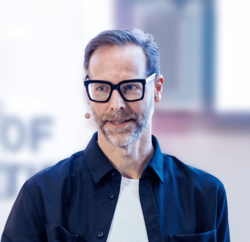
Vincent Weckert studied at the Muthesius Academy of Fine Arts in Kiel (Muthesius Kunsthochschule) , after which he worked at various agencies, including frog, brains4design and Ideo. Since the end of 2023, he has been involved in development at Agile Robots; prior to that, he worked as a design manager at Siemens in Nuremberg.