Peter Zumthor Builds for the Long Term
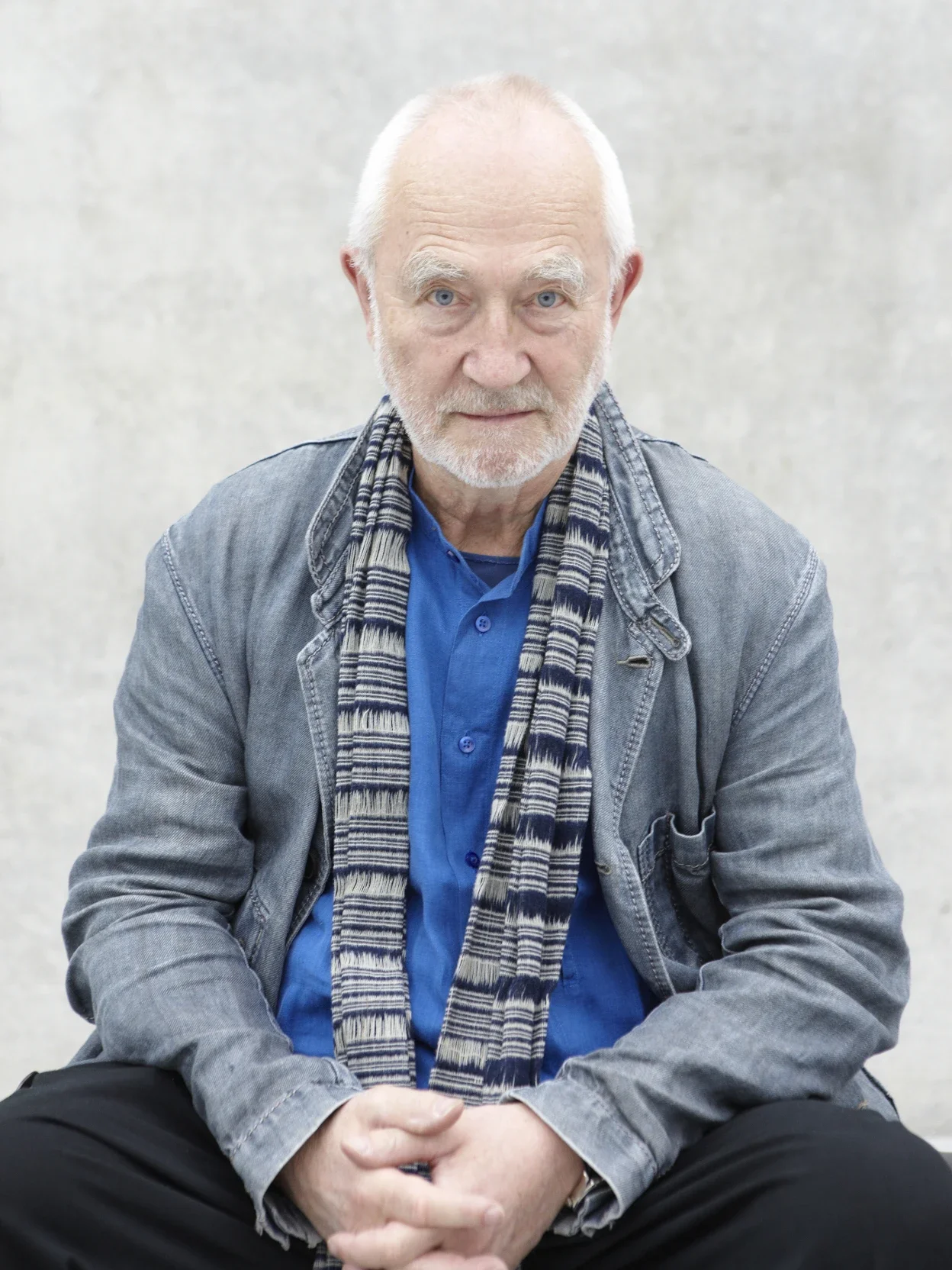
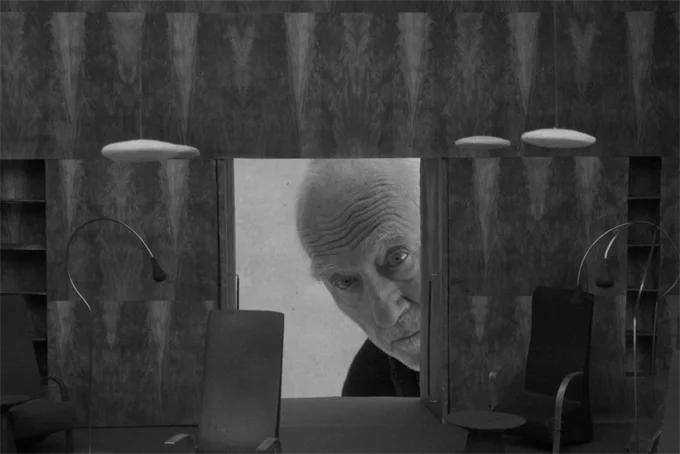
Peter Zumthor, aged 83, has now become a film star, too. Wim Wenders spent 14 years making his 3D documentary, 'From Inside Out', about the celebrated architect, which is due to be released in cinemas soon. While Wenders reveals no great secrets, he offers a glimpse into the life of a man who has remained true to his architectural vision despite considerable opposition. The film also sheds more light on the role of Annalisa Zumthor-Cuorad (1947–2026). The first person he turned to for advice was his wife, an architect, writer and former director of the Therme Vals. She was a trusted confidante and a source of stability for an architect who had never sought celebrity.
In one of the film's most moving scenes, Zumthor thanks her. Since 2014, she had been dependent on a wheelchair due to an autoimmune disease. She simply nods and says “Yes” several times. Yet those words say everything. As Wenders explains in an interview, they capture the determination and courage that led Zumthor to trust his instincts and create his own designs, rather than continuing to be inspired by figures such as Louis Kahn and Oscar Niemeyer.
From the Shelter in Chur to the Therme Vals
The film deliberately omits Zumthor’s early work. It opens in 1986 with the shelter for Roman archaeological remains in Chur, a simple timber building. The projects that propelled Zumthor onto the international architectural stage then follow in quick succession, most notably the Therme Vals (1996) and the Kunsthaus Bregenz (1997). Curiously absent is the Swiss Pavilion at Expo 2000 in Hanover: a labyrinth of timber that was entirely dismantled and recycled. This pavilion was a particularly clear expression of something that Zumthor, a double bassist and jazz enthusiast, has always emphasised, either directly or indirectly: that architecture is a form of vibration. Within, visitors move between layers of timber, following the sounds of live music. Although it does not feature in the film, 'Klangkörper Schweiz' ('Sounding Body Switzerland') could serve as a key to understanding Zumthor’s sensory approach to architecture.
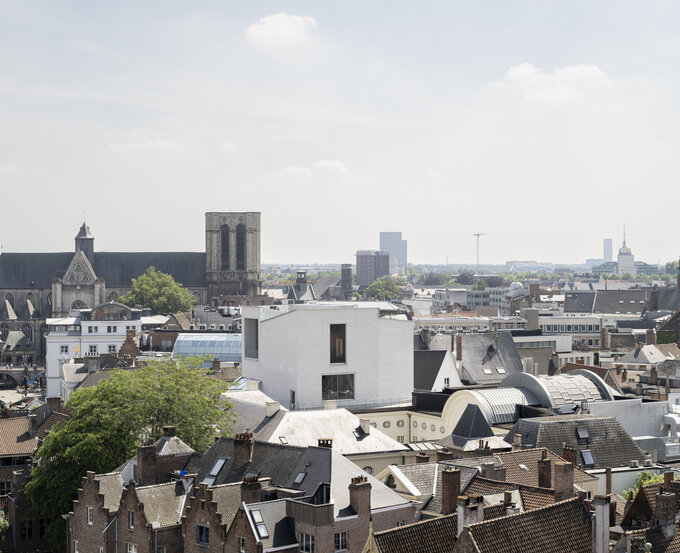
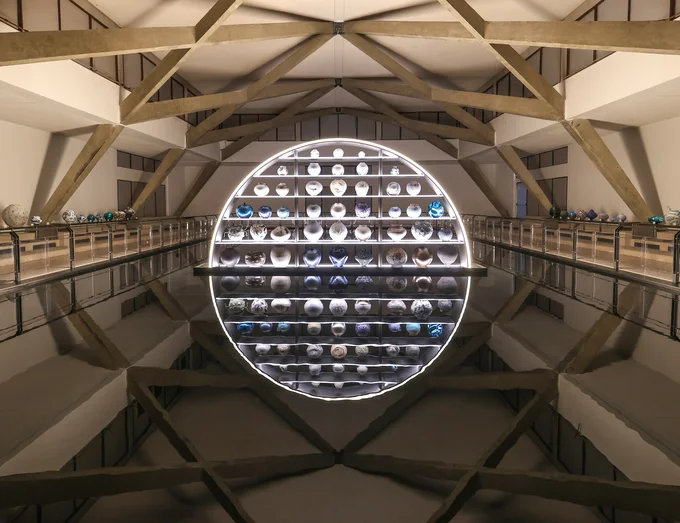
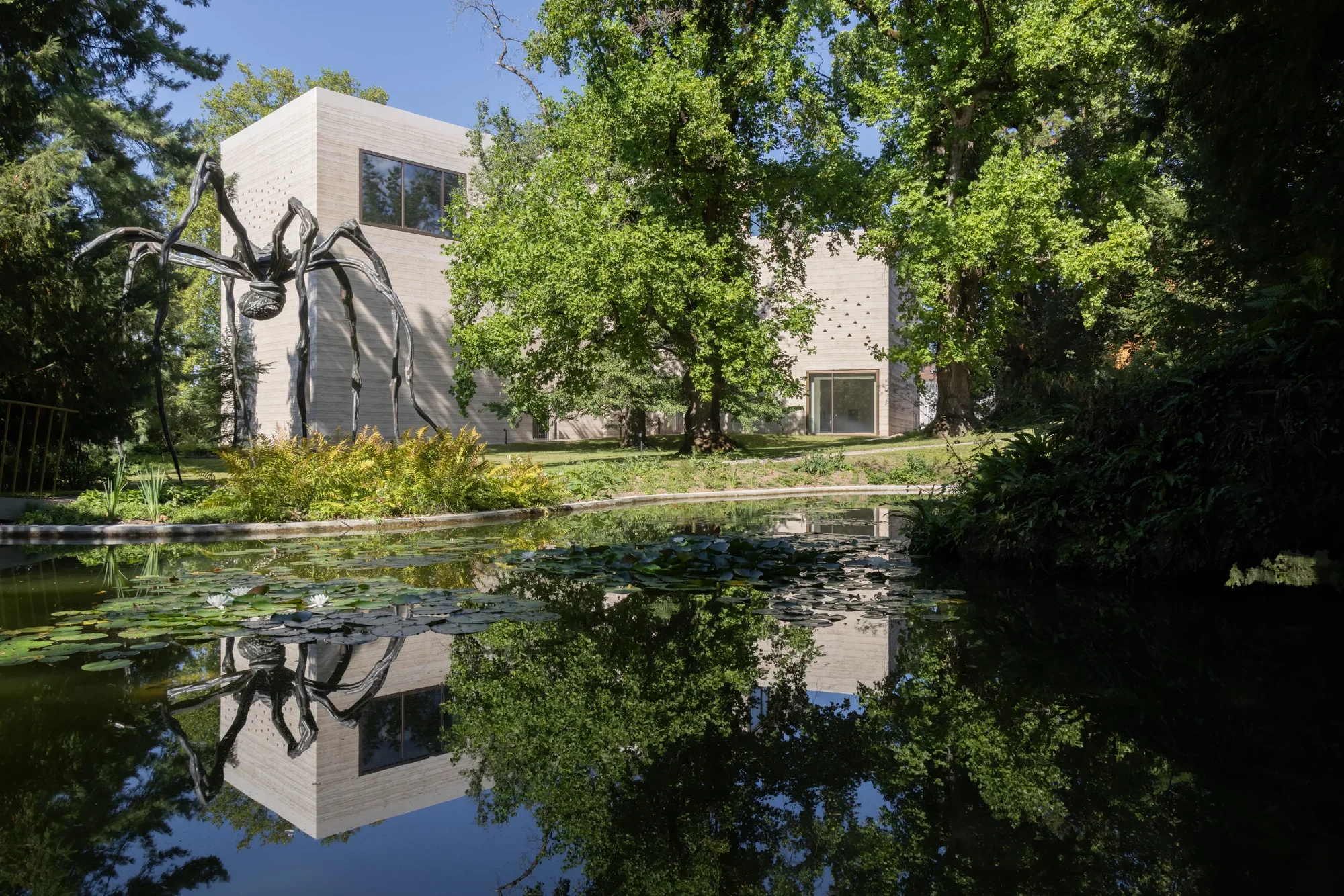
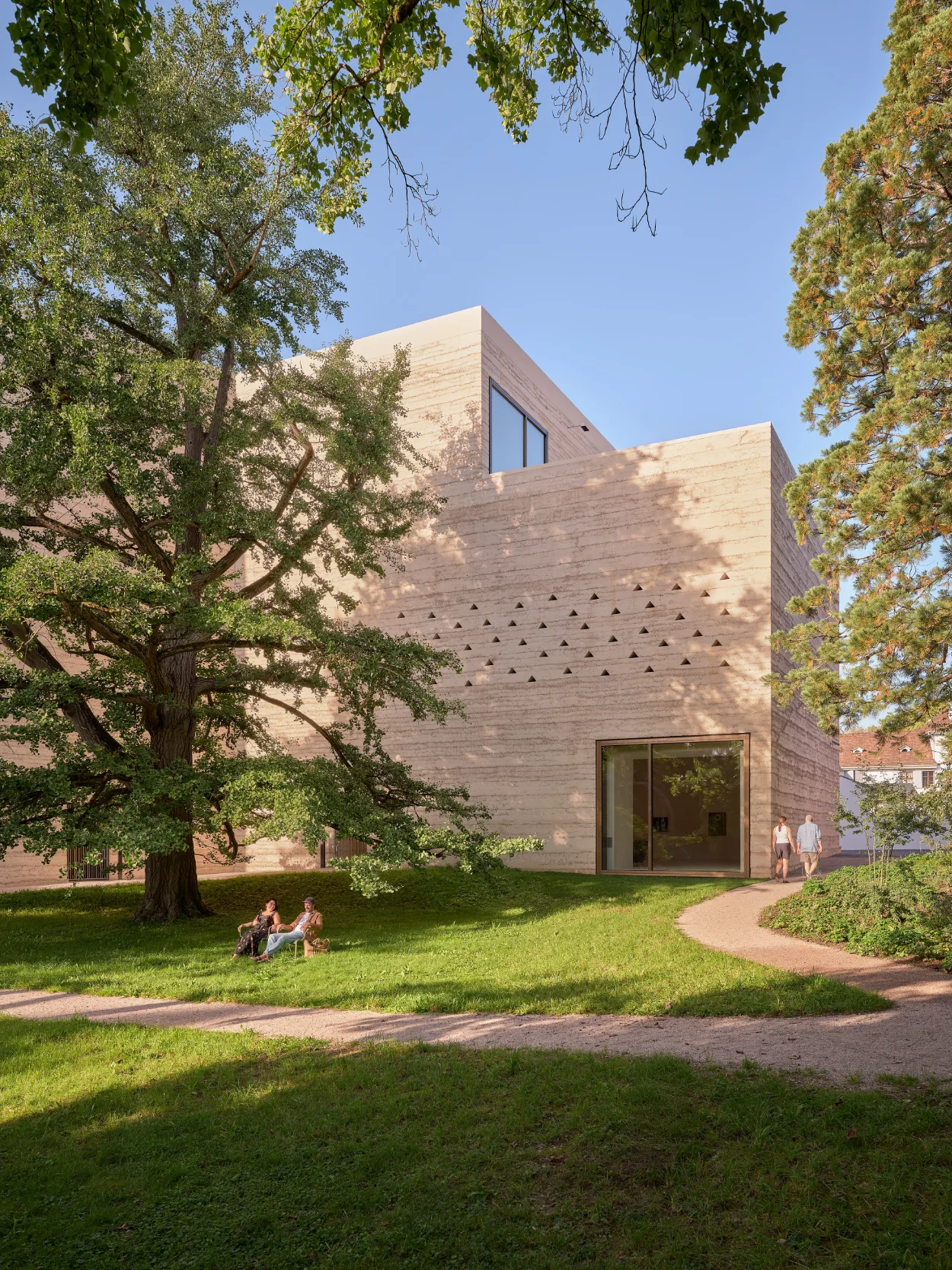
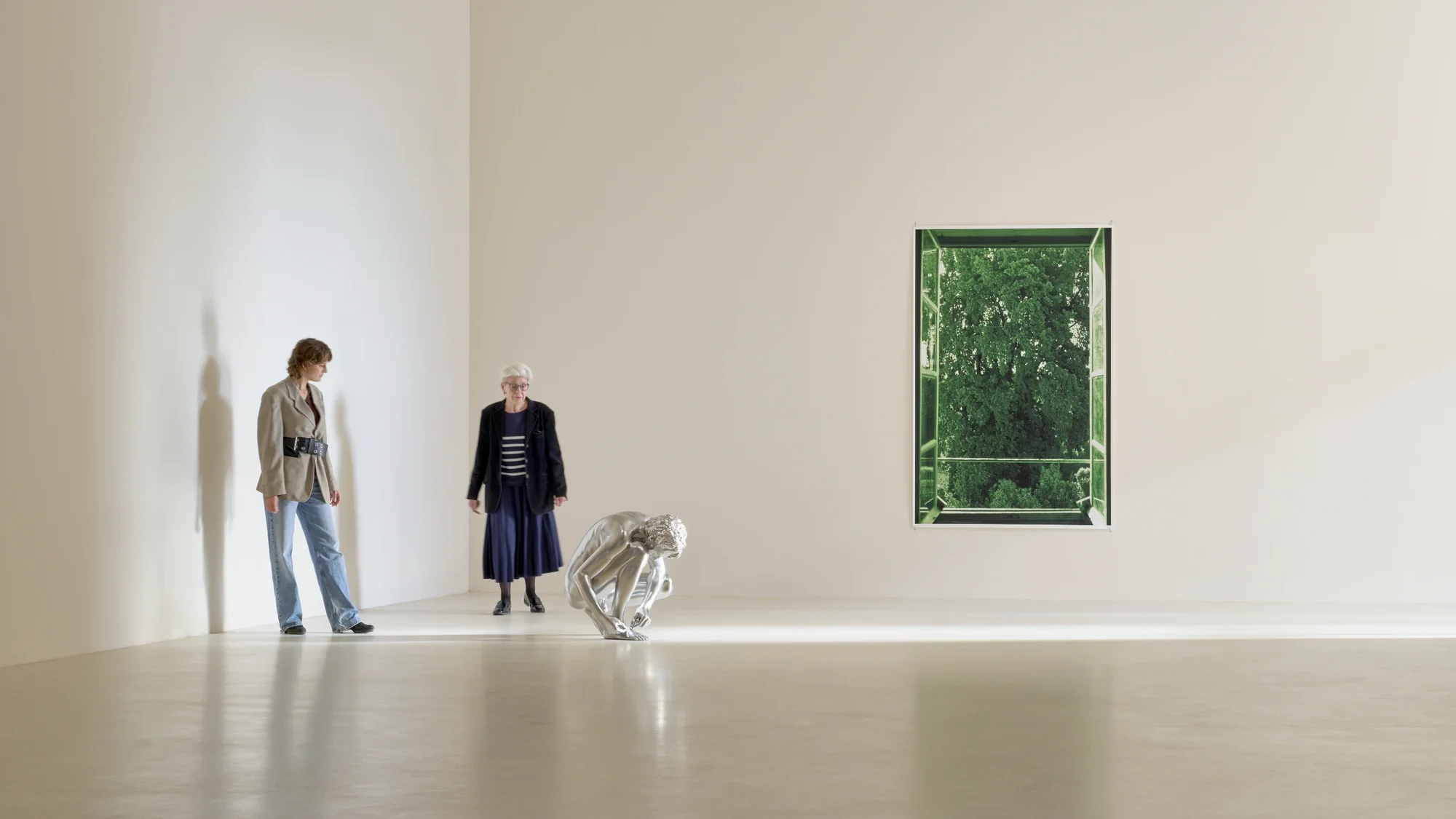
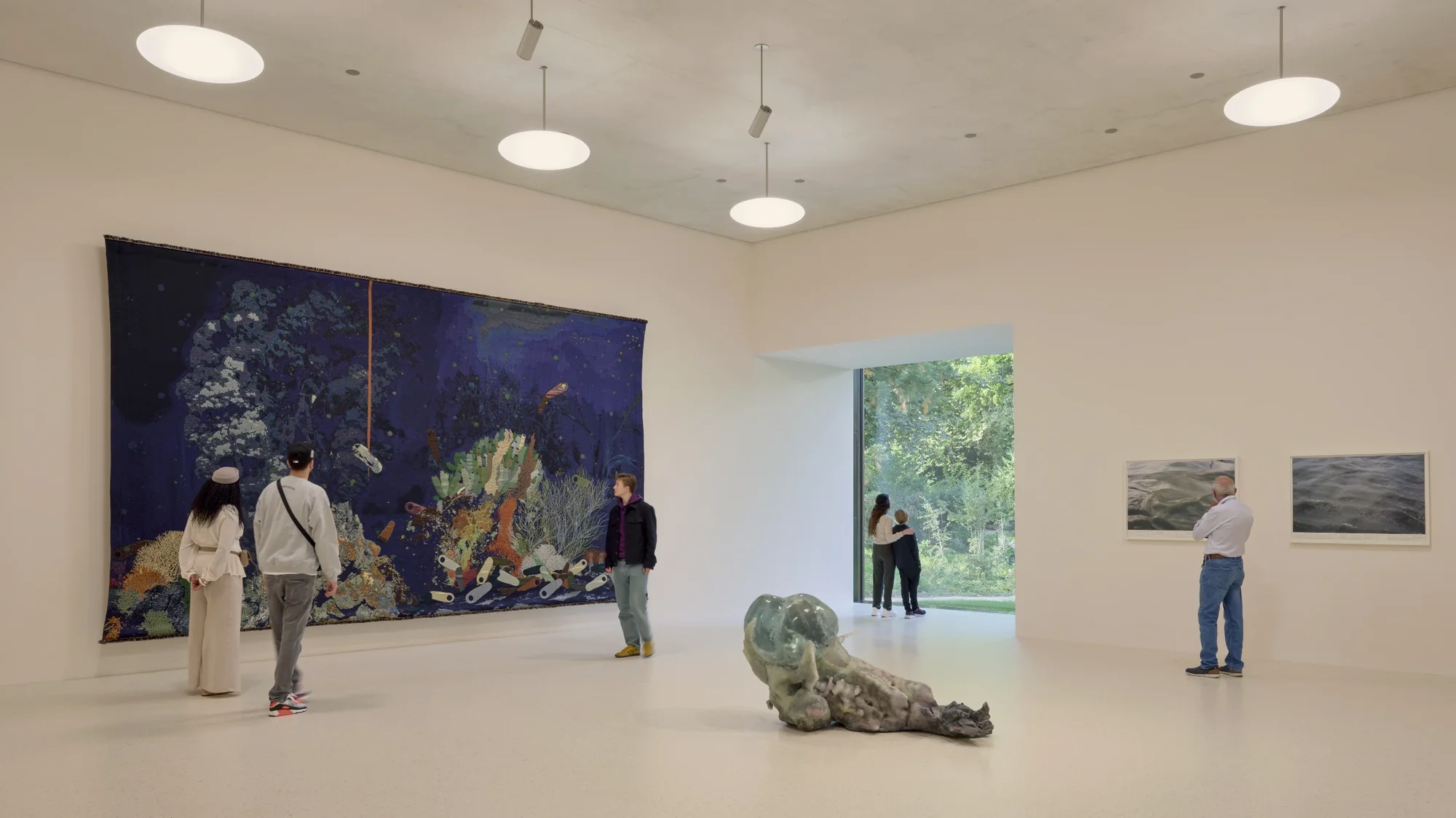
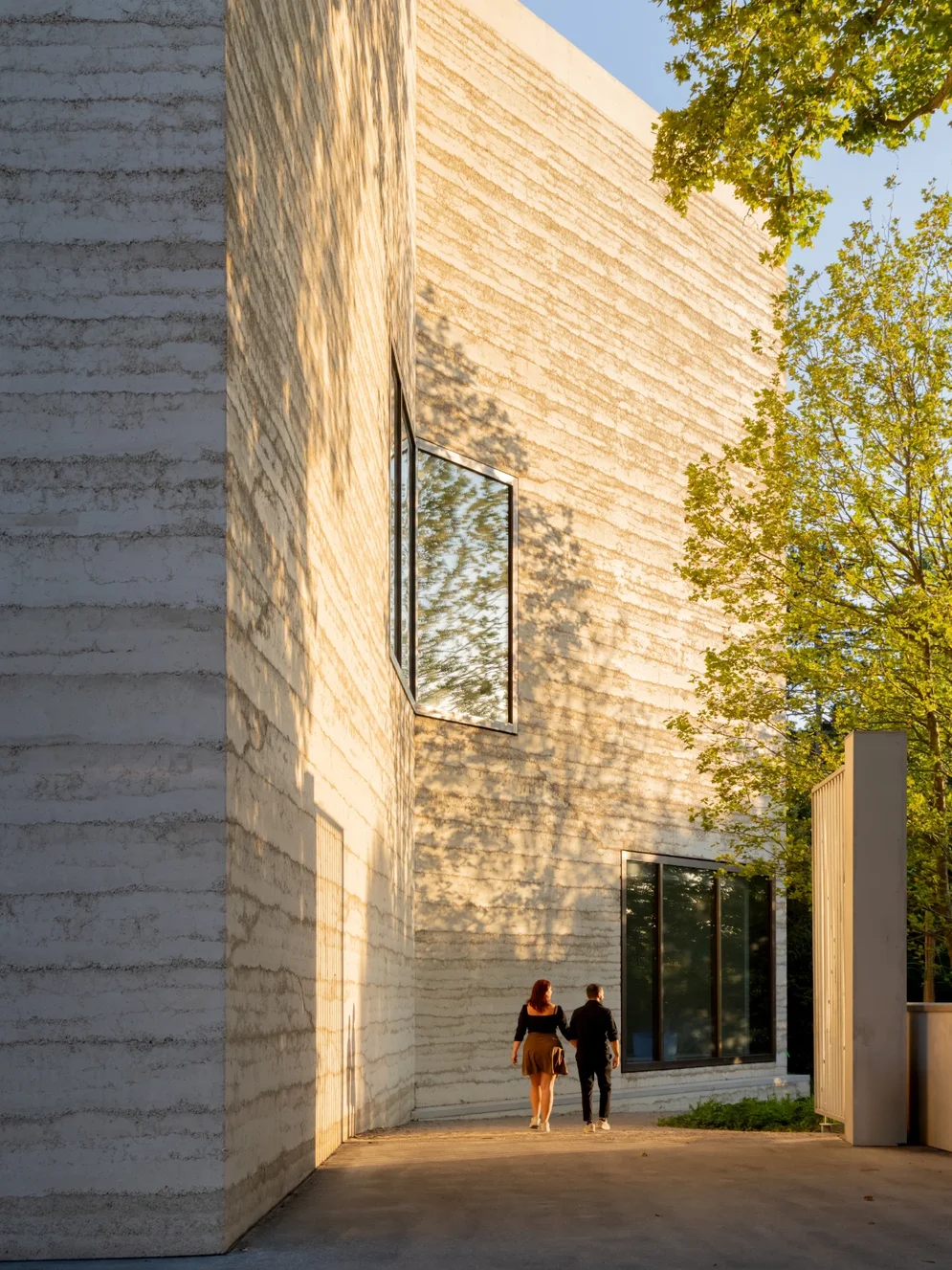
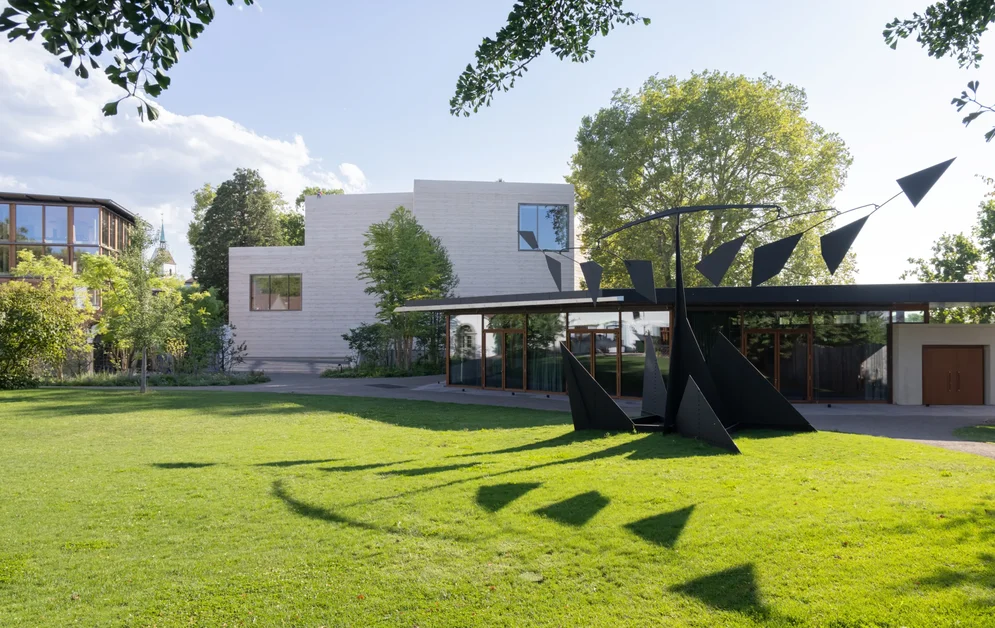
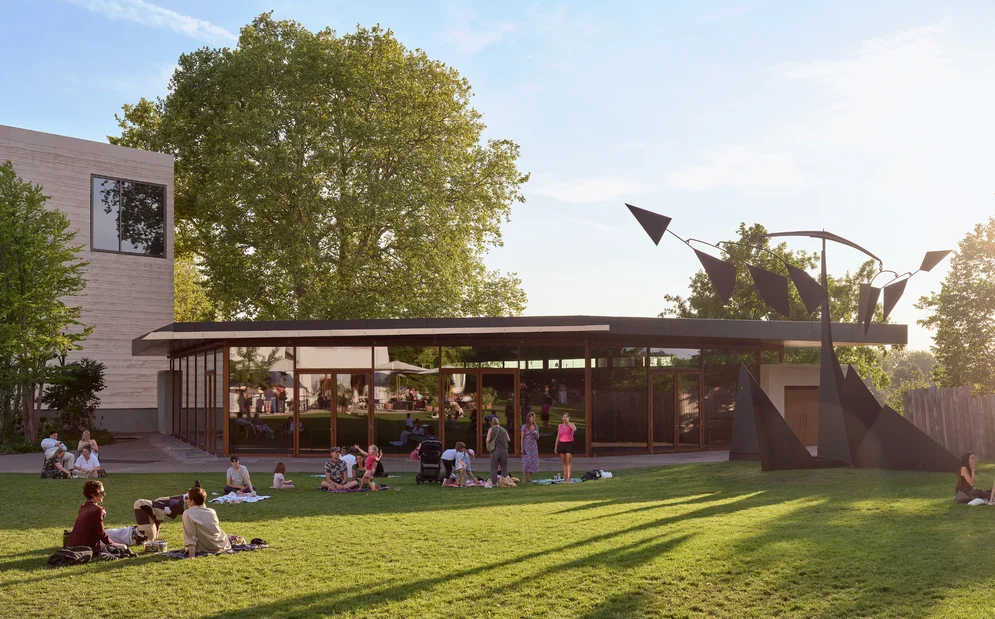
In 2026, two new buildings joined his portfolio, and they could hardly be more distinct from each other: the introverted extension of the Fondation Beyeler in Riehen and the expansive, amoeba-shaped LACMA in the heart of Los Angeles. On America’s west coast, Zumthor was designing more than just a museum. With a collection of around 155,000 objects, LACMA is the largest art museum in the western United States. The new David Geffen Galleries at LACMA replaced four buildings on the museum’s East Campus — the Ahmanson, Art of the Americas and Hammer Buildings, and the Leo S. Bing Center — bringing 17 years of work to a close.
Explaining his choice of architect, museum director Michael Govan once remarked that he had known from the outset that Peter Zumthor was one of the slowest architects in the world. There was a distinct note of relief in his words at the prospect of finally seeing the project completed.
Why Zumthor’s Buildings Take Time
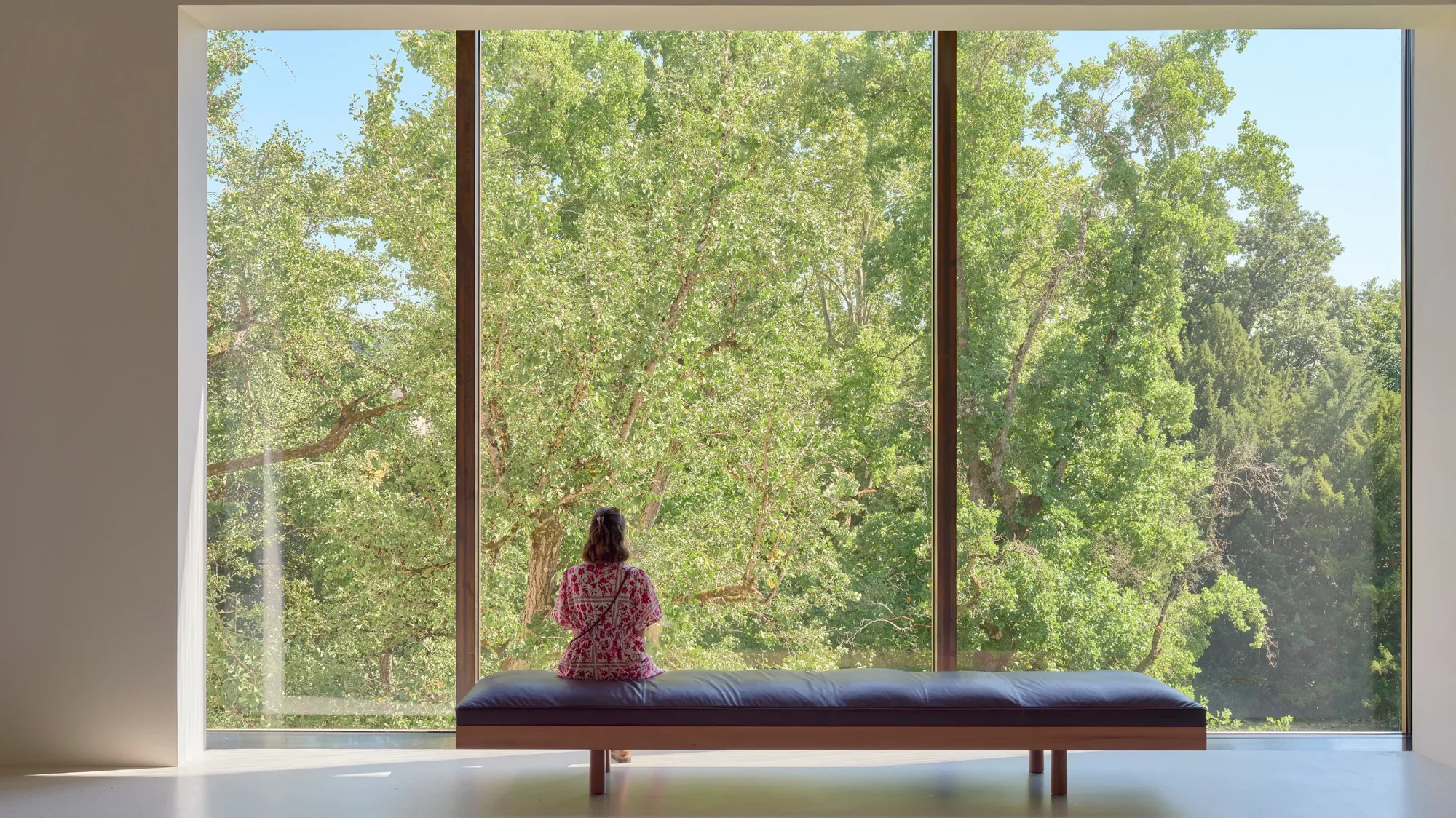
Waiting is part of the experience of a Zumthor building. His architecture bears the mark of time in a way that is quite different from the norm. While the construction industry increasingly relies on modular methods and focuses on speed, Zumthor continues to treat each building as a unique project, shaped by its particular setting. However, this does not mean that he is unwilling to carry successful approaches from one project to the next. The handrail at Kolumba, for example, reappears in the Fondation Beyeler extension in Riehen. Building on previous work is also part of the process.
17 years ago, in 2009, Zumthor received the Pritzker Prize, which is often described as the Nobel Prize of architecture. Around that time, he gave a remarkably candid interview to the Austrian newspaper Der Standard. He insisted that he was not, nor had he ever wanted to be, a service provider. ‘I see myself more as a kind of author. I also like to compare myself to a composer and conductor. I provide the score, but without my 100 to 500 outstanding soloists, I wouldn’t get very far. Ultimately, what I do is a work of architectural art.’ Some might describe this approach as uncompromising diligence. It has won the trained carpenter friends, including those involved in the controversy surrounding the 'Topography of Terror' documentation centre. It has also won him the highest honours in architecture, such as the Praemium Imperiale and the Royal Gold Medal from the Royal Institute of British Architects.
Few Buildings, Lasting Impact
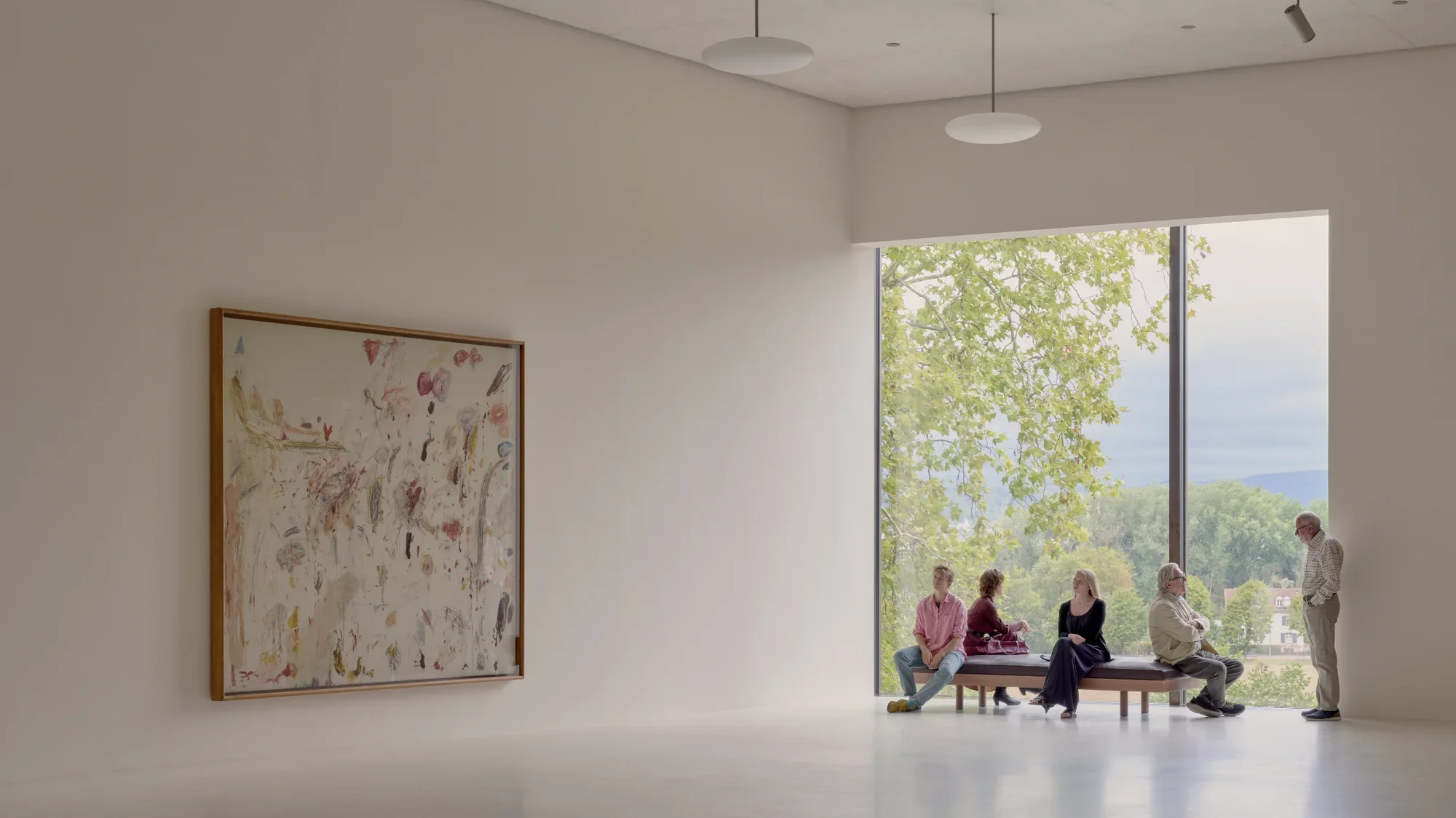
Zumthor has completed relatively few projects, but each one has been the result of intense thought and attention. This approach has resulted in exceptional buildings and, in turn, has helped his reputation to grow steadily over the years. His ambition is to create a harmonious relationship between a building and its setting and the surrounding landscape. It is interesting to note that, prior to establishing his architectural firm in Haldenstein in 1978, Zumthor was employed in heritage conservation by the Swiss canton of Graubünden. Prior to developing his own architectural language, he immersed himself in the past. Zumthor builds with time in mind, but his work is not simply a reflection of the passing of time.
Similarly, Wim Wenders’ documentary ‘From Inside Out’ was not made overnight. It grew out of a slow process of getting to know the Swiss architect and his way of thinking. 'I knew his writing before I met him,' says Wenders. 'Atmospheres in particular was a little book I regarded as legendary.' What he writes about has surprisingly little to do with architecture in the conventional sense. It's about how a door handle feels in your hand or how a dark corridor leading into a kitchen can be considered architecture."
An Alternative to the Digital Rush
The film takes a similar approach, offering an atmospheric insight into Zumthor’s architectural style. He makes no attempt to hide his background in traditional craftsmanship. In fact, his work is firmly rooted in materials, mass and scale. He trusts that things will age well and seems unconcerned about the risk of appearing old-fashioned. In fact, his approach has much to contribute to contemporary debates. It provides an alternative to the relentless pursuit of speed and the assumption that everything should be digitally accessible instantly and everywhere. Zumthor puts his trust in the particularities of a site, tried-and-tested materials, and craftsmanship. He builds up layers of time and makes them visible. In doing so, he nurtures something that cannot be fully explained: aura, spirituality, transcendence... the list goes on. In turn, his buildings attract people who are willing to spend time in a place and allow themselves to be shaped by the experience.
This seemingly old-fashioned type of presence, which affects us so directly, is easily lost in our increasingly digital world. It is the presence of skilled hands, of materials that we can see and feel, and of the traces left by human labour. For Zumthor, variations and apparent imperfections are not flaws to be eliminated, but gifts. He once said that his goal was not to be published, but to design buildings that would move people. This desire stems from the ambition to create places and objects that transcend the purely material. There is an odd parallel here with the age of digital AI, which makes similar claims but arrives at very different conclusions. What moves us? Where do we feel at home? Peter Zumthor has found his own answers.