Shaping the Generational Transition
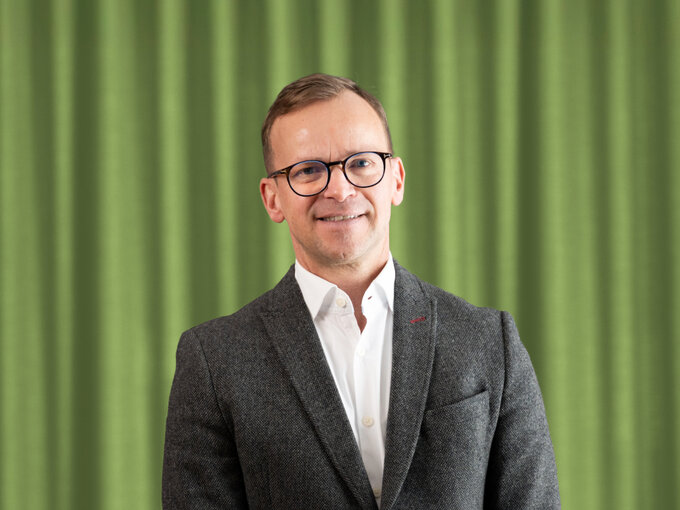
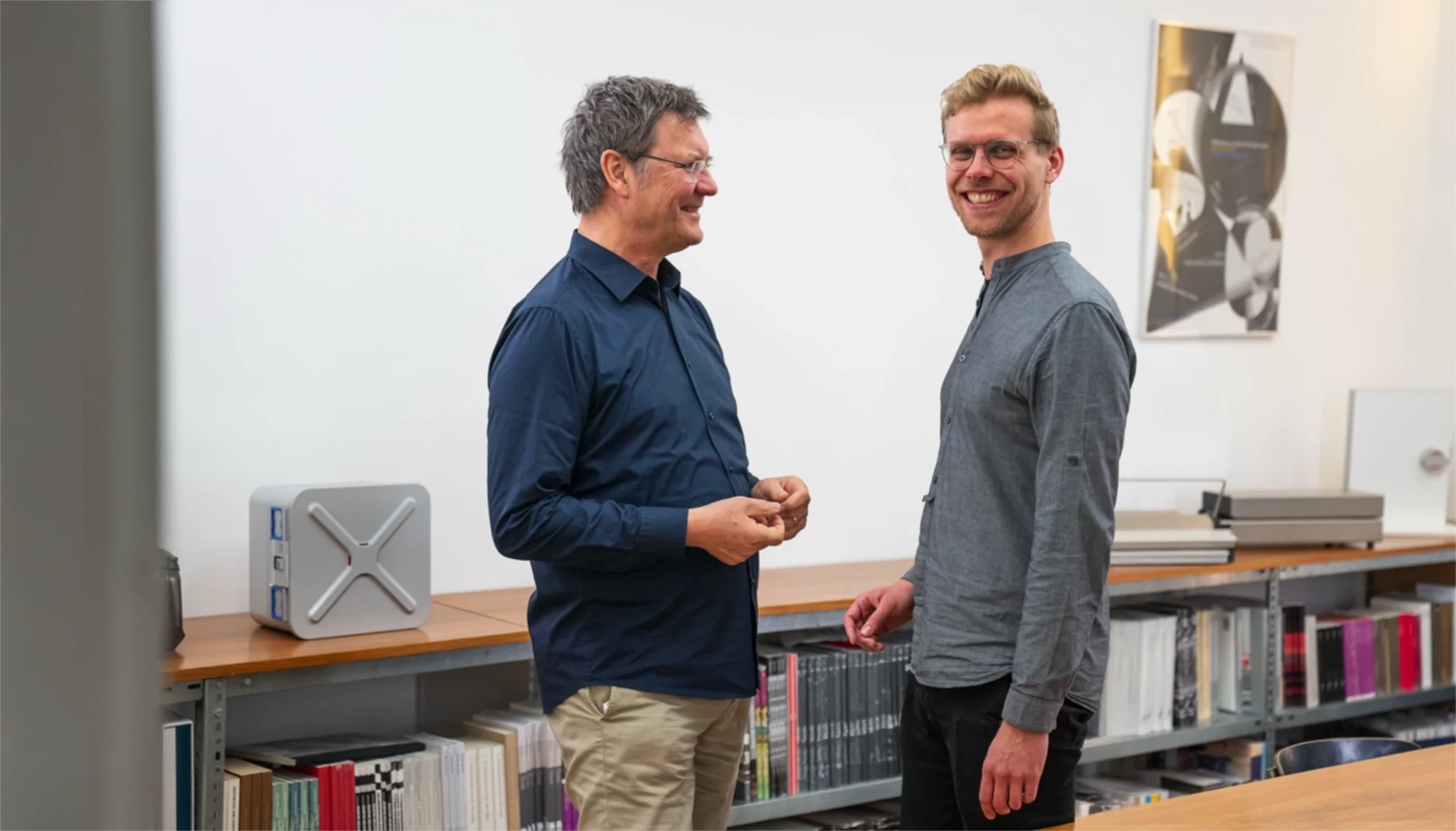
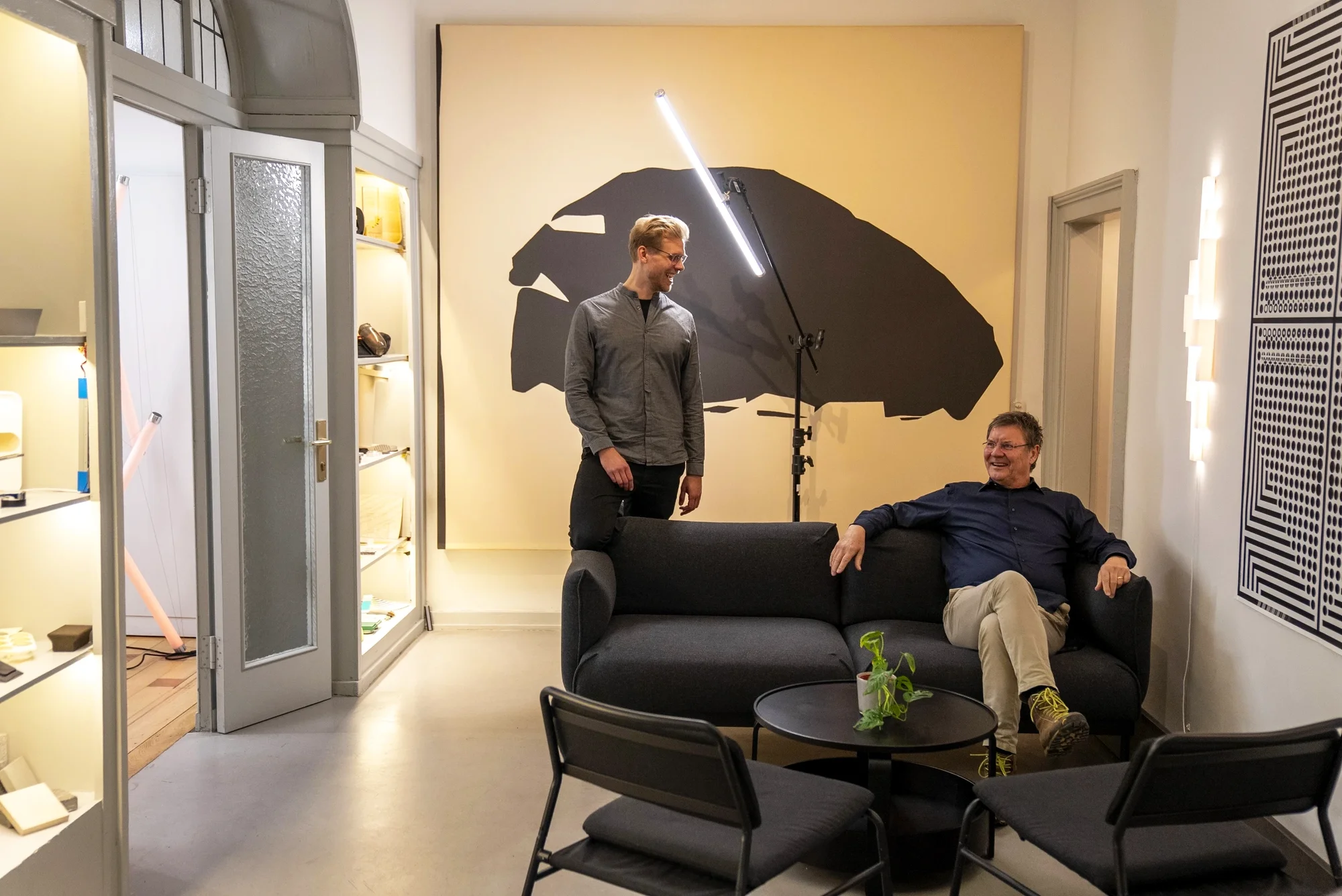
Olaf Barski has played a key role in shaping the design scene for over four decades and has now stepped back from day-to-day operations in his late 60s. Since last year, Paul van Laar (35) has been the new owner of Barski Design. Not only does the name remain, but so do the standards and the company’s identity. Olaf Barski remains on board, albeit as a “mentor, advisor and strategist” and as a walking treasure trove of experience. The two get on brilliantly, benefit from one another and have clearly defined their roles. The first step, however, was rather coincidental.
A generational handover is no simple matter and requires at least two people who need to find each other. How did that work out for you?
Olaf Barski: We didn’t actually know each other before we met at a Hessen Design event in 2023. We had a chat about what was going on at the time. It was completely spontaneous, without any pre-planning, searching or even a specific aim. From that, a regular routine emerged in early 2024; we kept meeting up for meals and talked about design, about successes, but also about challenges, about acquiring new clients or strategic direction. We realised quite quickly that our perspectives, creative approaches and styles were a good fit.
Paul van Laar: For me, it was very exciting; Olaf’s wealth of experience alone is fascinating. An enormous reservoir of knowledge, as Olaf has been doing this for over 40 years. At some point, we had the idea of merging our two offices – we get on really well personally, think alike in business and share the same values.

When did this topic first come up on your agenda?
Olaf Barski: I think it was in 2018 when I started seriously thinking about what the future held for my studio and myself. These thoughts became more pressing during the pandemic. Naturally, I also spoke to colleagues and friends – including non-designers – about what their plans were. Some had already retired from the profession in their mid-60s, but I felt that was too early for me. Fortunately, I’m physically fit. This whole process takes time – it can’t be rushed.
Fusion instead of handover? What does that mean?
Paul van Laar: It’s about bringing together expertise to create something better. Olaf once put it, loosely paraphrasing Frank Zappa: “One and One is Eleven”. The idea was to merge the expertise, knowledge, contacts and trust built up over decades at Barski Design with what I had built up over the last ten years with my own agency, White Lime. I am now the owner and managing director of Barski Design; Olaf is a consultant, mentor and strategist. The roles are clearly defined. Olaf Barski: It was important to me to truly hand over the leadership and responsibility. Paul is 100 per cent owner, bears the responsibility and makes the decisions – both business and design-related.
What ultimately motivated you to merge your practice with Olaf Barski’s and to work under this label from now on?
Paul van Laar: There are many factors at play here. First and foremost is the further development of the practices. Ultimately, we had to choose a brand – White Lime or Barski Design. We then opted for the more renowned and established brand. Another very valuable aspect of the new arrangement is Olaf Barski’s mentoring role. By that I mean asking the right questions about the tasks and approaches in order to then find the right arguments. When both of us, as good designers, agree that a particular solution is the best or that a proposal must look a certain way, everything gains even more substance. I always find these discussions incredibly fascinating.
Quite a few agency handovers fail under the pressures of day-to-day life. What did you do differently?
Olaf Barski: Yes, I know many such stories. Even well-known firms have stumbled during this phase, some have recovered, others have suddenly disappeared. Because I have never defined myself by power, but always by competence and skill, handing over responsibility is probably easier. In other words: if Paul has the responsibility, then he has it. That is not up for debate.
Paul van Laar: We’re lucky that we very often see eye to eye, share similar values and have high standards when it comes to design. We’ve never had a point of contention; we discuss things and ultimately find good solutions that we can both stand behind. That’s also down to the fact that we’ve clearly defined our roles. This aspect is absolutely crucial; otherwise, it would lead to a tense atmosphere. And the clients would notice that too.
That’s a good point – how have your clients reacted to the new arrangement?
Olaf Barski: When Paul and I visit clients together, we’re seen as a team. The combination of young, fresh perspectives and my experience goes down very well. What’s more, companies see that we’re taking responsibility by continuing to run Barski Design. That builds trust and provides reassurance. After all, we’re talking about larger budgets, complex product developments and continuity.
Paul van Laar: Some clients are actually very relieved that things are continuing and that the long-standing design partner they trust isn’t simply disappearing, but is actually getting even better. They don’t have to reorient themselves; they know what they’re getting into. That’s also what our slogan in our communications expresses: “Together for Good Design”.
People don’t usually talk about money, but the question must be asked: how do you determine the value of a design agency?
Olaf Barski: There are certainly models for assessing the value of a design agency. But the purchase prices arrived at are often unrealistic. We have agreed on a performance-based model, which we deliberately do not wish to discuss in detail here. That said, our model has worked very well so far.
Paul van Laar: Our interests are aligned. We both want Barski Design to be as successful as possible. Neither of us is holding anything back; we’re both giving it our all. And we both benefit when things go well. I believe that is the decisive factor.
What advice would you give to anyone planning a similar transition?
Paul van Laar: In my view, two things are important. Firstly, day-to-day life needs to be clearly organised – that is, roles, responsibilities and financial decisions. Otherwise, you’ll find yourselves discussing it all over again every week. Secondly: think through extreme scenarios in advance. What happens if – for whatever reason – things get really tough? It’s unpleasant to think through, but it brings peace of mind afterwards. If the worst-case scenario does happen, you know how things are sorted out. And my tip to young creatives: draw up a good contract, otherwise the problems will crop up all the more fiercely later on.
Olaf Barski: I’d say, be bold and build in a degree of trust. So don’t dither, but stay clear-headed. We want to do a good job, but ultimately even the best contract can’t guarantee that everything will work out.
Paul van Laar: Olaf actually has a right of veto if he has concerns that the brand and the campaign no longer align. That’s why the preamble of the contract sets out exactly what we want to do and what we don’t.
Olaf Barski: In fact, several consultants have looked at it to examine everything from different angles. So it’s better to speak to too many people than too few. However, that only works with experienced consultants from the design industry. Thanks to my long-standing involvement in various design associations, I knew competent people whom we could both trust.
Let’s look forward. What does your strategy for the future look like?
Paul van Laar: Our core values remain the same, but we are continuing to evolve. One area we are particularly interested in is a more holistic representation of development processes. For example, we have entered into a new strategic partnership with Mainz University Medical Centre. Medical technology is, as we know, a highly regulated, complex field – and we can bring our design expertise to bear there before the actual design phase begins. We are thus truly strategic development partners, not just stylists who simply make things look nice at the end.?
Olaf Barski: It’s important to me to work closely with external partners and not keep everything in-house. We can propose more innovative concepts – and then seek out the specialists whose expertise will support their implementation.
One final question for you, Mr Barski: What do you do with your time now?
Olaf Barski: I’m no longer in the office full-time, and I’m really enjoying it. I find the partnership with Paul and the interaction with the young team in the office very enriching. I’m also active and well-connected in many associations – such as the German Design Council, the DDC, aed and Hessen Design. I sit on juries, visit international trade fairs and am enjoying this time. I now have more breathing space and time, can take a step back and view our projects from a greater distance. I would sometimes have wished for this in the past, when I was still in charge.