‘A Totally New Beginning’
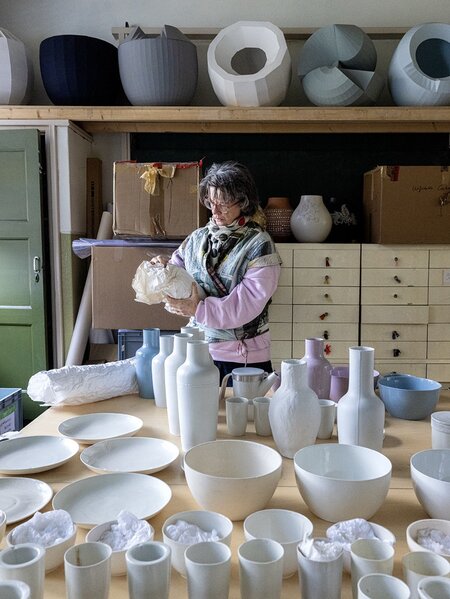
The title of your retrospective at the Vitra Design Museum is Whispering Things. I wondered: what do these things whisper?
Hella Jongerius: Oh, they whisper a lot. And sometimes they are very loud. I think an object or a piece of furniture is not just the physical thing, but it contains many voices and layers. It shows us who we are, what we want to be, or how we want to live. It shows us the production process, which often takes place in another culture. And it carries many references and stories within it—in the making process, in the handling of materials. So things have a story. They are actors. Things are silent witnesses to people’s lives. There are many layers of content surrounding a thing. And that is exactly what interests me.
And this is what you consider the whispering of things?
Yes.
Do you regard all designed objects as communicative in some way?
Everything communicates. All things can speak.
Also the ugly ones?
Also the ugly ones. Beauty communicates as well. It opens our hearts. If you look at something and you like it, then you are open to further stories. Perhaps you are open to buying it, or you are open to imagining what message might be inside the object. Yes, that’s how I look at things.
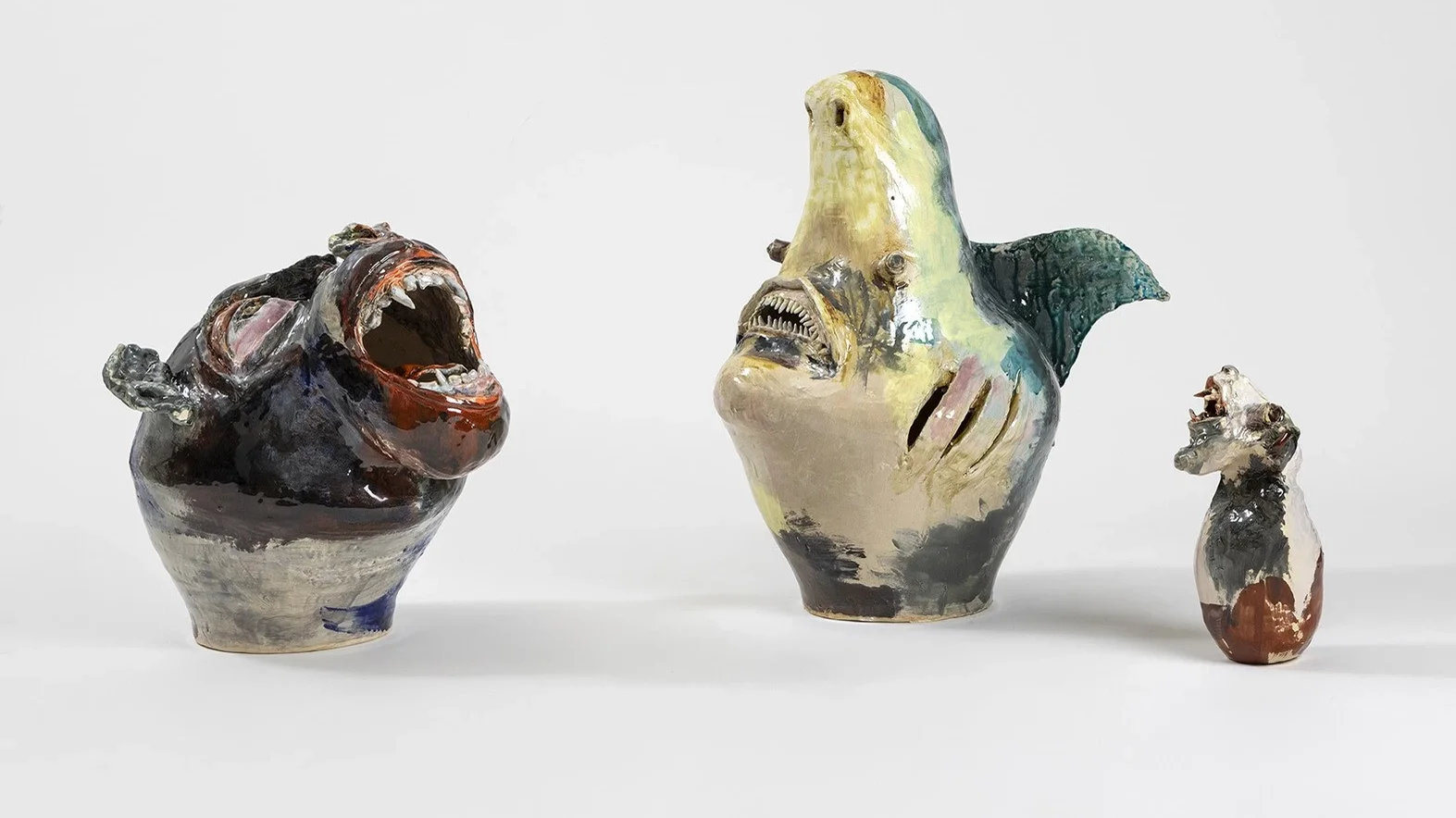
Looking at the sculptures of angry animals that you recently exhibited at Galerie Kreo in Paris—they seem rather to cry out loudly. Why is that?
I think they reflect the time in which we live. Time has always been a relevant theme in my work throughout my entire career. I believe we have every reason to be angry right now. There are many tyrants currently ruining the world. When I did the exhibition Woven Cosmos at the Gropius Bau during COVID, my questions were: What could be healing objects? Can objects heal us? I have often created animals—for Nymphenburg, for Ikea, props for Vitra, the Office Pets, the Frogtable. And suddenly I thought that in this era, in this day and age, I needed different animals. And they turned out to be very angry. I gave each of them the name of a woman. Suddenly you looked at them quite differently—they had the voice of a woman. But these new animals are wilful; they are also humorous.
To my mind, you have developed more and more into artistic realms lately. Would you agree? How do you think about the relationship between art and design?
Well, it is actually not in my interest to assign myself to a particular discipline—even though others like to do so. Of course I have thought about it, and I believe my approach or my way of working is an artistic one. But my themes and my perspectives always move within the world of design or are related to it. That is the world I know, the one that interests me. And why does it interest me? Because functionality as a goal provides direction and is also a way of finding a solution to a larger issue that might have an impact on society. That is why design interests me. And within this functionality there are various aspects of production—craftsmanship and technology, both very exciting.
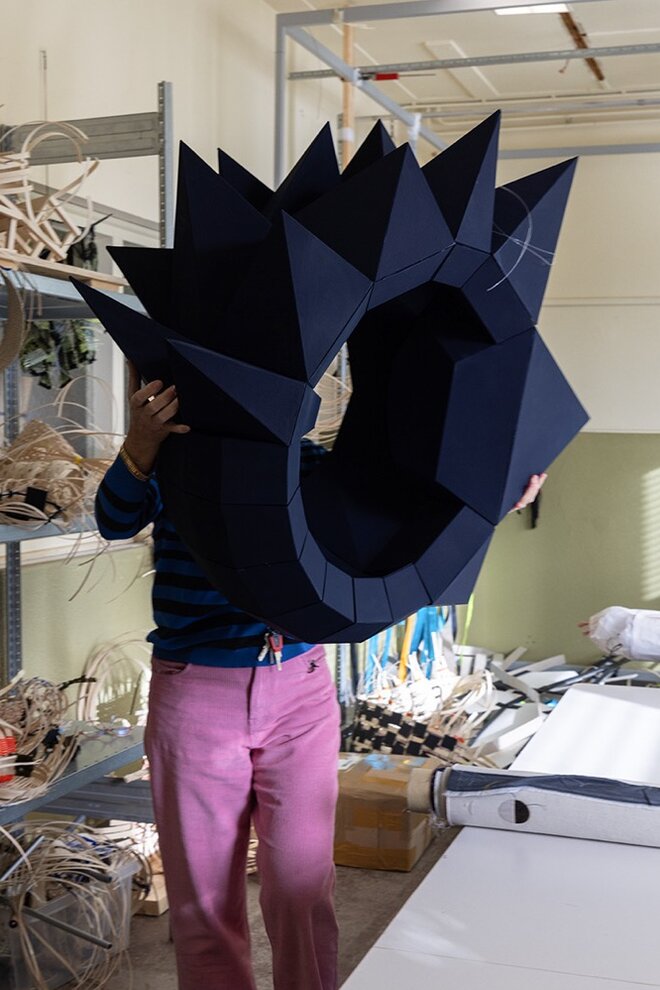
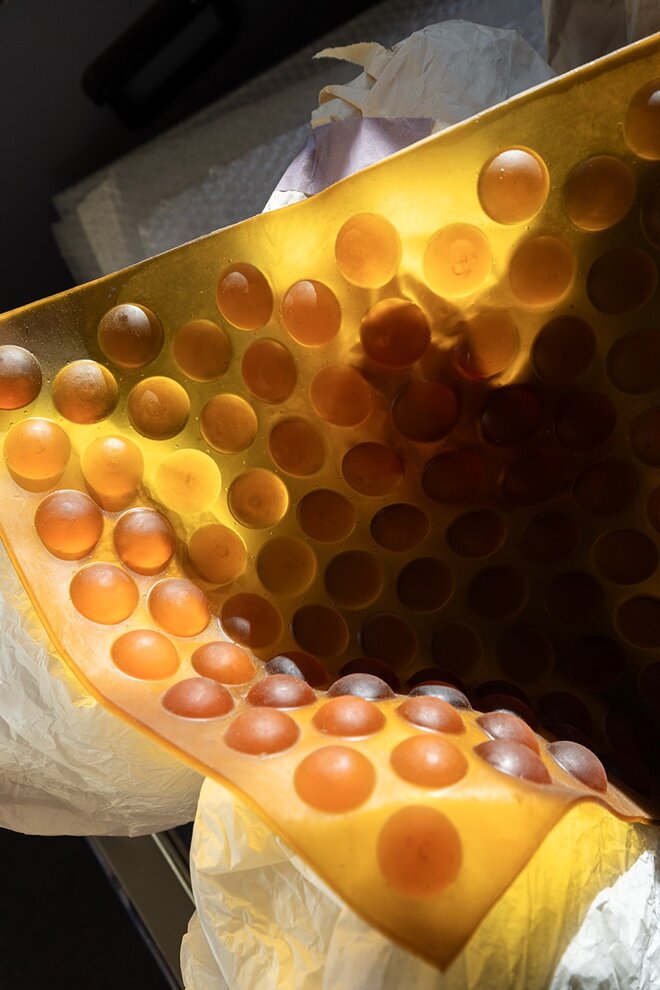
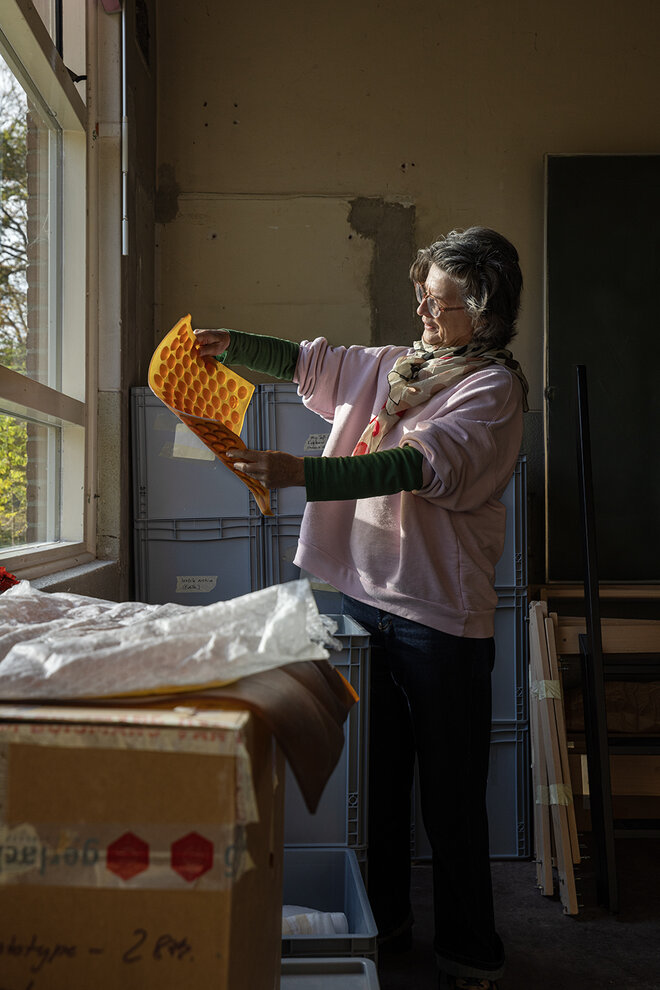
‘My way of working is an artistic one. But my themes and my perspectives always move within the world of design or are related to it. That is the world I know, the one that interests me. Functionality as a goal provides direction and is also a way of finding a solution to a larger issue that might have an impact on society.’
Hella Jongerius
Did something specific happen that led you to this decision? Was there a frustrating project where you said: I won’t do this anymore?
Honestly, my wake-up call was my own manifesto „Beyond the New”, which I wrote about eleven years ago while I was still working for industry. The manifesto was a mirror for myself. I thought: yes, I am standing here speaking about my own moral compass, beginning to think in a broader context. And at that time I also had my first research exhibition on colours, because I developed the colour and material library for Vitra, together with the art direction. So I already had a larger research theme that was no longer aimed at a single product. It was a parallel world.
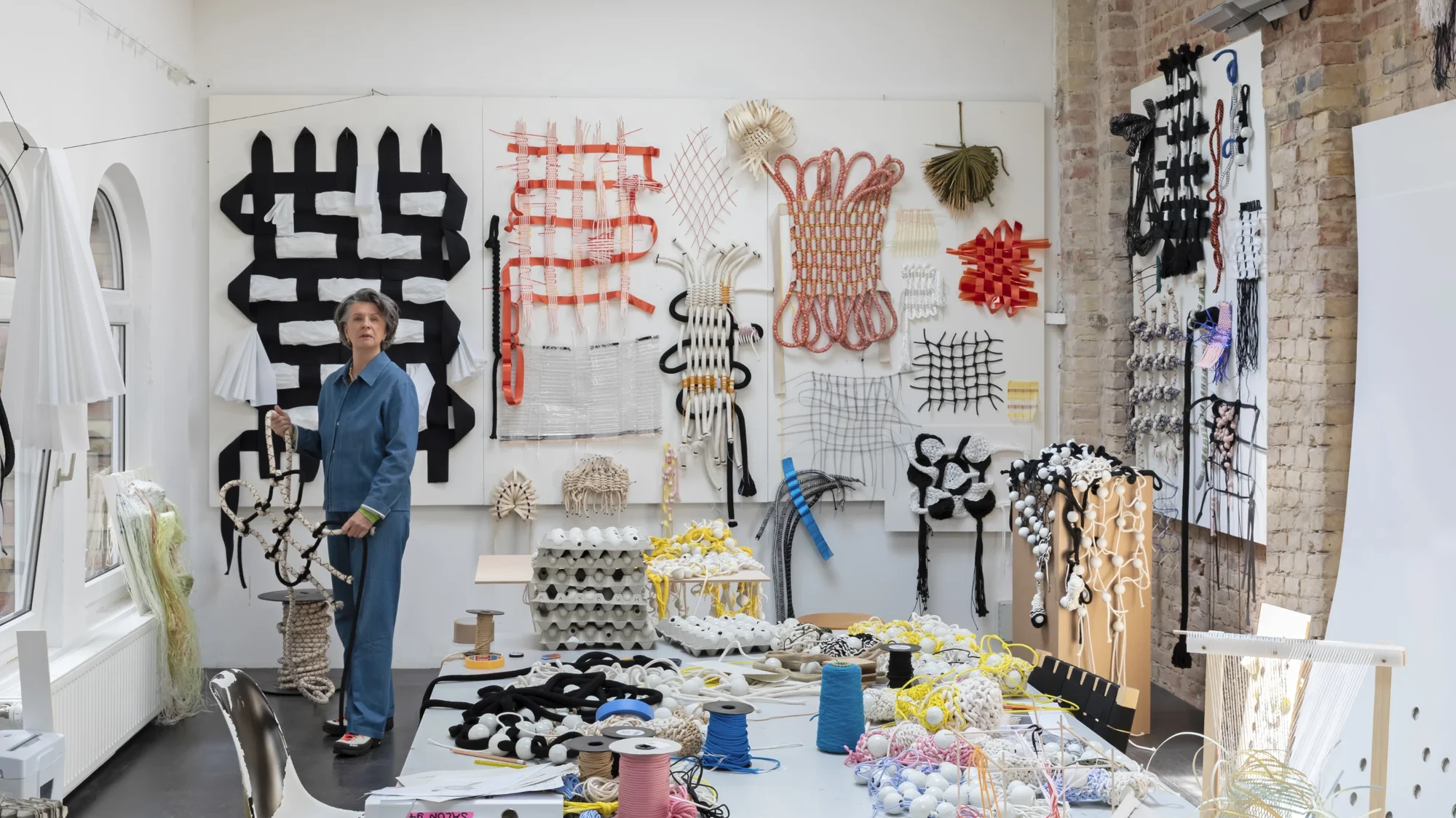
With the Vitra Design Museum exhibition, you are now returning to Weil am Rhein. A large part of your working archive has been added to the museum’s collection. How do you experience this process of reviewing, editing, curating, and contextualising your work through the museum? And what do you personally and professionally hope for from this retrospective engagement with your work?
You know, it may look like an ending, but for me it is a totally new beginning. That is how I feel about it. It is a relief that I no longer have all these things around me. I do not have to take care of them anymore. They have found a perfect home—in a place I have felt connected to for decades. This part of my archive is now surrounded by other significant designers’ archives. I am the first contemporary person and the first woman whose archive has been included there.
What I particularly like is that it is accessible. You can visit it upon request and research it. You can dive deeply into it. Other museums can borrow objects from it. So it is a living archive. That is much better than having the works somewhere in my storage.
For me, it was always very exciting to enter your studio and see your past work on the shelves or hanging on the walls … the Polder Sofa standing upright in a corner. Is your studio now an empty place?
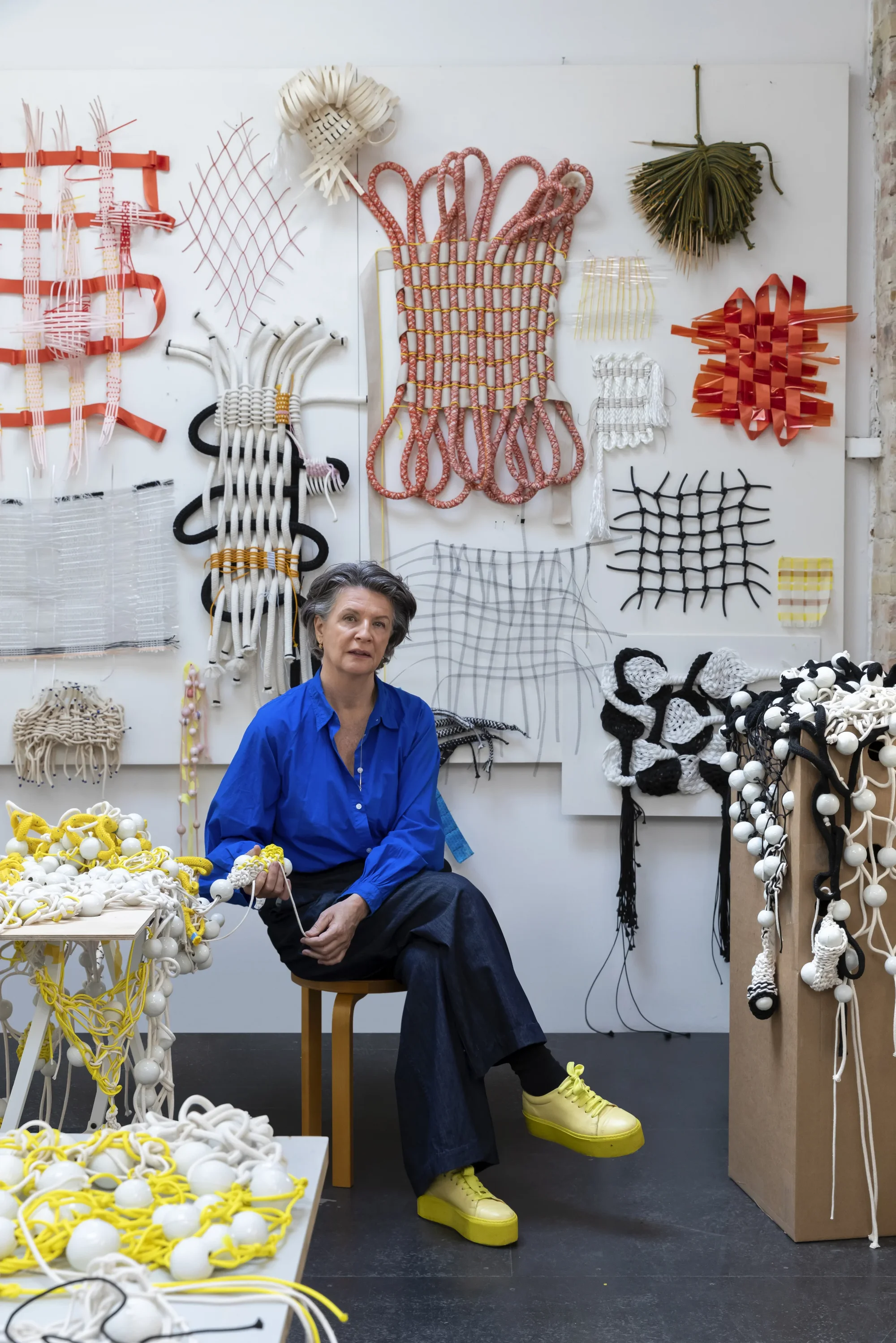
It is filling up again—with a large project currently underway. My studio is still a rich place of research, with a great deal to see.
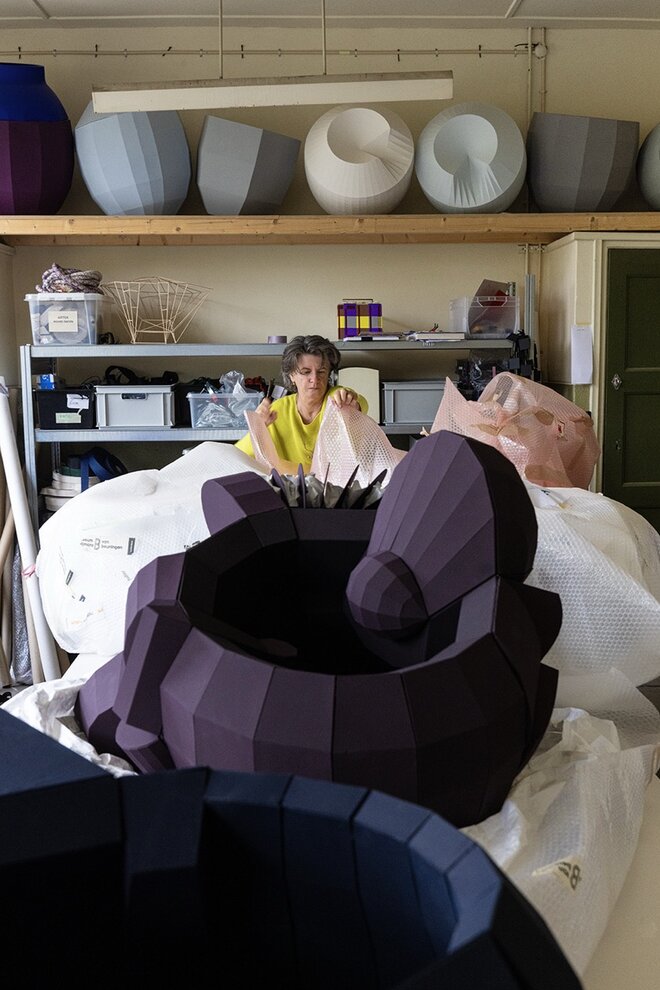
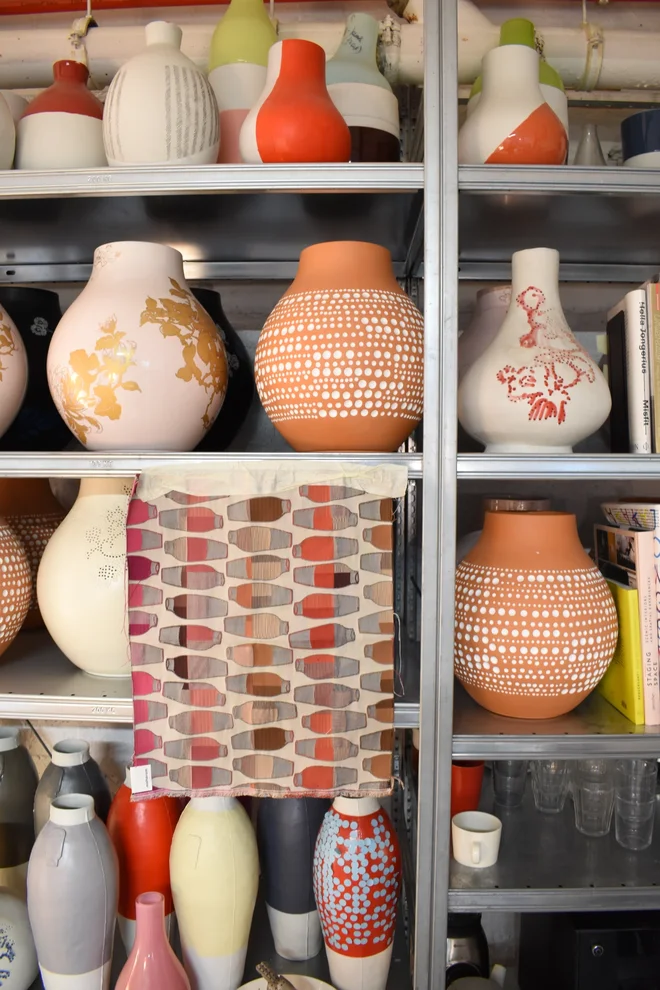
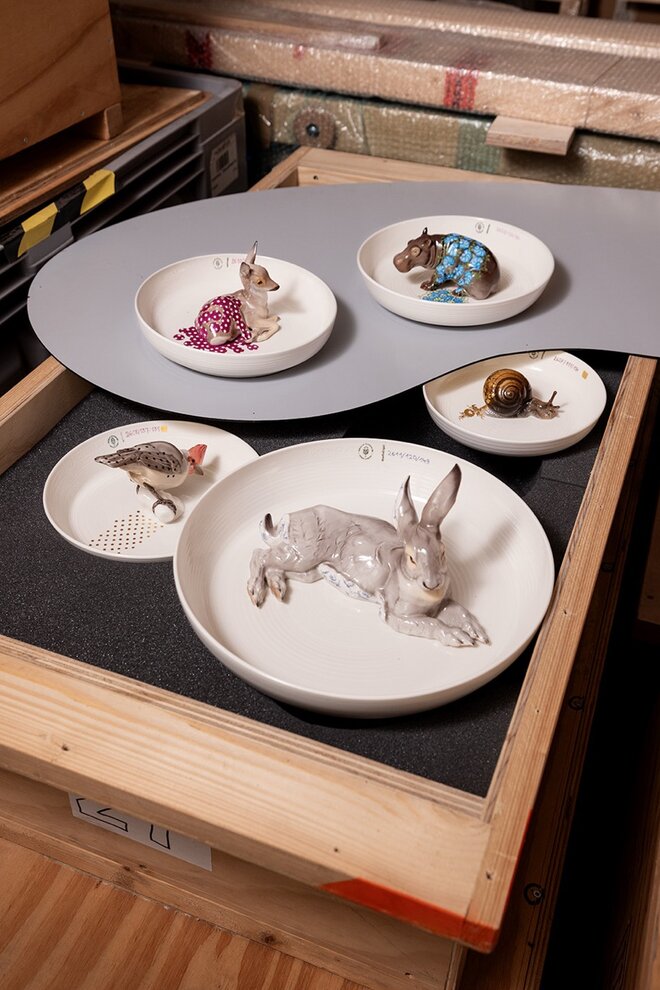
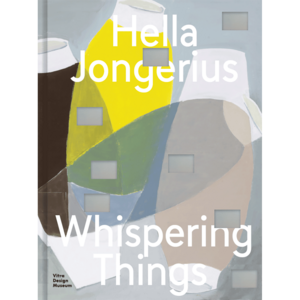
The catalogue accompanying the Whispering Things exhibition documents this part of your past work. Other works are in the collections of renowned museums such as the MoMA in New York, the Victoria and Albert Museum in London, the Centre Pompidou in Paris, or the Neue Sammlung in Munich. How does this affect your daily work as a designer? Do the achievements of the past ever stand in the way of developing new work?
It is always about relationships. The curators of these museums have followed my work since my beginnings. That is why I focused on these four. When I was working on my archive, I asked them whether they would like to include additional objects. Because I think it is important that there is not just a single object somewhere. There should be a body of work in each of these museums. Nevertheless, this does not influence me when developing new work. In a way, my archive is present in everything I do, because it follows a continuous line of thinking. The concept of my attitude has essentially been the same from the beginning.
With AI, design ideas can now be visualised quickly and easily. Often the results still look very kitschy—but that might change in the coming years. Do you see AI more as a challenge or as an opportunity?
I think it is an opportunity, but I do not use it myself. What I find interesting is that consumers can inform themselves about objects—about how they are made or how to repair them. I have always liked new technologies because they are exciting.
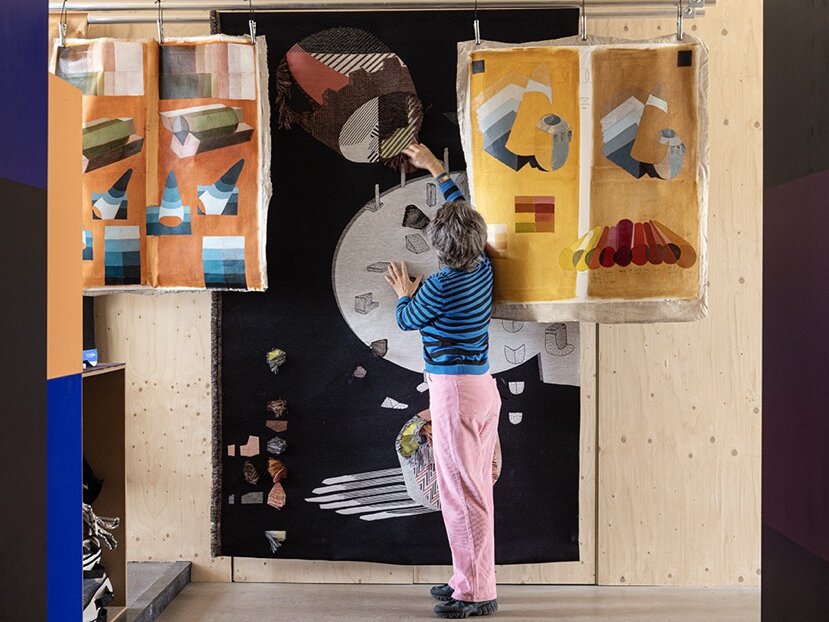
You are well known for integrating craftsmanship into industrial production processes. Could this approach also lead to innovations in circular design methods? For example, by considering from the outset how an object can be easily repaired by hand?
I think it is very good that today you can bring your chair back to Vitra and have it repaired. I find that a very good concept. When we buy a product, we as consumers also take on the problem that comes with it. However, responsibility for recycling, repair, and the proper handling of materials at the end of a product’s life cycle should lie with the companies, not with us. This theory is not mine; it is described in the book Material Matters by Thomas Rau and Sabine Oberhuber. It would lead to much better product quality, because companies would carry the burden if everything came back to them. We need new laws for the use of certain materials and for certain production methods. As a designer, you have to think about such issues and not only about creating new things.
What advice would you give to young designers today?
Try to find the right question. I think that is crucial. Connect yourself with a group, a museum, or an institute—or build your own communities. Alone, your voice is too weak. So much is happening; the world is on fire. I feel responsible, and I hope young designers also feel responsible to find solutions to the problems we are facing. Show what your handwriting is, what your vision for the world is. At some point, recognition will come. The telephone will ring. But it takes time, and it is not enough to sit behind a computer and produce some Insta stuff. It requires commitment—real making, real doing. When you come from an academy, you know nothing about the real world. So: read books. Philosophy, politics, economics—whatever interests you. You have to challenge and educate yourself, because our profession is not just about making things.
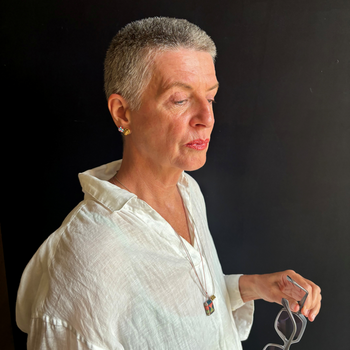
About Hella Jongerius
Hella Jongerius was born in De Meern near Utrecht in the Netherlands in 1963. She studied industrial design at the Design Academy Eindhoven from 1988 to 1993 and became interested in the connection between craftsmanship and industrial production early on. In 1993, she founded the Jongeriuslab studio in Rotterdam. She has designed for Vitra, Maharam, KLM, IKEA and Royal Tichelaar Makkum, among others, and developed an approach that integrates material research, colour and traditional techniques into contemporary product design. In 2008, she relocated her studio to Berlin. Jongerius' work has been exhibited in major museums such as the Museum of Modern Art (MoMA) in New York, the Design Museum London, the Vitra Design Museum and other institutions worldwide, and is part of important collections of contemporary design.