Design History in the Bathroom
1. Selecta (1968)
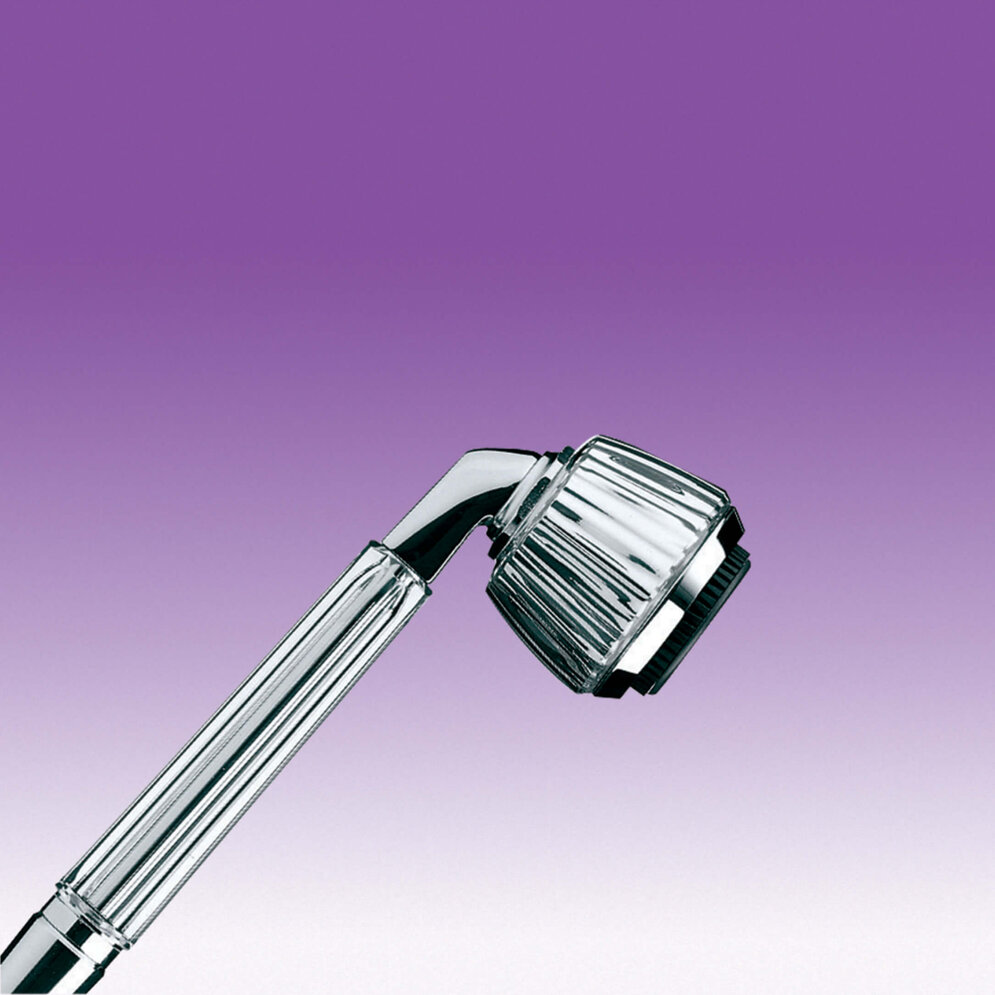
In 1968, the Selecta hand shower was the product the market had been waiting for. The company went on to sell 30 million units over the following decades. Selecta embodied a new way of life: the bathroom was no longer reserved solely for personal hygiene – it was also a place where one could have fun. In that sense, the Selecta was a quintessential product of the 1960s. Visually, it adhered to the classic, functional industrial design tradition of the Werkbund and Bauhaus, but the Plexiglas on the shower head was cutting-edge and brought the spirit of the late 1960s into the bathroom. A twist mechanism allowed the water jet to be adjusted to a hard or soft spray. Selecta struck a chord with an entire generation. Hardly a single newly built detached house in West Germany in the early 1970s was constructed without a Selecta hand shower in the bathroom.
2. TriBel (1974)
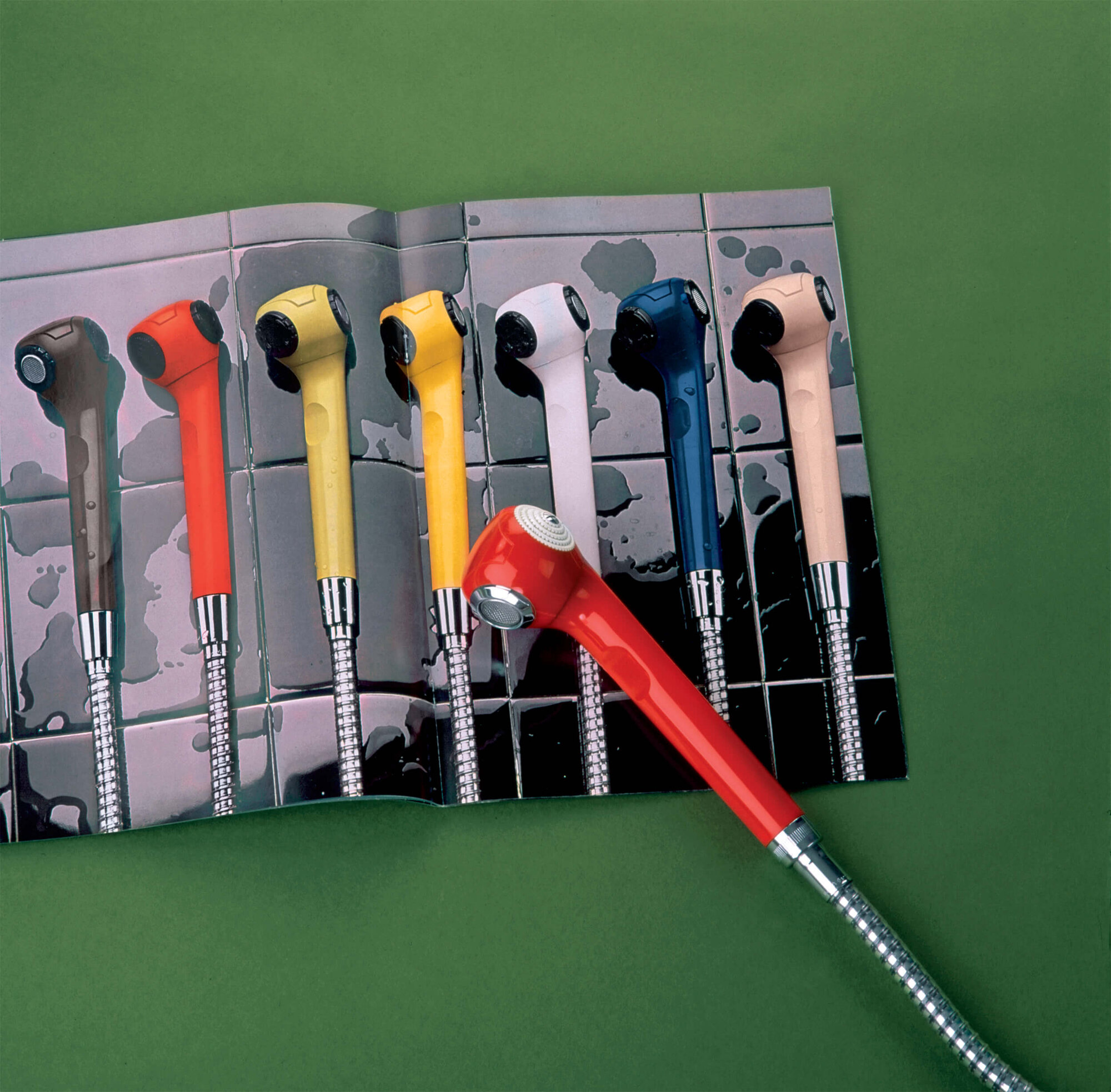
What began modestly with Selecta reached its full potential with a new model. The TriBel offered water fun for all ages in the bathroom. The hand shower, available in six trendy colours, is a 1970s design icon. Its spherical head had three different water outlets around its circumference. Depending on which outlet was facing downwards, the water would be dispensed as a massage jet, a cascade or a shower. This stroke of genius was the result of a collaboration between the Esslinger Design studio and the engineers at Hansgrohe. This marked the beginning of a wonderful friendship.
3. Allegroh (1981)
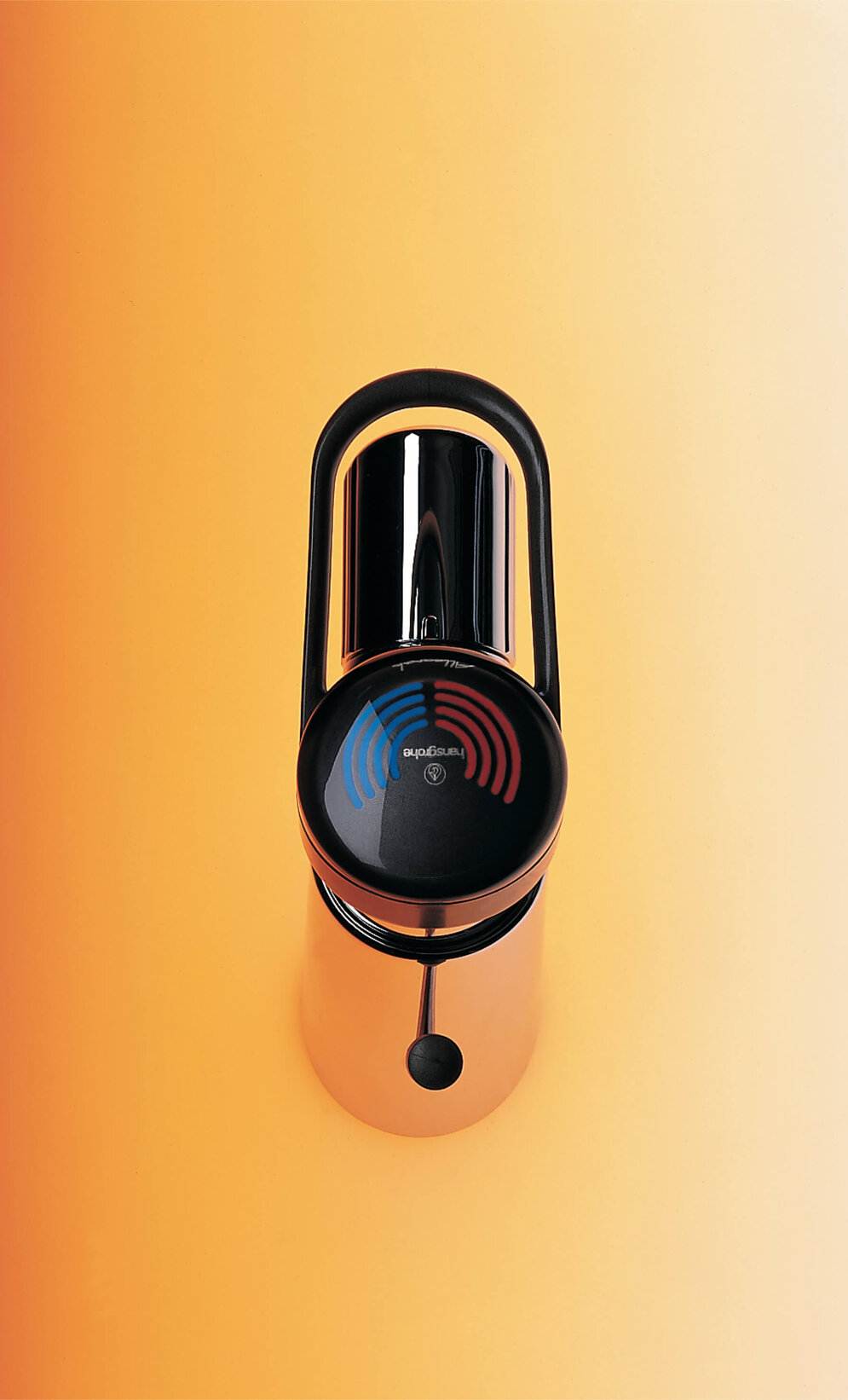
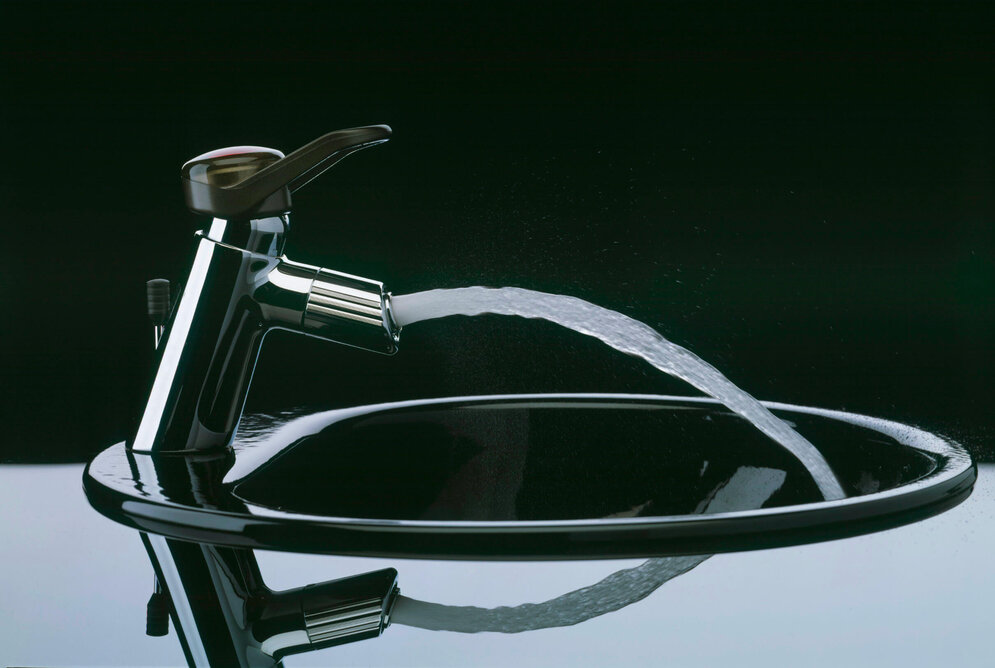
Together with Esslinger Design, Hansgrohe took the next major step in product development in 1981: with Allegroh, the company launched its first in-house range of taps. In terms of design, Allegroh is very much a child of the 1980s. Cool chrome instead of bright colours, dynamic, angular lines instead of rounded shapes. Yet Allegroh also offered a clever twist, much like the TriBel: the spout could be rotated 360 degrees. This allowed the water jet to be directed to every corner of the washbasin – or even to drink directly from the spout with ease. However, another detail of the Allegroh set an even greater precedent: its bow-shaped handle. With its help, the tap could be operated effortlessly even with the little finger.
4. Uno (1985)
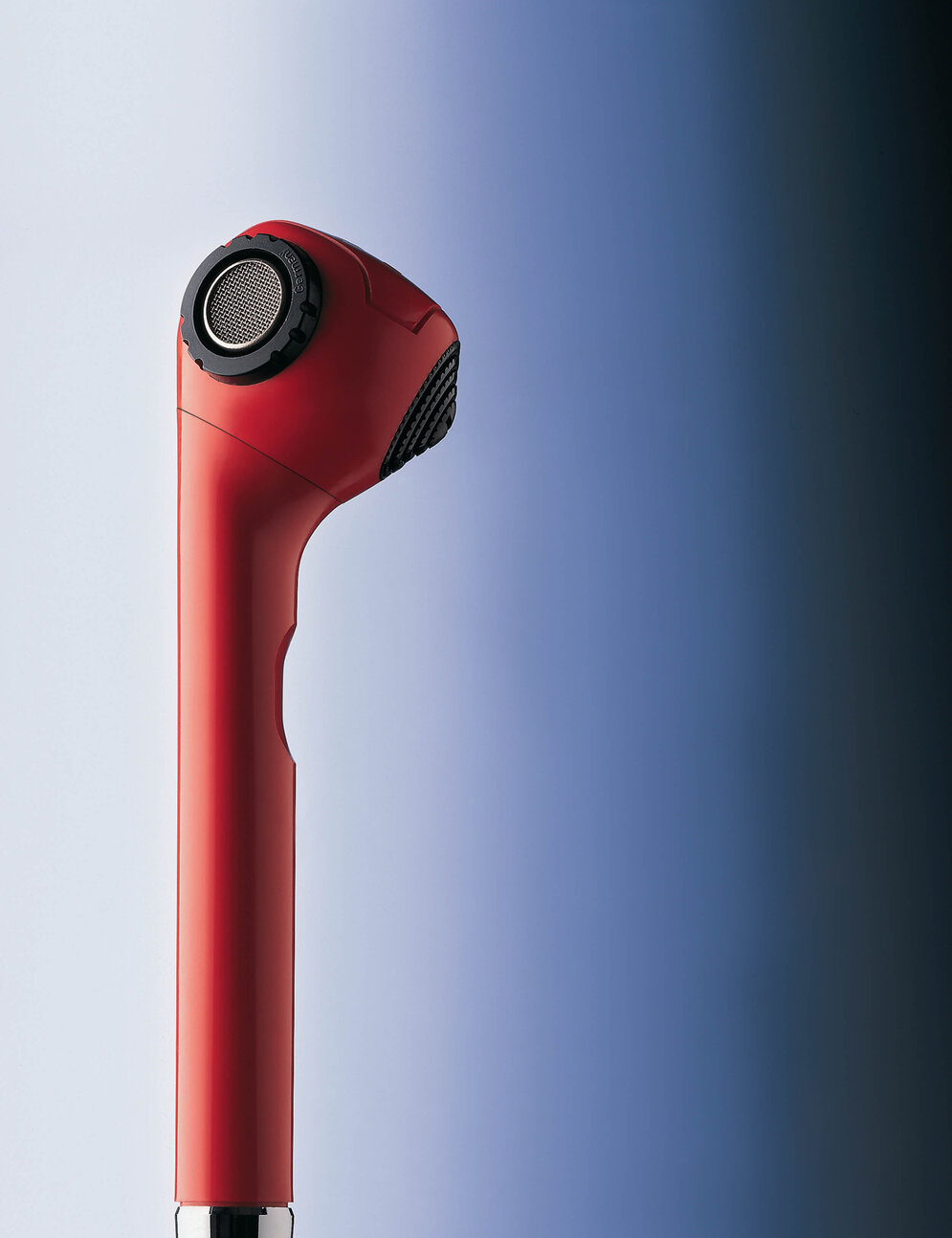
The Uno shower mixer and hand shower, launched in 1985, embodied the design DNA of both the TriBel and the Allegroh. From the outset, the design by Frog Design – as Esslinger Design has been known since 1982 – envisaged a colour-rich scheme. Bright red and vibrant yellow featured alongside more understated versions in white and grey. The Uno inherited the practical bow-shaped handle from the Allegroh. Colourful and child’s play to adjust – qualities that mattered to the creators of the shower fitting. After all, the target groups were intended to include not only young families but also nurseries and schools.

5. The Shower Temple (1989)
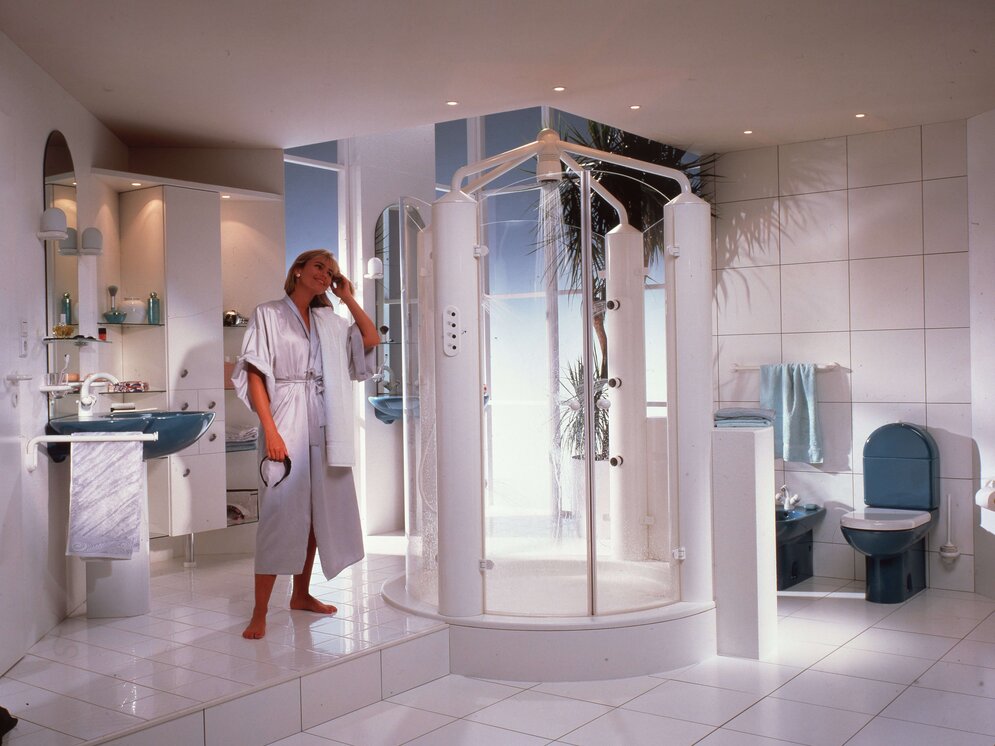
The ‘Shower Temple’, launched by Hansgrohe in 1989, was a real game-changer: in this innovative enclosure with an integrated shower system, the water didn’t just come from the overhead or hand-held shower. Water jets on the walls massaged and relaxed the body from head to toe. The first Shower Temple was, very much in keeping with the times, a piece of postmodern mini-architecture for the bathroom. Completely freestanding, the shower enclosure consisted of four columns supporting the side jets. Curved glass walls were positioned between them. A tubular structure formed a small open roof that supported the overhead shower.
6. Arco (1991)
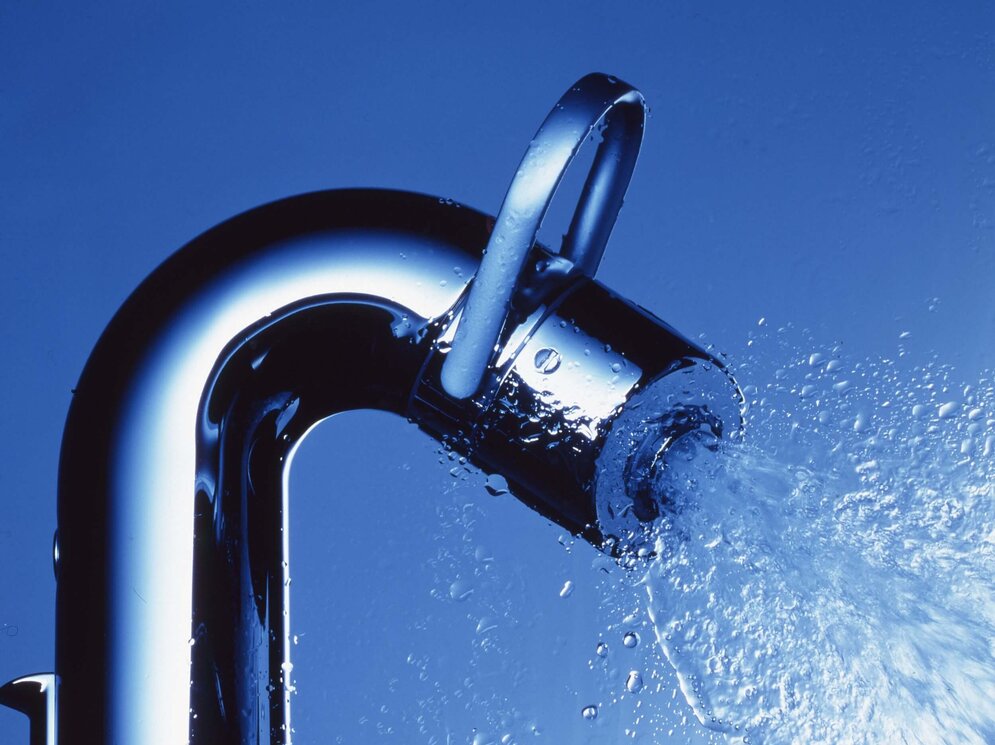
With the Arco range of taps, Hansgrohe broke new ground. A young design studio from Stuttgart, Phoenix Design, was responsible for the design. The basic concept behind Arco is as simple as it is ingenious: the mixer tap and spout are housed within a metal body shaped like a curved tube. In the single-lever version, the tap is operated via a lever handle. As with the Allegroh, the water outlet can be swivelled. Hansgrohe presented the option of connecting a hand shower directly to the basin tap as an innovative solution. The idea did not catch on. The Arco design concept, on the other hand, became a classic that is still referenced and further developed today.
7. Joco (1993)
Whilst the Phoenix design studio had kept the forms of the Arco range strictly minimalist, the designers showed their playful side with the Joco children’s hand shower. Specially tailored to children’s needs, the four-coloured hand shower takes the form of an animal’s head: a yellow nose as the spout, a red head with googly eyes and a green crest, and a blue neck as the handle. The nose delivers either a strong or a gentle stream of water. The design is a perennial favourite: known as the “Jocolino”, the design can still be found today, with only minor changes, in Hansgrohe’s range.
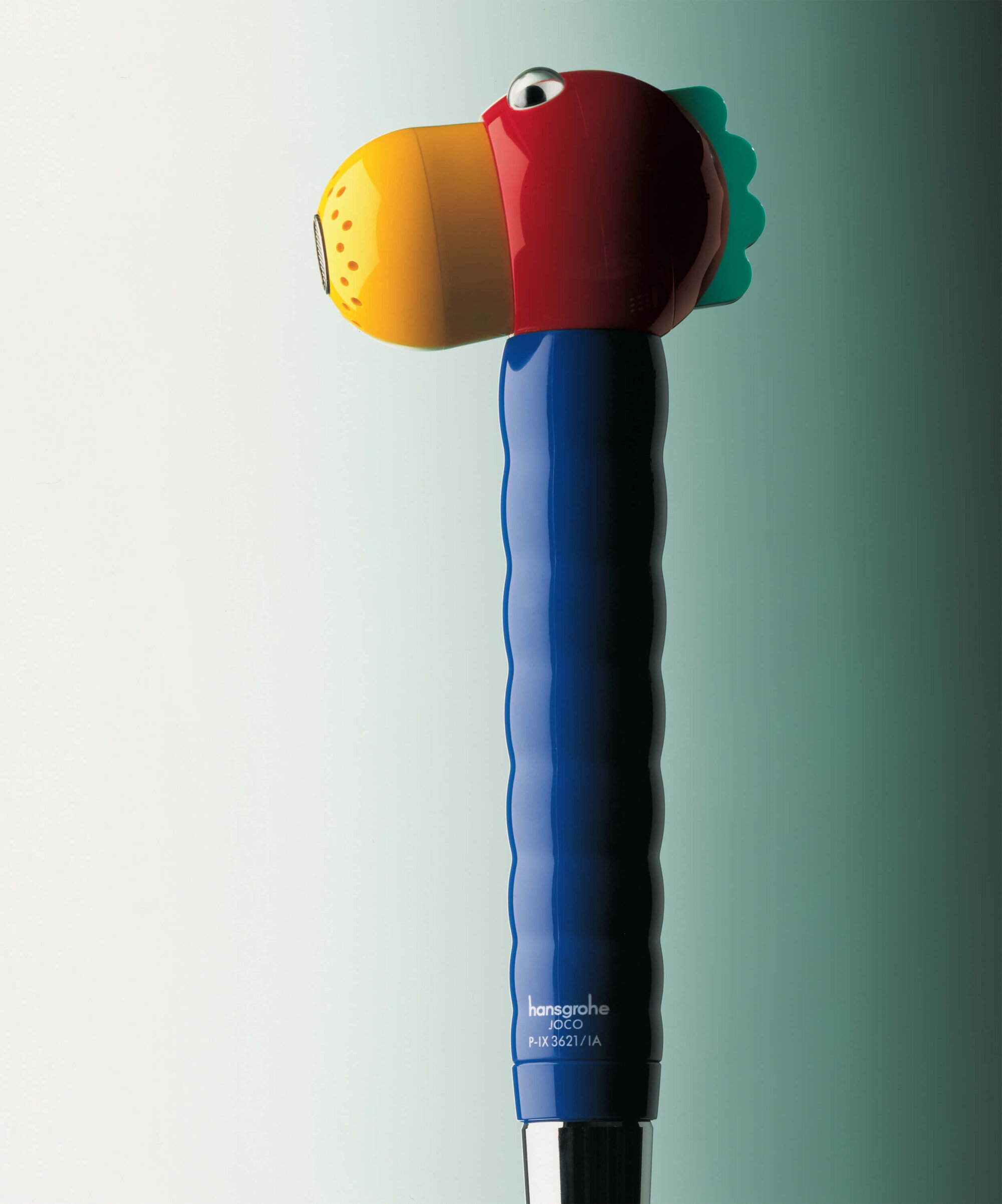
“The product is specially designed to meet children’s needs. Its animal-like appearance, complete with a crest on its head that children can feel and fascinating googly eyes, brings the children’s shower gel to life and makes it fun. The little ones are still thrilled by it today.”
Tom Schönherr, Phoenix Design
8. AXOR Starck (1994)
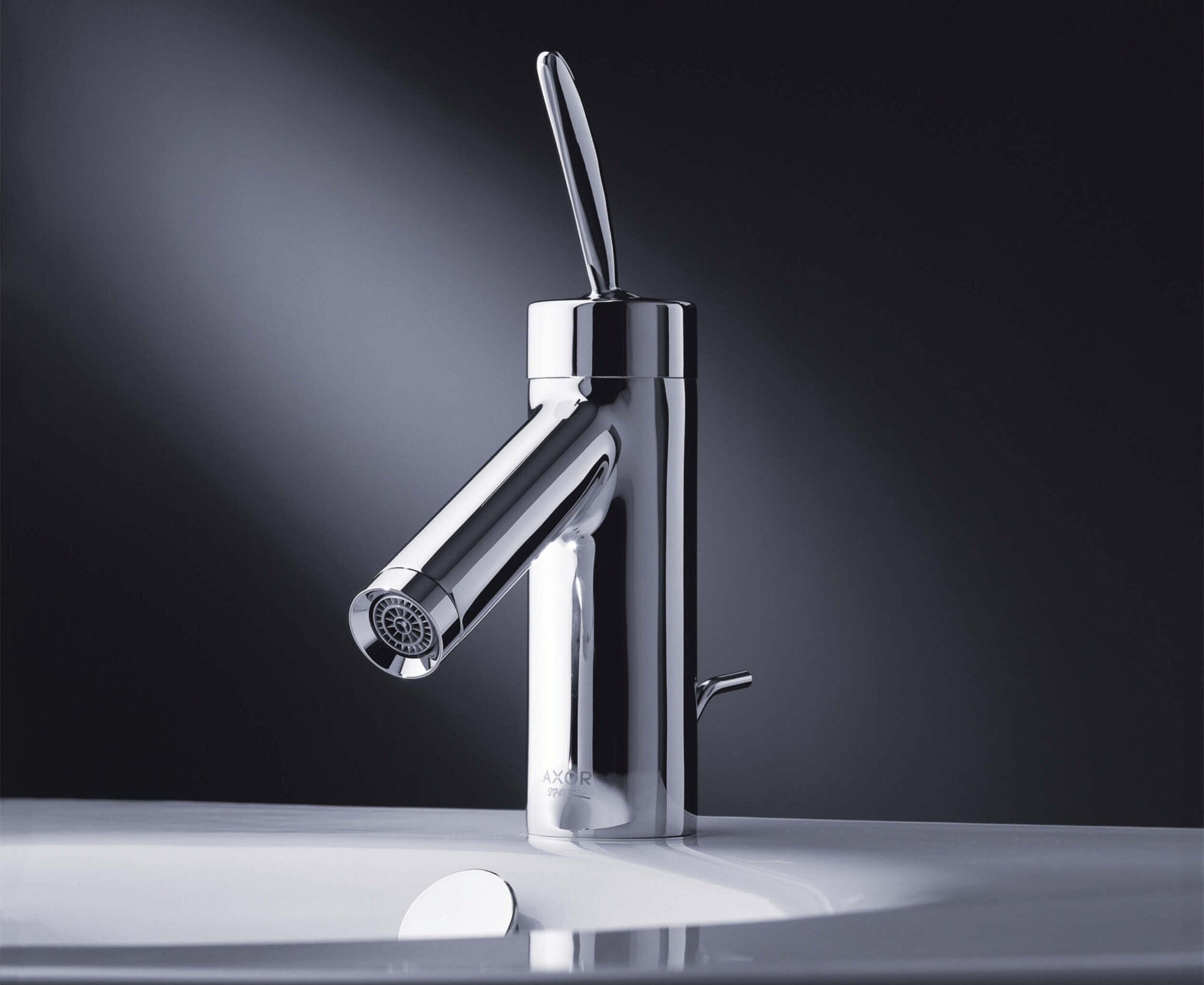
In the early 1990s, Hansgrohe decided to launch a new design brand for the luxury segment. For the first AXOR tap, they commissioned none other than the superstar of design, Philippe Starck. The AXOR Starck, unveiled in 1994, was a sensation: instead of the lever previously used to operate the mixer tap, the company had developed a completely new joystick control. The upright lever regulated both the water flow and the temperature. The designer shaped it into an abstract, sculptural form reminiscent of an elongated leaf. AXOR Starck remains a staple of the company’s range to this day and is now also available in a second version featuring a stereometrically shaped joystick.
“The idea was to develop a design that showed a deep and fundamental respect for water. It is our life. (…) And so I thought of a farm. The relationship with water on an old farm is very straightforward. The water comes from a spring. There is a pipe. You have a bucket. You have a pump. And the water flows into the bucket. The idea was to design something as simple as that.”
Philippe Starck
9. Raindance (2003)
With Raindance, Hansgrohe and Phoenix Design ushered in a new design trend in 2003: the hand and overhead showers in the range featured round, flat shower heads with an unusually large diameter. The hand showers had significantly shorter handles than was previously the norm. This was intended to enhance ergonomic handling. But the design was not the only innovative aspect of Raindance. The showers produced a wide, extremely soft water jet. Here, the focus of product development was no longer on cleaning, but on the experience. Raindance was a huge success and a model for many similar products that continue to shape the market today.
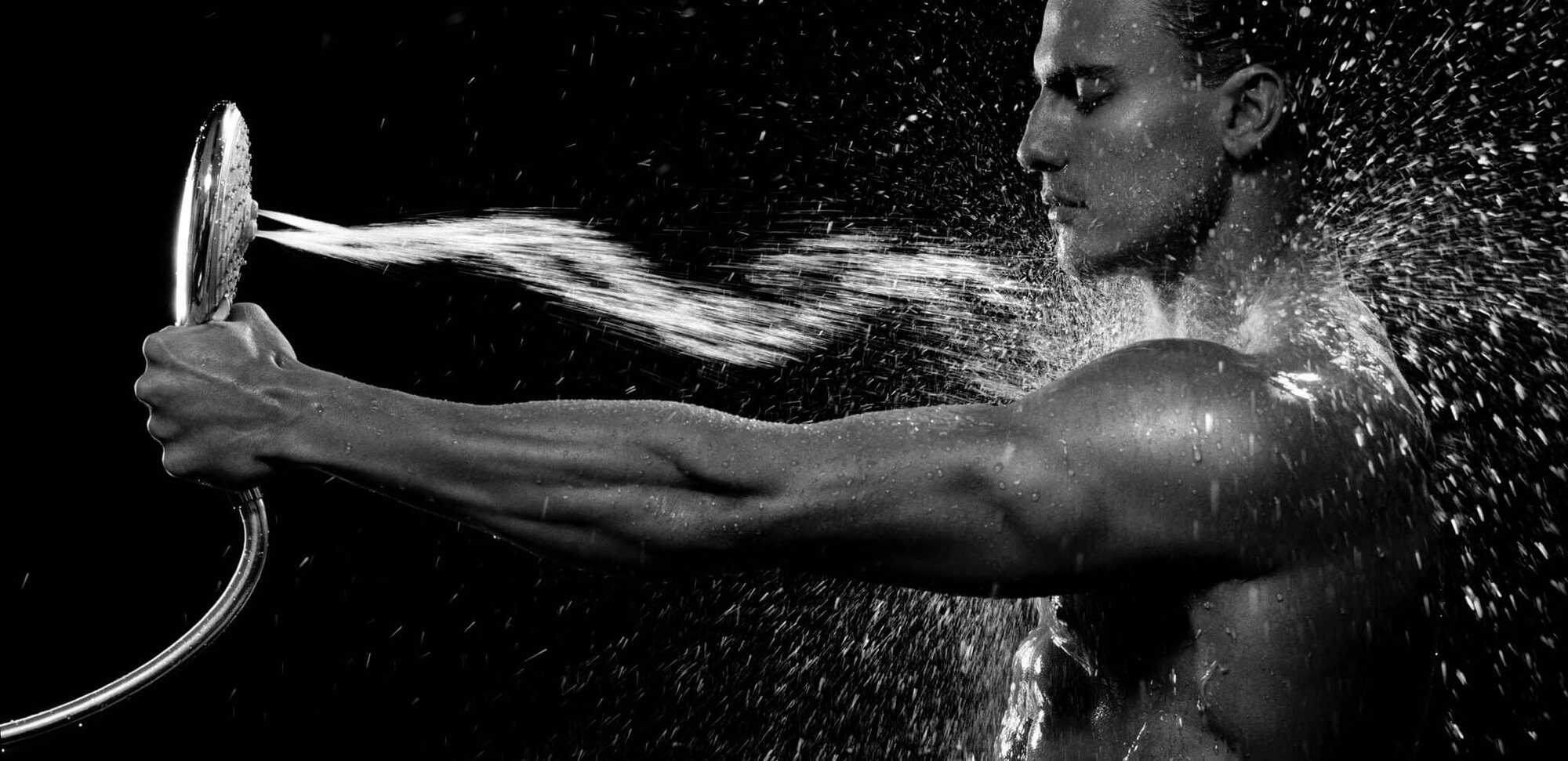
“The Raindance hand showers were the first to really evoke a sense of well-being. Until then, hand showers looked completely different: a small spray disc, a bulky head, and lots of unnecessary spray modes. With the Raindance, we wanted to focus on the sensory experience of water (…). That was a major step forward in design.”
Tom Schönherr, Phoenix Design
10. AXOR Starck V (2014)
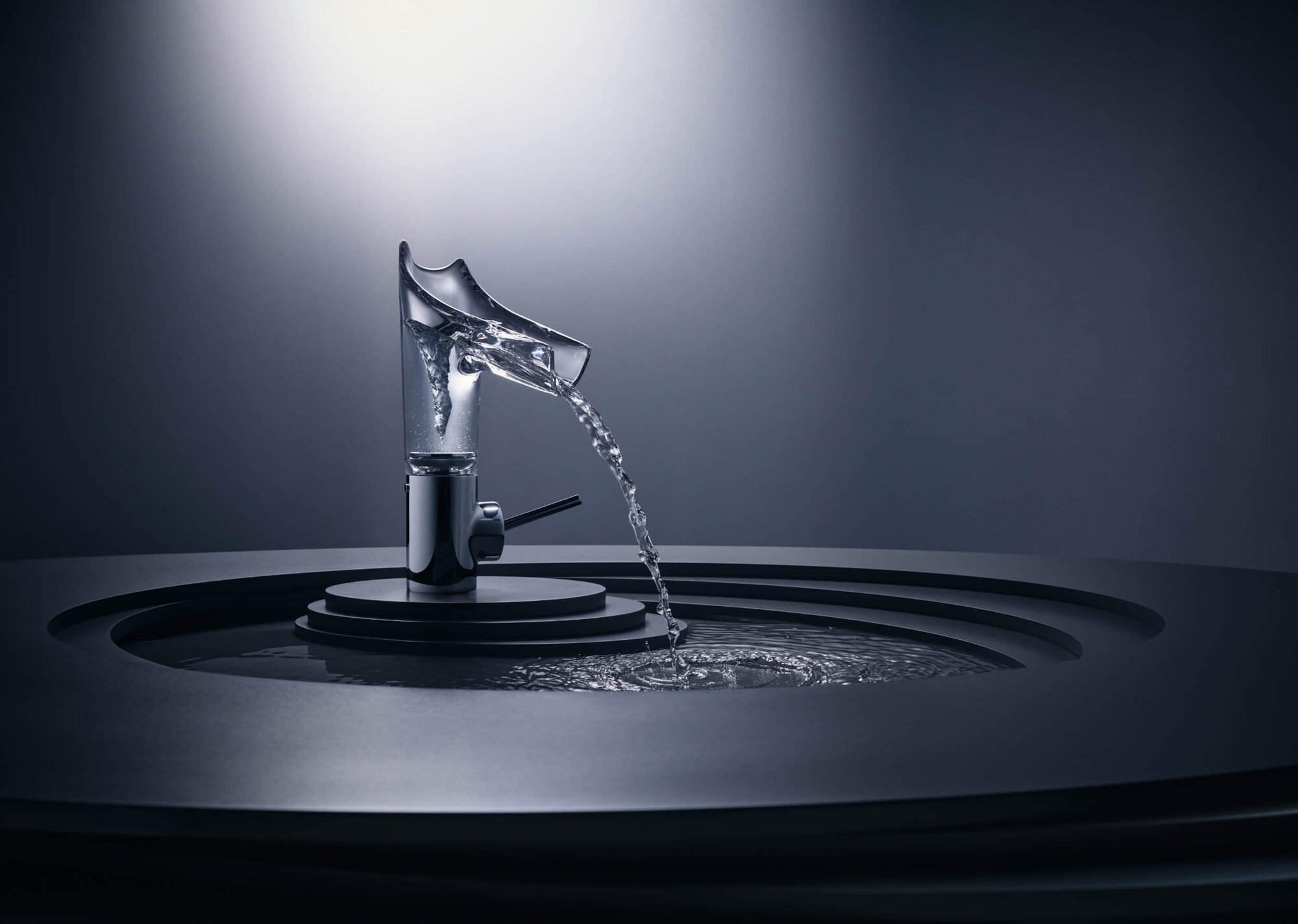
Twenty years after AXOR Starck, Philippe Starck has managed to repeat his stroke of genius. Once again, he has turned conventional ideas on their head: in the form of a glass tap with an open spout. With AXOR Starck V, the water is set in motion within the glass body and then flows into the basin as if from an open hand. Never before has water been presented in the bathroom in this way. All technical aspects recede into the background, transforming the tap into a small fountain sculpture. Here, form does not follow function; instead, technical excellence transforms the flow of water into a luxurious spectacle.