Seven Pilgrimage Destinations for Panton Fans
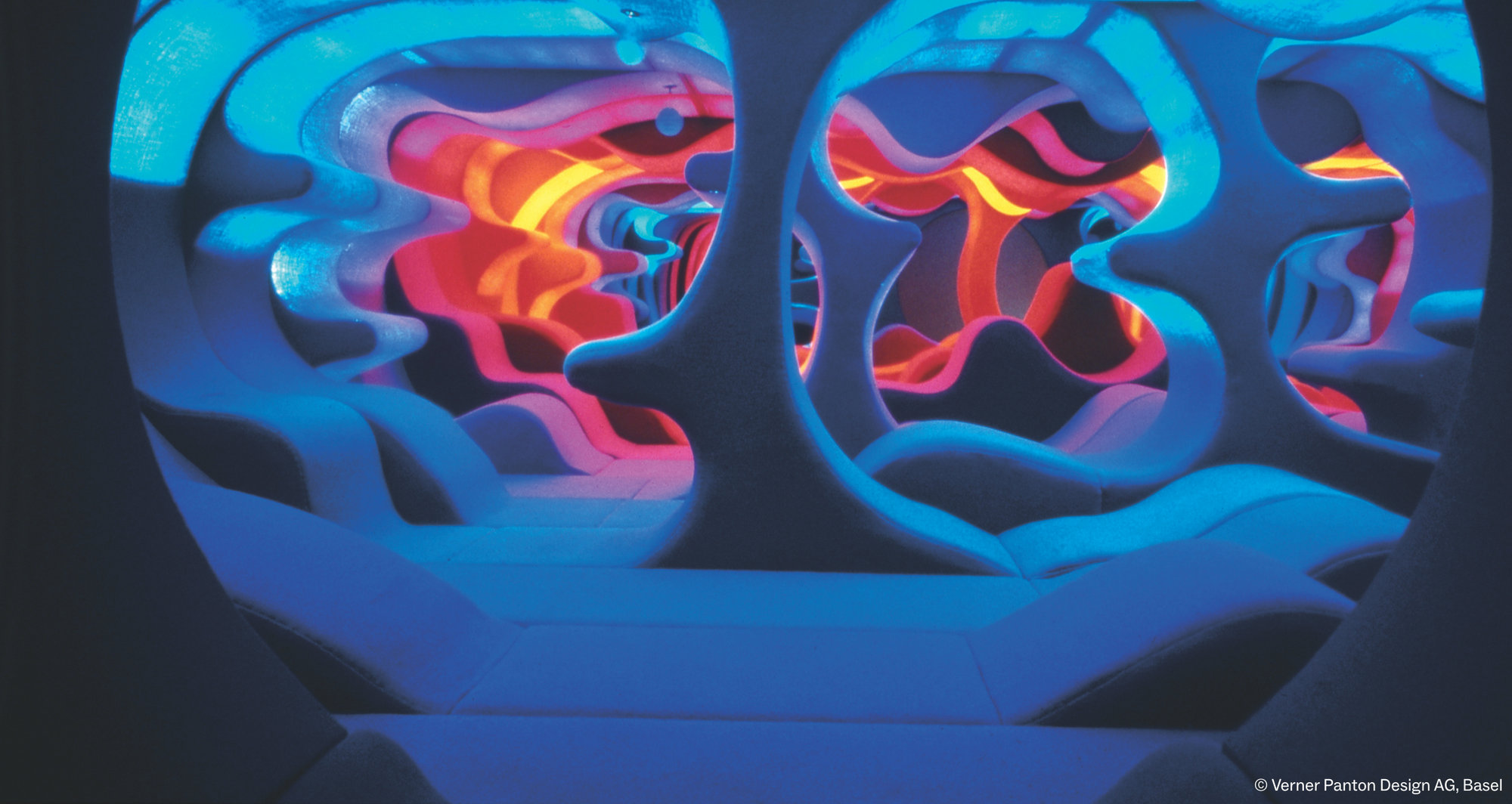
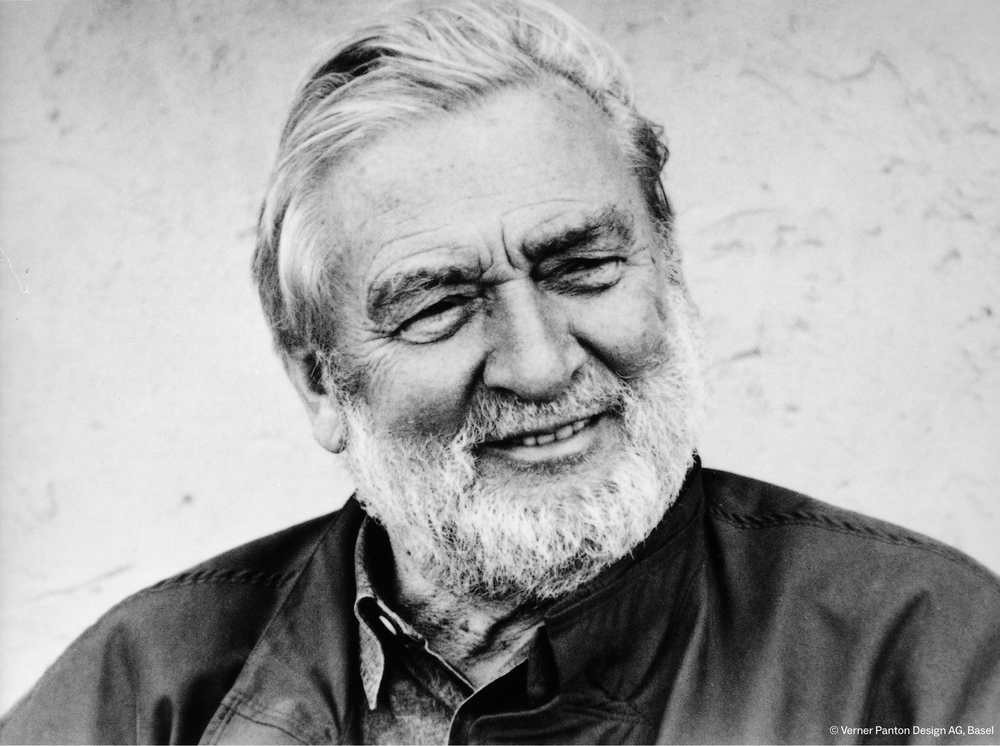
He is considered one of the most influential designers of the 20th century: the Dane Verner Panton. He would have turned 100 on 13 February, making 2026 a Panton year that will be celebrated with exhibitions and anniversary editions of his products. Most design fans probably know him as the designer of classics such as the "Panton" chair or the "Panthella" and "Flowerpot" lamps. But Panton's thinking was much more comprehensive: with spatial concepts such as the Visiona II installation and the interior design for the Spiegel publishing house, he created total works of art from furniture, surfaces, light – and, of course, colours. To mark his milestone birthday, here is a selection of places that are well worth visiting for Panton enthusiasts – from Copenhagen to Hamburg and Berlin to Basel. Here, his work is alive, and visitors can experience his spatial inventions, colour concepts and, above all, his joy in unconventional design first-hand.
Spiegel Canteen, Museum für Kunst und Gewerbe Hamburg
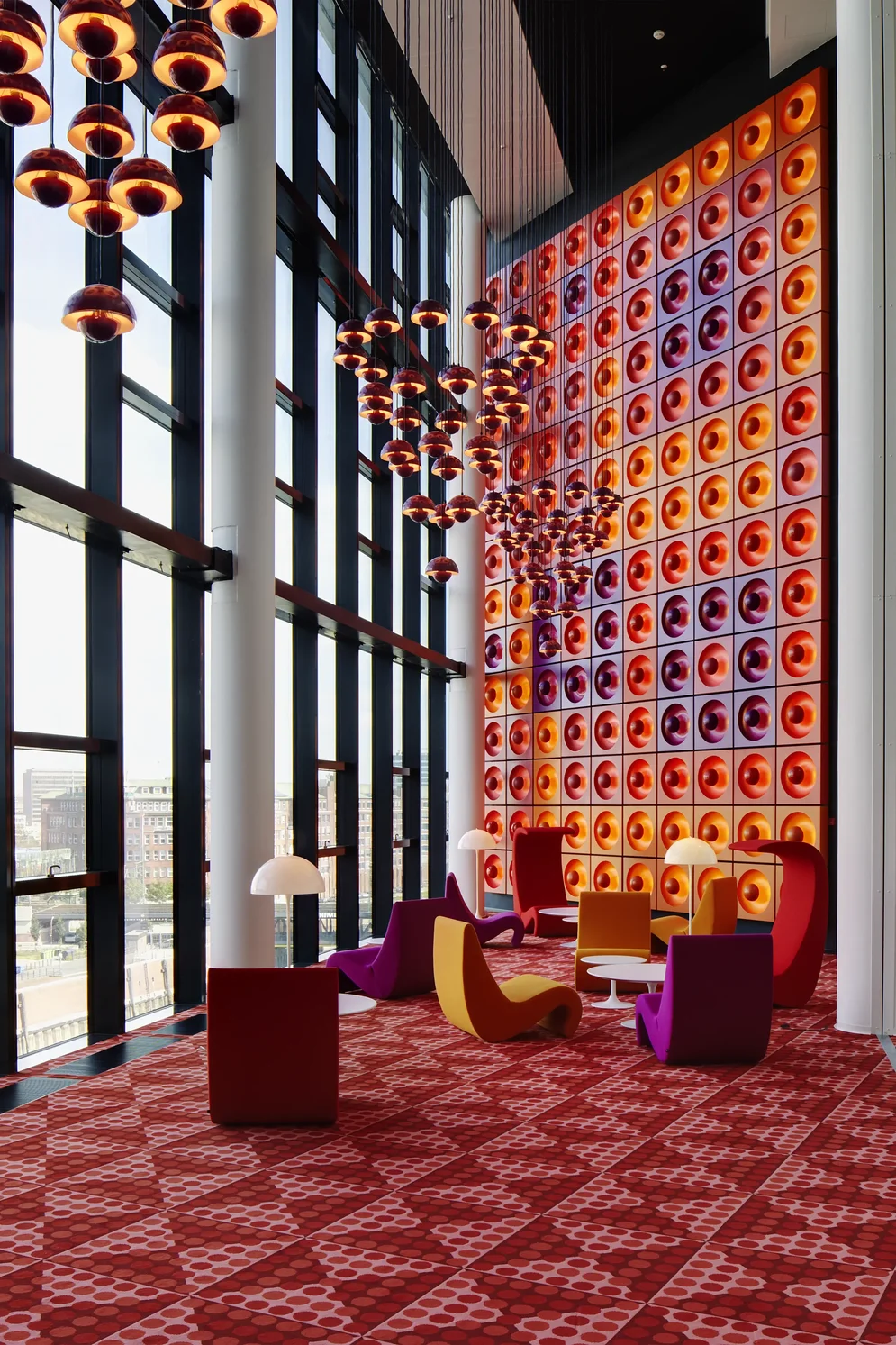
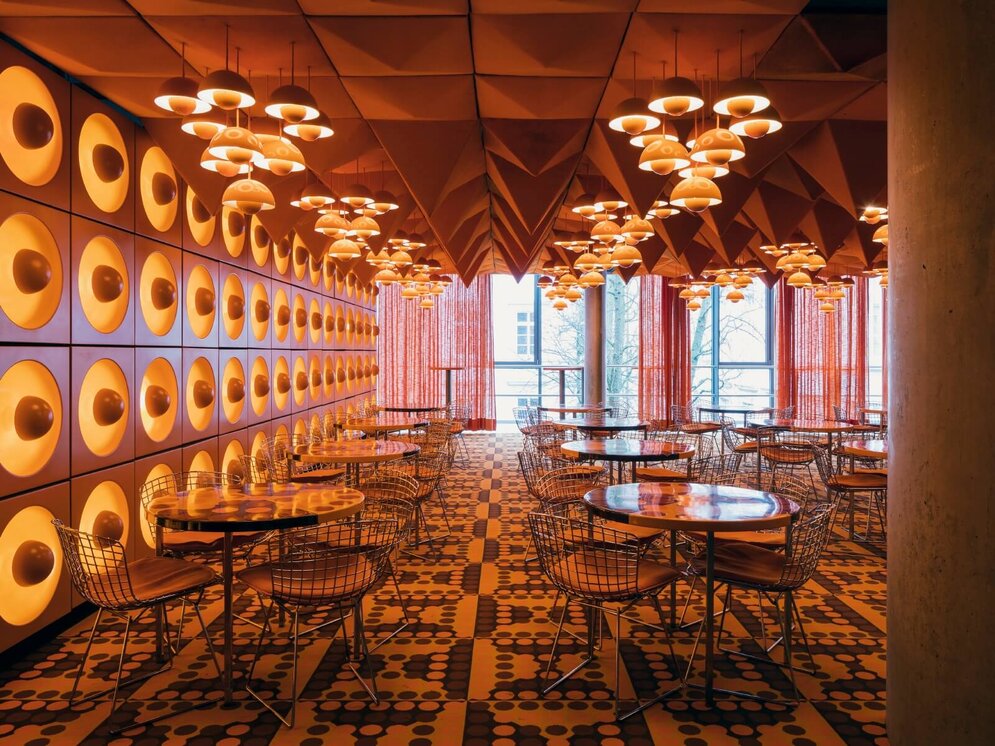
Only the offices were white: in 1969, Spiegel-Verlag commissioned Verner Panton to furnish the new publishing house building on Brandstwiete – an exceptionally large commission. Panton bathed all the rooms in the bold Sixties colours for which he was already known at the time. Starting with the entrance area and the inner courtyard, he also designed the entrance hall, canteen, bar, basement swimming pool, conference room and corridors of the high-rise building designed by Werner Kallmorgen. He turned the publishing house into a psychedelic Gesamtkunstwerk, equipped with, among other things, his own specially designed modular fman luminaire, curtains, carpets, lights and furniture. Each room had its own colour. "When it was inaugurated, many found the design provocative and shocking: A central news organisation did not present itself as neutral, but loud, colourful and self-confident. Colours and shapes became active players in communication and made it clear that rooms are not mere backdrops, but that design can actively shape and leave a lasting mark on society," says Stephanie Regenbrecht, collection manager at the Museum für Kunst und Gewerbe in Hamburg.
The pool soon fell victim to a fire, and other rooms were dismantled in the 1980s and 1990s because they were considered outdated. However, the canteen had been a listed building since 1998. When Spiegel Verlag moved to a new building in 2011, the Museum für Kunst und Gewerbe took over large parts of the original furnishings. Since then, the canteen and snack bar have been one of the highlights of the collection presentation as a permanent room-in-room installation. "The space exemplifies the museum's commitment not only to preserving design, but also to bringing it to life as part of design history and current social discourse. We are currently working on a new layout for these rooms, which will also incorporate parts of the ensemble that have not been on display until now. The aim is to make Verner Panton's approach – translating function into sensation – directly tangible," Stephanie Regenbrecht continues. In the new Spiegel building, the publishing house set up a snack bar in memory of the legendary interior, featuring several Panton objects from the old building. In 1973, a few years after Spiegel Verlag, Panton was also commissioned by Gruner & Jahr, its Hamburg-based competitor, to design an interior. The canteen has also been preserved, and the original furniture moved with the publishing house to a new building in 2024.
Vitra Campus, Weil am Rhein
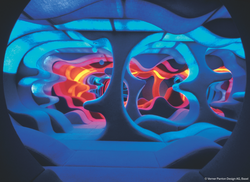
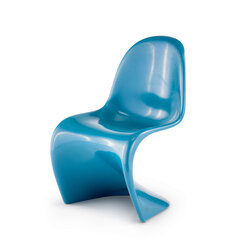
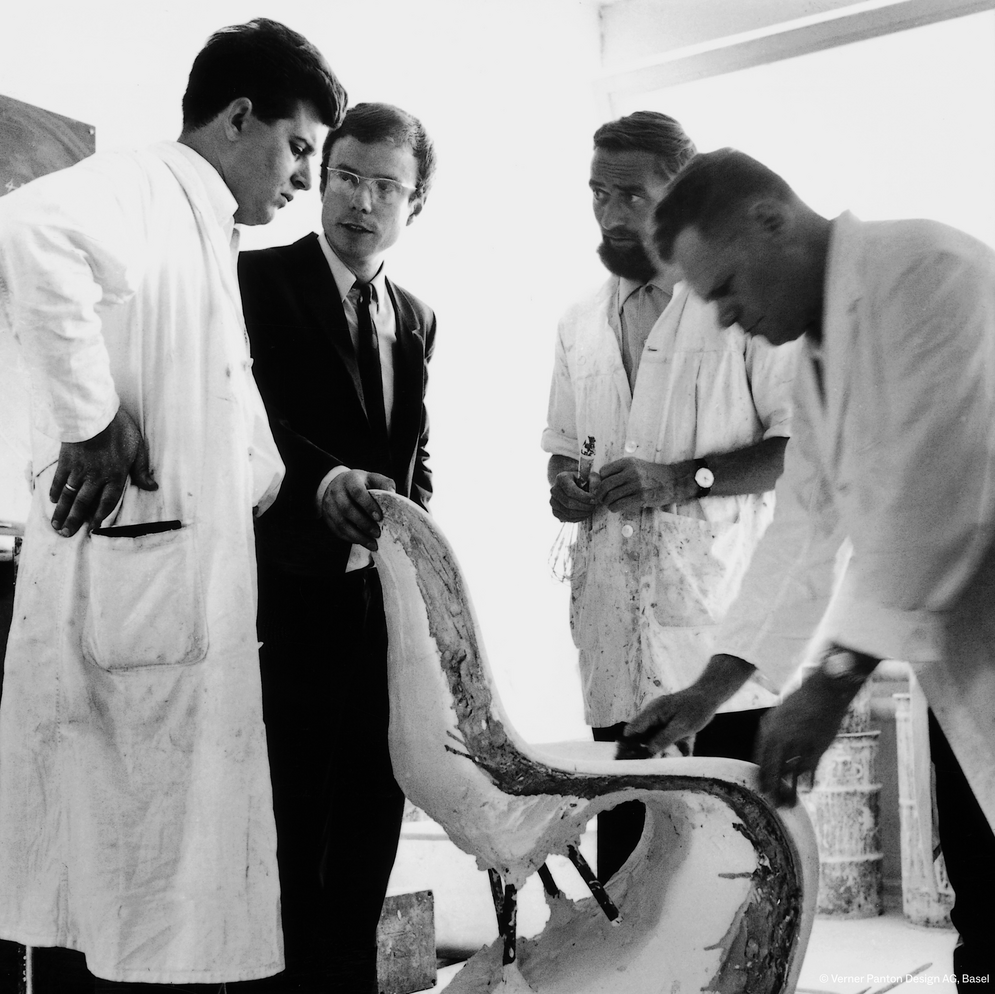
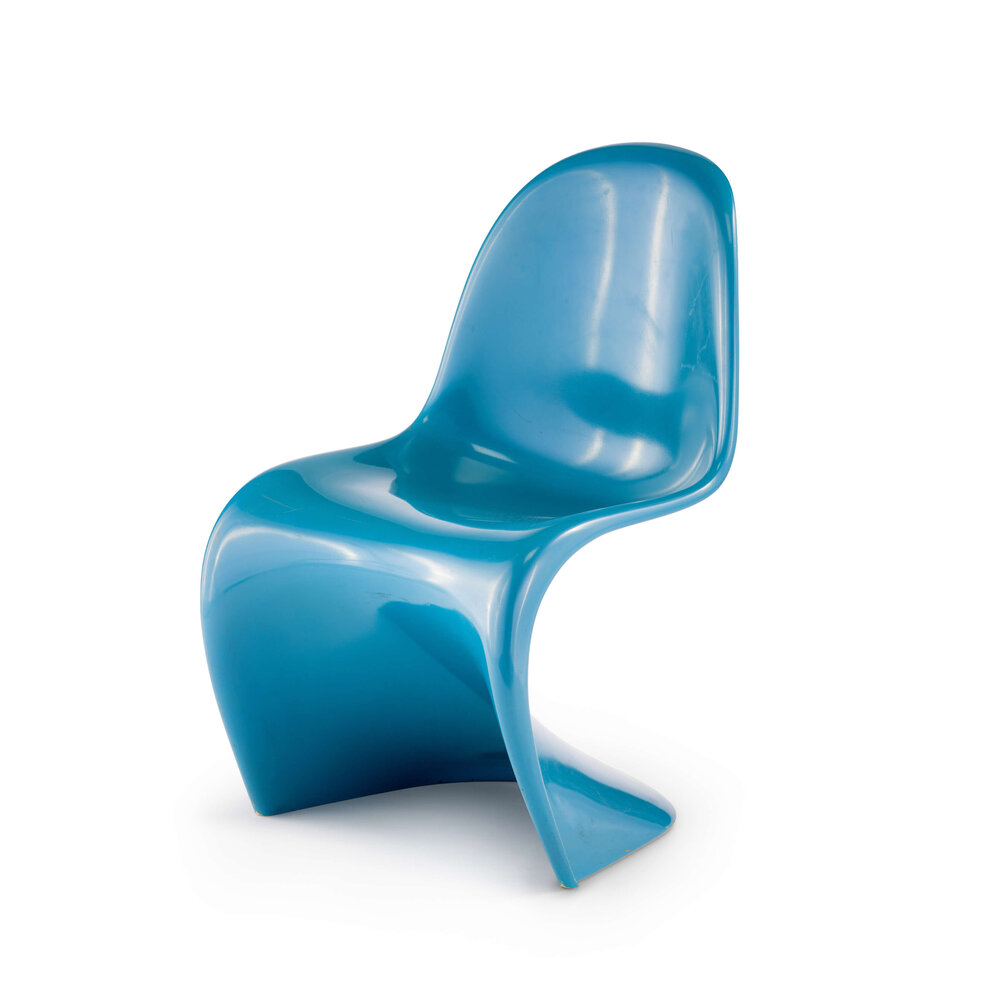
Verner Panton had a special relationship with the Swiss furniture manufacturer Vitra. In 1963, Vitra CEO Willi Fehlbaum was the first to believe in Panton's idea of a cantilever chair made entirely of plastic – previously, the designer had been rejected by manufacturers throughout Europe. Panton moved to Basel specifically to develop the "Panton" chair with Vitra. Today, the chair is one of the absolute classics of furniture design, and Panton's designs are a fixture in the Vitra product range. This special relationship is also reflected in the Vitra Design Museum's collection, which has an extensive inventory of objects, textiles and archival materials by Verner Panton. To mark the 100th anniversary of his birth, the museum is drawing on this Panton collection, one of the most important of its kind, for the exhibition "Verner Panton. Form, Colour, Space". It will be on display from 23 May this year in the museum's exhibition depot on the campus in Weil am Rhein. Part of his work will be presented chronologically and thematically, with separate sections on key objects such as the "Panton" chair and the "Visiona II" exhibition at the Cologne Furniture Fair in 1970. At the same time, the exhibition focuses on Panton's historical context, from new plastics and manufacturing techniques to social upheavals and the fascination with futuristic aesthetics. One highlight is undoubtedly the walk-in reconstruction of the legendary ‘Fantasy Landscape’ from 1970 – one of a limited edition of eight.
Restaurant Kunsthalle and "Panton" Passage, Basel
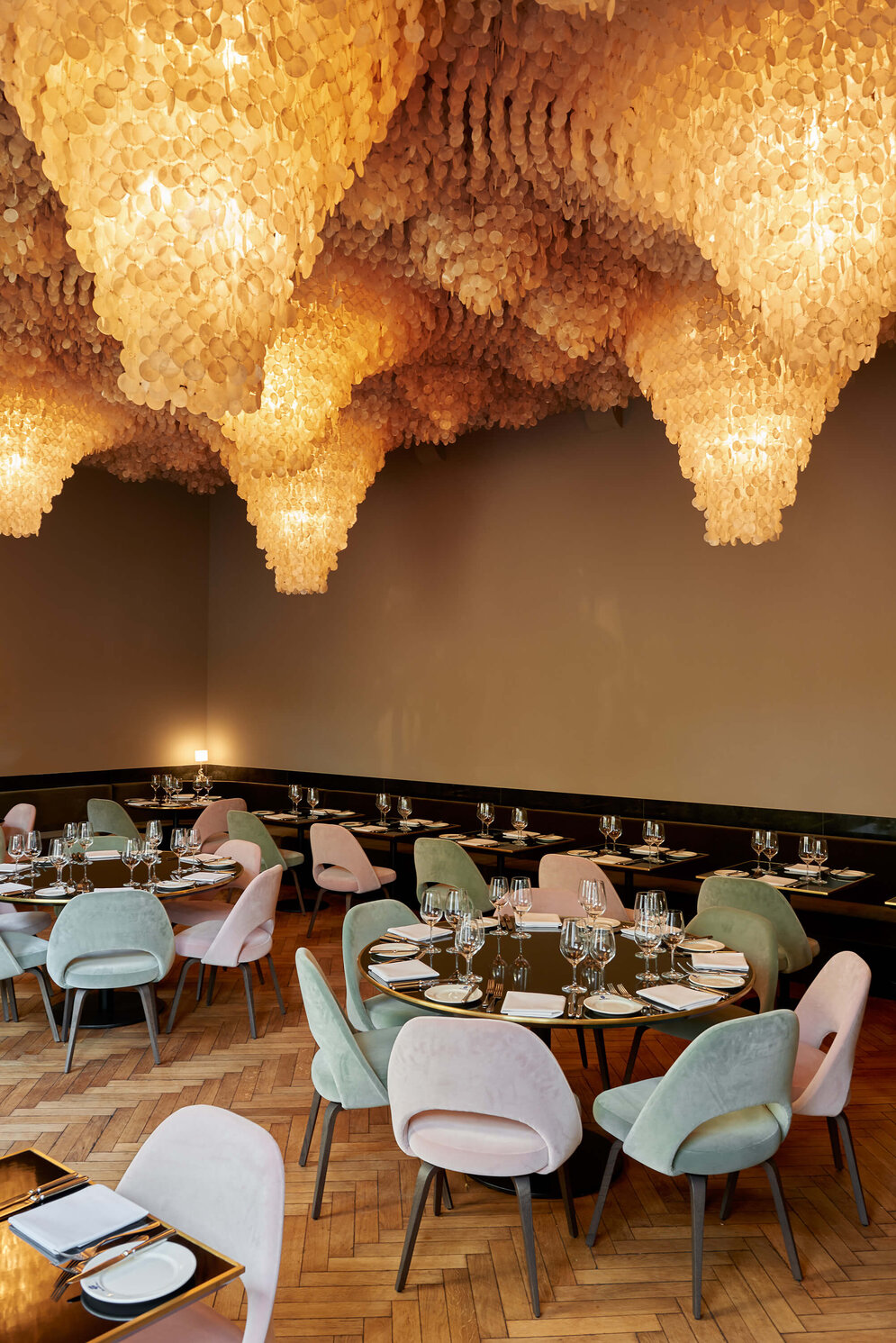
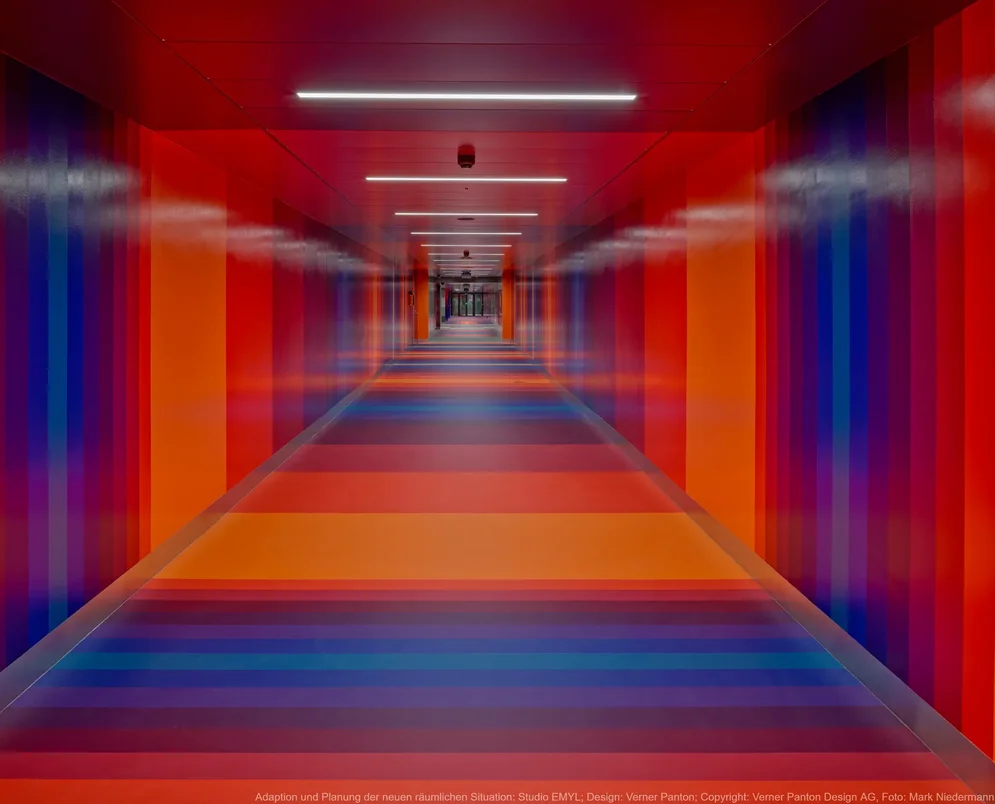
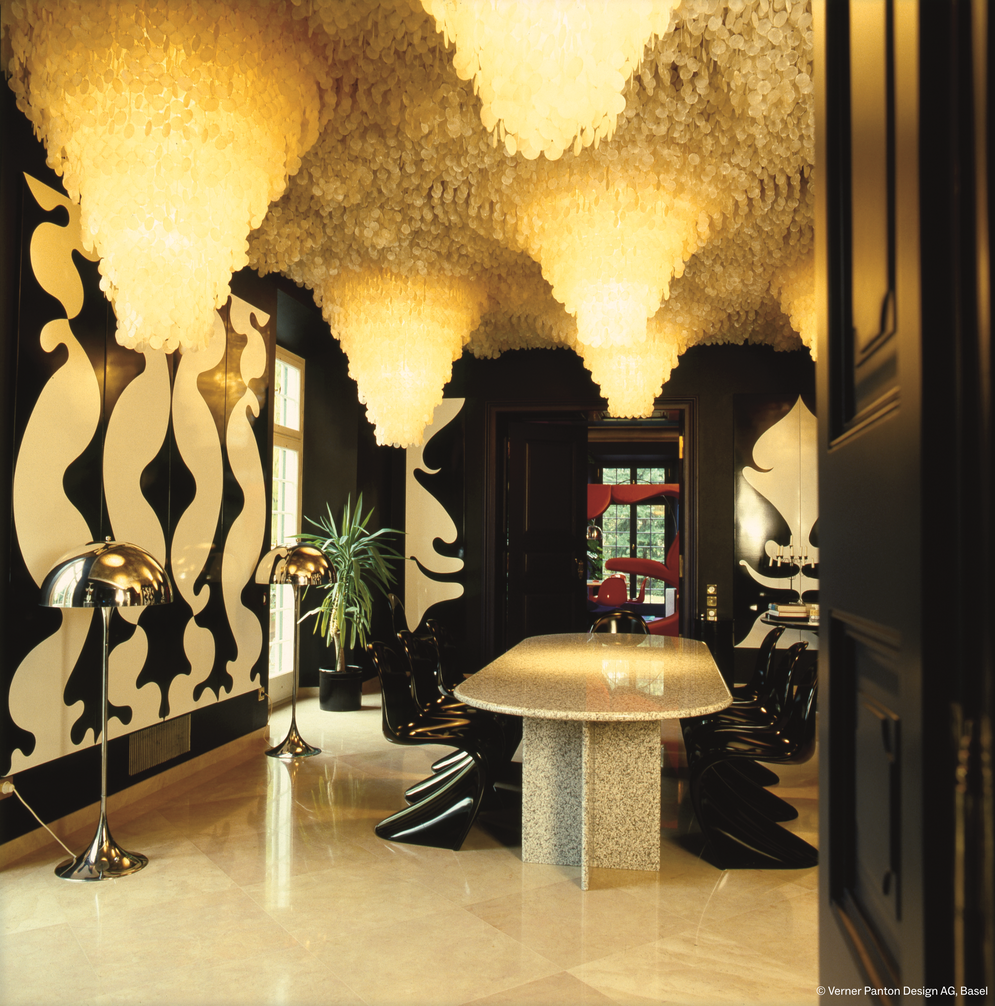
During his time in Basel, Verner Panton lived in the suburb of Binningen, in a house he furnished himself – including the three-dimensional seating sculpture "Living Sculpture" in the living room and a ceiling landscape made of backlit shell tiles in the dining room. The "Living Sculpture" is now in the collection of the Centre Pompidou, while the shell light ceiling has been on loan to the Basler Kunstverein since 2017 and installed in the Restaurant Kunsthalle in Basel. The restaurant was an obvious choice as a new home, as the designer was a regular there, and so the room with the spectacular ceiling now bears the name "Panton Hall" in his honour. Less festive, but all the more colourful, is the so-called Panton Passage, an underground passage to the Basel University Hospital designed by Verner Panton in 1978. The original corridor fell victim to construction work a few years ago, but was reconstructed into a shorter edition in the immediate vicinity and has been open to the public since 2024. Now, as originally intended, the floor is covered with the colourful patterns typical of Verner Panton.
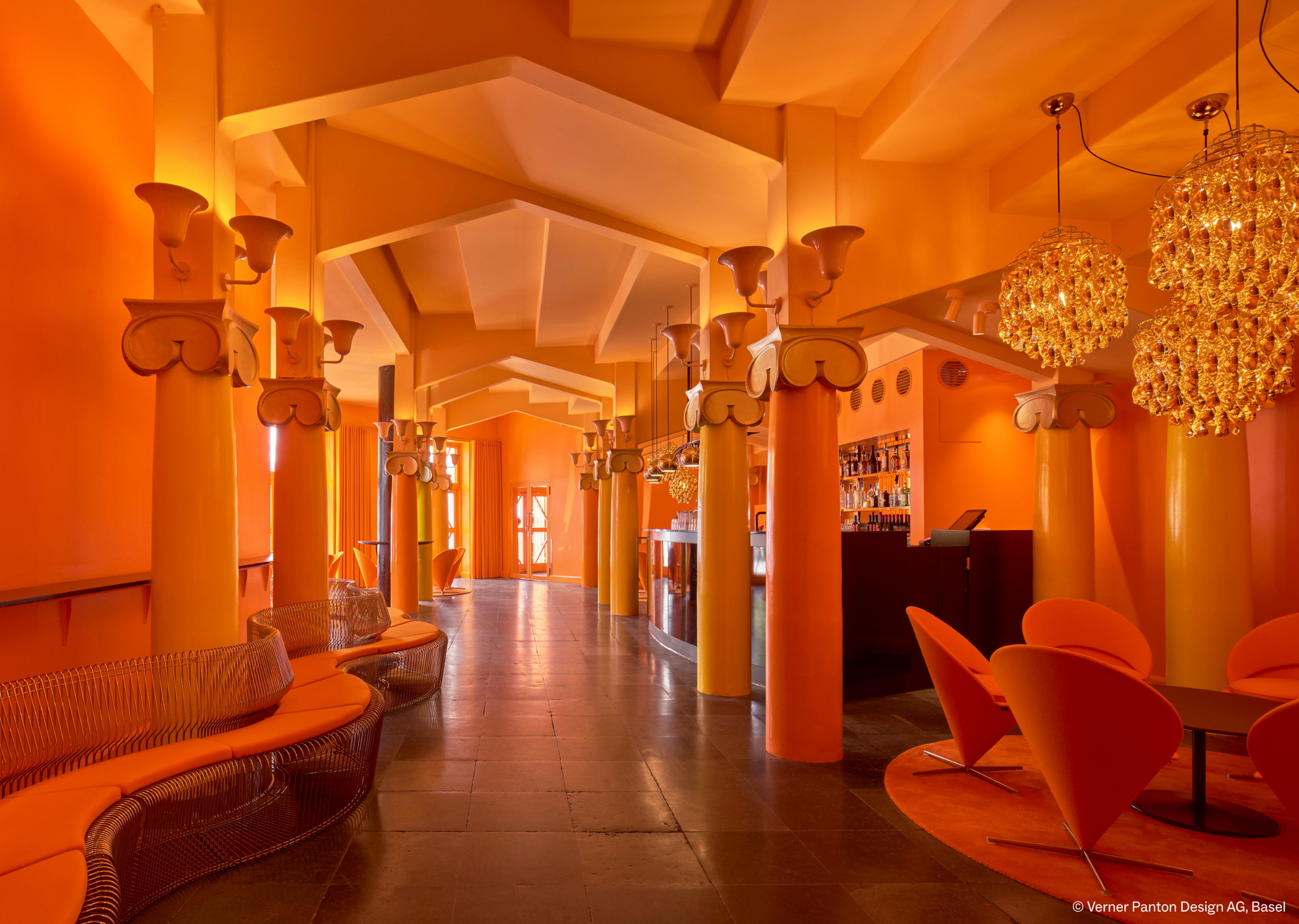
Kunstgewerbemuseum Berlin and Circus Building, Copenhagen
The second major exhibition in this anniversary year is being organised by the Kunstgewerbemuseum at Berlin's Kulturforum. Under the title "World of Colours. 100 Years of Verner Panton", the museum will be showing over 100 exhibits relating to Panton and the 1960s lifestyle associated with his designs from 13 November 2026. "His joy in experimenting with innovative plastics opened up design possibilities that were previously unimaginable. Synthetic materials instead of wood, chrome-plated steel instead of veneer, exciting and flexible instead of quiet and rigid. Panton's approach was a break with tradition and an unconditional commitment to progress," says the announcement for the exhibition, which will be on display until mid-2027. Just in time for Panton's 100th birthday, the so- called Circus Building in Copenhagen is shining in renewed splendour. Panton was hired as a colour and lighting consultant in 1984 when the event venue was redesigned, and he transformed the historic interiors into one of his total works of art with bold colour contrasts and lighting installations. Last year, the listed building from 1886 was renovated, with the public areas such as the entrance hall, foyers and staircases being restored in accordance with the original colour and lighting concept in close collaboration with Verner Panton Design AG. There are orange, green and purple rooms, blue columns meet pink ceilings, red columns meet orange ceilings. And the furnishings consist entirely of furniture and lighting by Verner Panton.