'AI Alone Produces Nothing but Trash'
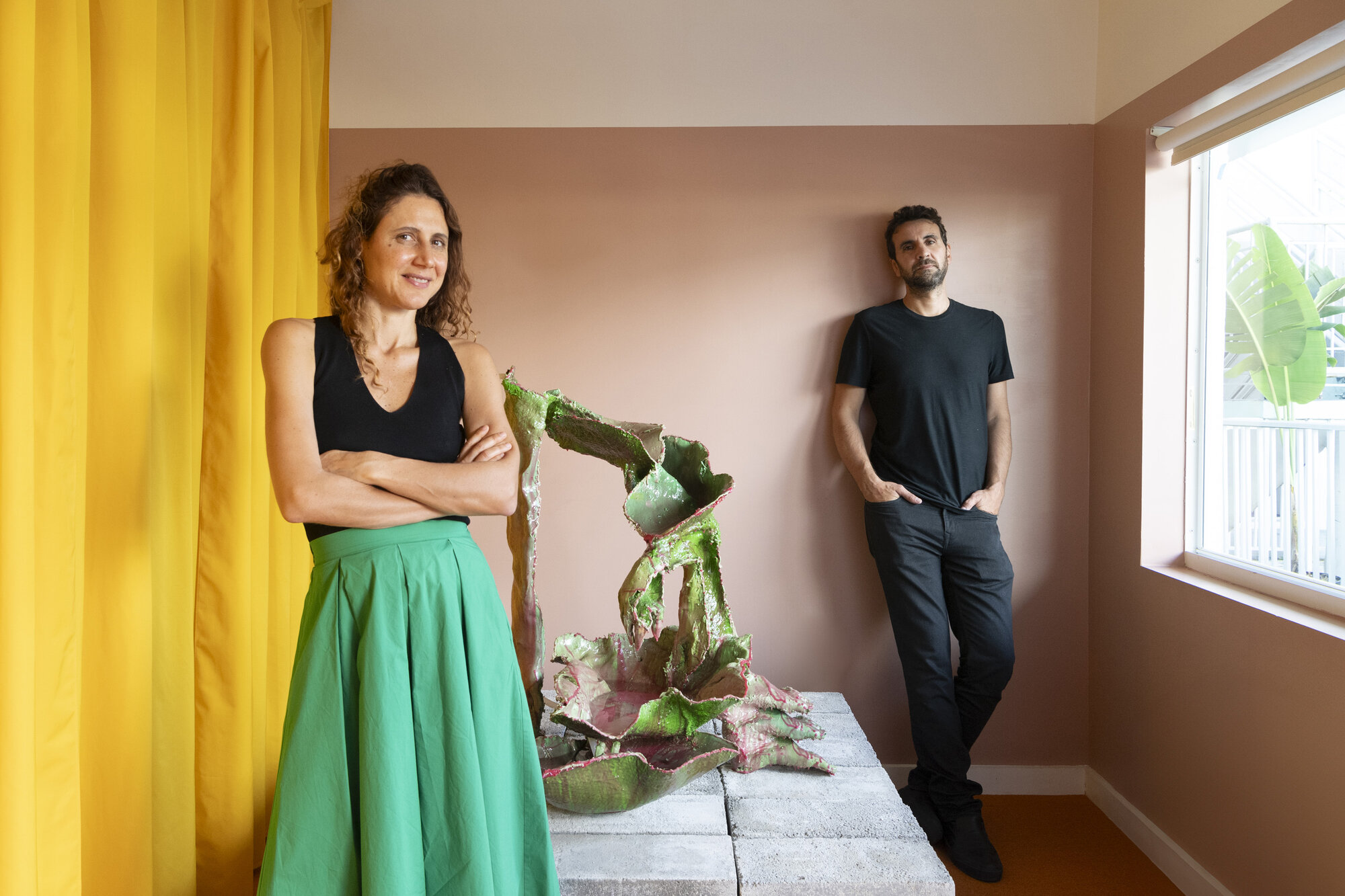
Founded in 2018, Alcova has established itself as one of the most influential independent platforms during Milan Design Week. Each year, Ciuffi and Grima activate disused or historically significant sites on the outskirts of Milan, ranging from former industrial buildings to abandoned civic structures and historic villas, transforming them into exhibition environments for emerging international designers. Their approach combines curatorial risk, architectural context, and close engagement with material research. Ciuffi brings long-standing experience within Milan’s design ecosystem, while Grima previously served as editor-in-chief of Domus and as creative director of the Design Academy Eindhoven. At Heimtextil 2026, Alcova returns for a second edition as trend curators, extending this methodology into the textile industry.
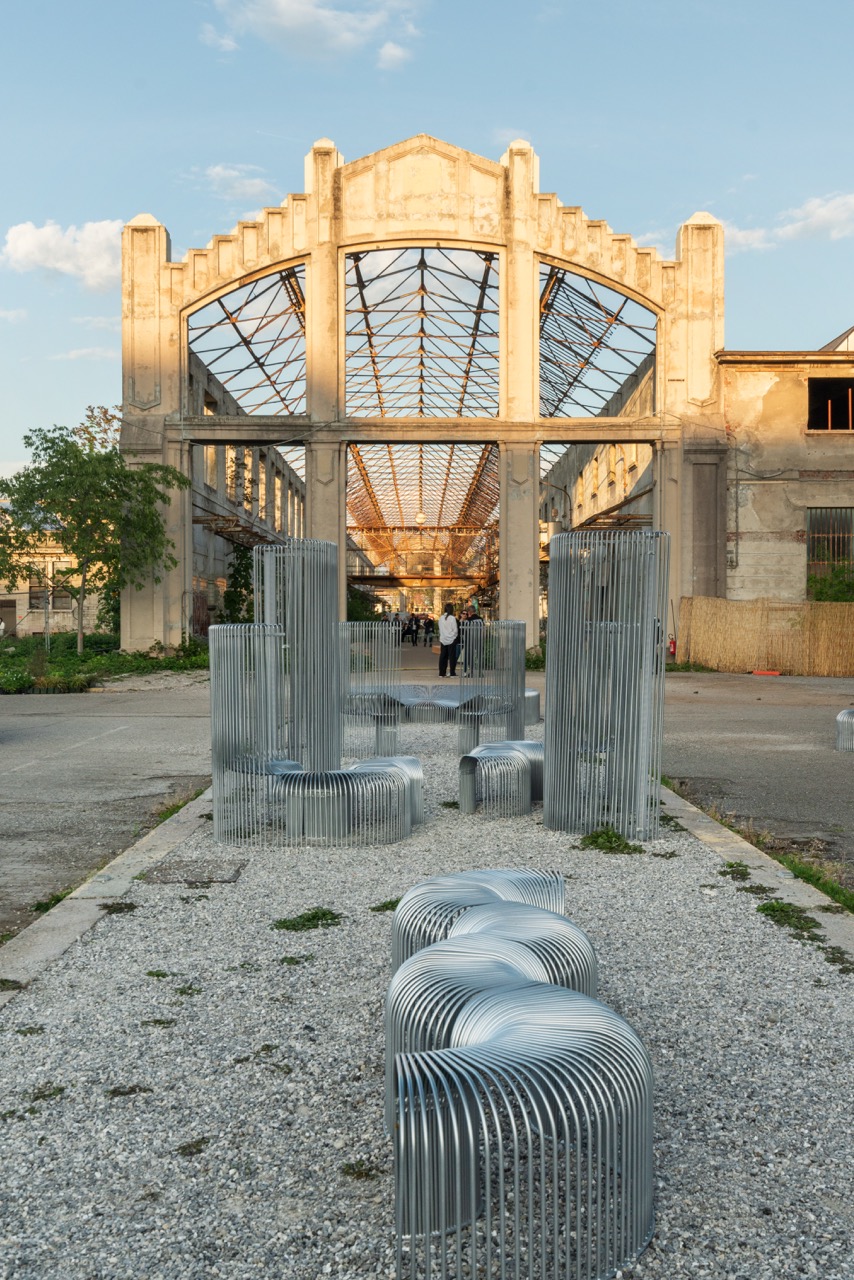
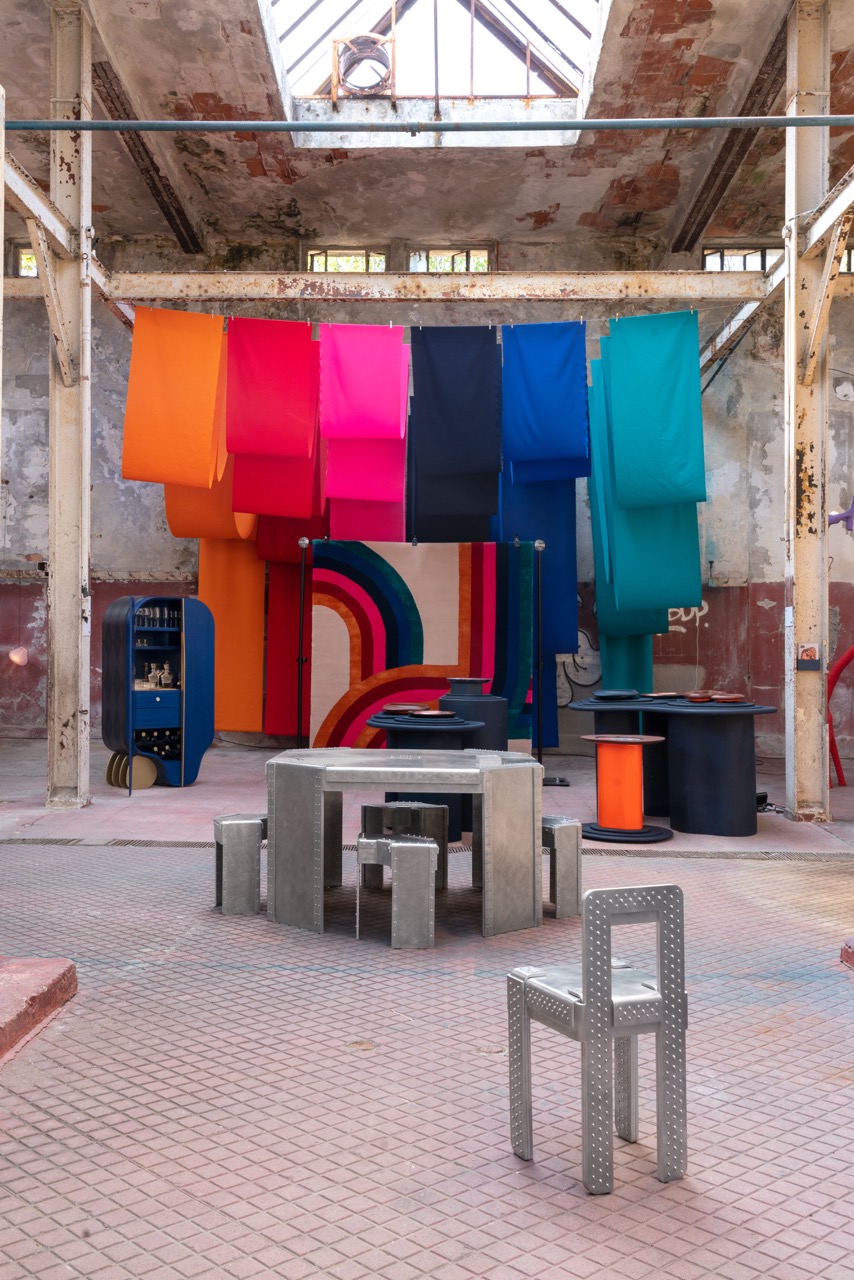
As the creators of Alcova, you place great emphasis on special and changing locations. You say, "the magic lies in the place". What is it like to bring a static trade fair like Heimtextil with rather neutral halls to life?
Valentina Ciuffi: At Alcova, control over the site forms part of the curatorial framework. Spatial character, scale, and history shape how projects are read and how visitors move through them. At Heimtextil, the situation differs. The halls are neutral by design, and the commission requires a different approach. That difference does not weaken our position. The work shifts from staging a place to structuring a line of inquiry.
For Heimtextil, the task centers on focused research into one field, textiles, processes, tools, and cultural trajectories. At Alcova, the platform hosts research conducted by more than one hundred designers, each pursuing distinct questions. The skills remain transferable. Curatorial thinking, narrative construction, and the ability to give form to abstract ideas do not depend on architectural character alone. In Frankfurt, meaning emerges through content, sequencing, material evidence, and interpretation rather than through the site itself.
Joseph Grima: Alcova tends to work with small studios and manufacturers producing limited editions. Their cultural influence often exceeds their market reach. Heimtextil operates at a different scale. The fair brings us into direct contact with industrial production, supply chains, and decision makers working across global markets. That proximity creates a direct feedback loop with the industry. Some forms of experimentation, testing, and translation only become possible within a framework like Heimtextil.

In the announcement of the collaboration, Heimtextil stated that shared vision mattered more than textile specialization. How would you describe this vision?
Joseph Grima: Our conversations converged around a broad understanding of design as a discipline shaping almost every sector today. Design once applied to a limited set of products. Today it informs systems, services, technologies, and forms of labor across industries. Textiles occupy a special position within this expanded field. Textile practice stands among the oldest human creative activities. Studying its history offers insight into how tools, labor, culture, and innovation evolve together. That perspective makes textiles an ideal lens through which to examine contemporary design questions.
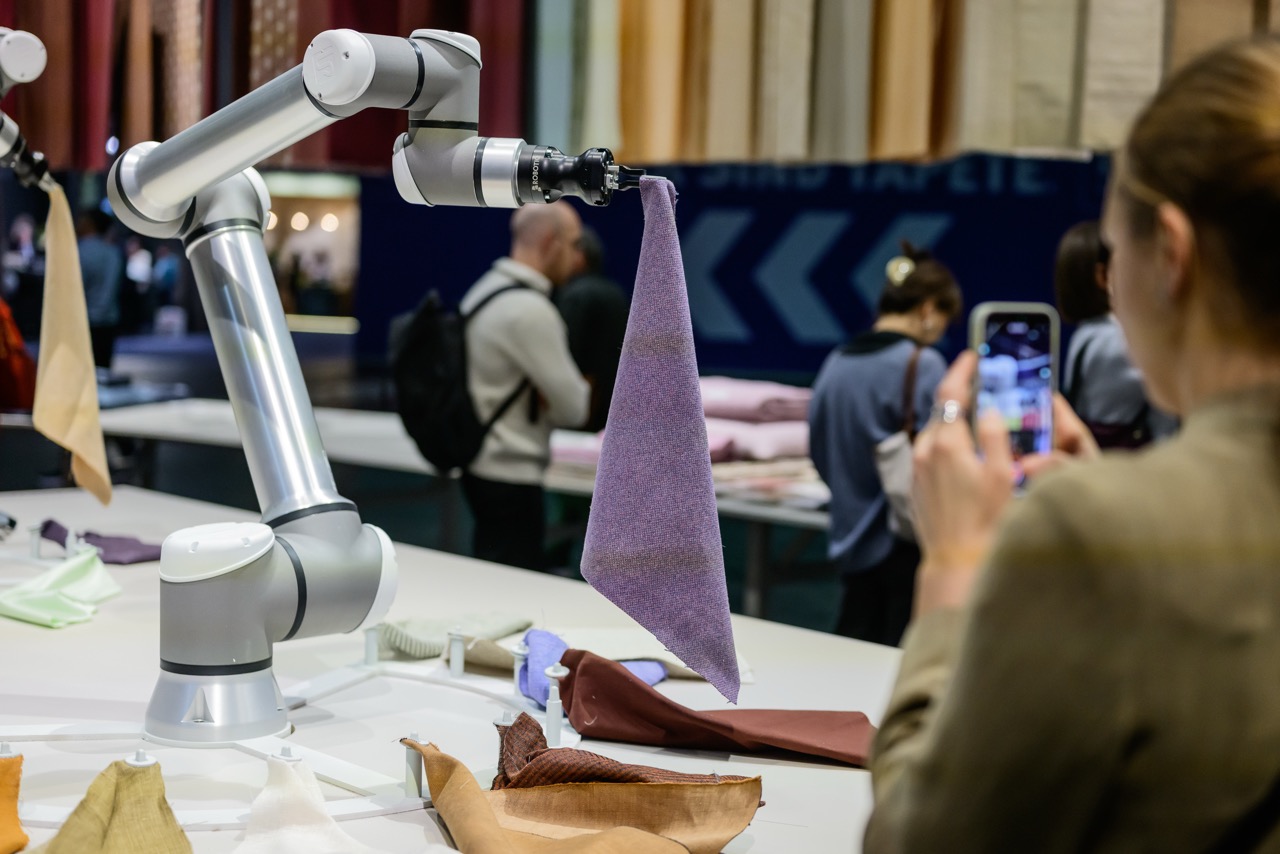
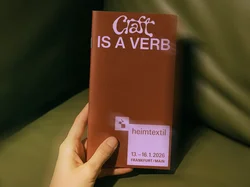
Artificial intelligence forms a central theme of Heimtextil 2026. Your introduction states “Craft is a verb.” You argue that AI strengthens craft rather than erasing it, and that meaningful outcomes depend on human involvement. Does this position reflect an Italian cultural background rooted in craftsmanship?
Joseph Grima: Our perspective reflects an Italian context, in that Italy sustains a dense network of micro industries focused on highly specialized production. Craft knowledge plays a central economic and cultural role. Recent technological change has expanded opportunities rather than narrowing them. Designers who once depended on large scale industrial production now operate through short runs and individualized outputs. Digital tools support this shift.
AI stands at an early stage within this process. When AI replaces authorship or decision making, results lack depth and coherence. When designers and craftspeople guide computational systems, outcomes gain precision and character. Human judgment tempers the impersonality of automated systems. This interaction generates productive tension. The risk lies in substitution. The opportunity lies in integration. Integrated processes strengthen creative labor across fields, including sectors operating at industrial scale such as textiles.
Alcova often engages with collectible design, which many associate with elite audiences. How does this approach translate to large scale production and the broader public represented at Heimtextil?
Valentina Ciuffi: Collectible design should not be understood only as gallery driven luxury. This field functions as a testing ground. Early experimentation takes place at small scale, where risk remains manageable. Observing advanced practitioners provides insight into future directions. Designers such as Selma Alihodzic Asakura and Jonas Hejduk exemplify this role and participate in Heimtextil.
Large scale applications already demonstrate this logic. Our publication includes the example of a project by Bjarke Ingels Group for an airport in Bhutan. A shortage of skilled labor led to a hybrid process. AI performed initial carving on large wooden panels. Craftspeople completed the work by hand. The principle remains consistent across scales. Designers guide technology rather than deferring to it. Misguided applications reveal limitations clearly, such as AI generated reinterpretations of the Charles and Ray Eames house rendered as generic luxury interiors. The same logic applies to textile production. Direction determines outcome.
Your trend framework introduces six motifs, including “The uncanny valley” and recurring references to glitches. How should readers understand these terms?
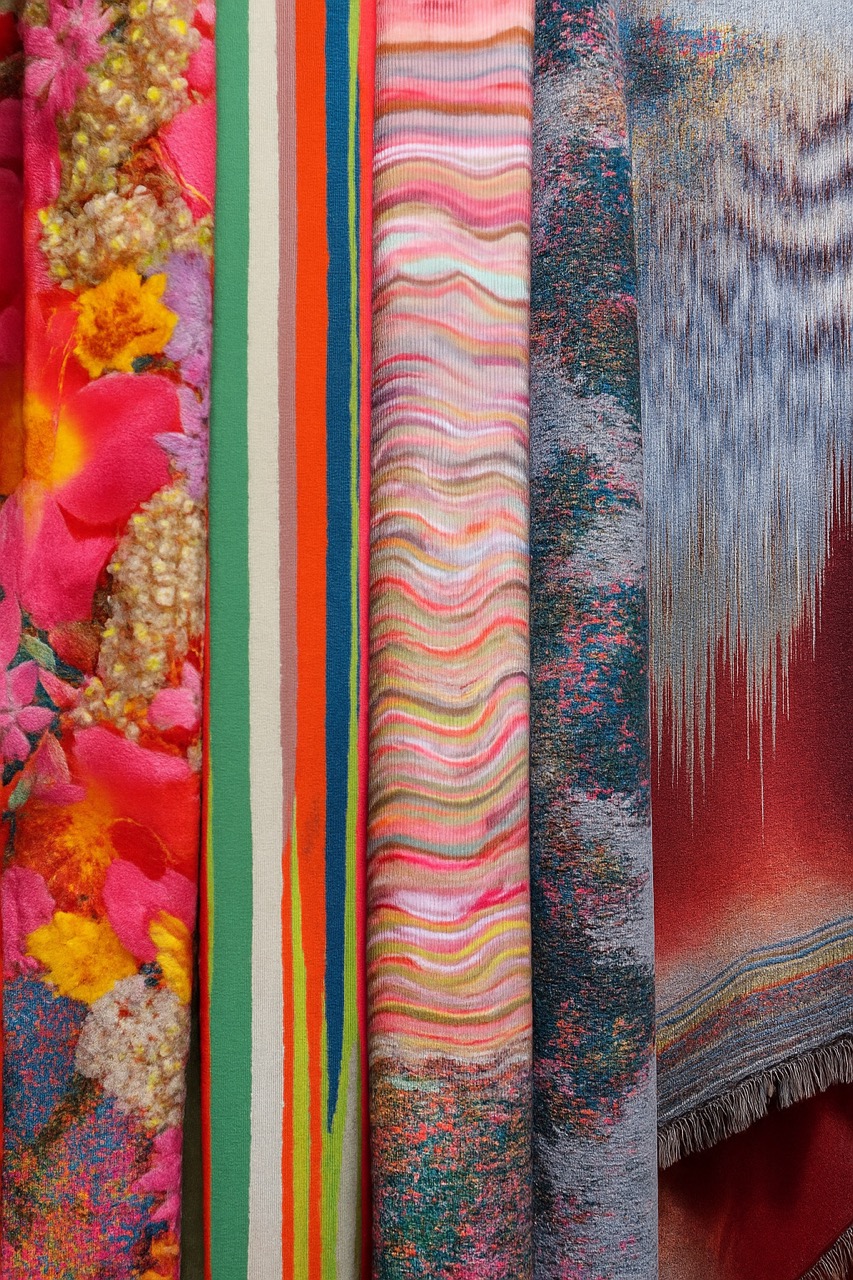
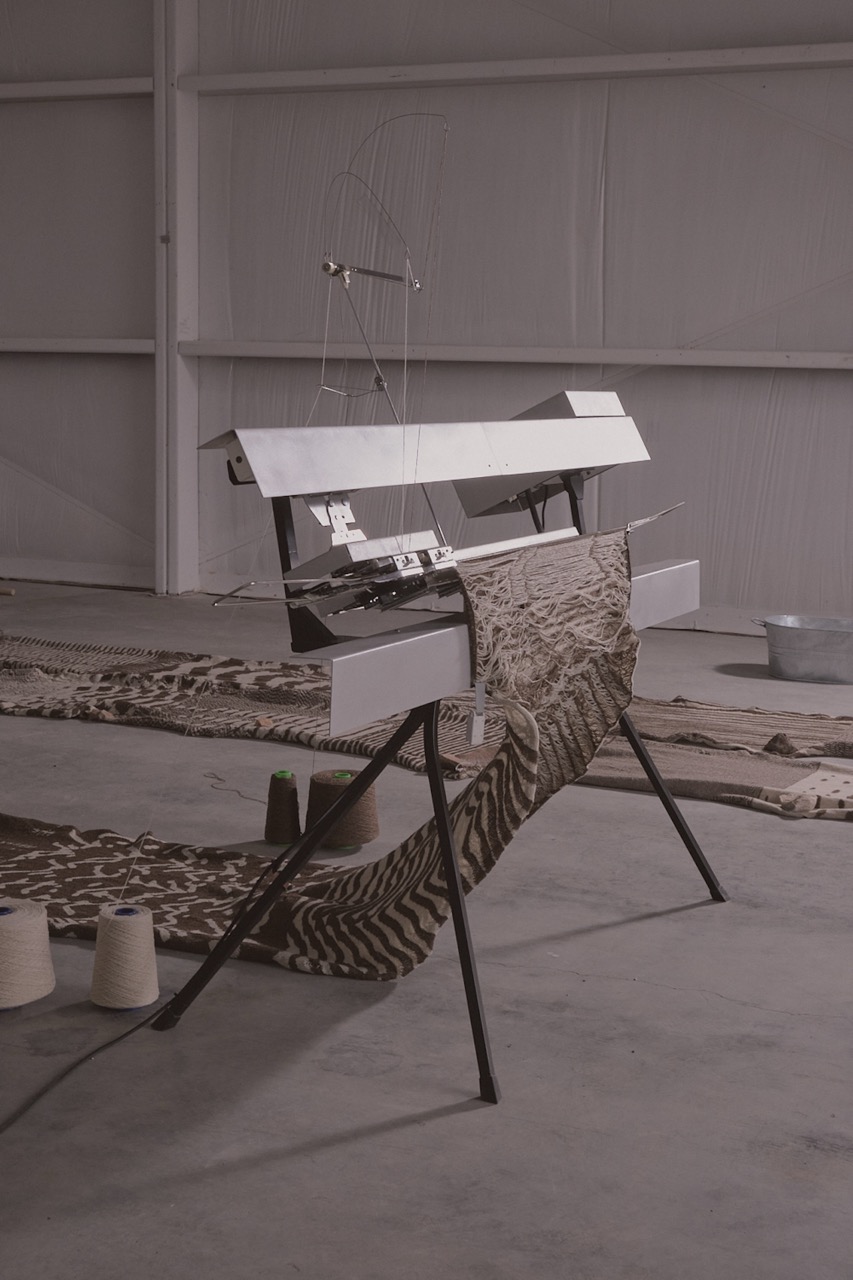
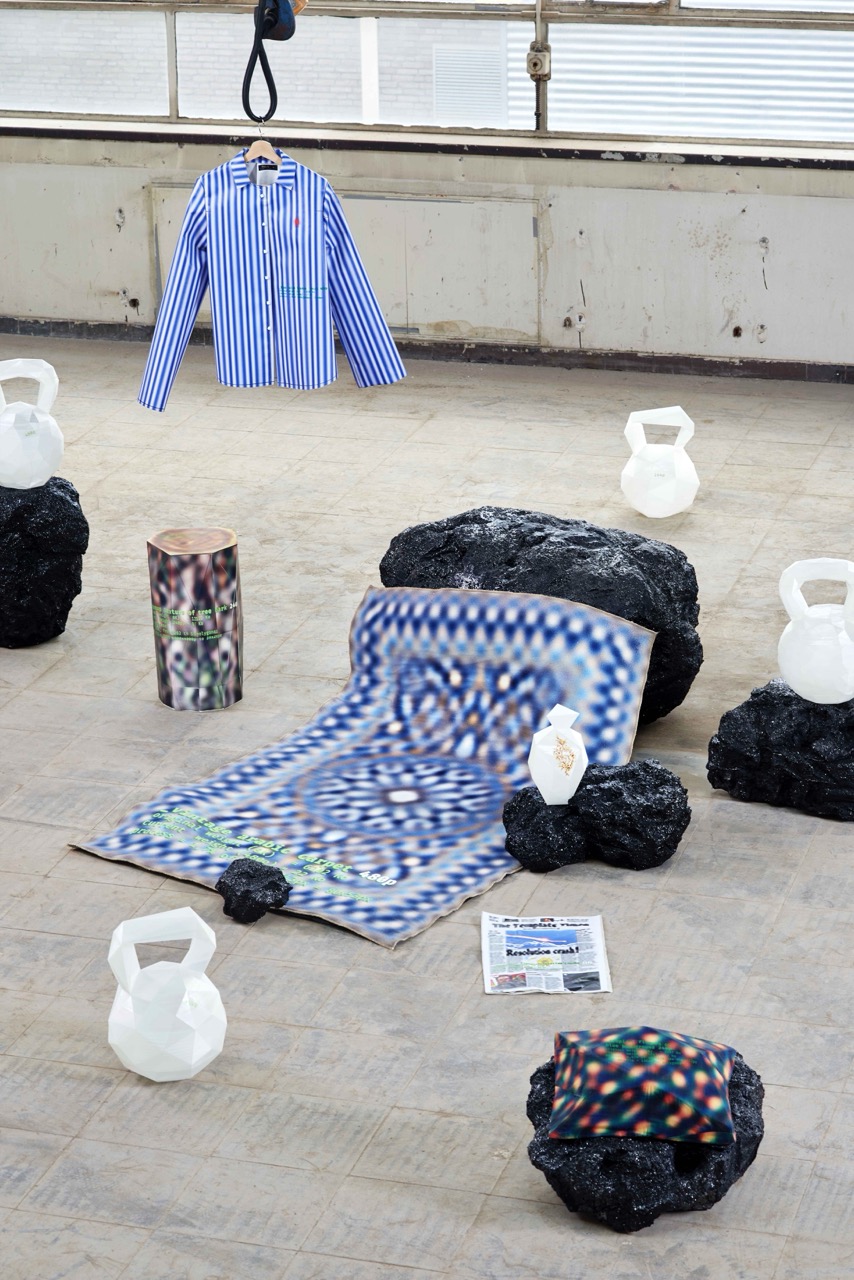
Valentina Ciuffi: A glitch represents a digital error. Craft traditions value irregularity as evidence of human presence, and digital glitches mirror this condition within computational systems. They expose the seams of automated processes. Designers like Jonas Hejduk work with this idea. His rugs and stools translate visual errors into deliberate aesthetic, and in this way, Handcrafted objects reproduce the appearance of computational malfunction.
The color palettes proposed for Heimtextil diverge from prevailing trends. How did you develop them?
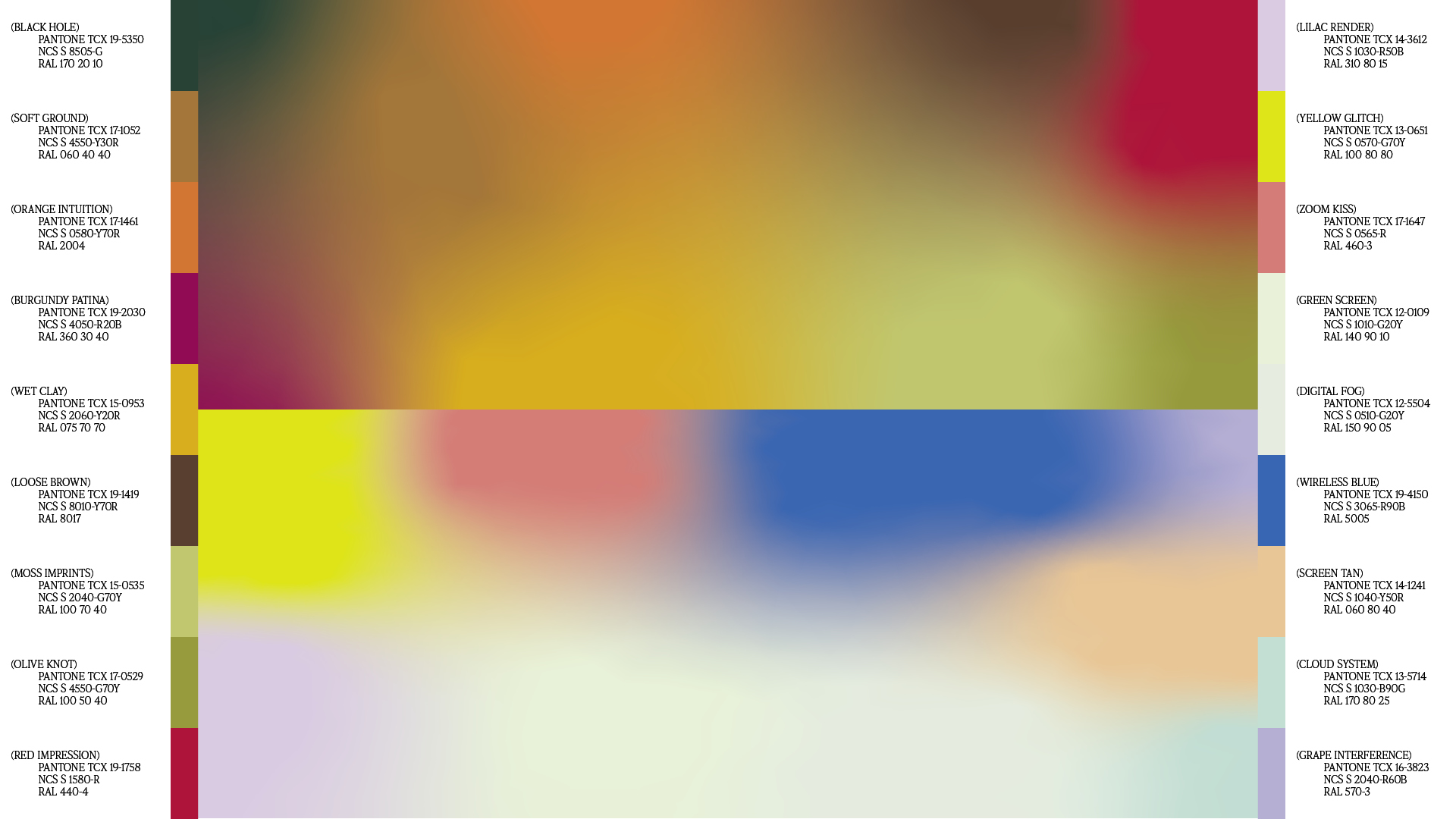
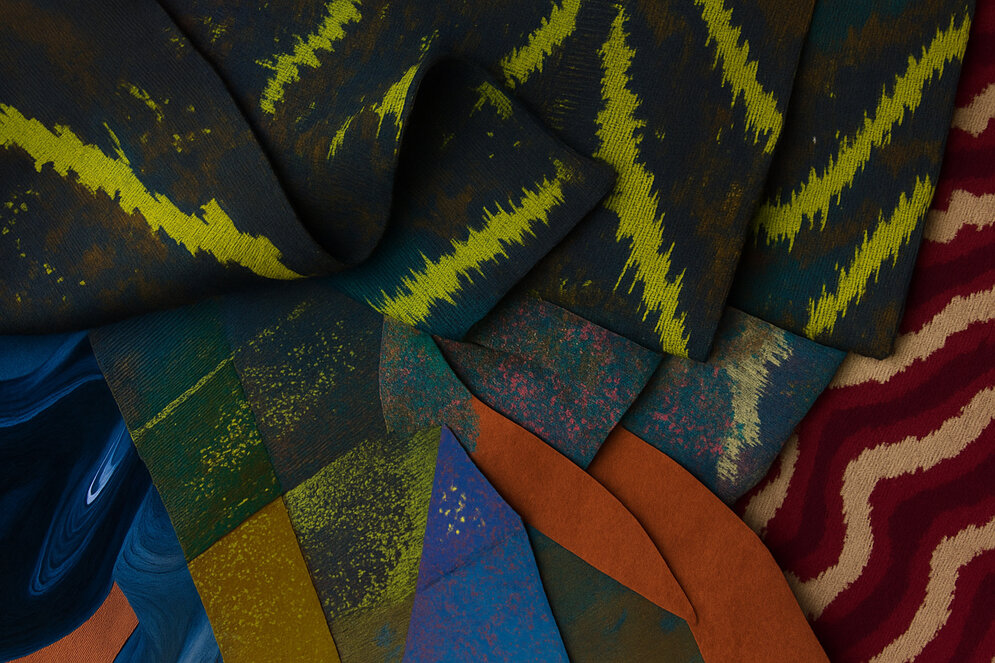
Valentina Ciuffi: I worked directly on the graphic palette for the publication. The intention focused on contrast. Earth based tones sit alongside acidic digital colors. This pairing reflects a broader shift. Warm material backgrounds support sharp digital accents. Glitches function chromatically as well as conceptually.
What should visitors focus on within the Trend Arena?
Valentina Ciuffi: Last year emphasized scale and verticality through a more mechanical atmosphere. This edition moves closer to domestic space. The installation imagines a future home shaped by techno craft practice. Material samples operate within this narrative. The space remains active through conversation and explanation. People animate the environment through presence and exchange.