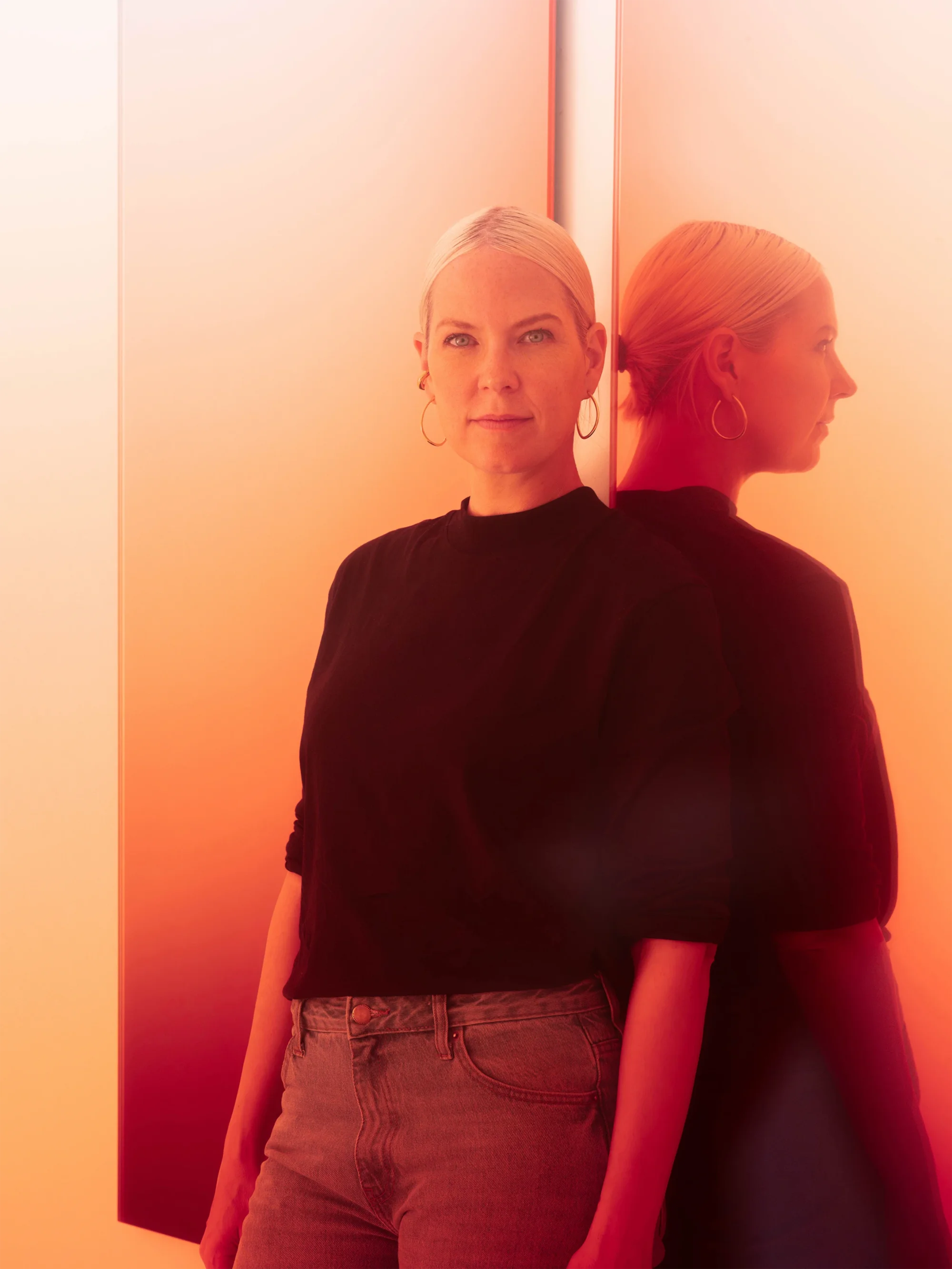
“I Shape the Relationship Between
Material and Light”
Sabine Marcelis, your exhibition at the Museum für Gestaltung Zürich brings together works from different phases of your practice, alongside new, site-specific pieces. What is it like to see your work as a whole? Have you discovered any recurring themes or constants that you may not have been fully aware of while developing the individual projects?
You know, I definitely feel too young to have retrospective or anything which is why I also didnt approach this exhibition as such. I want to showcase my way of working and how through the use of light and color, materials can be manipulated and manufactured into wondrous objects and installations. I also find it hard to look back as Im so preoccupied with moving forward. But its so amazing to have this moment to actually stop and look back for a minute. Iv done quite a lot of projects in the past years wtogether with my amazing team and it make sme very proud for some of those to be presented here altogether - representing and showcasing my world and sharing it with the visitors of the museum soon!
In your work, the object often seems to be just the starting point for something larger: a perception, an atmosphere or a spatial experience. Where does an object begin for you, and where does it end?
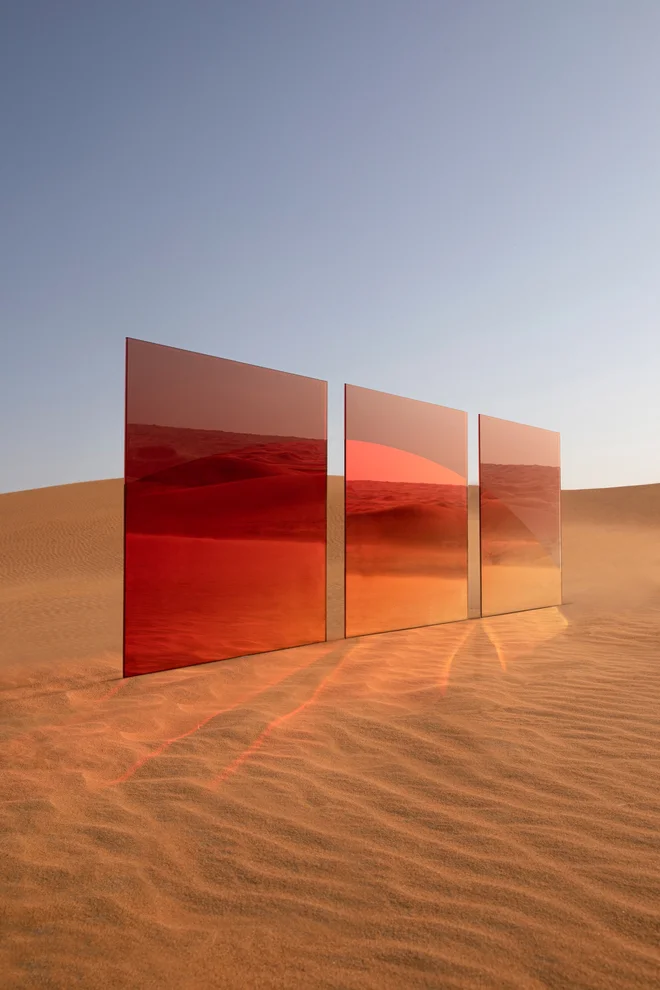
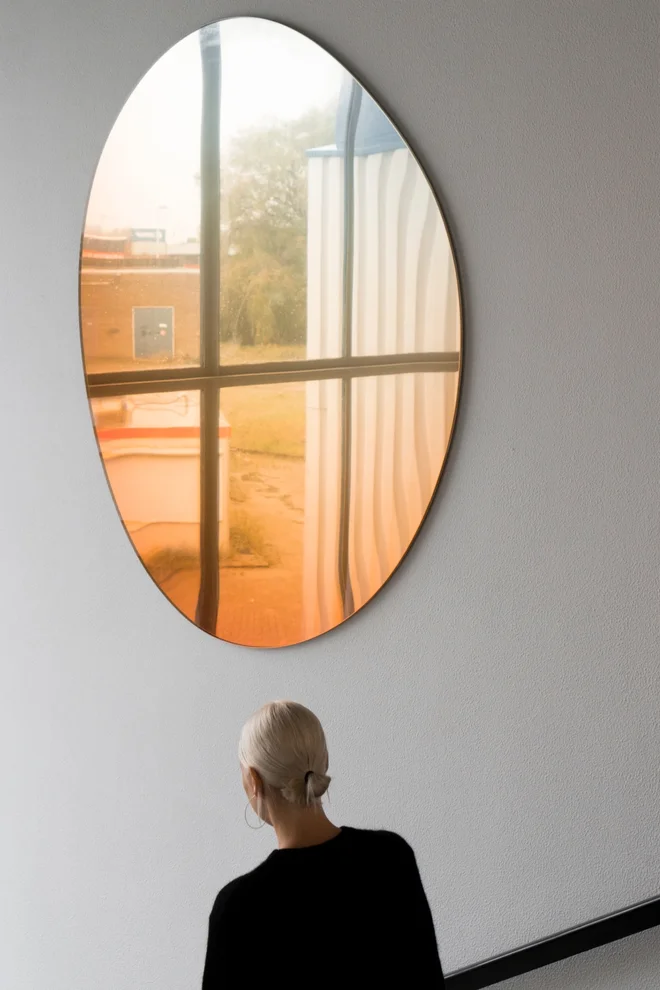
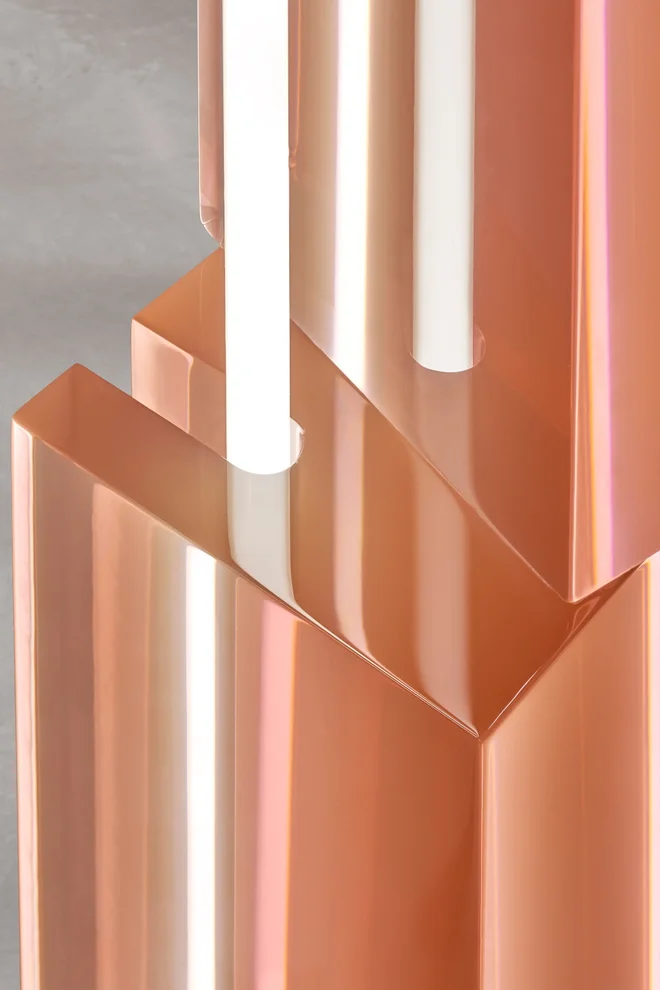
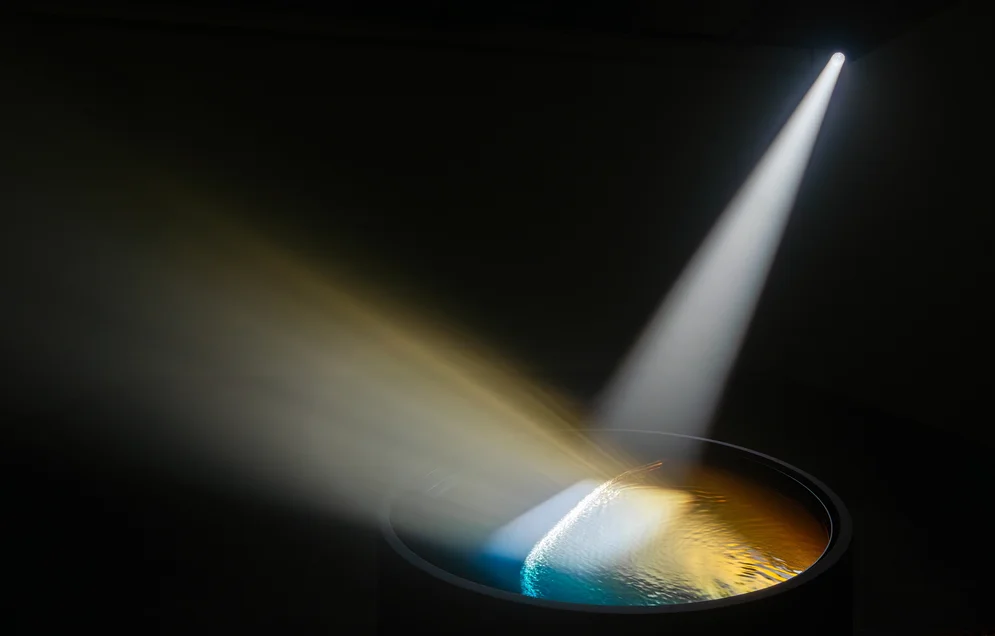
It always begins with the material. Im not the type of designer that sketches their next design. I need to be in the workshop, in the production process to get inspired and create. I want to experiment and influence how a material can be shaped. The exact form follows that and is defined by how a certain effect can be maximised. What I’m really designing is the relationship between a material and light I guess, and that keeps shifting depending on the conditions, the space, who’s standing in front of it. So in a way it never fully ends. I want to create objects and installations that are experienced in a dynamic way even though they may be completely static in their essence.
You have described how you look for moments of magic in materials. At the same time, your approach is strongly rooted in production, technology and experimentation. How do intuition and control come together in your design process? And how do you know when to stop refining a piece?
The most interesting effects are often discovered by accident and then reverse-engineered into something repeatable. I set up the conditions but I can’t control everything. Knowing when to stop is more about feeling than logic. When I stop wanting to change something, that’s usually it. My decisions are definitely informed by a lot of knowledge and research, but I really trust my gut also heavily, Intuition is not to be underestimated. Its what makes us unique and what gives a designer or artist their unique perspective.
Your forms are often strikingly reduced – a circle, a block, a disc, a clear geometric shape. Is this reduction a way of giving the material as much space as possible? Or is the form itself composed just as precisely as colour and light?
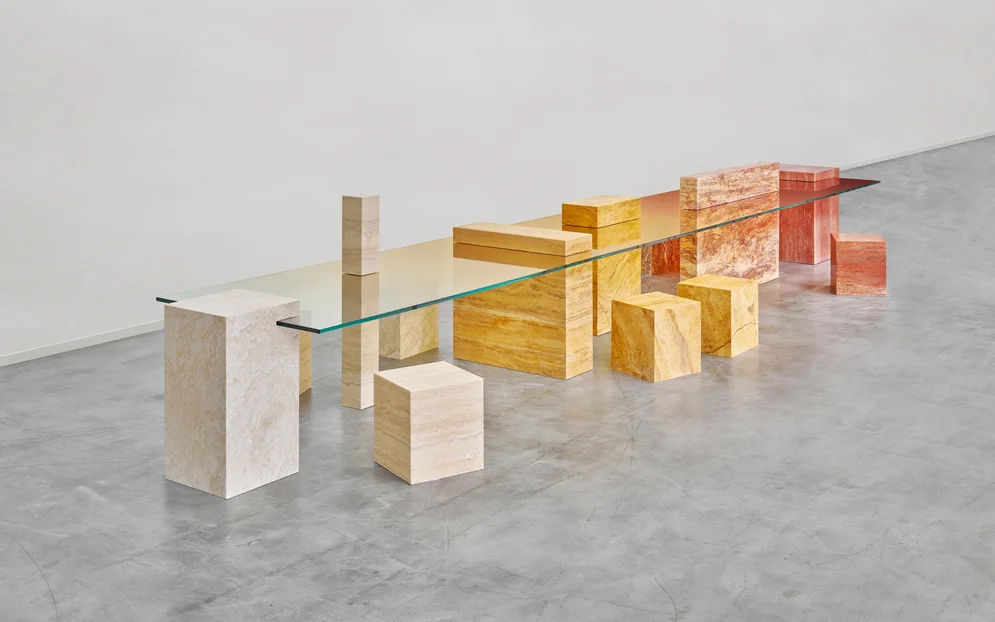
Both, I think. I dont want to create distraction or decorative elements that don't serve a purpose. Forms that don’t compete with the material effect but rather emphasise it is what Im looking for. But I’m also just genuinely drawn to some shapes like the torus or the circle and keep finding reasons to use them. Getting to the essence is always at the core. Its not about minimalism but rather a sense of purity maybe - purity that celebrates material qualities.
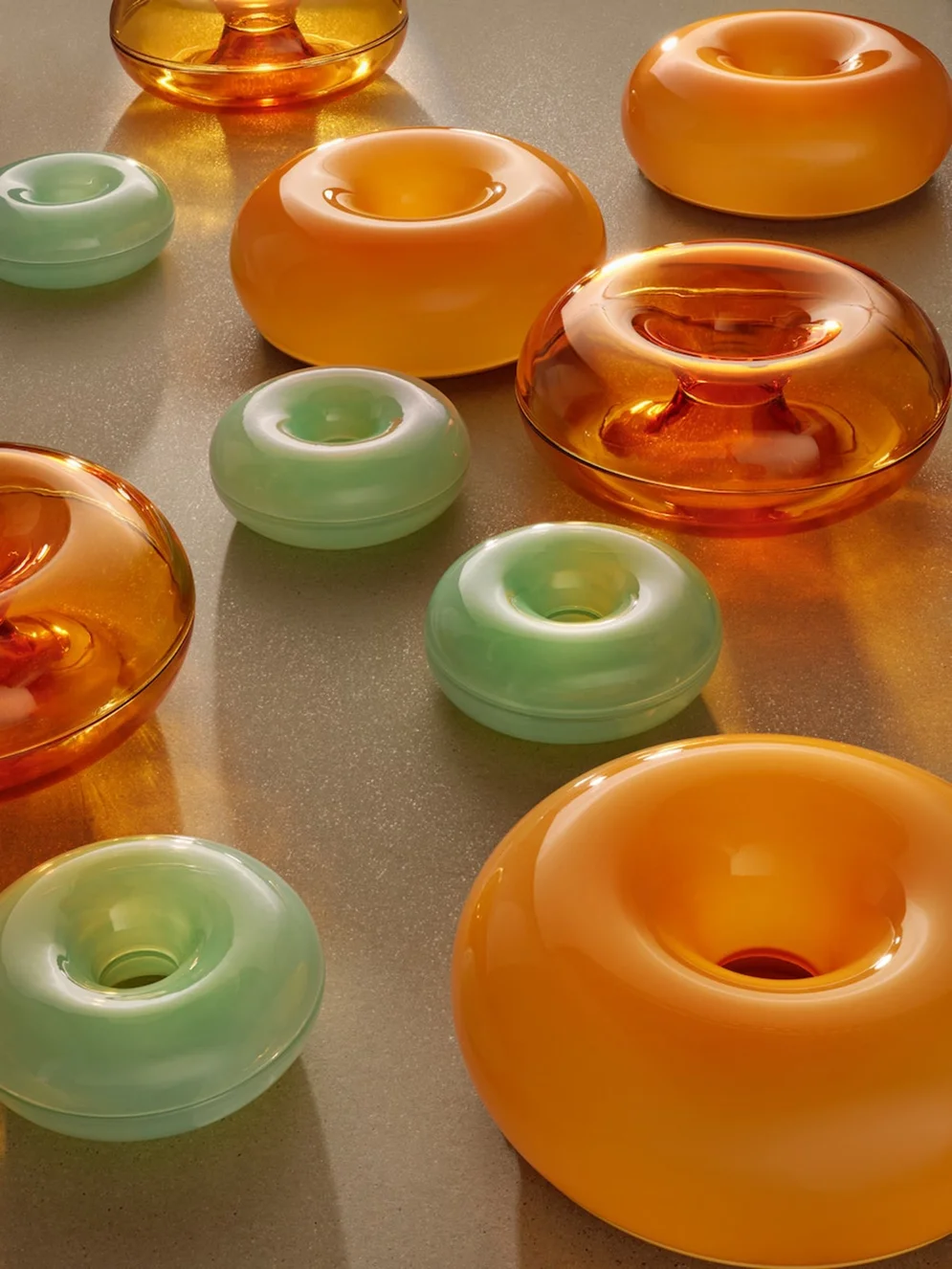
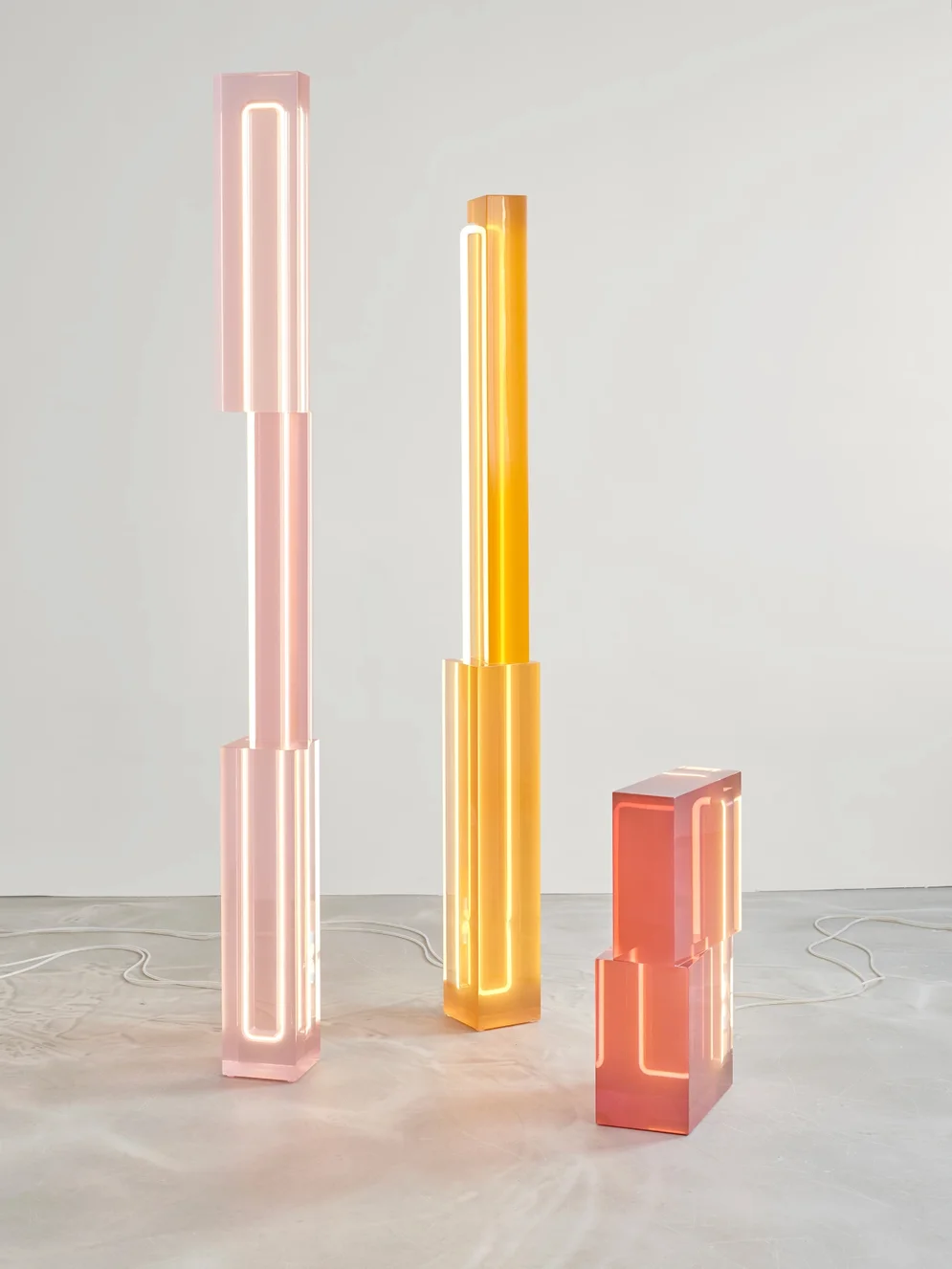
In your work, colour is rarely just a surface treatment. It emerges through transparency, depth, reflection or the way light passes through a material. Do you have something like your own theory of colour, or do you perhaps distrust fixed systems and categories for precisely this reason?
Colour I perceived differently in different materials and the way it is applied. I work with colour imbedded inside materials. In resin and glass, color shifts depending on thickness, volume, surface texture, how light passes through it — the same object reads completely differently in different conditions. I use colour as a tool to create depth perception, emotion and to filter light. It can impact the experience of a space. I think again, my colour use is founded in experience but definitely informed equally by intuition. I lik eto work with warm colours, colour combinations that can be unexpected at times. I love colour and wan to show through my work and this exhibition how fun it is to design with colour as a catalyst.
Resin has played a defining role in your work for many years. At the same time, its environmental impact is becoming increasingly difficult to ignore. You are now also exploring alternative and circular materials. How has this awareness changed your relationship with a material so closely tied to your design language? Is there a point at which you have to let go of a material you love?
Resin and glass are the materials I love the most to work with as they have the ability to be so many different things. Their transparency allows for so much interesting interaction with light and colour. But Im always demanding more from the materials I work with. Since 2022 we integrate solar cells inside my outdoor glass sculptures so that they are energy autonomous and can illuminate independently at night. As a designer im highly aware and cautious of my material use in general. I, and all other designers have a responsibility to use materials and processes that make sense for the market and context in which a work is presented. I limit resin strictly to unique works and small series and we continuously demand a higher bio-based recipe from our suppliers. We recently received a 99% bio-based resin with which we are extensively experimenting at the moment. Its so exciting that these innovations are happening and I want to definitely keep pushing for more of that.
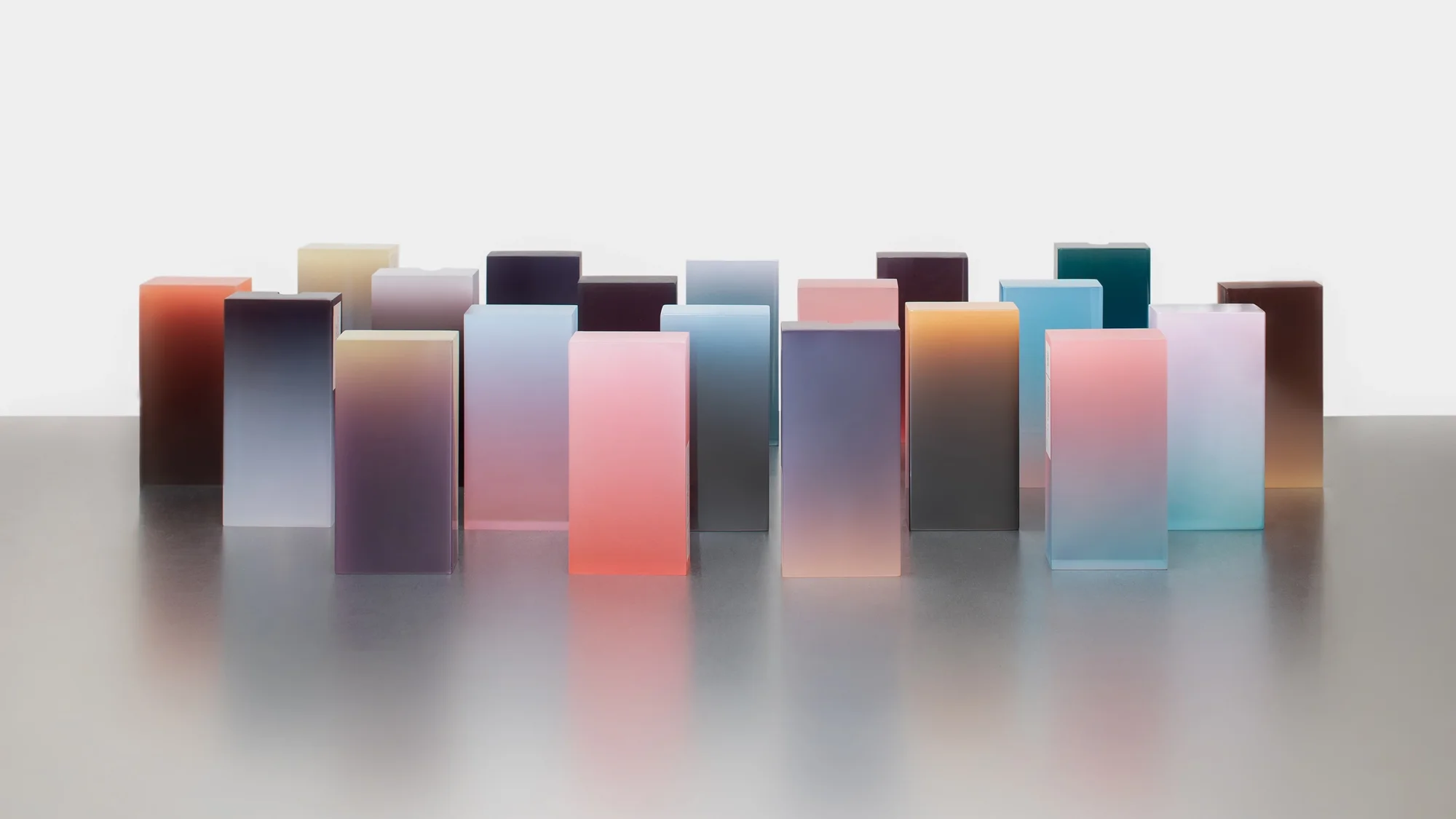
Your work today spans collectible objects, products, large-scale installations, public spaces and exhibition design. Does your approach to design change when you are creating for hundreds or even thousands of people rather than for an individual viewer or user?
Yes and no. The approach and aim is the same. But when an object has a very specific home to inhabit that can inform a lot of decision making. Creating something site-specific with a distinct meaning special to that location is what I then lean towards. When designing something that is to be massed produced I want to make it more than ever as timeless as possible. Stripped back to the absolute essence so it can find a home in many different types of homes and can grow with people to always be relevant in a next home also. Its much more about striking a specific balance between timelessness, a touch of ambiguity and at the same time recognisably from my studio in my style.
You once said that the experience itself can become a function. At a time when design is often defined in terms of efficiency, sustainability or problem-solving, what role does the purely sensory still play for you today – the sense of wonder, a moment of surprise or simply the desire to look at something a little longer?
Emotional experience of an object or installation can be as much of a function as the physical ergonomics. I really believe that. A lot of my work doesn’t emit the kind of light to illuminate a room for perfect reading conditions for example but they do change how you feel in a room. and that’s enough of a reason to exist. Good design is not only justified through its problem-solving. The sensory and emotional experience matters too.
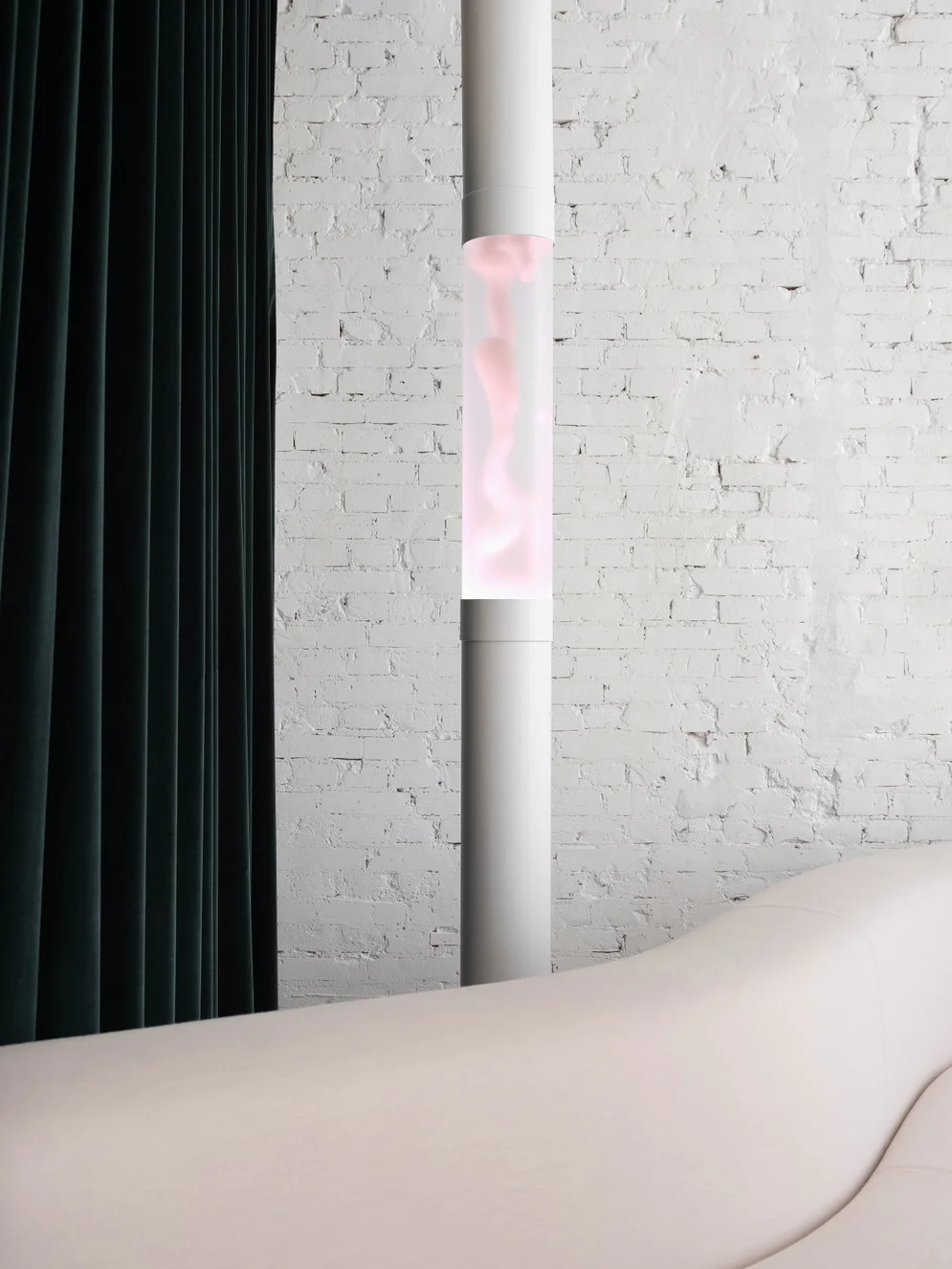
Looking ahead to the coming years, is there something you have yet to master, or a material, technique or scale that you would like to challenge yourself with? In other words, where are you currently looking for the next uncharted territory?
More technology embedded directly into materials, like the integrated solar cells I work with for energy-autonous public works. And working with very old techniques in a contemporary way. I recently did a project with Japanese uruchi masters and there is nothing more inspiring than working with expert craftsmen but giving a new eye to these very old crafts.