Local Production, Circular Thinking
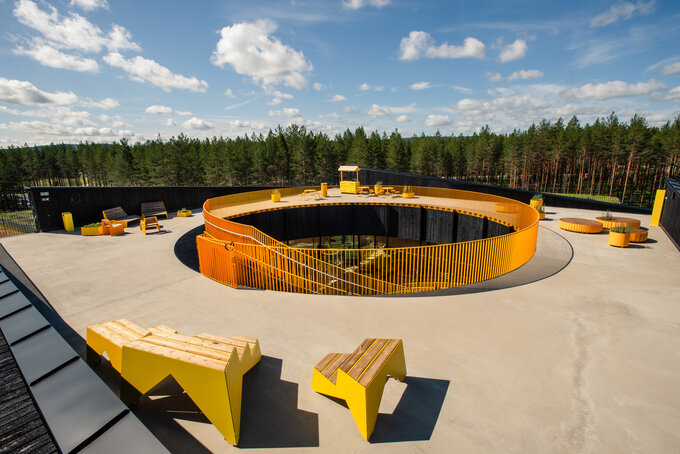
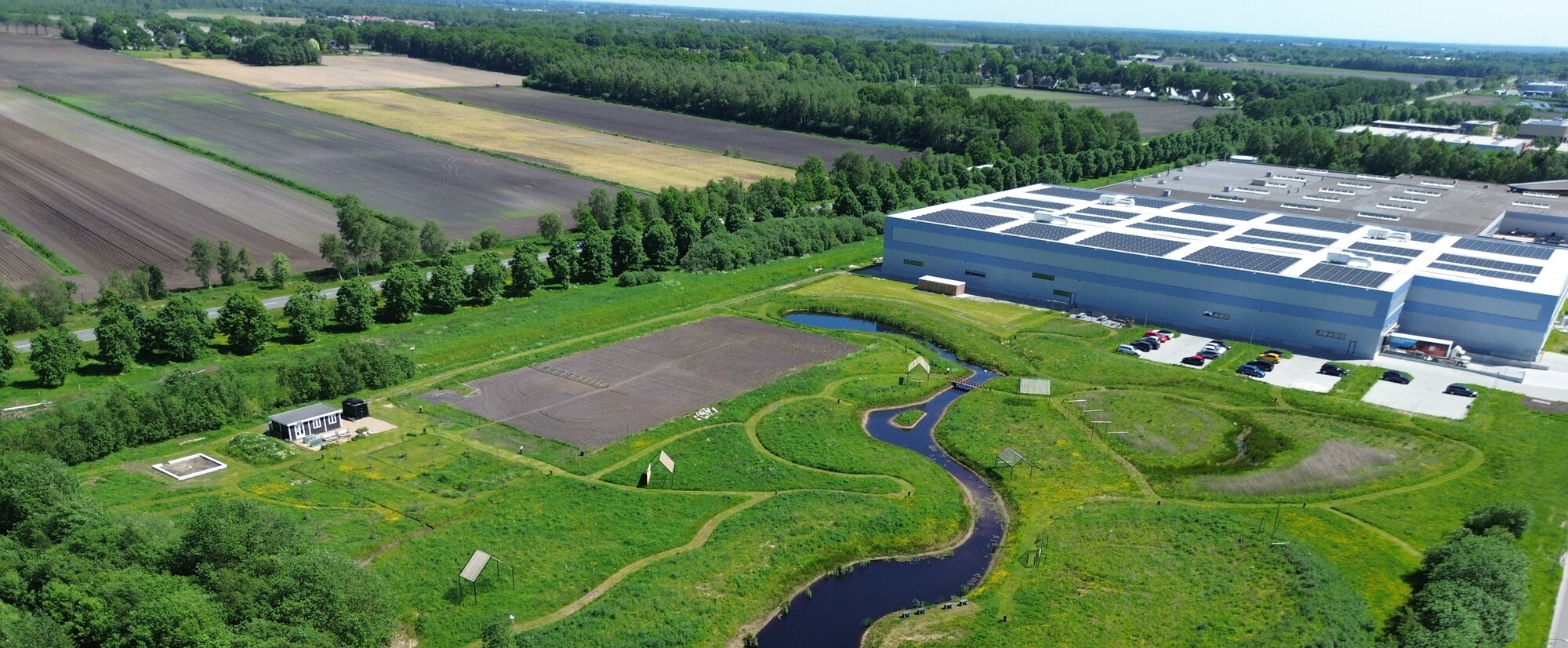
More and more modern employers are now offering their staff the luxury of a green terrace or roof garden, whether for breaks or as an inspiring outdoor workplace. However, Dutch office furniture manufacturer Vepa goes one step further: at its Emmen site, just a few kilometres from the German border, employees have access to an elaborately designed, park-like garden covering almost half of the company premises. The Green Field is a nature reserve, a recreational space, an allotment garden, an experimental field and an open-air office all in one. It features natural forest, flower and wild grass areas, as well as fruit and vegetable gardens. Vepa developers experiment with fast-growing raw materials such as flax, hemp, and cattail plants, which the company already uses in production. A wide variety of food sources and nesting sites have been created for wild animals. You can observe the biodiversity in Green Field from an observatory, as well as from several terraces and vantage points. Those who want to work or hold meetings outdoors will also find the right place to do so. Green Field also has a social aspect: the fruit and vegetables grown there are given to low-income families free of charge, demonstrating that social sustainability is just as important to Vepa as ecological action.
From Raw Materials to Recycled Products: Everything From the Region
The company is owned by four families who have deep roots in the province of Drenthe. Vepa and its parent company, Fair Furniture Group, are two of the region's most important employers. "All Vepa furniture is produced locally – down to almost the last screw," explains Pia Himmelsbach, the marketing manager for the German market. "Our extensive in-house manufacturing capabilities enable us to understand and manage the ecological and social impact of our products." The raw materials are sourced almost exclusively from the local area, or from the company's own workshops. Recycling and waste utilisation play an important role in production. Large, colourful bins for the various categories of waste material are located throughout the premises. Hardly any material waste is not returned to the cycle. Other recycled materials are supplied from sources such as hospitals. The Blue Finn chair series has a seat and backrest that are largely made from recycled Blue Wrap. In its previous life, this material was used for sterile packaging of surgical instruments.
Hemp, Jute, Flax: Furniture Made From Rapidly Renewable Raw Materials
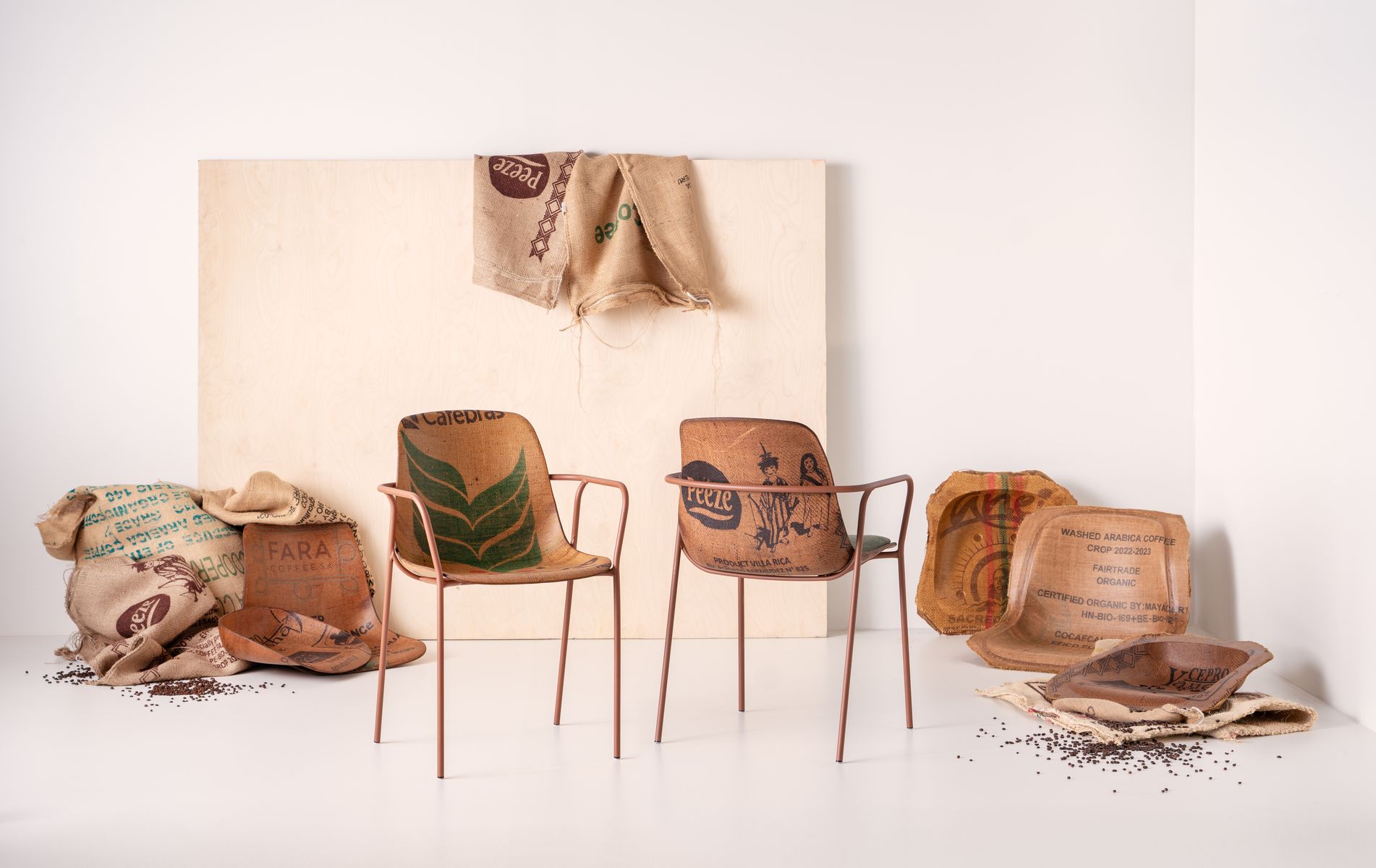
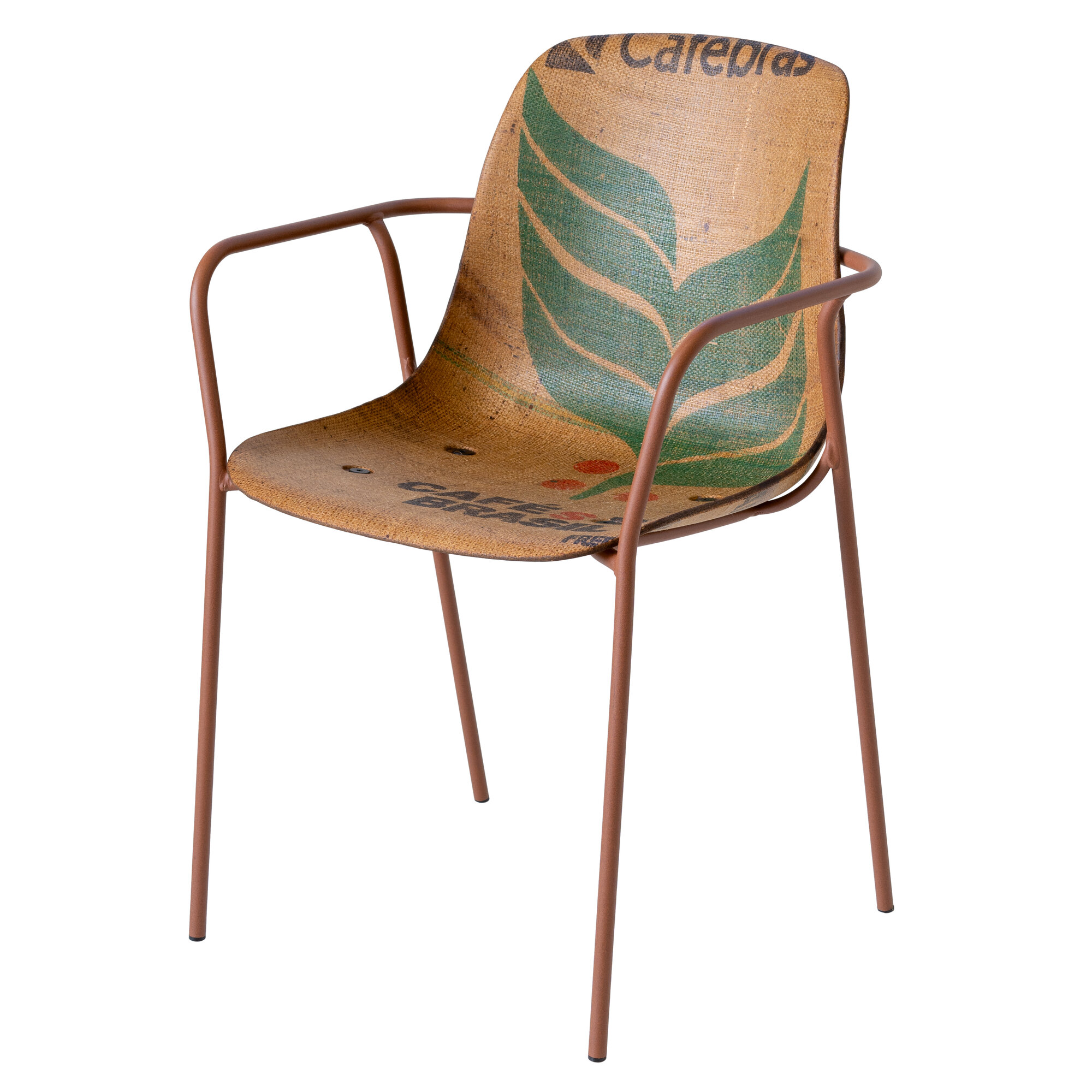
Other furniture is made from materials that can be renewed quickly. Hemp, for instance, has become a popular choice among Vepa's designers. The seat shell of the Hemp Fine chair series is made by pressing hemp and bio-resin together without using any additional chemical additives. Recycling has also recently been introduced here: Vepa has developed a process for applying jute sacks, sourced from a local coffee wholesaler, to the surface of the seat shells. The varied printing on the sacks makes each chair unique. Another rapidly renewable raw material used by Vepa is flax. The plant fibre is processed into table legs in Emmen. This involves winding resin-soaked flax cords around moulds and curing them at high temperatures. Chemicals are used with great caution at Vepa. “We don't use PVC or glue; we only use single-type materials,” says Gerdjan de Kam, Vepa's Design & Development Manager. “This ensures that we don't have any problems with emissions from our furniture.” There is another advantage, too: Vepa furniture can be repaired and refurbished time and time again. “Repairability is a matter of course for us,” emphasises de Kam. “It's part of our philosophy. We take responsibility for our products throughout their entire life cycle.”
A Second Life for Used Office Furniture
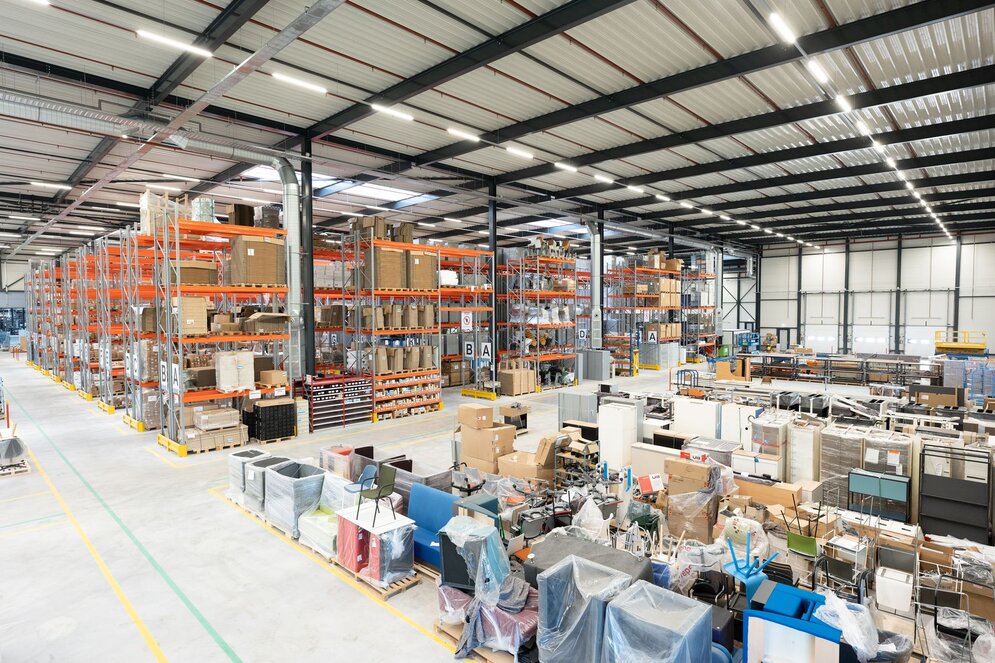
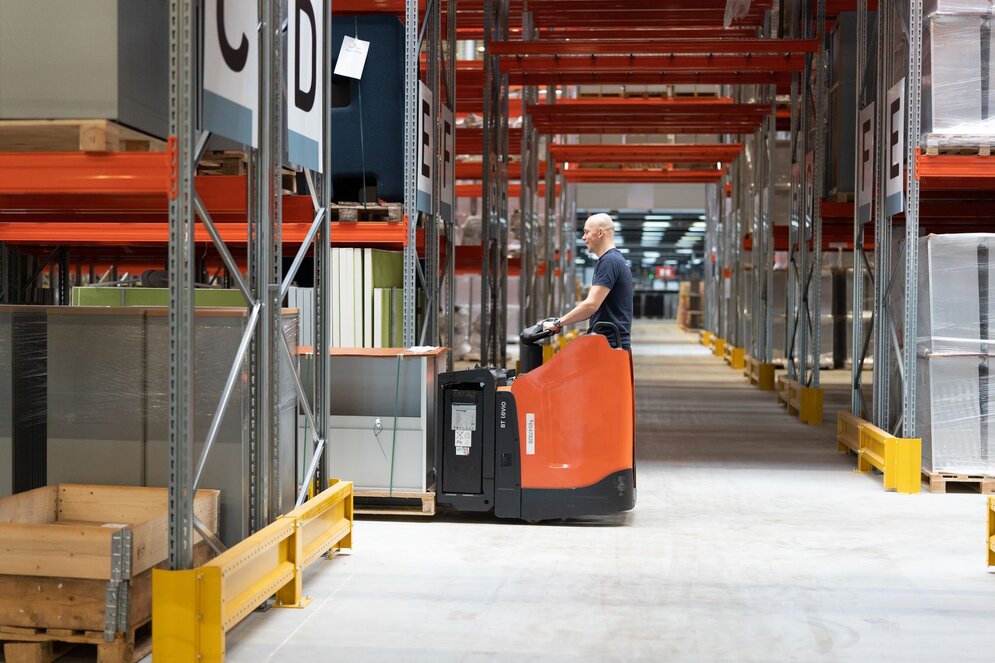
This can be seen in Vepa's new factory building in Emmen, where refurbishing used office furniture has developed into a new, flourishing line of business. This has contributed significantly to the furniture manufacturer almost doubling its workforce in the last five years. Vepa not only refurbishes its own products, but also those of other manufacturers, including office chairs and conference tables. Vepa offers this refurbishment service for batches of 50 to 100 pieces of furniture. Depending on the customer's requirements, the range of services offered extends from simple cleaning to repair and upholstery work to complete repainting. “Thanks to our high level of vertical integration, we have the expertise for all these tasks in-house,” explains Pia Himmelsbach. “For our own products, refurbishment can sometimes be easily integrated into the production line – for example, when a fresh powder coating needs to be applied.”
Refurbishment for the New Working World
The enormous upheavals in the world of work are working in Vepa's favour. An increasing number of companies are reducing and changing their office space in response to the sharp rise in the proportion of employees working from home. “One refurbishment measure we are currently carrying out frequently is shortening and reducing the size of desks,” reveals Pia Himmelsbach. The explanation: “Many employees do their desk work at home and only come to the office for meetings.” This also renders a lot of office furniture redundant. However, considerable demand has arisen elsewhere, reports Pia Himmelsbach. “In order to meet their sustainability goals, many public institutions in the Netherlands are turning to refurbished furniture.” This is because the CO₂ savings are enormous. Compared to new furniture, refurbishment uses only 10 per cent of the material on average. Vepa searches the second-hand market for suitable office furniture for Dutch authorities, government agencies, schools and ministries, and then refurbishes it. In addition to having a positive impact on sustainability, refurbishment has another advantage for many companies, as Pia Himmelsbach explains: “The purchases can be financed from the maintenance budget and do not have to be put out to tender, which is costly and time-consuming.”
Opportunity for New Business Models
Until now, private companies have generally been reluctant to refurbish existing furniture rather than buying new pieces. However, the costs are relatively insignificant, as Pia Himmelsbach knows: “The challenge often lies in the logistics!” After all, the business must continue to operate during the refurbishment. Gertjan de Kam believes that office design must therefore change. “In the future, office furnishings must be designed to evolve, so they can be changed and added to repeatedly. After all, people buy furniture for their homes bit by bit.” He believes that interior designers could then take on the role of 'directors', guiding and accompanying the continuous renewal of the office. But might Vepa's refurbishment activities harm its own dealers? After all, they want to sell new office furniture. “No,” says Gertjan de Kam, “on the contrary.” The new business model enables Vepa dealers to provide hybrid solutions – a combination of new furniture and refurbishment. The goal is to establish a continuous business relationship. “Refurbishment creates a business area for retailers that is much less dependent on the construction industry than selling new furniture alone.”