Making More from Less
At the end of April 2026, the Volkswagen Group announced that the company’s business model was no longer working. The consequence: “The product portfolio will be further streamlined, along with structures and processes.” According to the press release, the focus will be on “those platforms and technologies that make a tangible difference to customers.”
Germany’s entire automotive industry, renowned for its premium products, is currently operating in crisis mode. Key markets such as China and the United States are erecting significant barriers to European products. Strategies that secured revenues and profits for many manufacturers over decades are no longer viable. But which approaches are fit for the future? Legal obligations relating to the circular economy represent both a challenge and an opportunity.
Until now, product circularity and the actual reuse of raw materials from end-of-life vehicles have hardly been regarded as factors that make a “tangible difference” to customers. Automotive design has been far less oriented towards circularity than many would consider desirable. While the industry has been addressing aspects of circularity for decades, these efforts have largely been confined to pilot projects and prototype implementations. Many stakeholders are still waiting for standardised, mass-produced solutions.
Old Cartel Fines, New Recycled Content Targets
Yet the issue has long occupied the industry. In April 2025, the European Commission imposed fines totalling €485 million on the leading automotive manufacturers and an industry association after concluding that they had obstructed competition in the recycling of end-of-life vehicles over many years. Through a cartel and detailed agreements, they had collectively refused to advertise the recyclability of their own products. As a result, prospective buyers and lease customers were unable to compare the actual recycling performance of different vehicles.
In December 2025, the European Council and the European Parliament agreed on new rules governing the recovery and reuse of raw materials in automotive manufacturing.
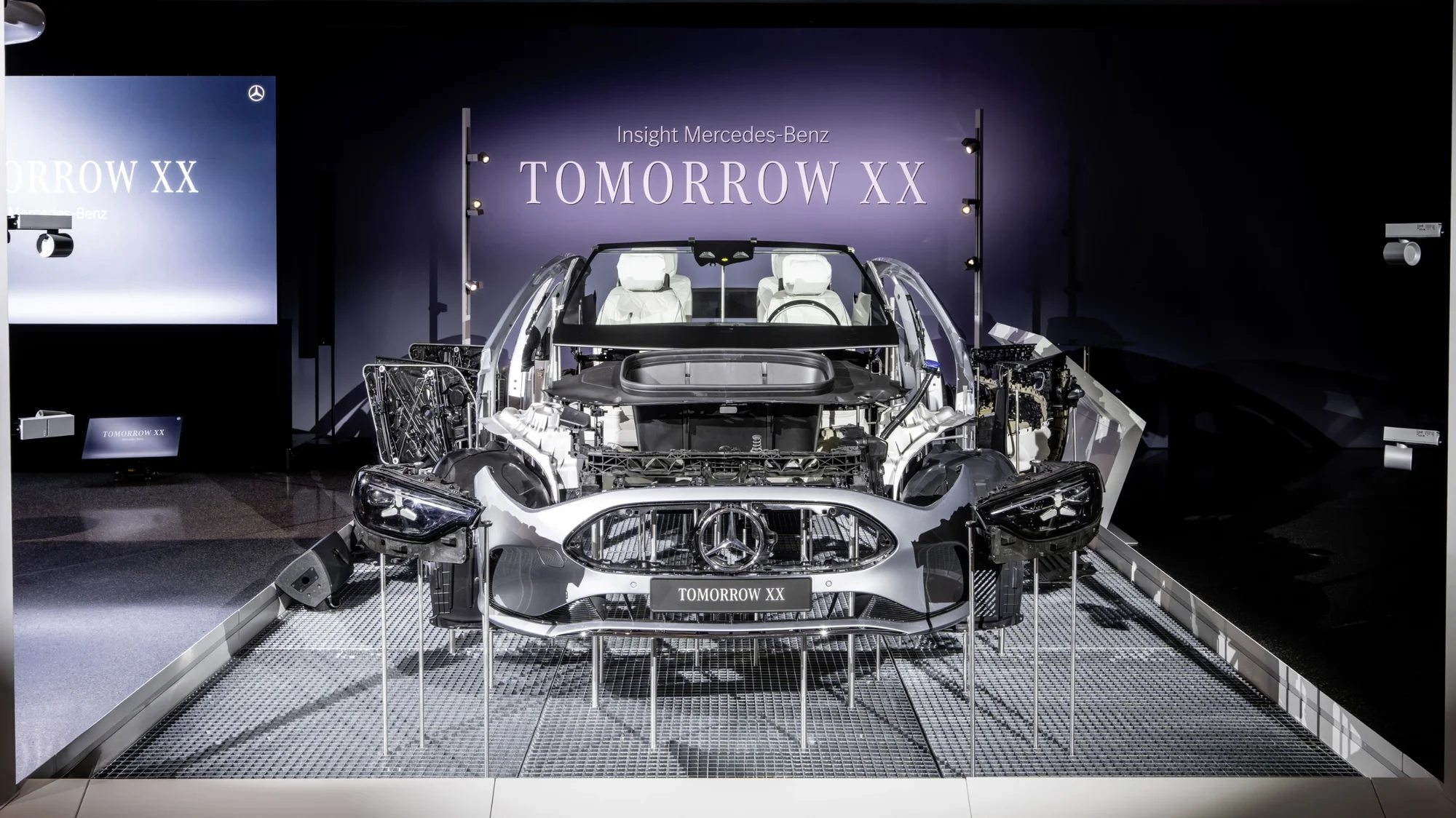
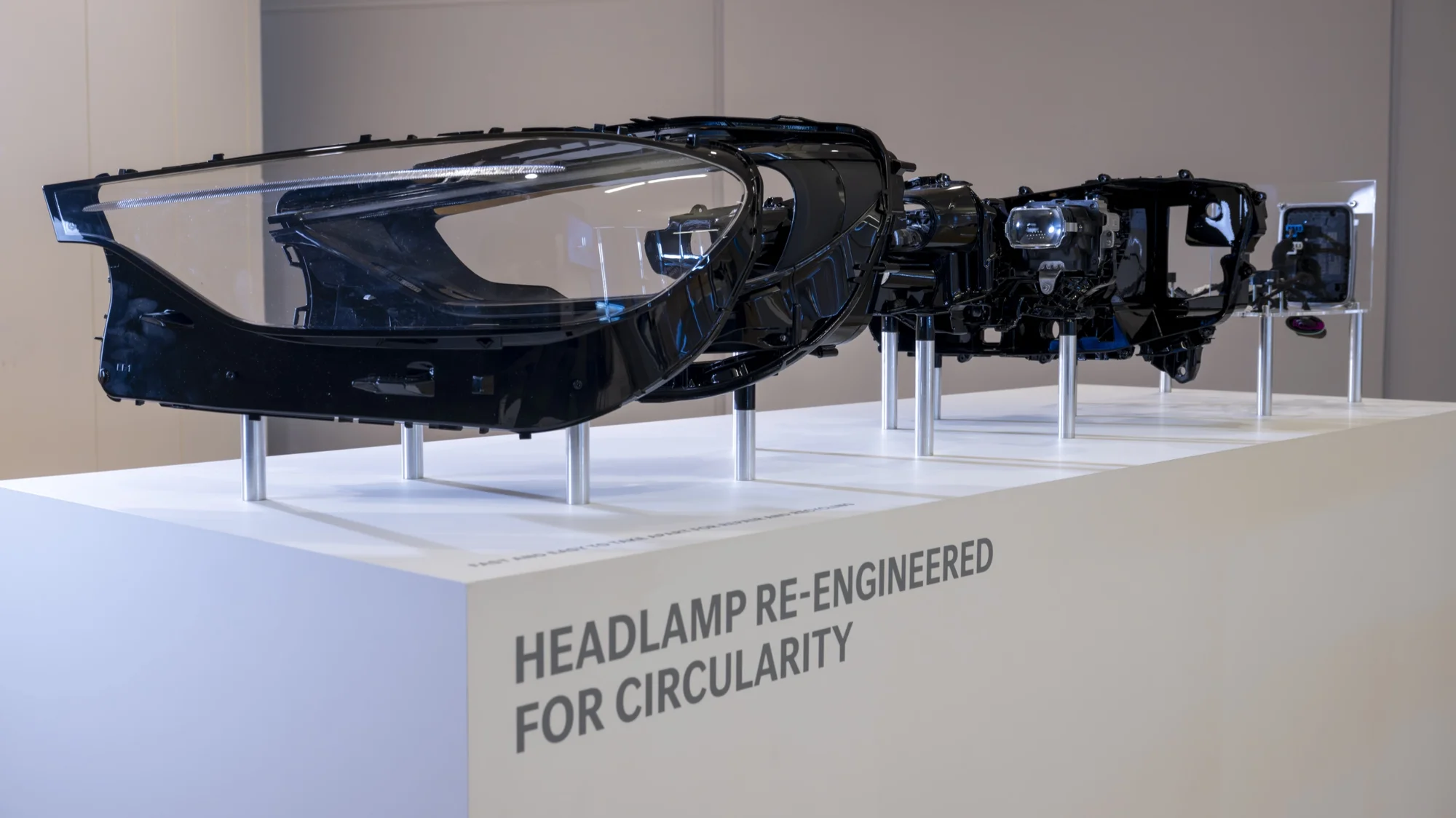
The regulations begin at the design and engineering stage: vehicles must be easier to dismantle, and manufacturers are required to provide “clear and detailed instructions for the removal and replacement of parts both during use and at the end of the vehicle’s life.” To stimulate demand for recycled materials, from 2036 onwards plastics must contain at least 25 per cent recycled content, with 20 per cent derived specifically from end-of-life vehicles. These requirements apply equally to cars manufactured within the EU and to imported vehicles. The European Commission may also introduce recycled-content requirements for other materials. The objective extends beyond sustainability in terms of resource conservation. Reuse, refurbishment and remanufacturing are also intended to increase the availability of second-hand spare parts, thereby reducing repair costs.
The Car, a Material Mix
Steel, glass, battery cells containing rare earth elements, and countless types of plastics: making vehicles circular involves material streams of widely differing kinds and volumes, each requiring dedicated recycling and processing pathways.
The industry term for automotive waste is “end-of-life vehicle”, referring to passenger cars and light commercial vehicles that are no longer roadworthy and cannot be relicensed at the end of their service life. At present, however, their fate is anything but transparent. Manufacturers have long offered take-back guarantees, yet relatively few vehicles are actually returned to them.
According to official statistics, around 2.98 million end-of-life vehicles were permanently deregistered in Germany in 2023. However, only 253,000 reached domestic dismantling facilities. Most were exported to other EU countries, while a smaller proportion went to destinations outside the EU. According to the German Environment Agency, the whereabouts of approximately 440,000 vehicles categorised as having an “other destination” remain unclear. At present, comparatively few vehicles are returning to the material cycle.
There appears to be broad consensus on the need for change. So far, however, progress has been incremental. Could the current structural crisis provide the incentive needed to implement truly consistent circular design? Manufacturers such as BMW and Volvo have already demonstrated success in this area. Anyone serious about reuse must begin by designing products with their end of life in mind.
Transformation at the Production Site
Zwickau in Saxony is one of the traditional centres of the German automotive industry. Volkswagen has been manufacturing vehicles here for the Group for the past 35 years. The site attracted considerable attention when it was converted for electric vehicle production. Even so, it currently operates at only around 70 per cent capacity.
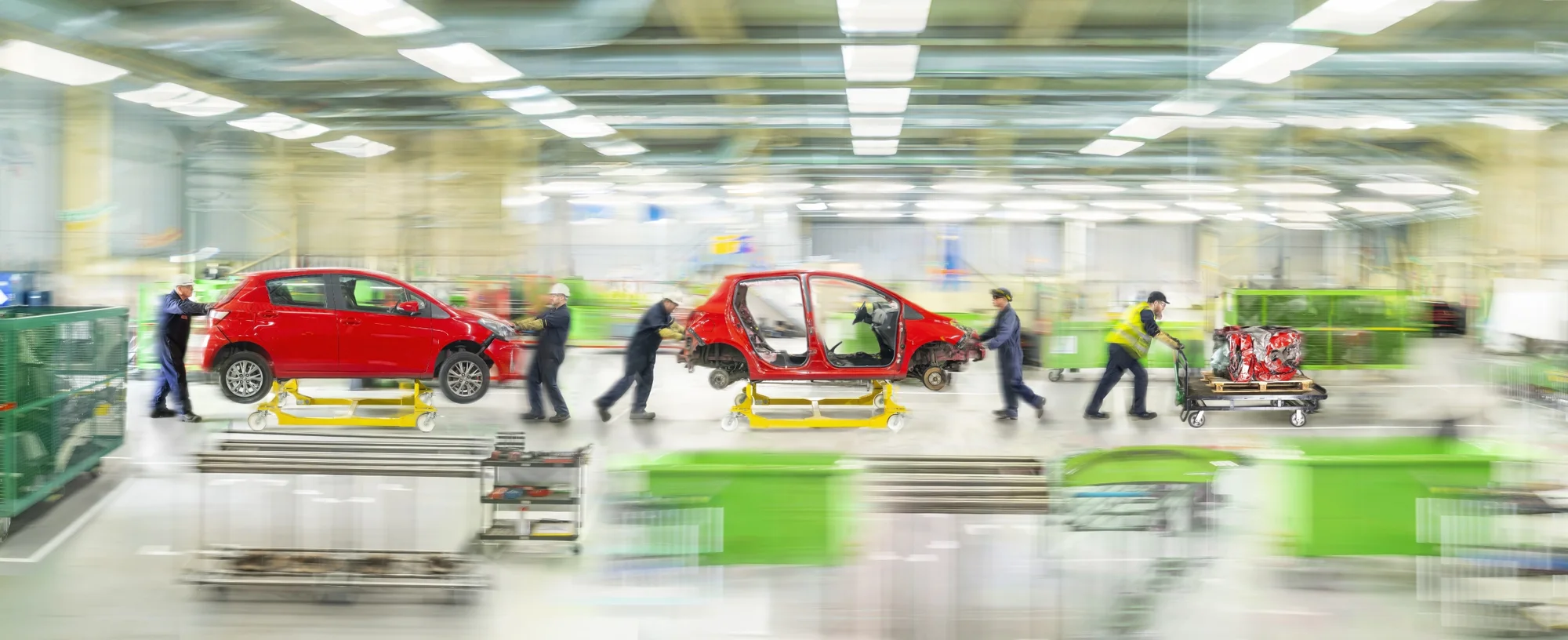
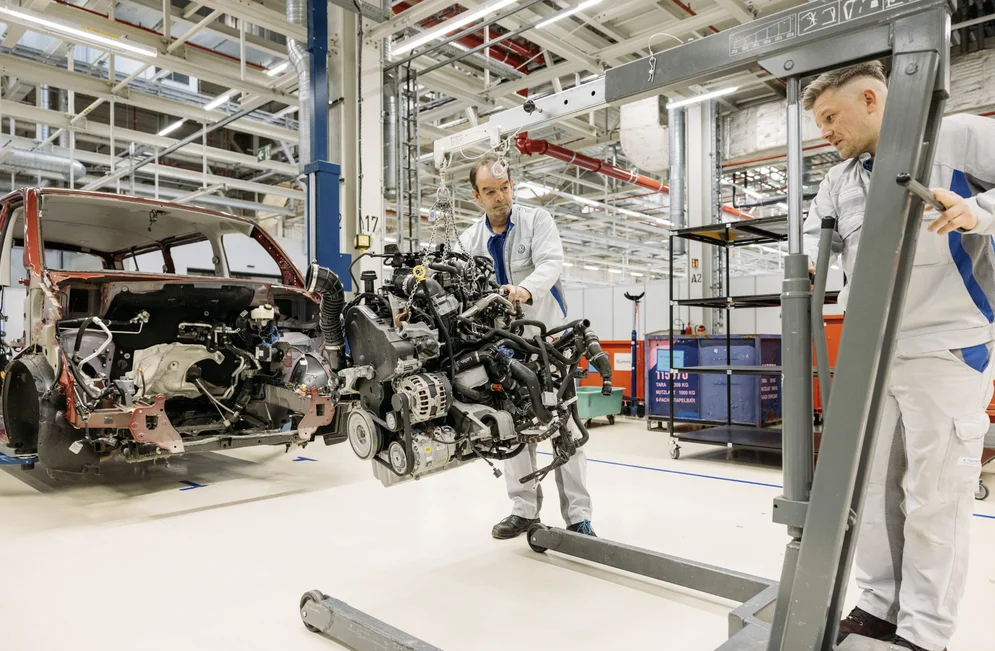
A more recent development is its commitment to vehicle dismantling. Volkswagen is investing €90 million at the site to gain a better understanding of product end-of-life processes and component recyclability, while the State of Saxony is contributing a further €10 million. Initially, the new “Competence Centre for the Circular Economy” will dismantle around 500 vehicles annually, with plans to increase capacity to as many as 15,000 in the future. Around 1,000 employees are expected to move from production into dismantling and refurbishment activities, with approximately 200 dedicated exclusively to disassembly.
Even more far-reaching is the transformation undertaken at Renault’s Flins plant, approximately 40 kilometres west of Paris. Established in 1952, it initially produced models such as the Dauphine and the R4 before manufacturing a range of other small cars. The factory also produced metal and plastic components. New vehicle production ceased in 2024 with the end of the Zoé programme. Of the original 237-hectare site, less than one hectare is now occupied by the “Re-Factory”, where around 2,000 employees work across a variety of activities. These include refurbishing used vehicles, repairing electric vehicle batteries and repurposing them for stationary energy storage, overhauling both mechanical and electronic automotive components, dismantling end-of-life vehicles and recovering materials. Even Renault Group production equipment, such as industrial robots, can be refurbished here. Under the banner “Re-Start”, the centre also offers training programmes focused on the circular economy.
Renault operates smaller “Re-Factories” at several company locations, including Duisburg, where the refurbishment of used vehicles from all manufacturers is the primary focus. Circular economy principles are also gradually making their way into Renault’s new vehicles. The body shell of the Twingo E-Tech incorporates 38 kilograms of low-carbon steel produced in European electric arc furnaces, 75 per cent of which originates from circular material streams. It is, however, only a symbolic first step.

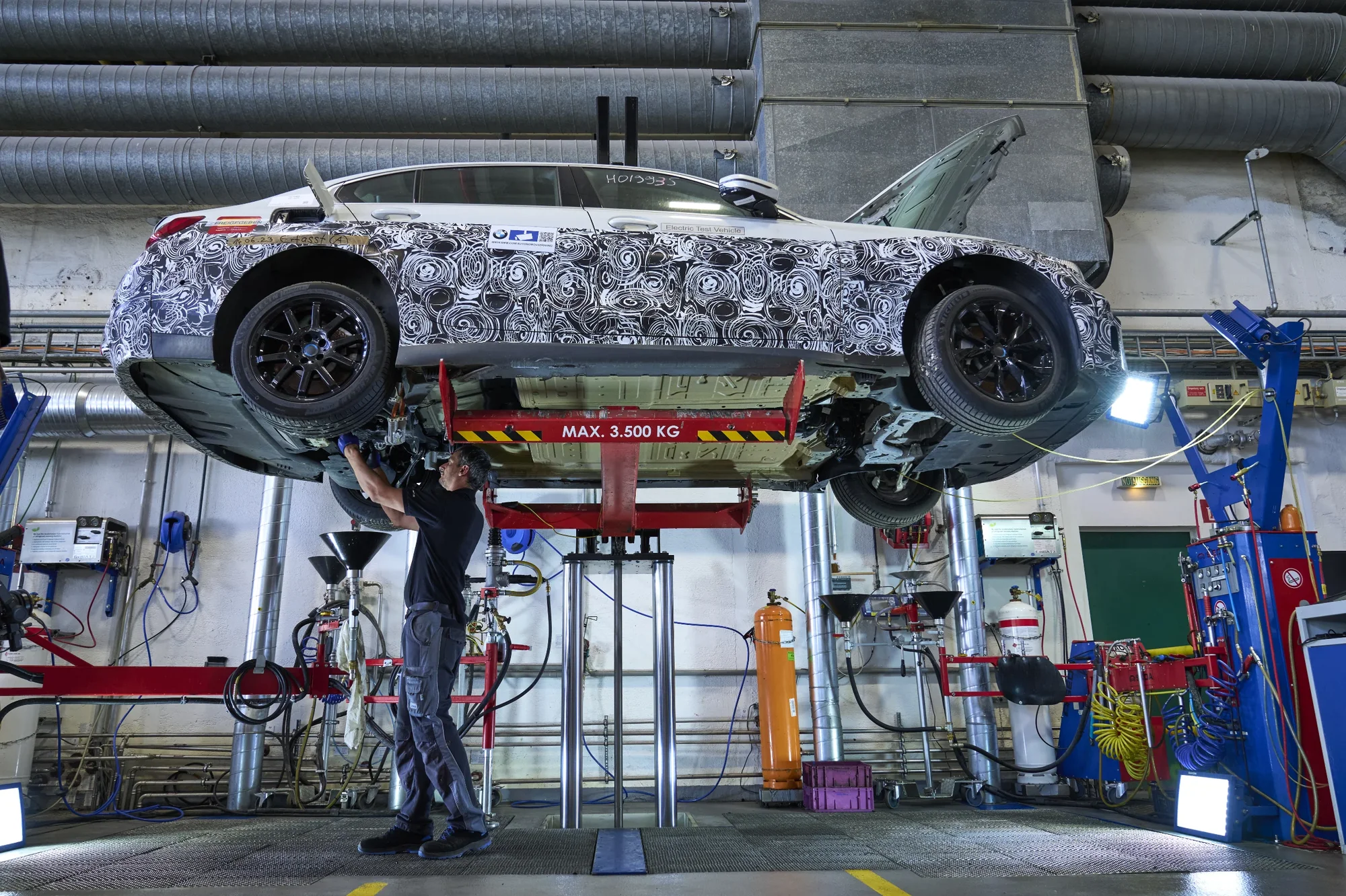
The BMW Group is constructing its new Recycling and Dismantling Centre (RDZ) in Wackersdorf, scheduled to begin operations in early 2029. BMW has already operated a similar facility in Unterschleißheim for more than 30 years. Its primary objective is to develop recycling processes and test them under real-world conditions, while generating insights for future product design. Several thousand vehicles are dismantled there every year, many of them pre-production vehicles built solely for testing purposes and never sold to customers. During dismantling, selected production components are earmarked for reuse while materials are recovered for recycling. The resulting knowledge is made available free of charge to dismantling companies through a dedicated database and is also fed directly into product development.
Monomaterial statt Mehrkomponenten-Werkstoff
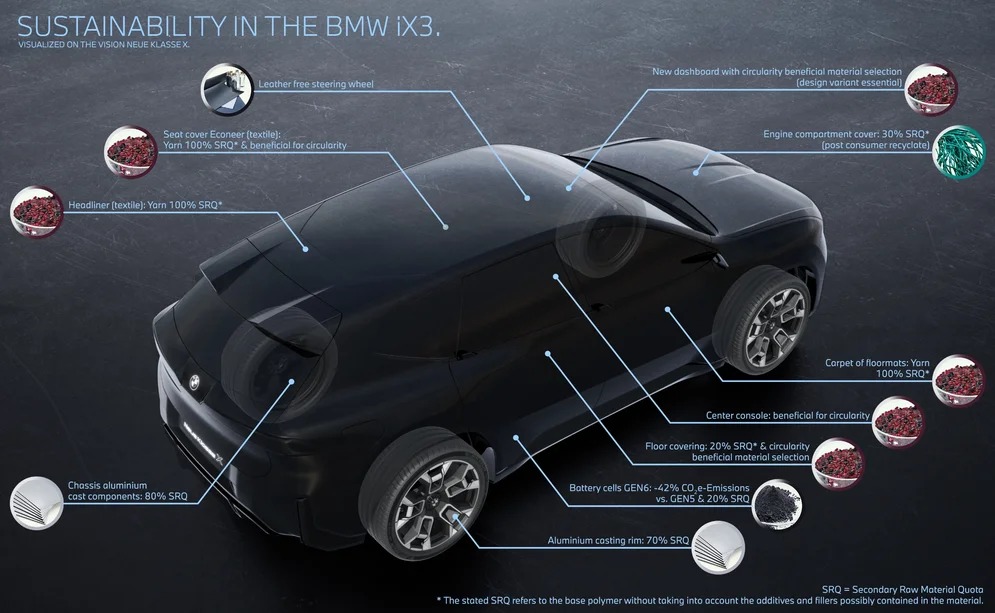
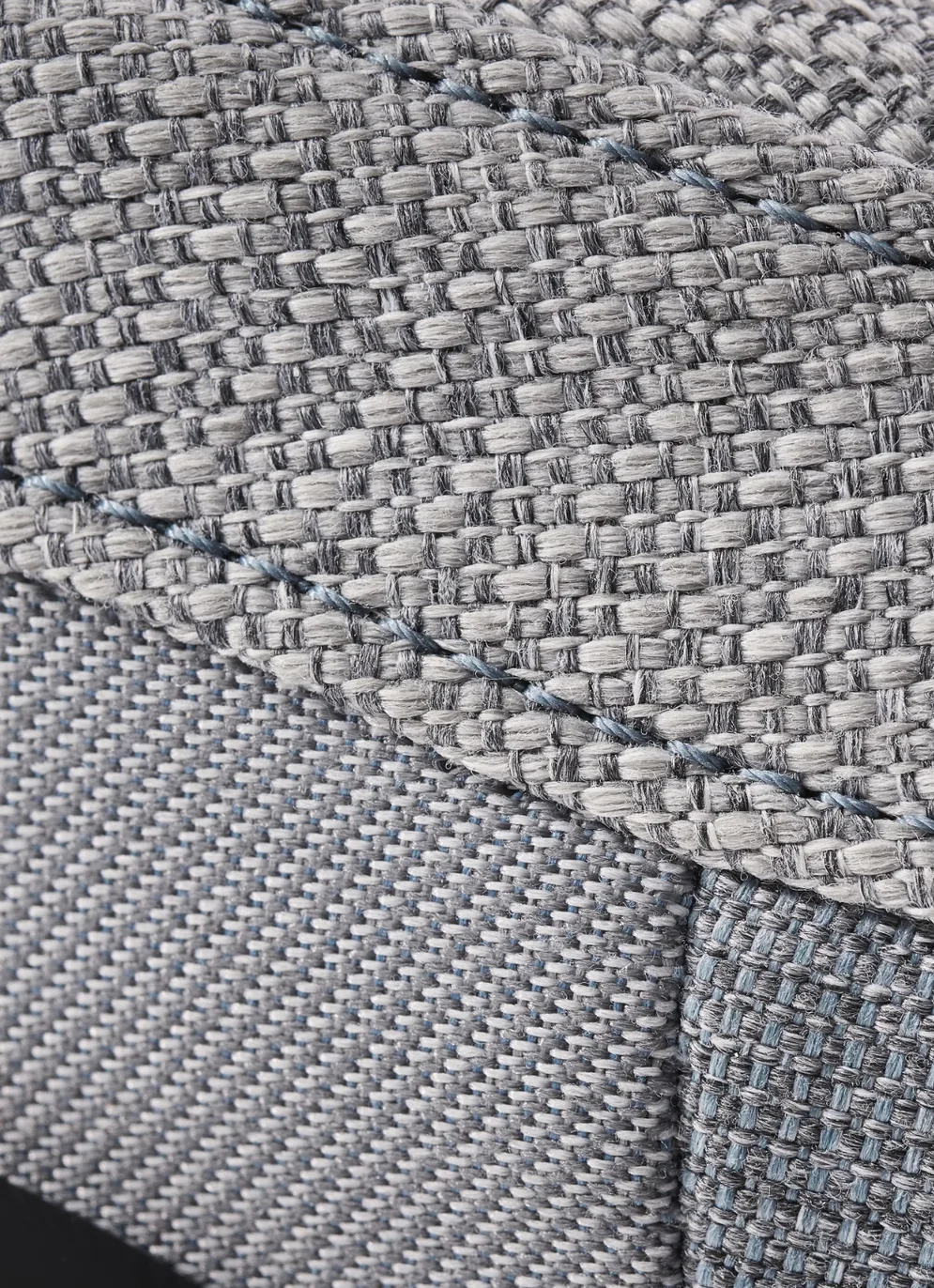
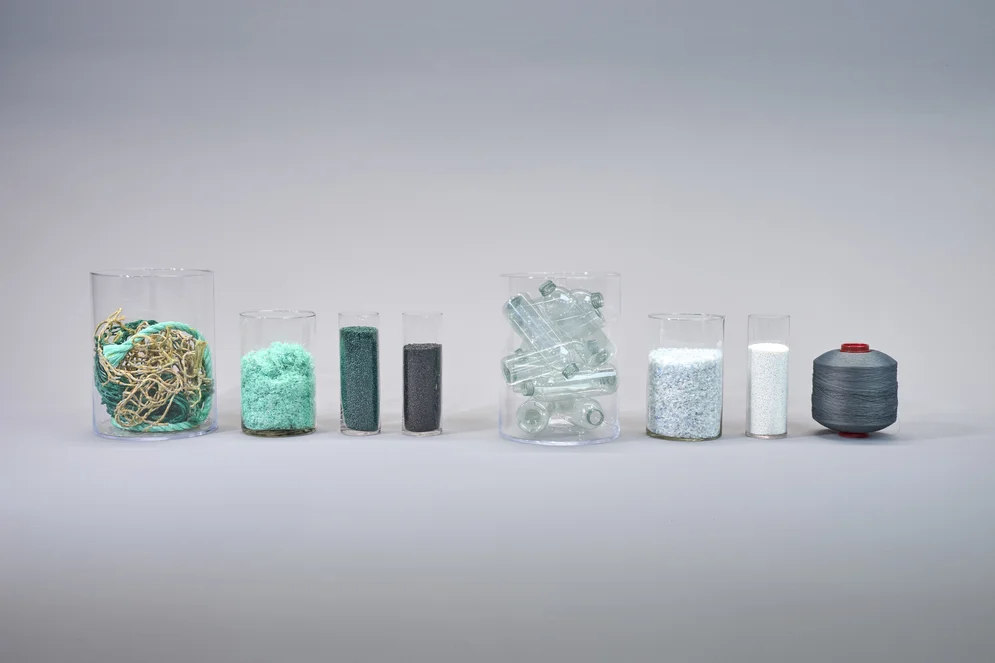
Many people are familiar with the fact that PET bottles, often used only once, can be compressed in supermarket recycling machines and transformed into fibres. BMW already uses such material in the iX3 50 model of its “Neue Klasse”. Around one third of the vehicle consists of secondary materials. The Econeer seat upholstery (available in the “Essential” trim level) is made entirely from PET-based materials, from the textile yarn and adhesive to the fleece backing. The secondary material has also been optimised for easier dismantling at the end of the vehicle’s life. In keeping with the principle of “Design for Circularity”, the centre console, instrument panel and interior floor covering have likewise been developed with future disassembly in mind.
Around 1973, the design collective Des-In created the “Tyre Sofa”, embodying an alternative aesthetic through the reuse of discarded tyres. Mercedes-Benz, by contrast, is exploring how waste tyres can be transformed into new seat upholstery for the company’s flagship models. The resulting material, known as “Labfiber”, is intended to replace natural leather while reducing water consumption, energy use and CO₂ emissions.
In 2024, Mercedes-Benz opened a battery recycling plant in Kuppenheim near Rastatt to recover lithium, nickel and cobalt from spent batteries as completely as possible. The project involves Primobius, a joint venture between Germany’s SMS group and the Australian company Neometals. Supported by the Federal Ministry for Economic Affairs, the research project is accompanied by three German universities. It examines “the entire recycling process chain, including logistics and reintegration concepts”, as a “contribution to the future scaling of the battery recycling industry in Germany.” Vehicle engineer Steven Peters of the Technical University of Darmstadt recently outlined, in a report published by the Frankfurter Allgemeine Zeitung (“Resurrection of a Car”, 28 April 2026), the idea of “making vehicles as refurbishable as houses, where heating systems can be replaced or interiors modernised.” He coined the term “cross-generational product modularisation” to describe this concept. For now, however, it remains a utopian vision that is unlikely to play a significant role in automotive circular design in the near future.