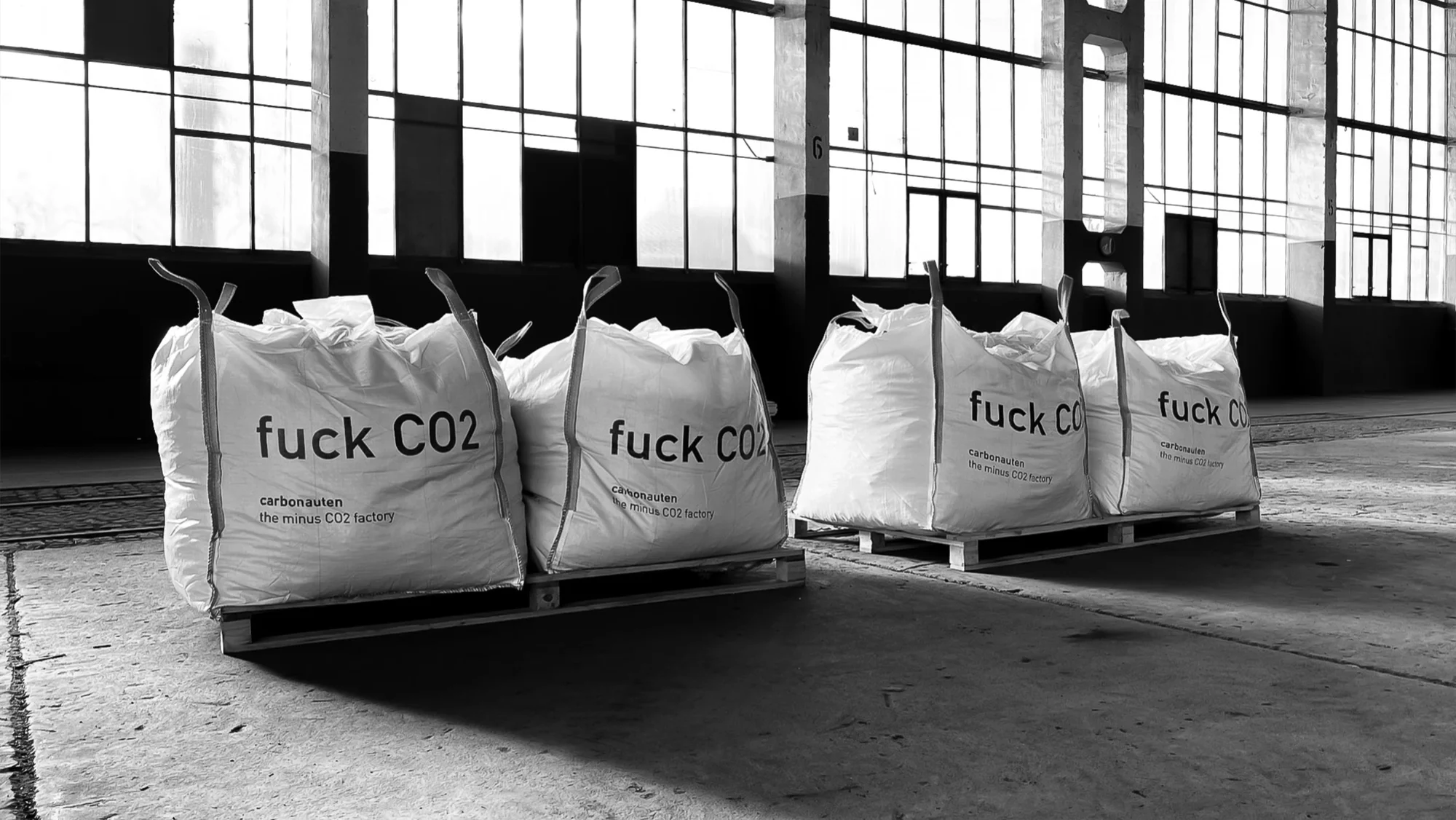
The Boom of Biochar
Understanding the Carbonauten’s business model and technology takes time. That’s the nature of a ‘wicked problem’ — complex challenges like climate change cannot be solved overnight.
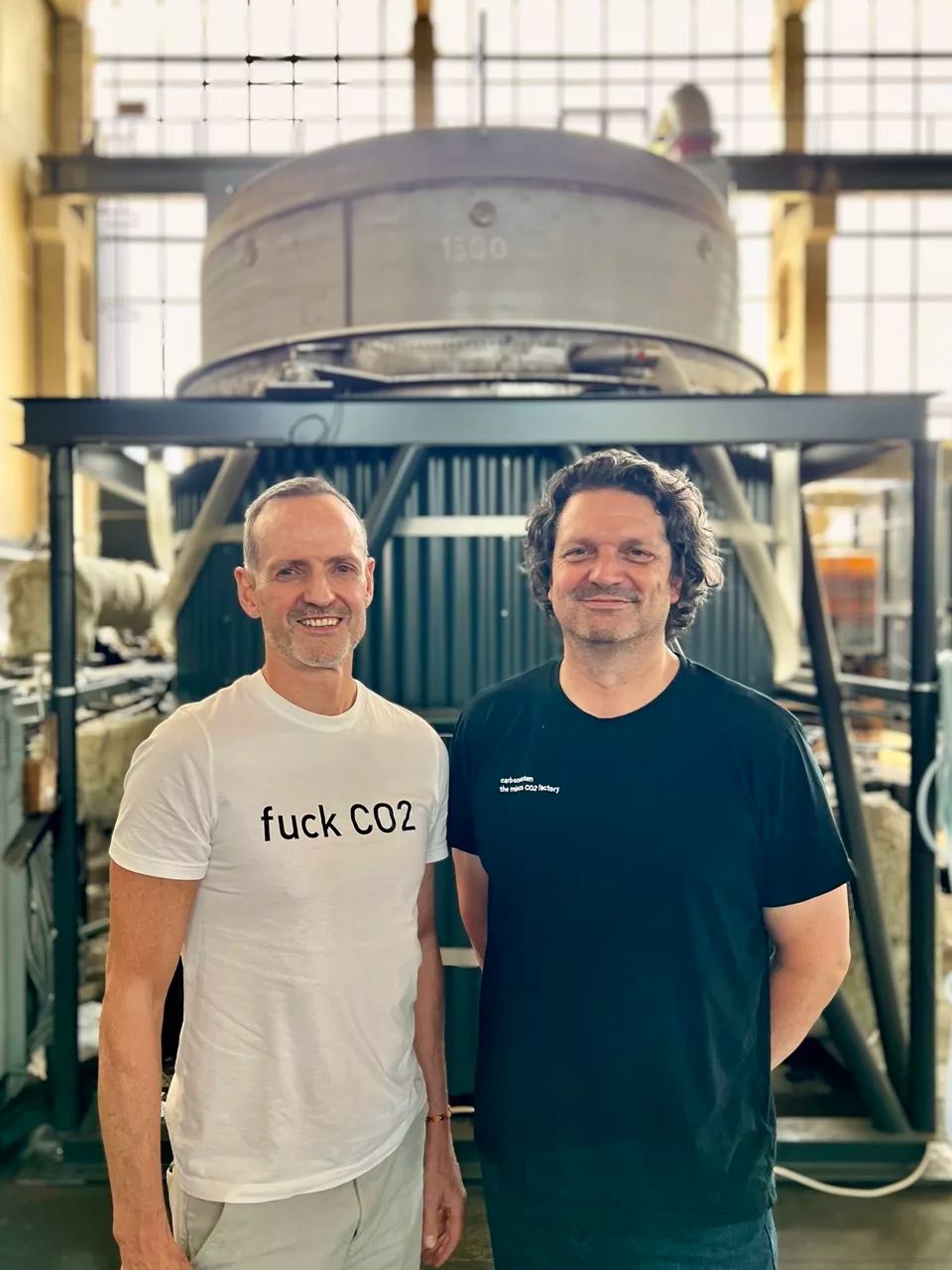
One of the people behind “Fuck CO₂” is Torsten Becker, a trained product designer who has had a varied career and now also describes himself as a “dreamer”. While Becker is based in Giengen an der Brenz — the Swabian town made famous by Margarete Steiff’s teddy bears — his business partner, Christoph Hiemer, works in Eberswalde in the state of Brandenburg. There, the start-up founded in 2017 has built its first Minus CO₂ Factory. More sites are planned worldwide in the coming years.
Biochar: An All-Round Weapon
Torsten Becker is a hands-on type who, as he admits, often wants to “jump straight to the tenth step”. Following his experience with Carbuna AG, a platform for plant-based carbon products, he discovered the potential of biochar. He was particularly impressed by ‘Terra Preta’ – the biochar-enriched soil created by indigenous peoples in the Amazon Basin in Latin America that is renowned for its fertility and nutrient density.
Today, the Carbonauten also offer biochar-based substrates for agricultural use. These are purely natural and act as nutrient stores rather than fertilisers. However, Becker stresses that biochar’s potential goes far beyond this. It locks up carbon over the long term and can also be used as a feedstock for materials such as plastics or additives in the construction industry.
Furthermore, its production generates surplus heat as well as pyrolysis oil, which is another highly versatile product. For Becker, therefore, biochar is a true all-round weapon.
Carbon Dioxide Removal Technologies
The fact is: cutting CO₂ emissions alone will not be enough to achieve the Paris Agreement’s 1.5-degree target – scientists of the IPCC agree on that. What is also deemed necessary is the removal of harmful greenhouse gases from the atmosphere. In this context, Carbon Dioxide Removal technologies – CDR for short – using biochar are regarded as particularly promising.
Background: At present, only a handful of carbon removal technologies exist – for example, Bioenergy with Carbon Capture and Storage (BECCS) or Direct Air Capture with Carbon Storage (DACCS), in which CO₂ is captured and then stored in materials, oceans or underground. Some of these methods carry risks – storing CO₂ in the oceans, for instance, can lead to acidification.
Afforestation is a natural option, but it too faces limits, as land is scarce and competes with agricultural use. Biochar, by contrast, offers decisive advantages: it can be produced at scale, remains stable for centuries and permanently binds CO₂ – whether in soils or in various materials.
„The key, is that the technology must be both sustainable and cost-effective – otherwise industry will have no interest in green technology.“
Torsten Becker,founder of Carbonauten GmbH
Sustainable and Affordable
The key, Becker explains, is that the technology must be both sustainable and cost-effective – otherwise industry will have no interest in green technology. “The low price is the game changer.” He is in talks with major companies such as VW, Mercedes-Benz, Liebherr, Siemens, Porsche and Deutsche Bahn, with whom he is running pilot projects. So far, however, industry interest has remained muted, as there is still little knowledge about the technology. It requires explanation and is not as “on trend” as other green technologies – such as hydrogen, which Becker jokingly calls “energetic champagne”. Unlike hydrogen, biochar receives no subsidies in Germany. In China, where the Carbonauten are also active, the situation is very different.
Nachhaltig und günstig
Der Schlüssel liege darin, dass die Technologie sowohl nachhaltig als auch kostengünstig sein müsse – sonst habe die Industrie kein Interesse an Green Technology, erklärt Becker. „Der günstige Preis ist der Game Changer.“ Er steht mit großen Unternehmen wie VW, Mercedes-Benz, Liebherr, Siemens, Porsche und der Deutschen Bahn in Kontakt und setzt mit ihnen Pilotprojekte um. Noch sei das Interesse der Industrie jedoch verhalten, so Becker, da bislang wenig Wissen über die Technologie vorhanden sei. Sie sei erklärungsbedürftig und liege nicht im Trend wie andere grüne Technologien – etwa Wasserstoff, den Becker augenzwinkernd „energetischer Champagner“ nennt. Anders als Wasserstoff werde Biokohle in Deutschland nicht gefördert. In China hingegen, wo die Carbonauten ebenfalls aktiv sind, sehe die Situation ganz anders aus.
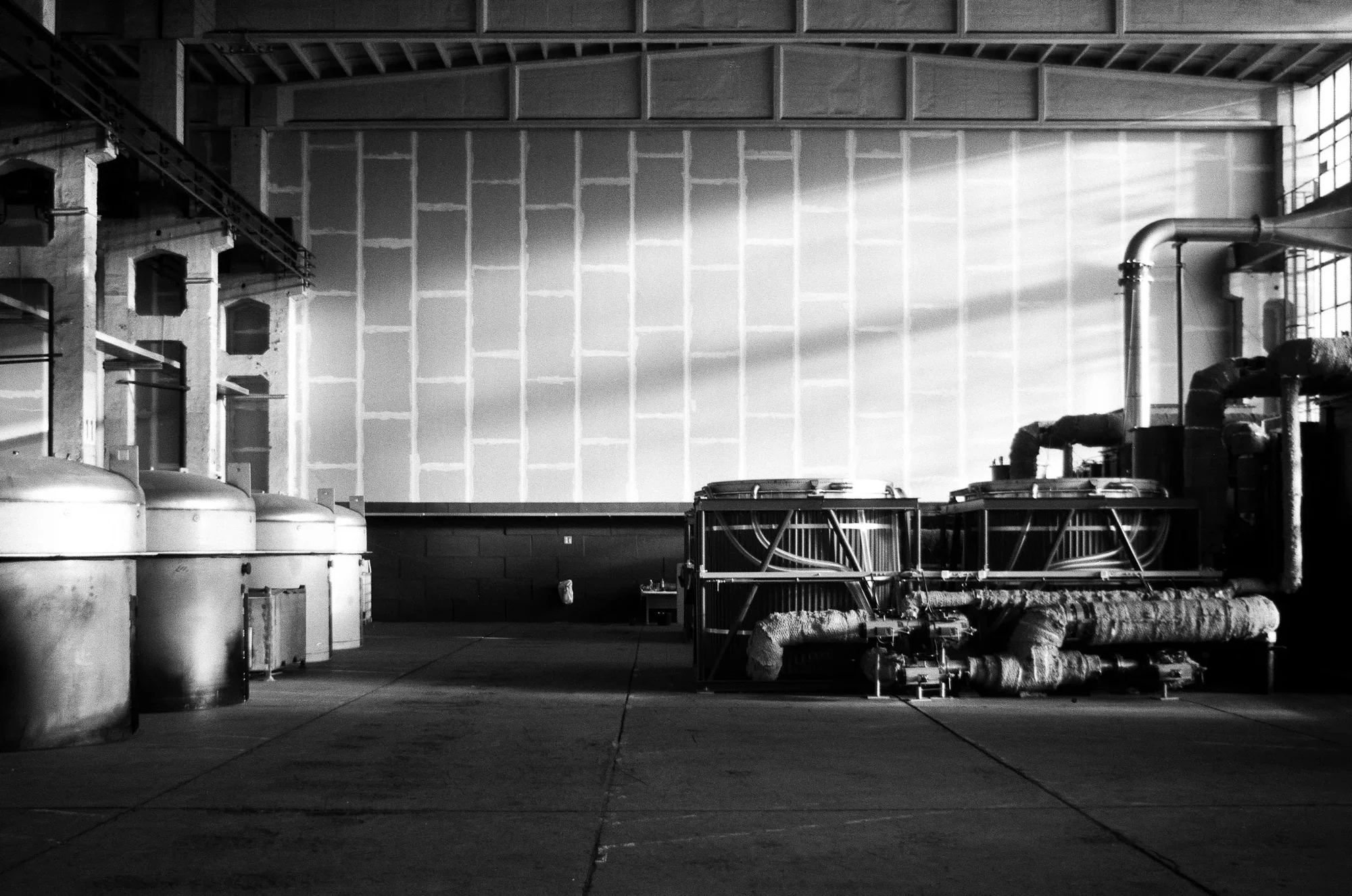
The Minus CO₂ Factory in Eberswalde
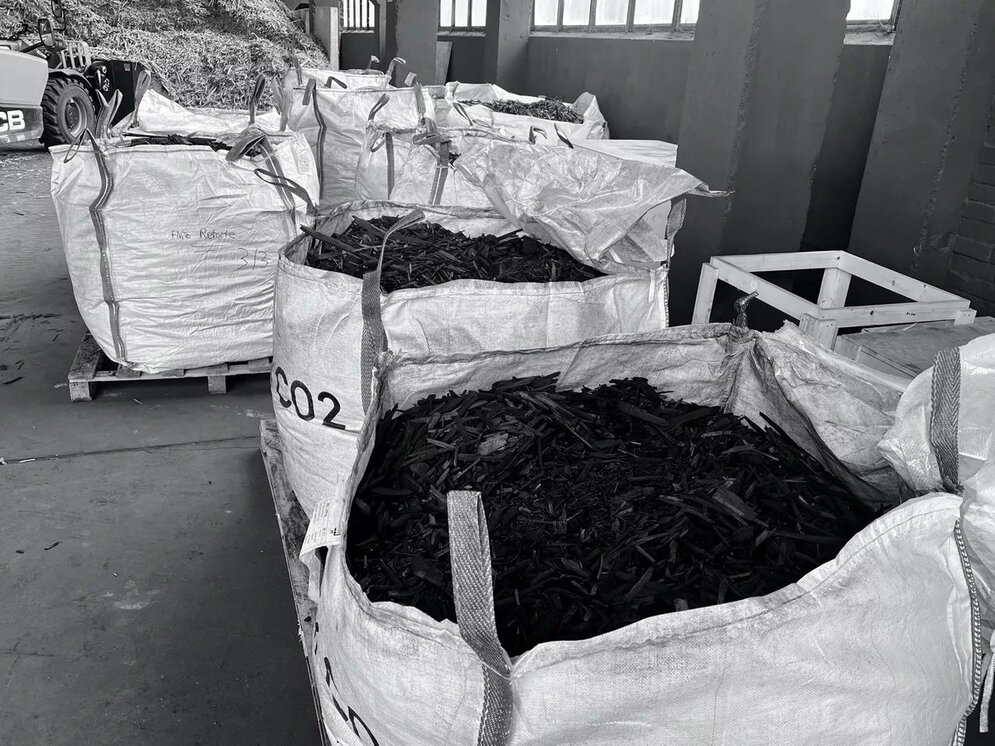
The decarbonisation process at the Minus CO₂ Factory, which cost around €3.6 million to build and was financed through limited partnership capital, will process 10,000 tonnes of biomass annually from the end of 2025. The core business lies in CDR technology: producing one tonne of biochar locks up 3.67 tonnes of CO₂ permanently. That’s because, when plants or trees naturally decompose, CO₂ is released, a process that biochar production prevents.
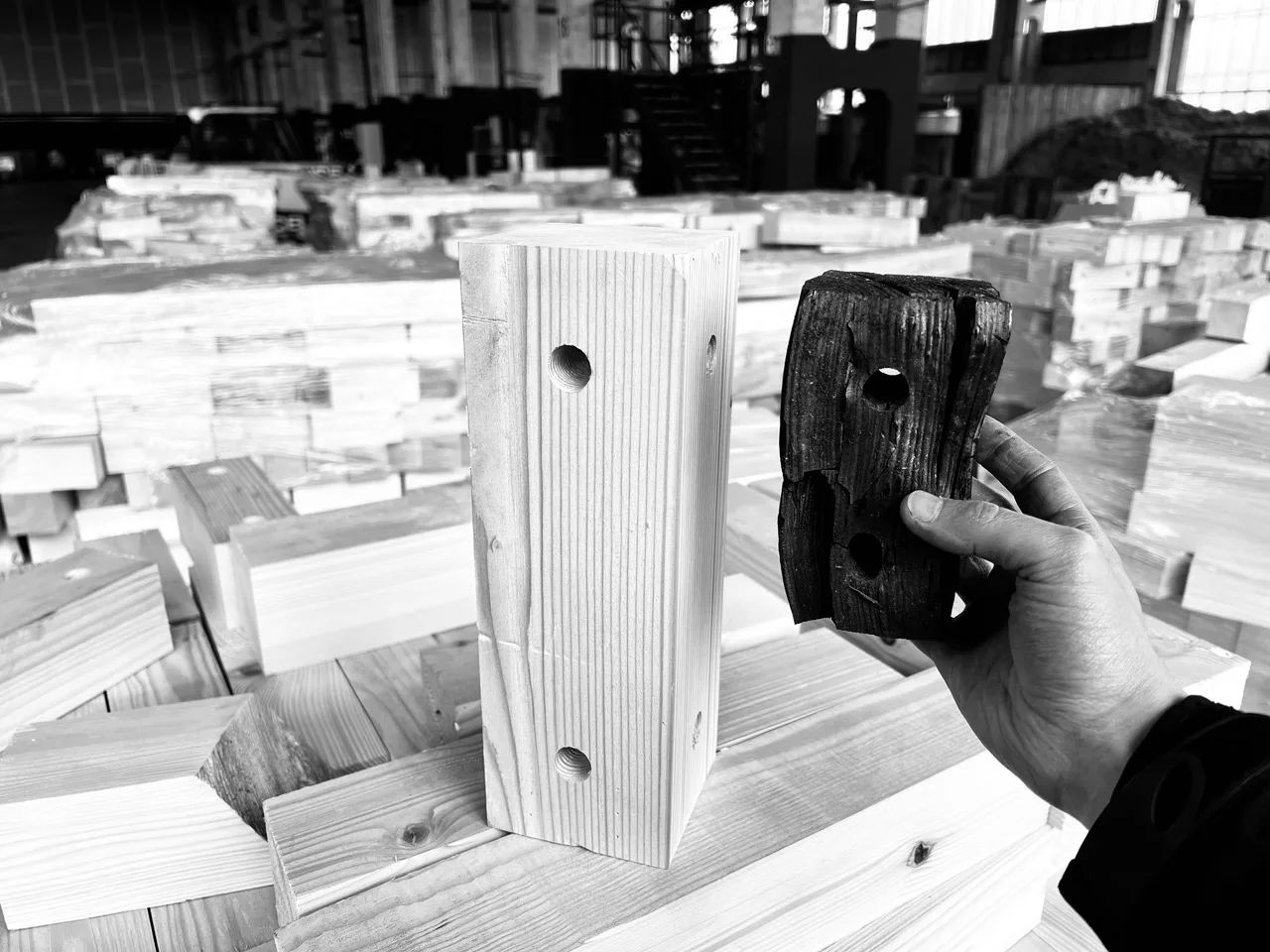
The Carbonauten use pyrolysis for production, but with their own approach. In the retort batch process, biomass – such as residues from the timber industry – is converted into biochar at temperatures between 400 and 700°C in an oxygen-free environment. This process takes six to eight hours and takes place in seven-cubic-metre steel containers. The biomass is loaded into these containers and heated exothermically by synthesis gas.
Hidden Champion: Pyrolysis Oil
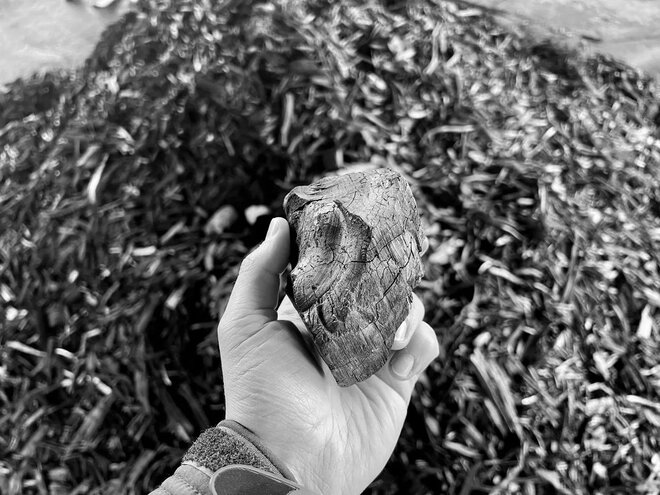
Alongside the biochar, which emerges from the process dry and visually similar to charcoal, one third each of synthesis gas and pyrolysis oil are also produced. All three components can serve as versatile precursors. The synthesis gas can be used to heat production processes and generate surplus heat, which can be fed into district heating networks, for example. Becker describes pyrolysis oil as a ‘hidden champion’. It has countless applications in food production, pharmaceuticals and medicine, for example in flavourings or in the manufacture of acrylic.
Pilot Project With Deutsche Bahn
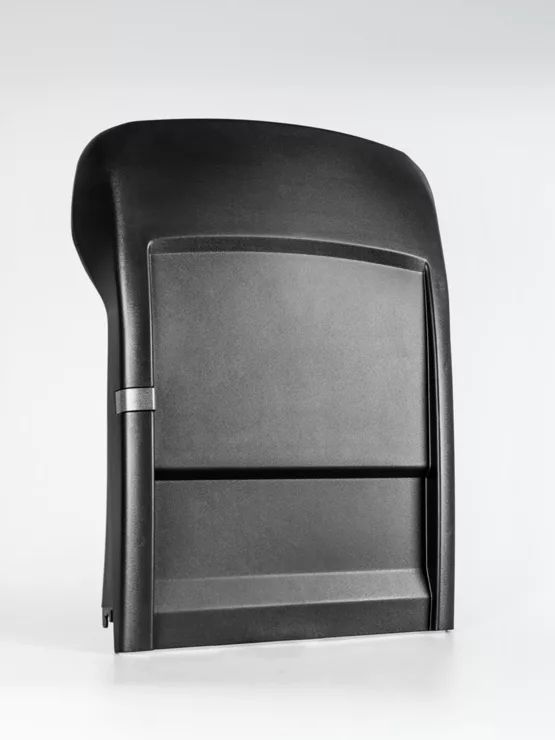
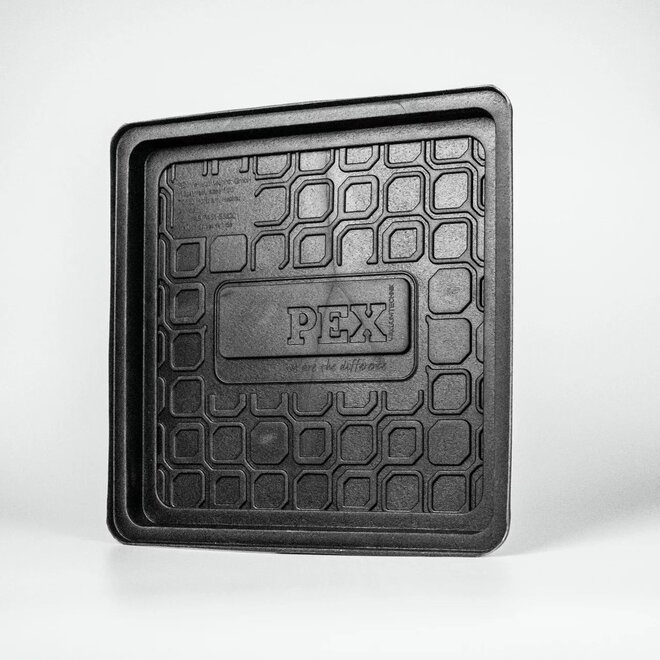
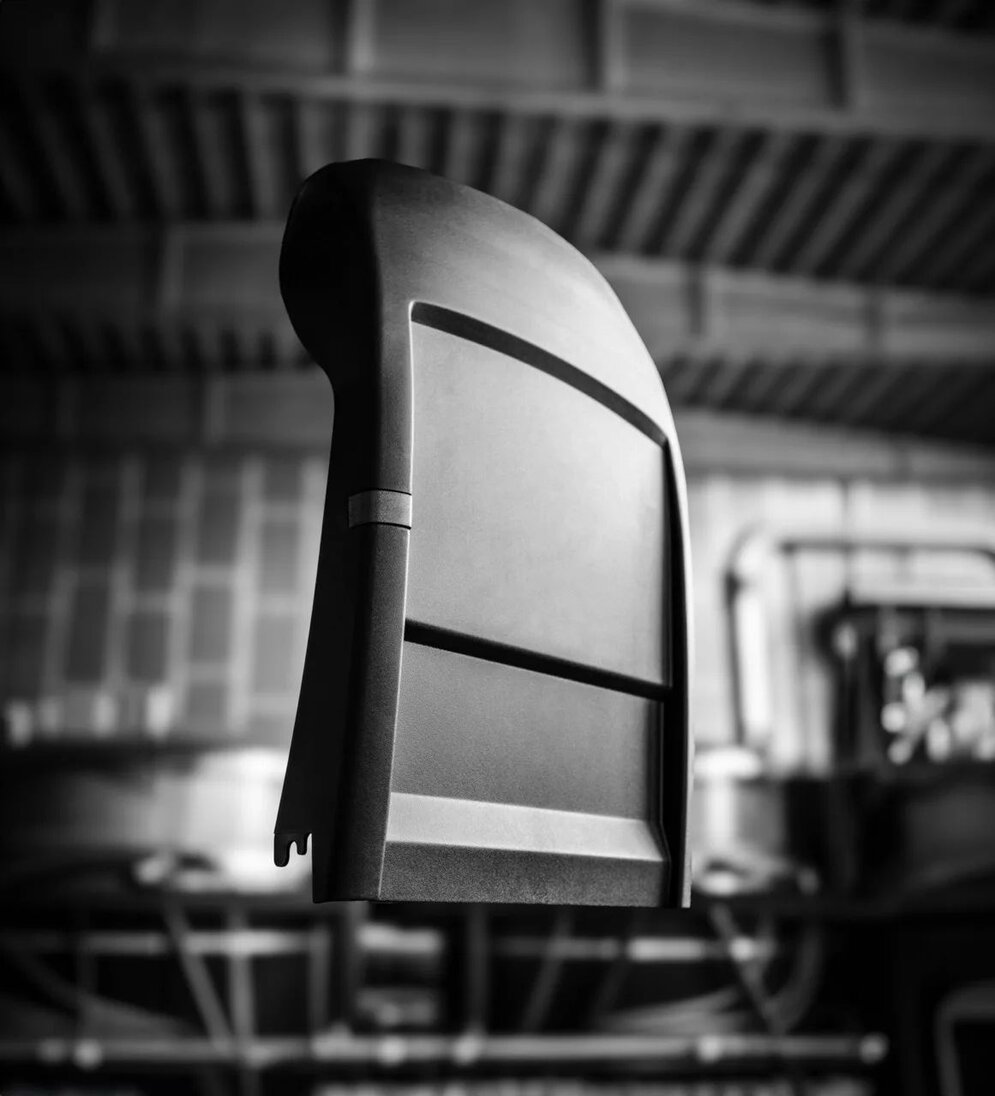
The Carbonauten market all materials enriched with biochar under the name NET Materials. They currently focus on plastics, blending up to 50 per cent biochar into granules. This black compound reduces the use of fossil materials, making it particularly climate-friendly. The Carbonauten have already completed a pilot project with Deutsche Bahn using this biochar-plastic compound: a seat shell for the ICE train and a suitcase for DB employees. Becker emphasises that the material properties are convincing: the compound is extremely stable, very light, and also odour-absorbing.
Becker is enthusiastic about the prospects: in the future, the Carbonauten could manufacture semi-finished industrial parts, as well as their own products, directly — for example, using injection moulding machines. “It’s really not that complicated. Why ship parts halfway around the world when you can produce everything in one place?”
A Global Growth Market
The biochar market is only just starting to take off, reports Becker. According to a McKinsey analysis from December 2023, a CDR industry capable of removing gigatonnes of CO₂ to net-zero levels could be worth up to $1.2 trillion by 2050. In May 2025, Microsoft signed the world’s largest biochar deal to date with the major decarboniser Exomad Green in Bolivia, in order to meet its CO₂ targets.
While the US and countries in the Asia-Pacific region are currently investing the most heavily in biochar technologies, more and more providers are also emerging in Europe, including Germany, albeit with different emphases. For example, Hamburg cleantech start-up Novocarbo focuses on emissions certificates, while Berlin-based EcoLocked mixes biochar into ready-to-use concrete.
Less Bureaucracy in China
In fact, according to Becker, the Eberswalde plant, which covers an area of around 3,200 square metres, is already too small. Up to twelve sites are planned worldwide, as the business is strongly regional in nature. If biomass has to be transported more than 100 kilometres, the CO₂ balance is lost. Construction of the second factory began in Chibi, in China’s Hubei province, in 2023. It will have a capacity of 200,000 tonnes of waste bamboo per year. Becker has good contacts in China and the state will support the plant. He is particularly enthusiastic about the straightforward bureaucracy there. However, new opportunities are also emerging in Germany: the town of Giengen an der Brenz has expressed interest in hosting a Carbonauten plant to utilise the surplus heat from production.