‘These Days, You Can’t Get By Without Taking a Stance’
The German Design Graduates (GDG) annual exhibition will open at the MAKK (Museum für Angewandte Kunst Köln) on 3 September 2025. What can visitors expect?
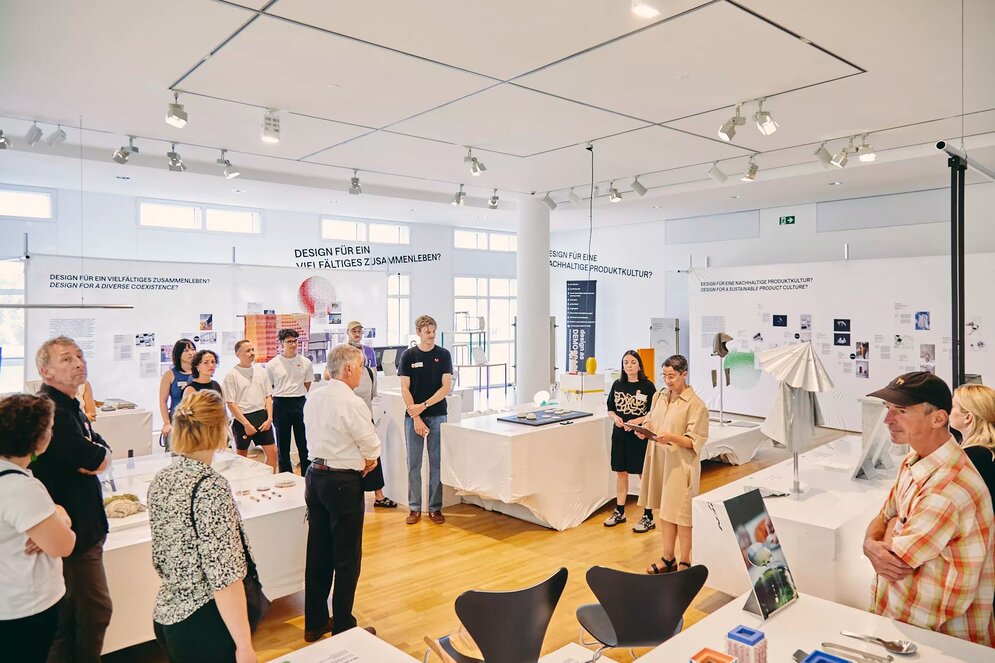
Katrin Krupka: This year, for the first time, we are presenting not only works from the fields of product and industrial design, but also from communication, digital, fashion and textile design. The range is immense, spanning everything from industrial and market-oriented applications to artistic and experimental projects, as well as collaborations with research institutes. This exhibition is unique in Germany, providing a comprehensive overview of the current generation of design graduates.
The title ‘Dare to Design – Spaces of Care’ suggests a philosophical stance. What is the idea behind it, and how is the theme of care reflected in the exhibited works?
Having an opinion is central to design. These days, you can’t get by without taking a stance. ‘Spaces of Care’ involves considering the economic, social, ecological and political implications of design from the outset. The concept of care is not usually associated with design, which is precisely what makes this approach so exciting. It’s about taking responsibility in each and every area.
Could you name some pieces from the exhibition that particularly reflect this?
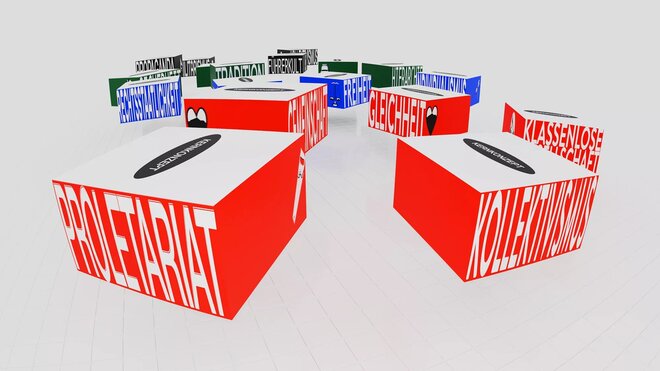
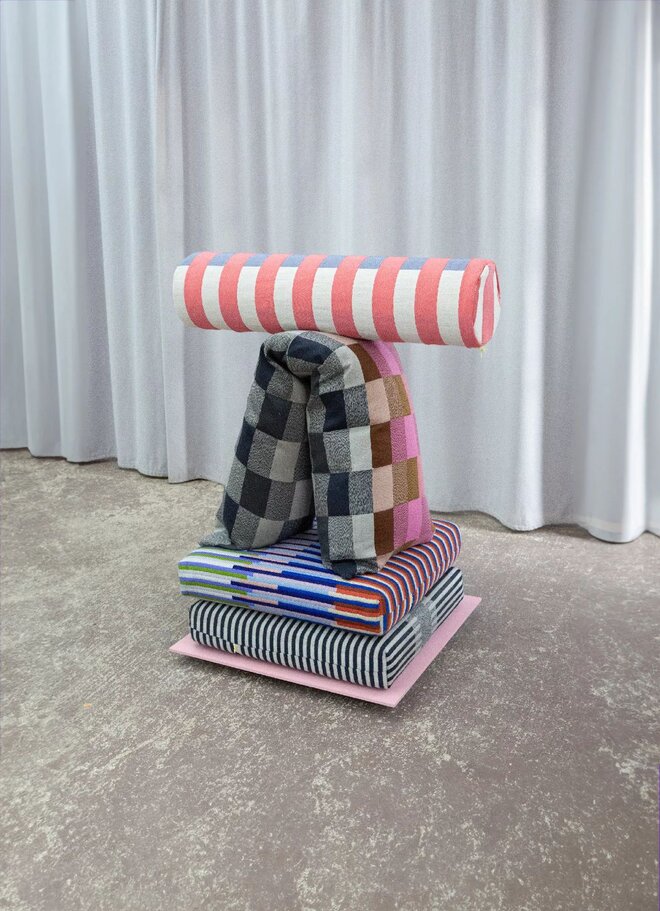
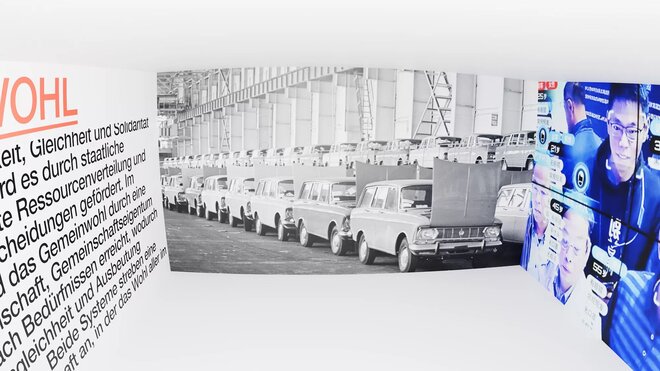
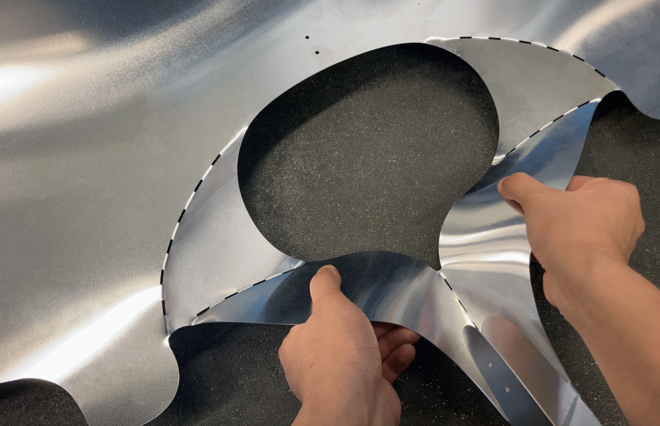
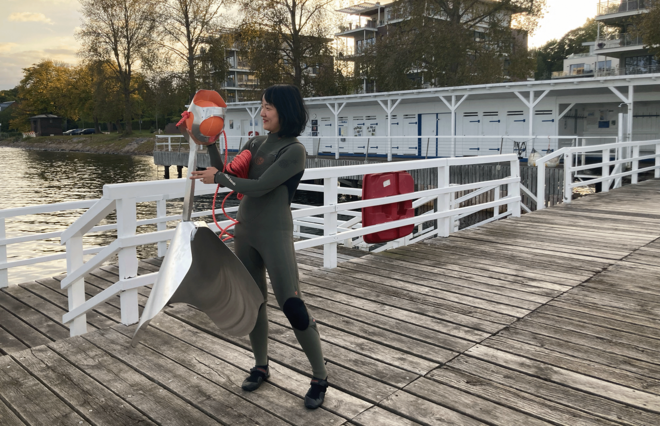
One particularly exciting project is Aaron Siermann’s ‘Ideologien visualisieren’ (Engl.: Visualising Ideologies), which uses AI to visualise different worldviews. It demonstrates how socially relevant issues can be made tangible through design. Another example is Paula Holzhauser’s ‘You May Also Like’, which addresses the issue of textile overproduction by using surplus yarn discarded in industrial weaving mills. Responsibility towards our living environment is also a theme of Ony Yan’s ‘Nessie’. This project was developed in cooperation with research partners. It shows what transfer projects between academia and practice can look like.
This year, a total of 45 graduation projects from across Germany were curated. What were the selection criteria?
At GDG, we don’t use rigid categories because disciplines are increasingly blending together. Each submission is assessed on its own merits. We consider the following criteria: innovation, execution, impact, construction and communication. We ask: how original is the idea? What transformative potential does it have? How well is it communicated? This year, for the first time, we involved an expert team from the German Design Council in the selection process. Our team then applied a curatorial approach to assessing the feasibility and breadth of the exhibition. Finally, the mentors selected highlights by choosing their ‘spotlights’.
What is the role of mentors at GDG?
They select the spotlight projects, bringing their expertise and professional experience to the table. Integrating different perspectives was important to us. The mentors come from a variety of disciplines. They assess which projects stand out and have the potential to succeed in practice. This adds another dimension to the selection process and helps graduates receive critical feedback on their work.
The exhibition design was created by “Studio für Gestaltung” using materials borrowed from the construction industry in a resource-efficient way. What makes this circular approach special, and why is it important to you?
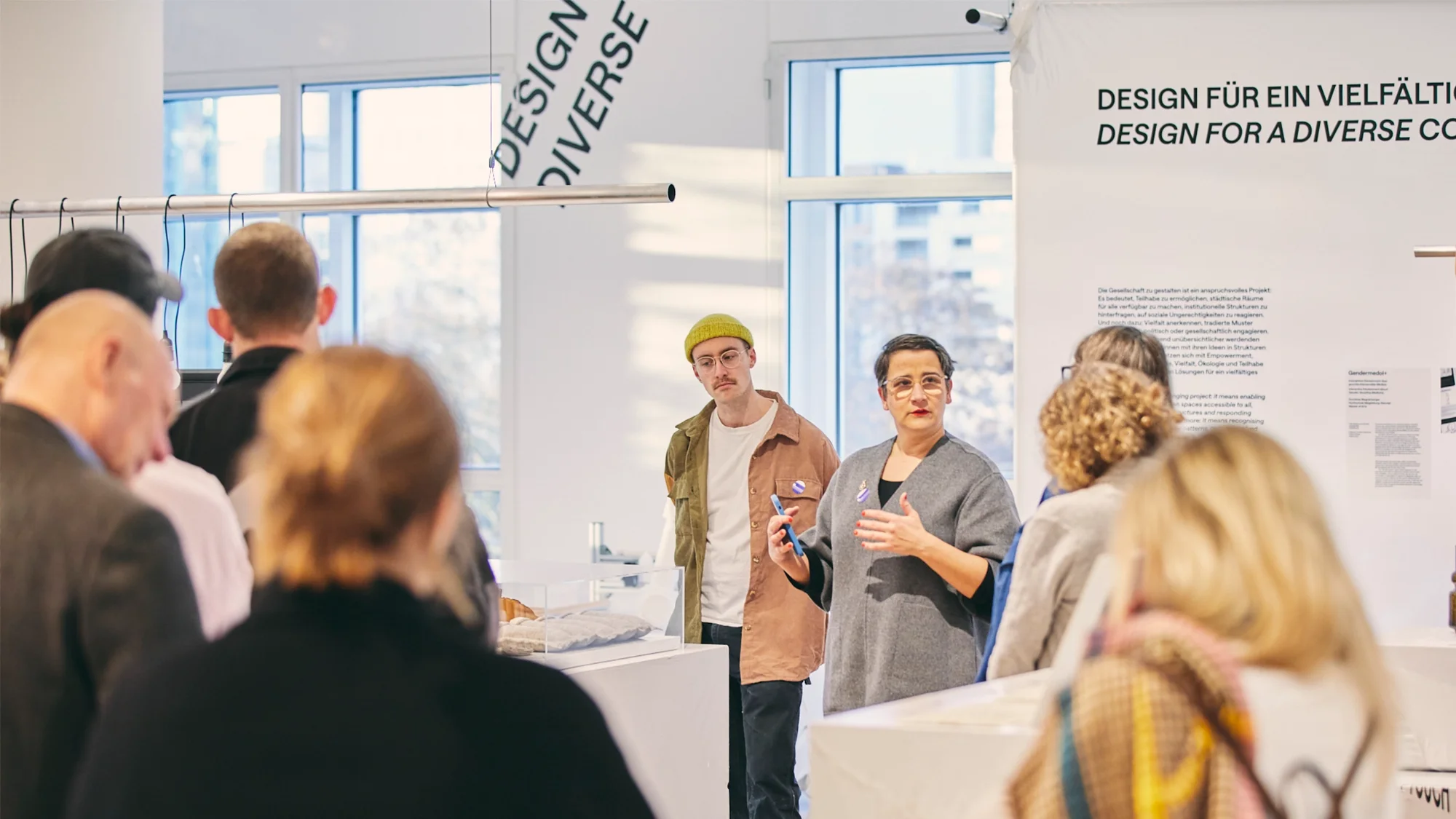
Together with the Cologne-based Studio für Gestaltung, we developed a concept in which materials such as concrete blocks or panels are borrowed from construction sites and used almost unprocessed. After the exhibition, these materials return to circulation. We wanted to embody the idea of circularity not just in the projects, but also in the exhibition concept itself. This idea is also reflected graphically: a mobile, symbolising movement and transformation, illustrates how analogue work is finding new relevance in the digital age.
How can students or recent graduates apply to take part in the exhibition?
Every year, we invite all German state universities with design degree programmes to participate. Thanks to a participation fee paid by the universities, all graduates, whether with a Bachelor’s, Master’s, PhD or diploma, can submit their work. This work is presented on our digital platform, which functions as a library of all final projects. This platform is unique in providing a nationwide overview. Projects can be filtered by keywords such as ‘Circular Design’, ‘Social Design’ or ‘Research’. This allows interested parties to quickly identify the themes being explored by the universities. For graduates, this means gaining visibility far beyond their own institution.
What other benefits do participants gain from taking part in the initiative?
The main benefit for those selected for the exhibition is the prestige of the hosting venues. The opening is attended by guests from the worlds of design, culture, politics and business, providing valuable networking opportunities with companies, research institutions and potential employers. It is also often the first time that the press takes notice of the graduates. This all happens at a time when they are just starting out in their careers. We also organise workshops, talks and networking events as part of the exhibition, which graduates can participate in.
Once again this year, as well as in Cologne, you will be presenting the German Design Graduates at Dutch Design Week...
Exactly! From 18 to 26 October, we will be showing another exhibition in Eindhoven under the title ‘Next, Now, Then’. It has been curated and realised by the Dutch design studio Raw Color. The exhibition is intended for an international audience. The aim is to give graduates visibility abroad and open up new networks. While the full range will be on display at the MAKK, the Eindhoven exhibition will focus on projects that are more experimental and ‘edgy’ than those in Cologne.
On 10 November, German design graduates will participate in the Circular Design Clinic for the first time. This workshop is being organised by the German Design Council and Indeed for the second time this year. But what exactly will happen on the day, and what can we expect?
In collaboration with Indeed Innovation, we select around ten graduates to participate in an intensive training day. The aim is to enhance the market viability and circularity of their projects. The graduates present their models and work in small groups with coaches from Indeed and the German Design Council. This practical approach demonstrates how ideas can succeed in a real market environment. In the evening, there will be an exclusive networking event with companies at Vepa in Frankfurt’s Westhafen district. There, the graduates can present their projects and network. The format is kept deliberately small to enable in-depth discussions.
Looking back at previous years, what developments or changes in graduates’ themes and approaches stand out to you?
AI and circularity are, of course, central themes. Although sustainability is now widely accepted, its practical implementation remains challenging. Another important aspect is the close collaboration with research and business. I am seeing an increasing number of final projects entering into serious cooperation with external partners. This is a positive sign.
What would you like to see for the future of young designers?
I would like to see more designers in decision-making roles, not only as founders, but also within established companies and in the field of research. Design has the power to drive social change. However, to achieve this, businesses and politicians must be more willing to give designers more responsibility. This would enable designers to contribute even more to social transformation.
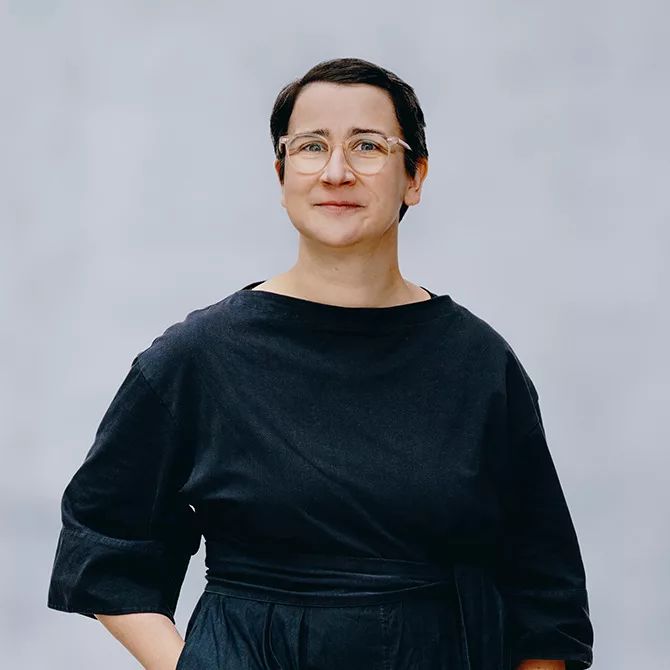
About Katrin Krupka
Katrin Krupka is a product designer and gained her Master’s degree with a focus on sustainability in Potsdam. After working in London at Layer Design and founding her own studio for material innovation, she went on to teach at Bauhaus-Universität Weimar, FH Potsdam and in Saarbrücken. In 2019, she co-initiated the German Design Graduates, which have been anchored at the German Design Council since 2022. There she serves as Director of the initiative.