Crafted By Hand: Mazda Celebrates Craftsmanship
Hiroshimastraße 1 in Oberursel. Anyone reading this street name for the first time will rub their eyes in disbelief. Hiroshima? Just outside Frankfurt? Indeed, just 15 kilometres from the city centre of the metropolis on the Main, where the Taunus mountains begin, lies the heart of Mazda’s European operations. On the sprawling site of a former wax factory – with two old clinker-brick towers standing as stone witnesses to the past. Surrounded by a park with plenty of greenery, the building does not impose itself: no glass corporate cathedral, no architectural statement in concrete. The flat-roofed brick building is more reminiscent of a 1960s bungalow: large windows, wide corridors, natural stone floors, and a view of Japanese maple trees.
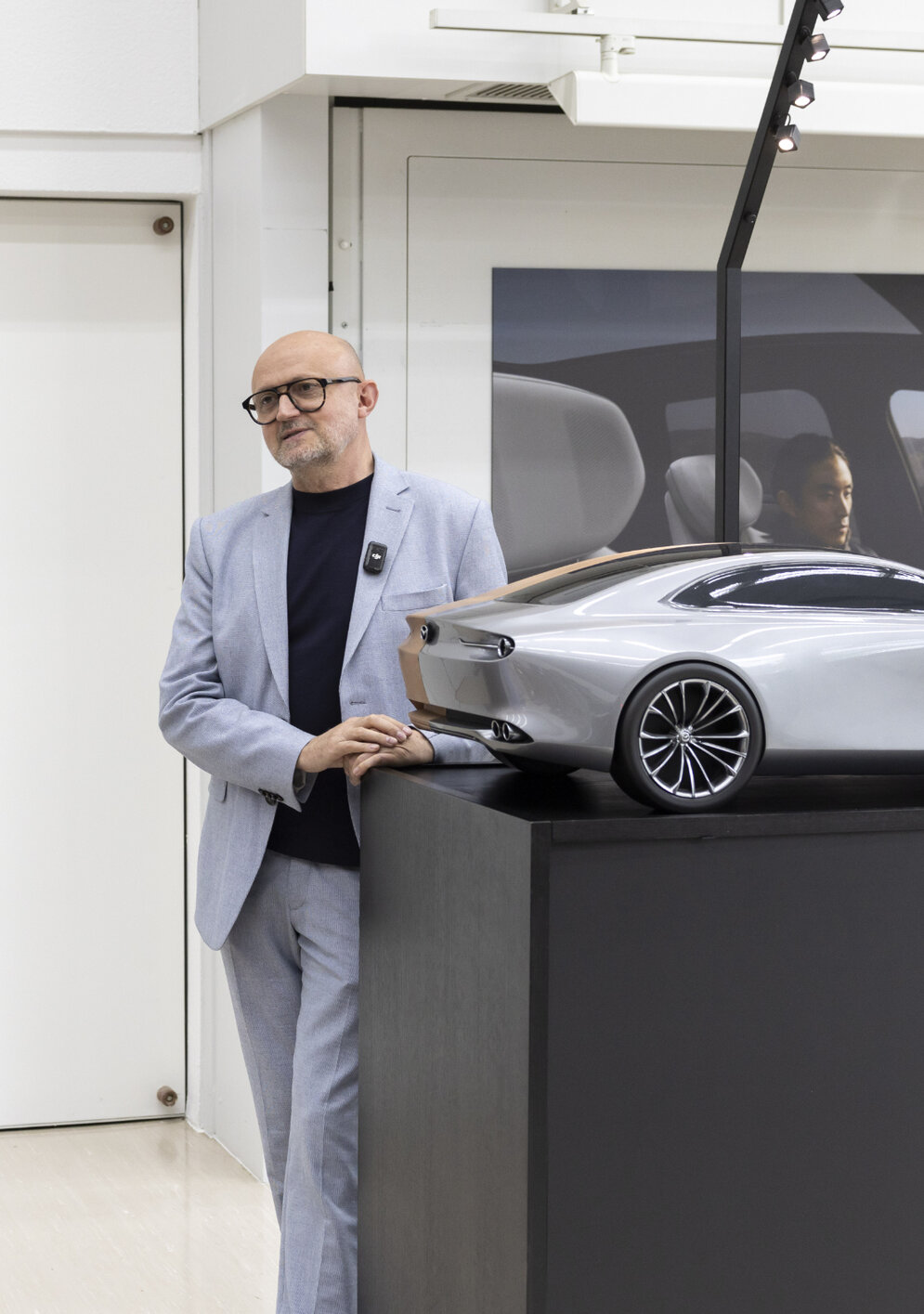
Mazda’s Research and Design Centre has been based in Oberursel since 1990. It forms part of Mazda Research Europe and, alongside Hiroshima in Japan and Irvine in California, is one of the company’s three global research and development centres. Around 90 people work in Oberursel, 25 of whom are from Japan. Jo Stenuit (Design Director, Mazda Europe) has known the centre for almost thirty years. He has been leading the European design team since 2018. His true passion, however, lies with Japan and the question of how Japanese philosophy of life can be translated into design. Mazda’s answer to this, since 2010, is ‘Kodo’.
Kodo Means Heartbeat
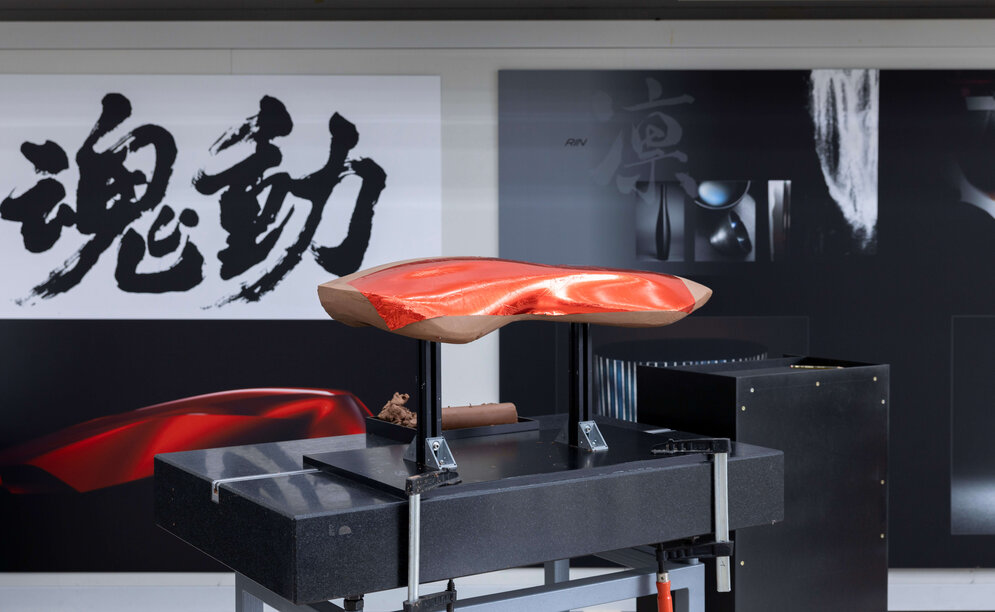
‘Kodo’ – the Japanese word for heartbeat – forms the basis of Mazda’s ‘Soul of Motion’ design philosophy. Underlying this is the belief that a vehicle should express movement and vitality, even when it is stationary. Volumes and surfaces are designed in such a way that light is not simply reflected, but comes to life. “When you drive past a Mazda, the reflections dance across the surface,” enthuses Andreas Feussner (Head of Clay Modelling, Mazda Europe). “This happens because the shapes guide the light and keep it in motion.”
Inside Mazda vehicles, the Japanese principle of ‘Ma’ applies – the conscious focus on the essentials. Clear structures, minimalist controls and spacious interiors create a calm atmosphere. ‘Ma’ is complemented by ‘Omotenashi’ – the Japanese principle of anticipating needs before they are expressed. The interior of a vehicle is designed so that every action feels intuitive. Underlying this is Mazda’s understanding of human-centred design: it is not technology that sets the pace here, but the question of how mobility should feel in everyday life.

The Hiroshima Way
Mazda’s design philosophy is deeply rooted in Hiroshima. The company was founded there in 1920 as ‘Toyo Cork Kogyo’ – a manufacturer of cork products, as cork was in short supply and in high demand as a sealing material following the First World War. Company director Jujiro Matsuda soon switched production to mechanical engineering. In 1931, the first vehicle rolled off the production line. What has shaped Hiroshima – the city that reinvented itself after the atomic bomb of 1945 – has also shaped Mazda: the determination to push boundaries and challenge conventions. Bahram Partaw (Lead Exterior Designer, Mazda Europe) calls this ‘The Hiroshima Way’. This spirit is always present at the design table here. And cork has now found its way into the vehicles: as an interior material for the MX-30. Not only as a reminder of Mazda’s origins, but also for reasons of sustainability: some of the cork used comes from waste produced during wine-making.
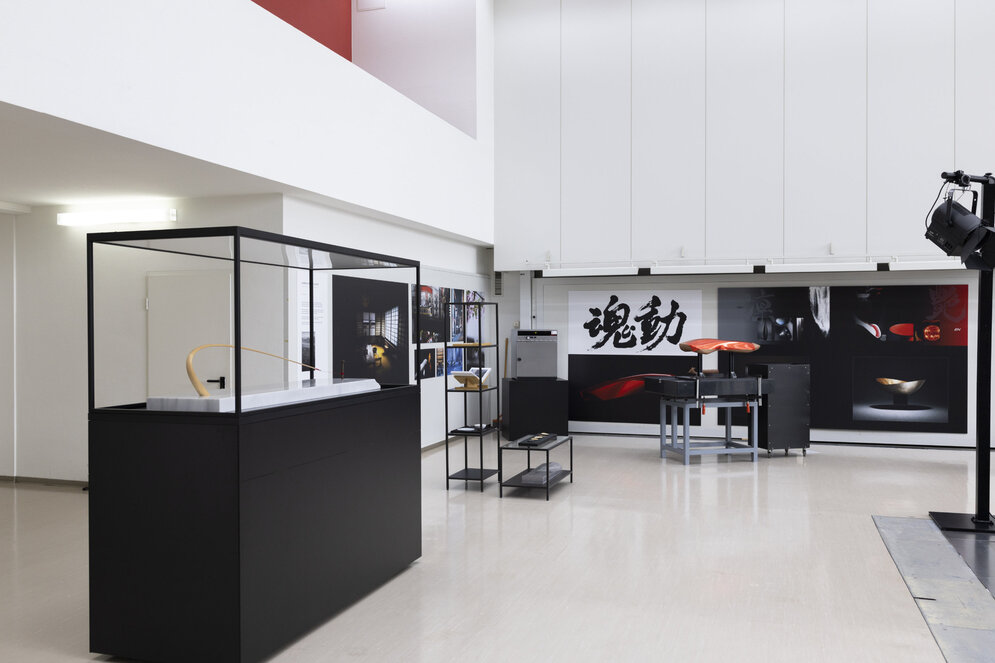
The Design Studio is the heart of the building: around eight metres high, spread over two levels. On one wall hangs a large screen displaying campaign images: serene, atmospheric photographs with a Japanese feel. Otherwise, the hall is more reminiscent of a sculptor’s studio: models at various stages of completion, files, scrapers, putty knives, and remnants of clay. On a table: sculptural objects made of bronze, wood and stone. These are not design objects, but material research for car keys. How does stone feel? How does bronze feel in the hand, compared to wood? What creates a sense of quality? And which of these forms can be translated into a production vehicle? The designers find the answers by handling the objects, comparing them and consulting their own senses.

The CX-6e From Oberursel
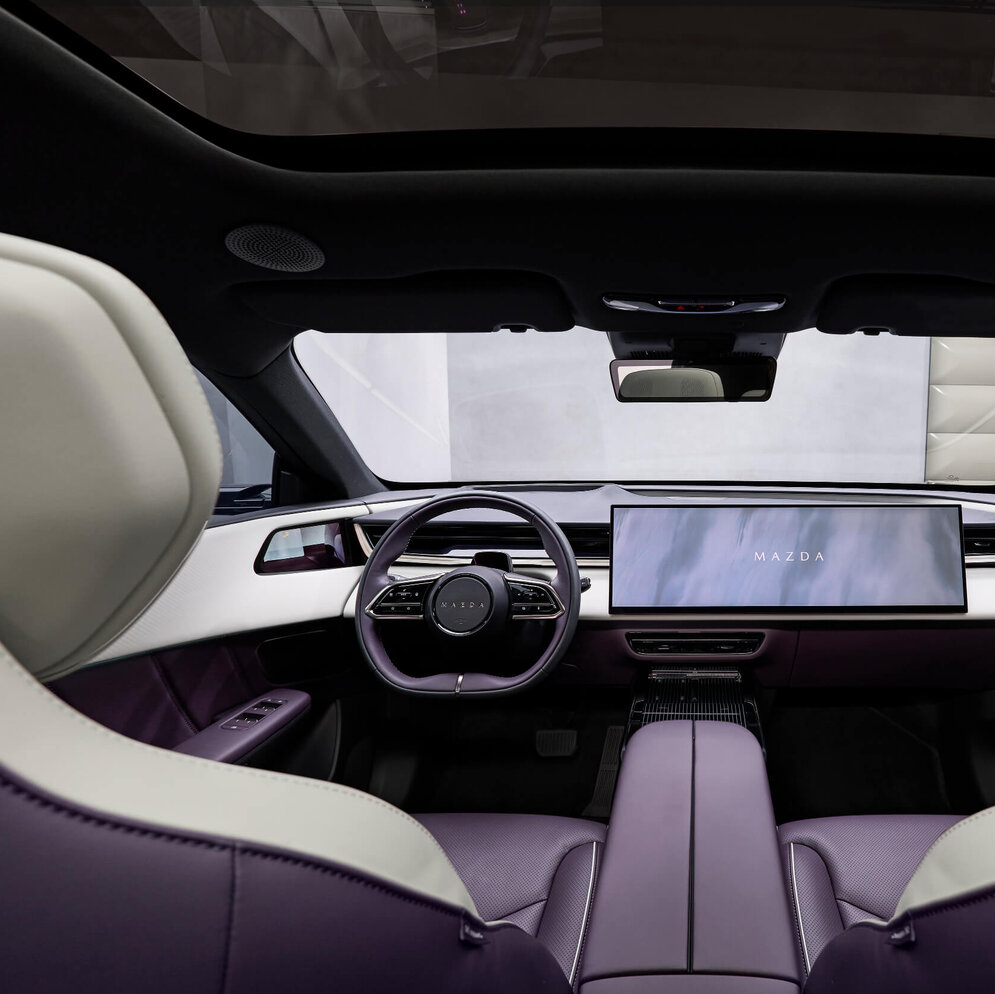
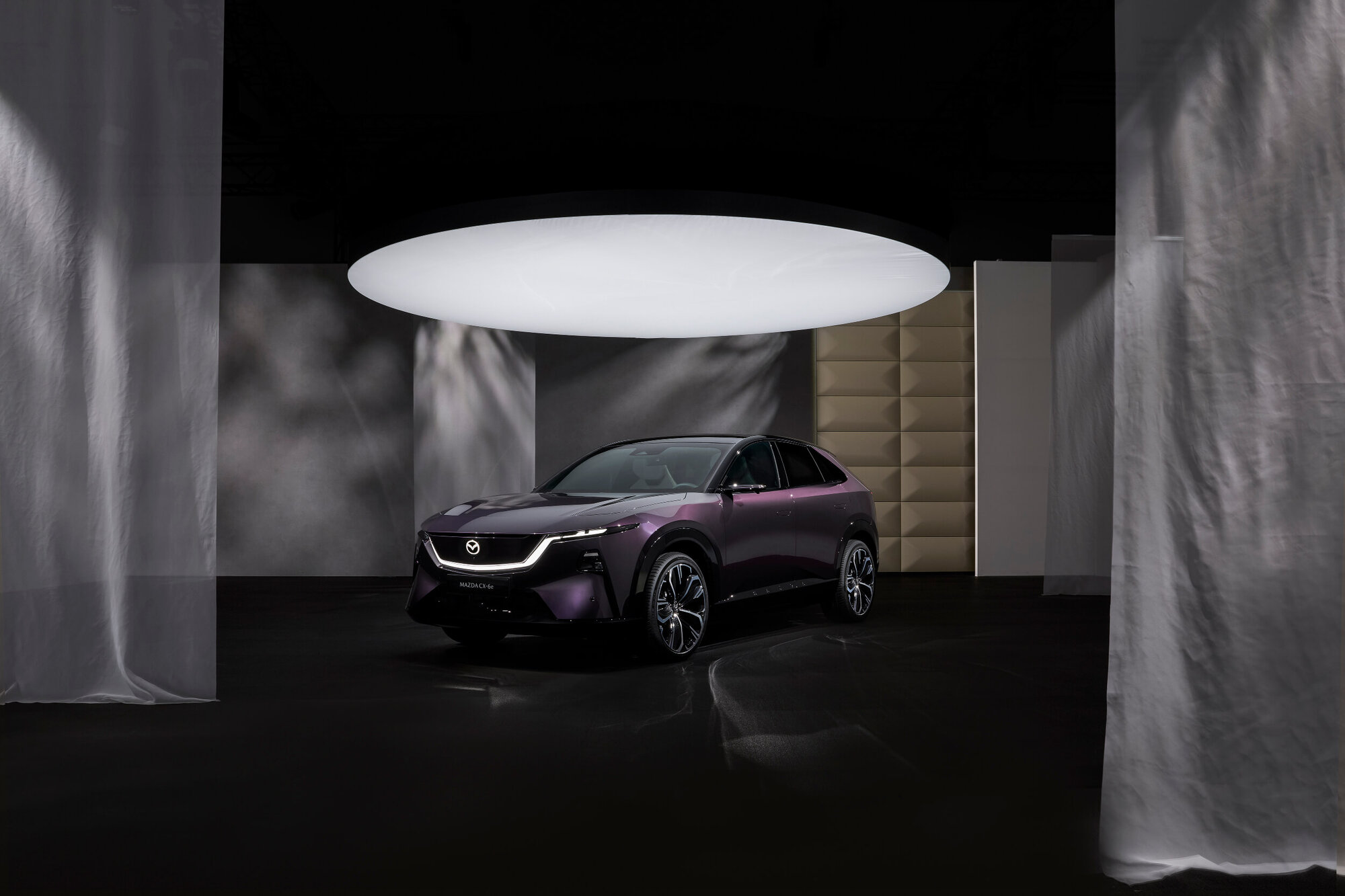
The new Mazda CX-6e takes centre stage at the Design Studio. The brand’s first all-electric SUV for the European market was created right here: in Oberursel. Lead Exterior Designer Bahram Partaw played a key role in shaping the vehicle. “The CX-6e is the most futuristic vehicle Mazda has ever built,” says Bahram Partaw. Its design follows the ‘Soulful Futuristic Modern’ principle, a further development of the Kodo design language that combines sculptural form with electric mobility without veering into cold functionality. For the interior, a colleague travelled specially from Japan to Oberursel to work alongside the local team. The electric platform made it possible to rethink the interior from scratch: stripped back to the essentials, with clean lines and nothing superfluous. The fact that the process took just two years from the first sketch to production – normally twice as long at Mazda – makes the achievement of this cross-cultural collaboration all the more impressive.
Research Into Colour And Materials
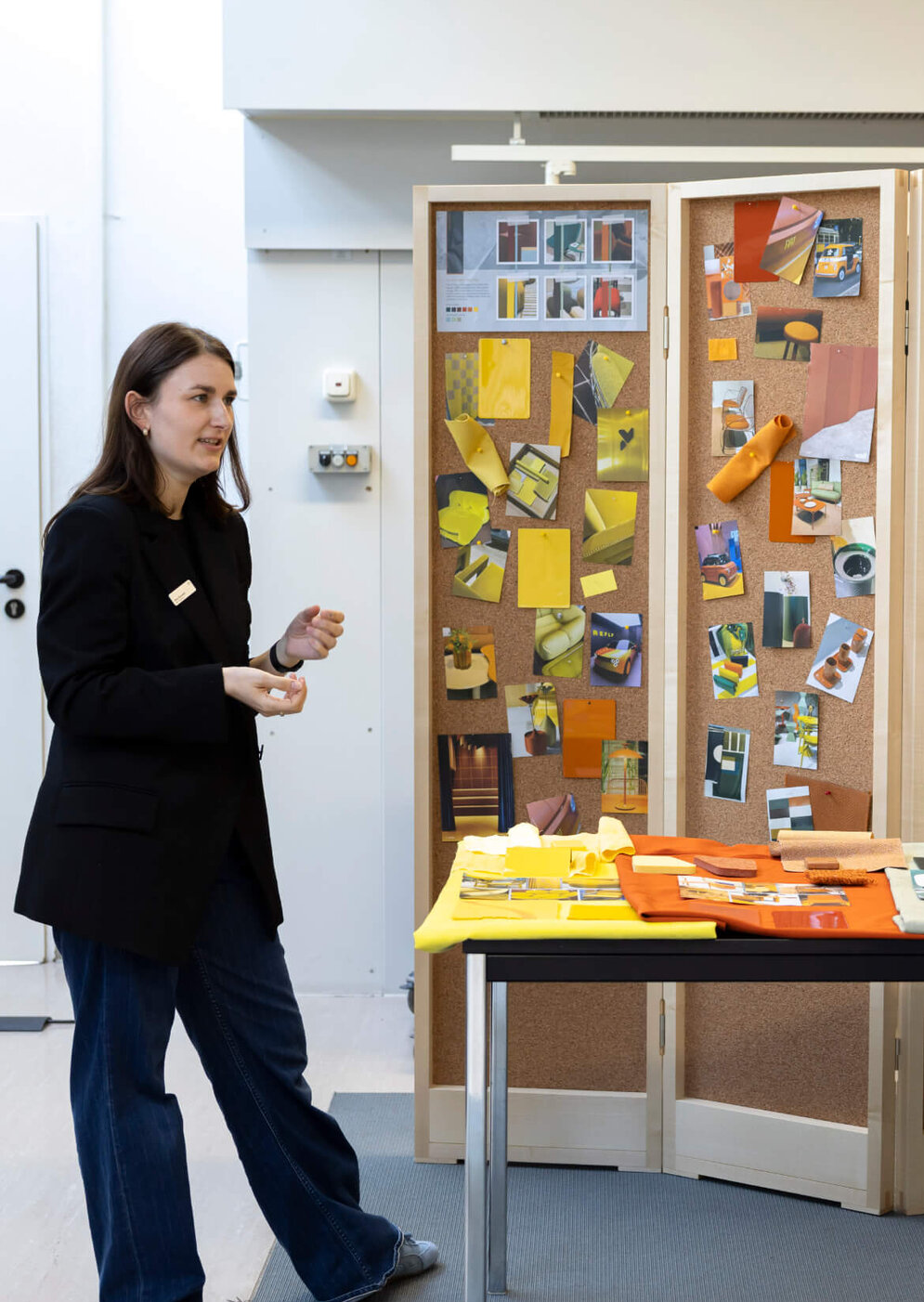
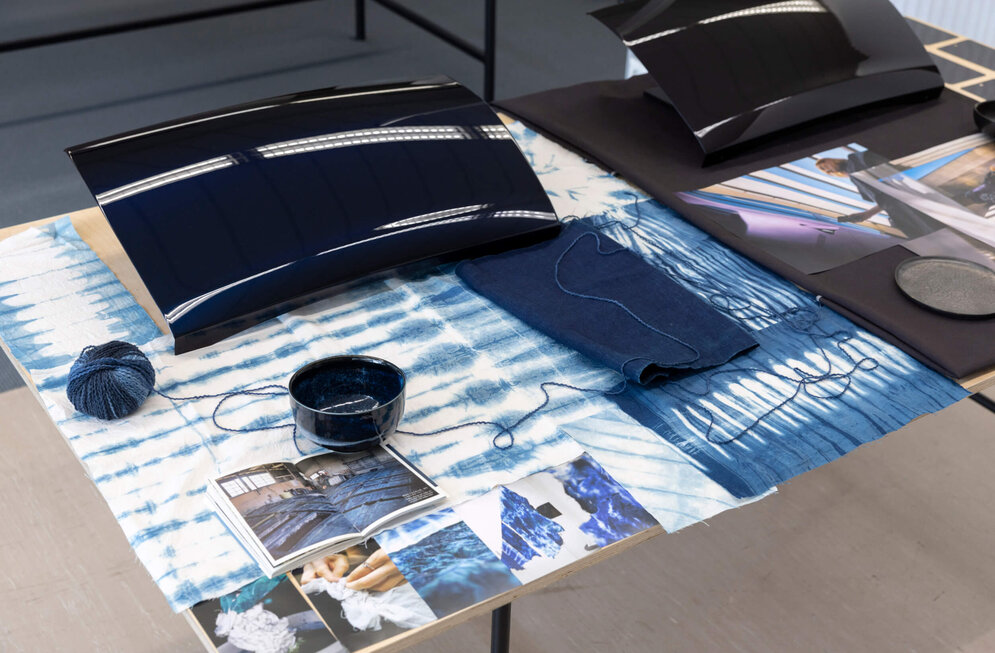
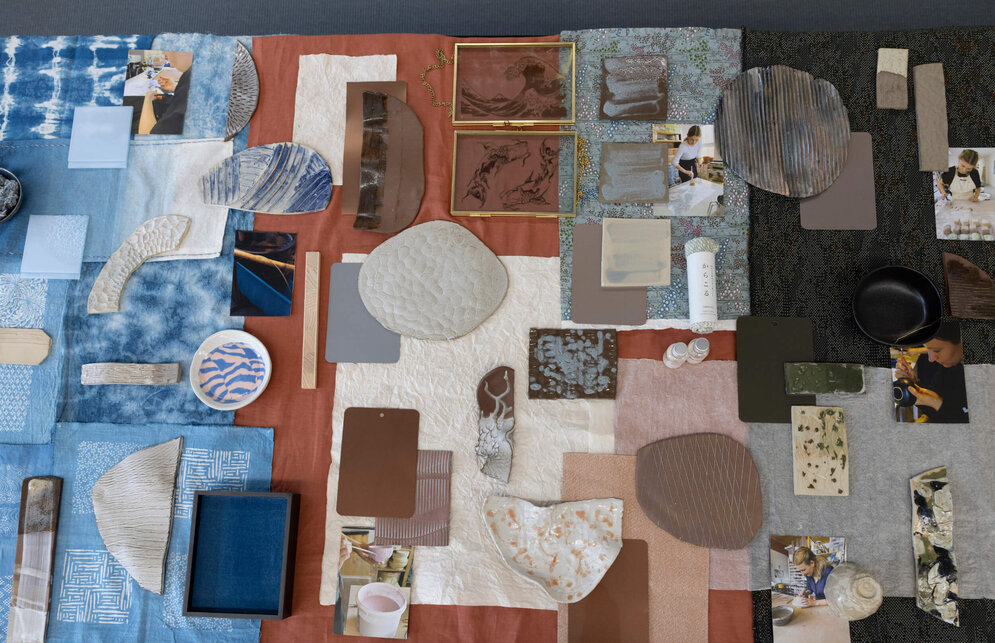
In the neighbouring Colour, Material & Finish Studio, Alena Gersonde (Senior Colour & Material Designer, Mazda Europe) works with her team. Draped across the tables are material samples, fabrics, colour swatches and fragments of ceramics. Washi paper from Japan – fine and fibrous, like dried skin. And time and again, indigo, in gradients, prints and patterns reminiscent of batik experiments. Of ‘Aizome’, the ancient Japanese craft of dyeing, which Gersonde and her team studied on their travels through Japan. Colour, Material & Finish: What sounds a bit like styling – the finishing touches to a vehicle – is in fact a discipline that conducts research independently and according to its own logic. Gersonde and her colleagues approach colour and material not just from the perspective of the product, but from the perspective of the world. “We travel to Japan and Milan, visiting Design Weeks, markets and museums. There, we observe where new materials are emerging and where aesthetic trends are taking shape before they become the next big thing.” This work has most recently resulted in two new colours.
‘Navy Blue Mica’ will soon make its debut on the CX-5, Mazda’s best-selling model worldwide. A deep dark blue that takes on a different quality depending on the light. In a streetscape full of grey, white and black, this makes quite a statement. Also available is the special colour ‘Nightfall Violet’. In the shade, it appears almost black – rather deep and understated. When light hits it, it shifts to a purple hue: glossy, vibrant and shimmering. “When the colour was first shown internally, many in the team reacted with scepticism, even shock,” admits Alena Gersonde. “But when they saw ‘Nightfall Violet’ on the finished CX-6e, everyone’s initial scepticism gave way to enthusiasm.” From summer 2026, both colours will be seen on Europe’s roads.
The shade ‘Soul Red Crystal’ is now regarded as the brand’s iconic signature colour and is far more than just a paint finish. Red is Japan’s national colour, inextricably linked to its flag. Technically, ‘Soul Red Crystal’ was created using the Takuminuriprocess – a multi-layered paint finish that shifts between a vibrant red and a deep dark shade. “We can use colour to strengthen the emotional connection to a product,” says Gersonde.
Crafted By Hand With Japanese Soul
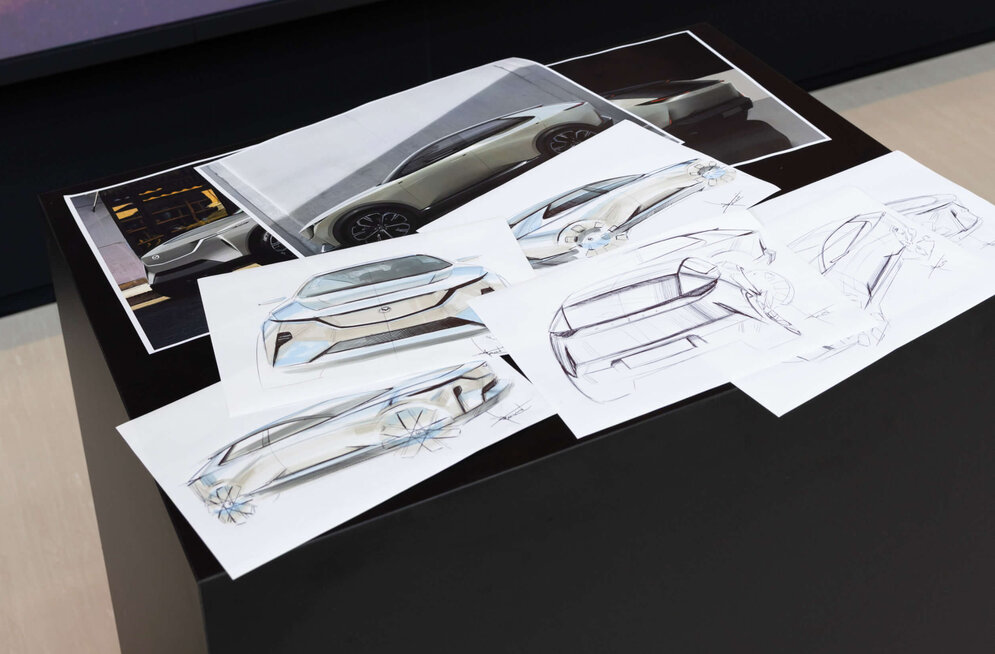
At Mazda, every vehicle begins by hand: paper, pen, sketch. Only when the design is deemed satisfactory does it make its way onto the computer, where it is modelled in three dimensions and tested. Then comes the step that sets Mazda apart from almost all other manufacturers: the process returns to analogue methods. ‘Crafted by hand’ is a philosophy that is put into practice here – from the first sketch on paper to the finished vehicle.
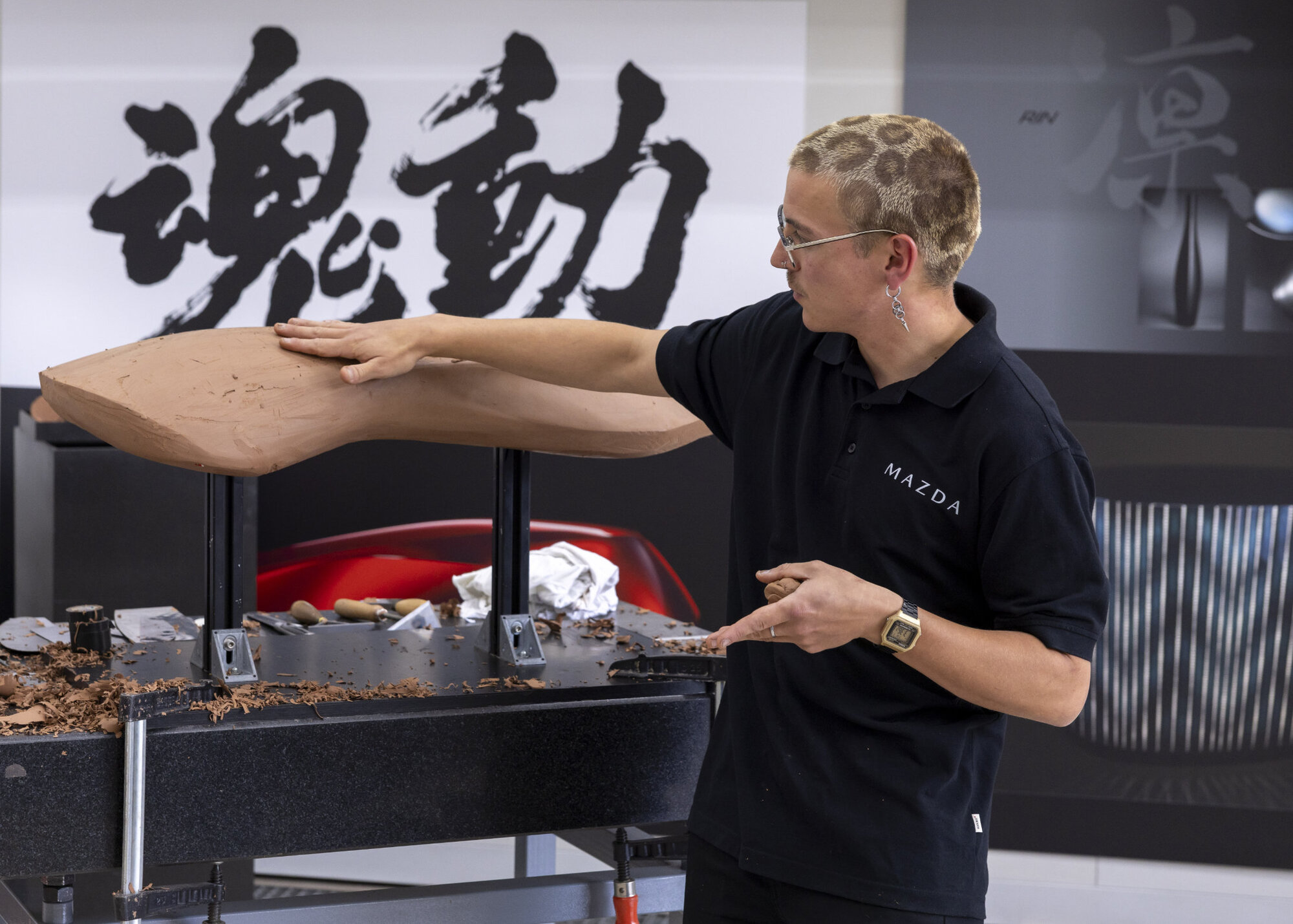
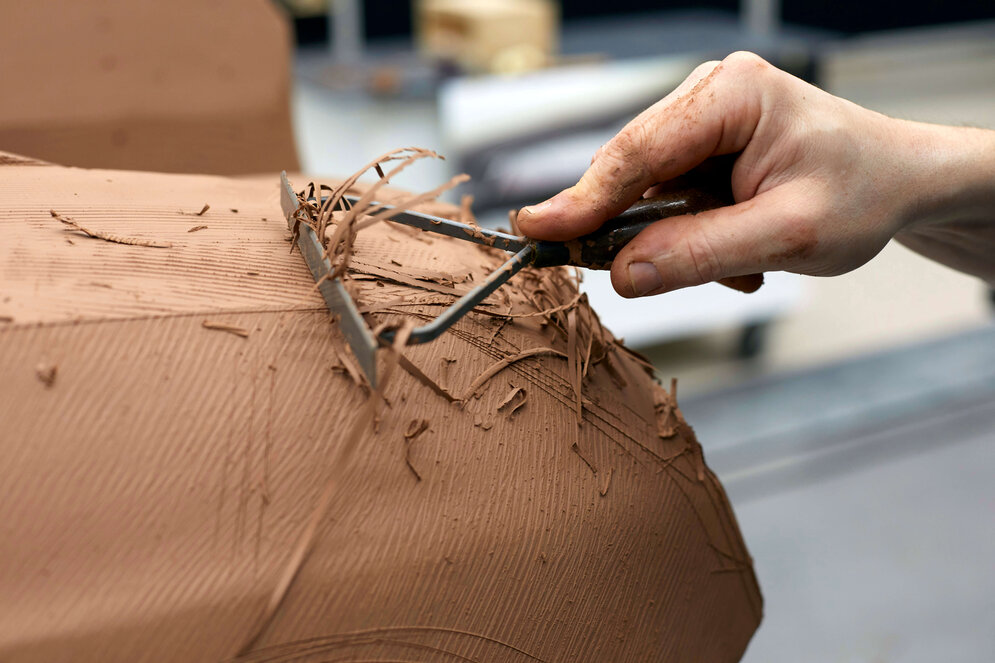
The basic three-dimensional structure is created from Styrodur – a rigid foam that is machined by a computer-controlled milling machine into the rough vehicle geometry. It is on this substructure that the real protagonist comes into play: industrial clay. Heated to 60 degrees, it is used to create, layer by layer, the sculptures that form the starting point for all Mazda vehicle designs. After all, what looks convincing digitally can appear completely different in three-dimensional space.
The title ‘Takumi’ is bestowed upon those who have mastered their craft to the highest standard. Worldwide, Mazda has only three Takumi specialising in clay modelling; they work in Hiroshima. The clay modellers in Oberursel work in close collaboration with them.
If the designers’ concept cannot be realised in clay exactly as drawn, the modeller suggests an alternative. This is because the physical model reveals what a screen cannot: how a vehicle sits in space; how its proportions relate to the human body; and how an edge feels when you run your hand over it. Once the shape is finalised, the model is coated with genuine vehicle paint – the actual production paint. Only now can you see how light refracts on a surface, or where a line is too harsh.
When asked whether the team also uses AI in the design process, Lead Exterior Designer Bahram Partaw replies in the negative. “This process is too valuable to hand over to AI. It requires the designer’s intellect, their aesthetic sensibility, and their ability to translate an emotion into form.” You can literally see and feel it when a vehicle has been created solely on a computer – everyone at Mazda’s Research and Design Centre in Oberursel agrees: “Something is missing.”