‘Design is always political’
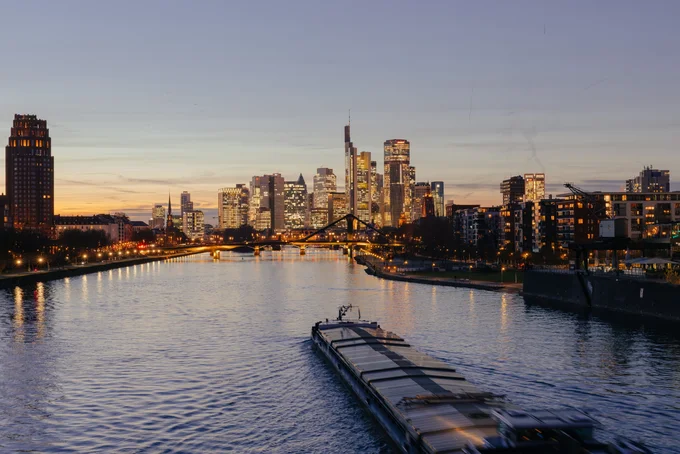
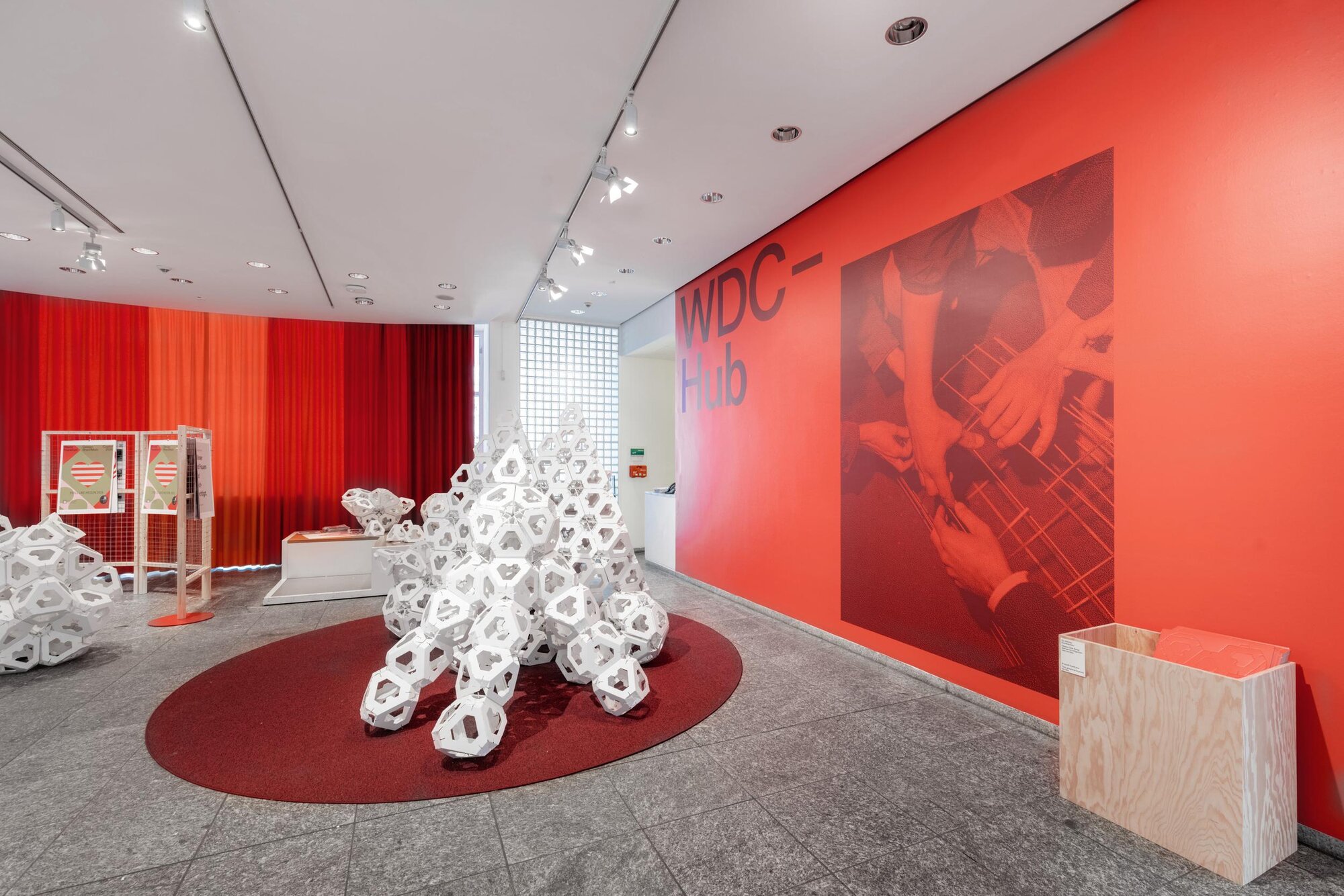
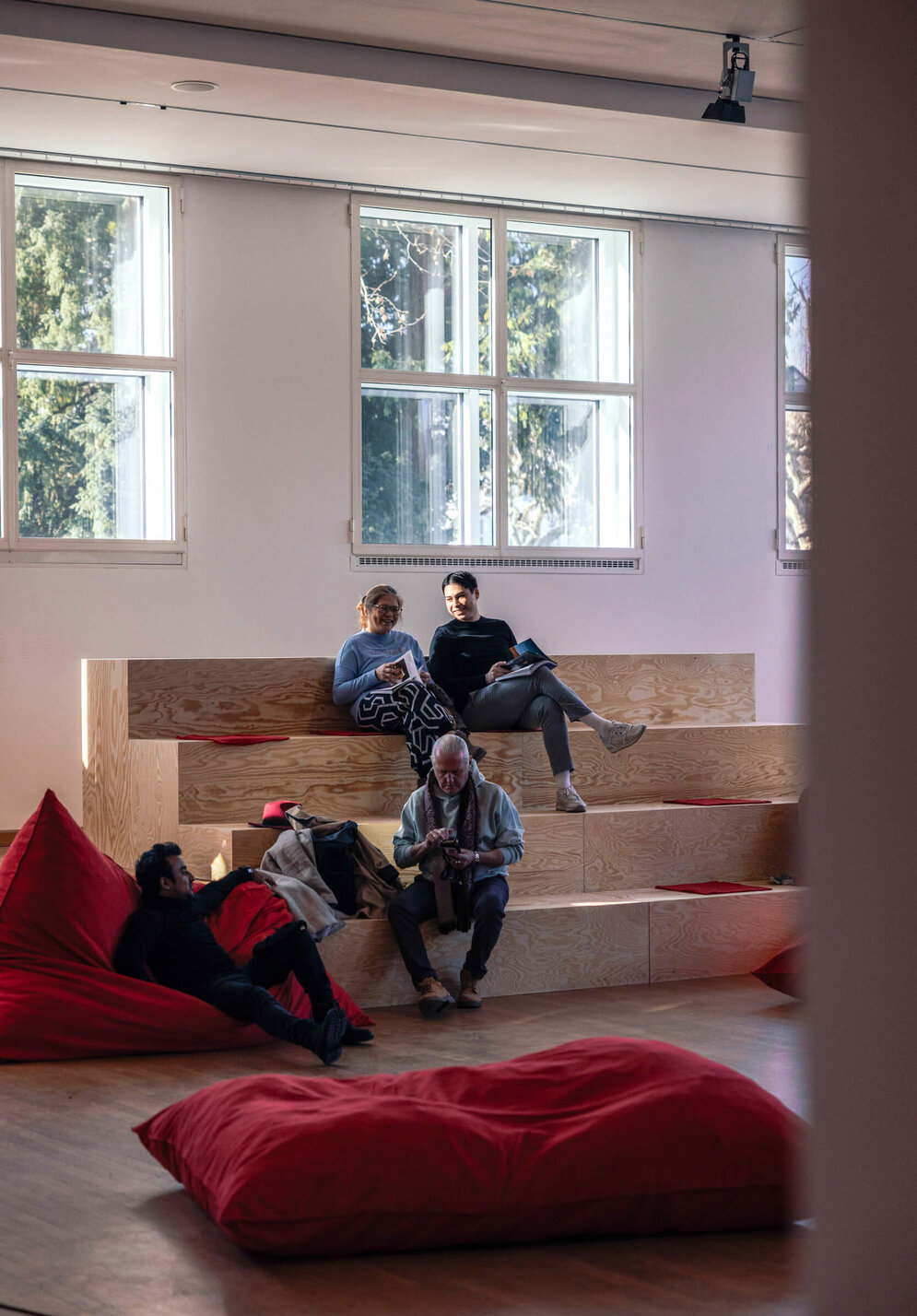
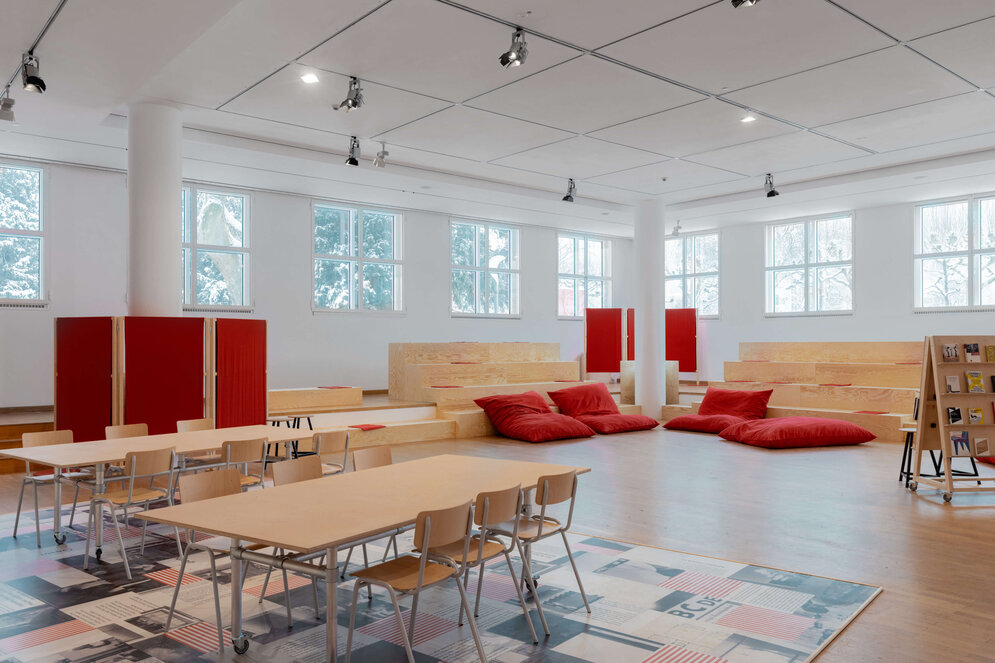
Anyone heading to Frankfurt am Main this year will sooner or later find themselves at the WDC Hub in the Museum Angewandte Kunst. The ground-floor spaces of the museum form the festival headquarters of World Design Capital Frankfurt RheinMain 2026 and thus the central hub for all 2,000 associated events organised by around 450 project partners. This is where the heart of the World Design Capital beats. The space was designed by Studio Formagora from Münster – and that is no coincidence. The WDC 2026 team and Studio Formagora share a similar view of what design can achieve: transformation through democratic participation and circular economy principles. Togetherness lies at the centre of World Design Capital Frankfurt RheinMain 2026 – and also at the heart of Studio Formagora’s practice. Accordingly, the WDC Hub has been conceived as a space for community: exhibitions and events can take place here, initiatives can present themselves, or the space can simply be used in between for reading or working – free of charge.
Third Spaces as a Business Model
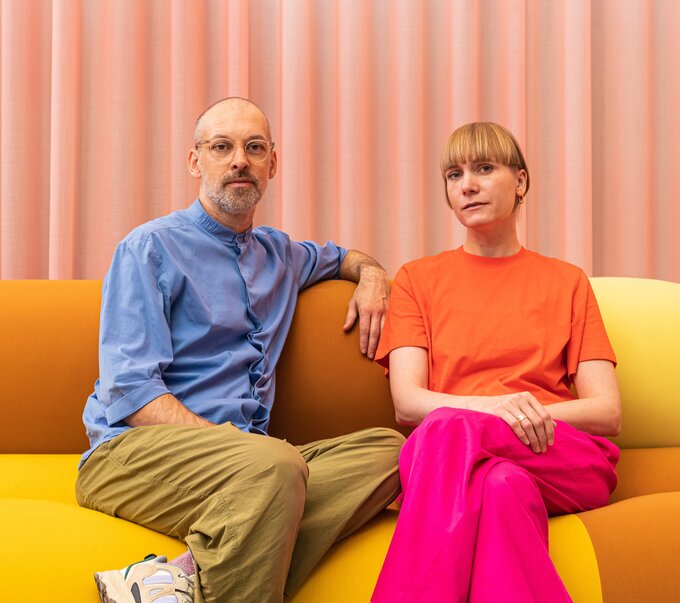
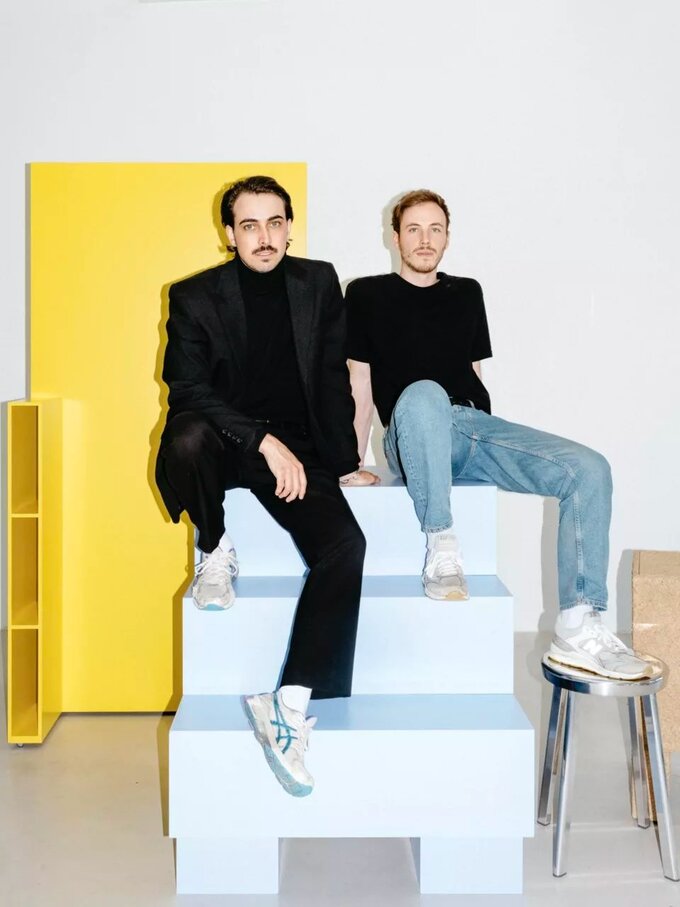
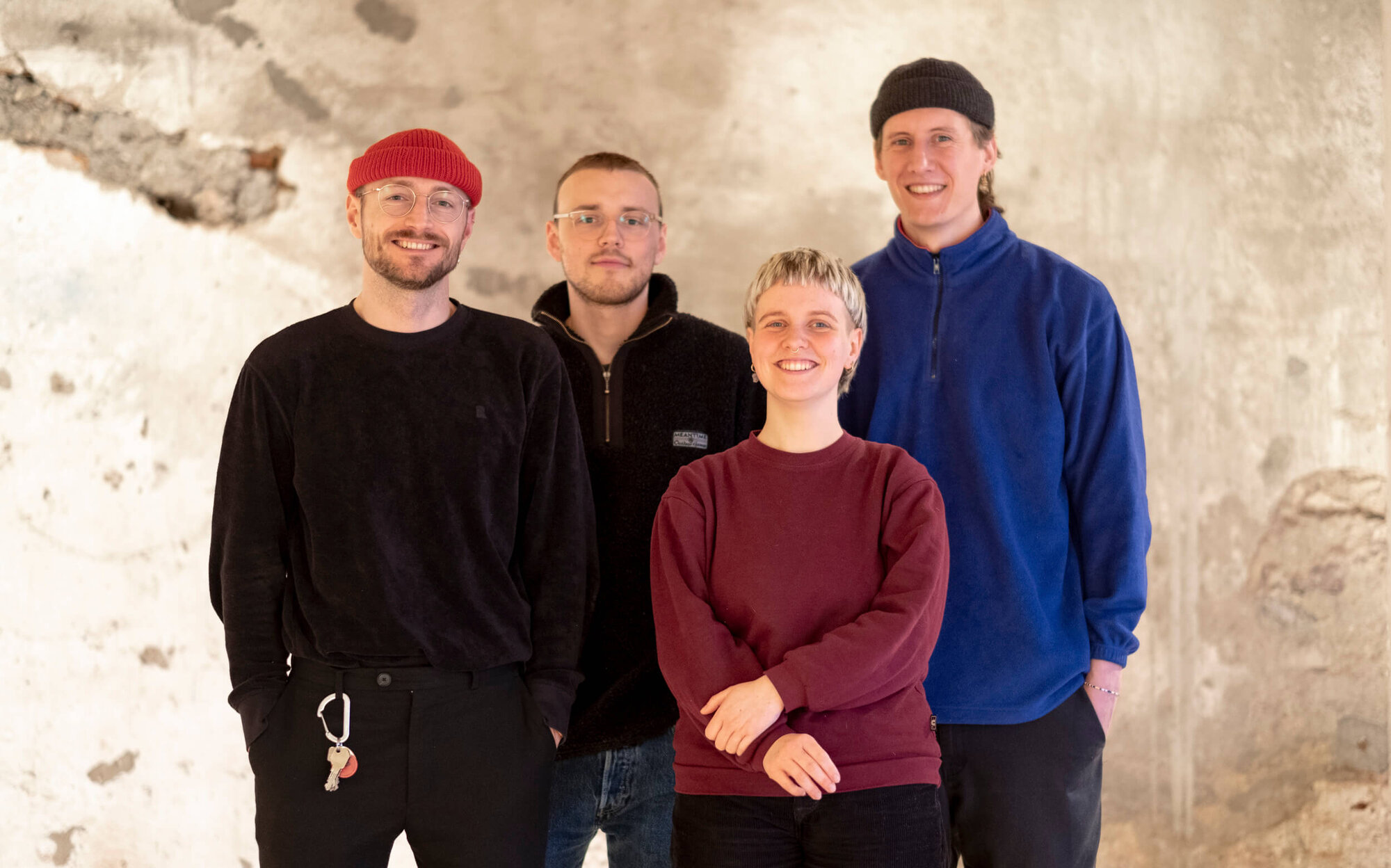
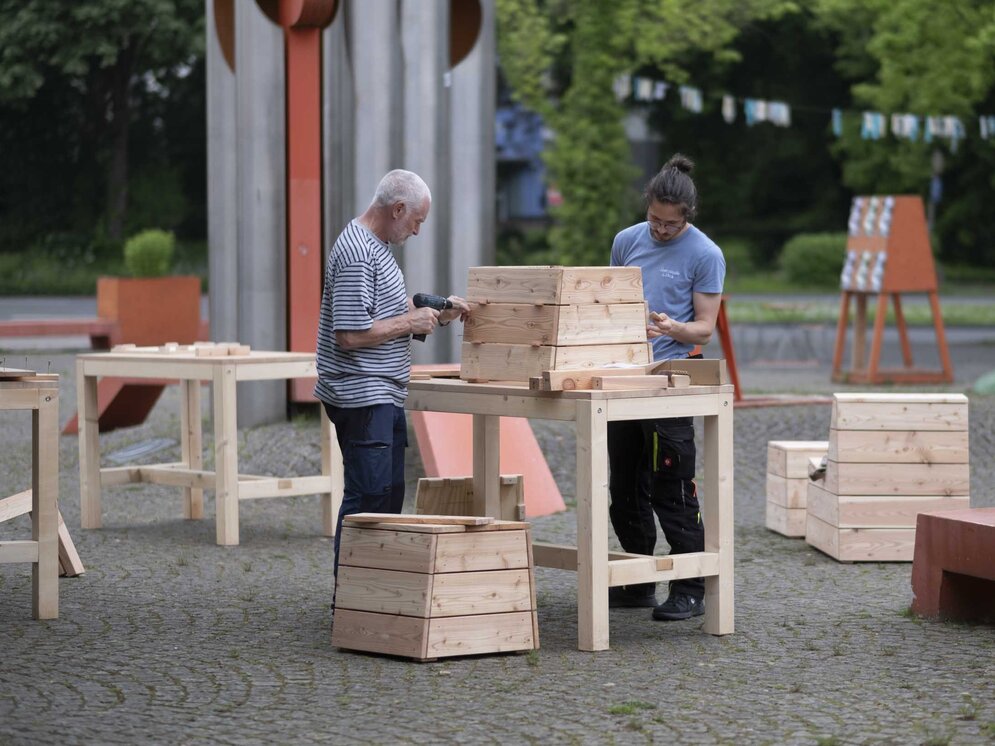
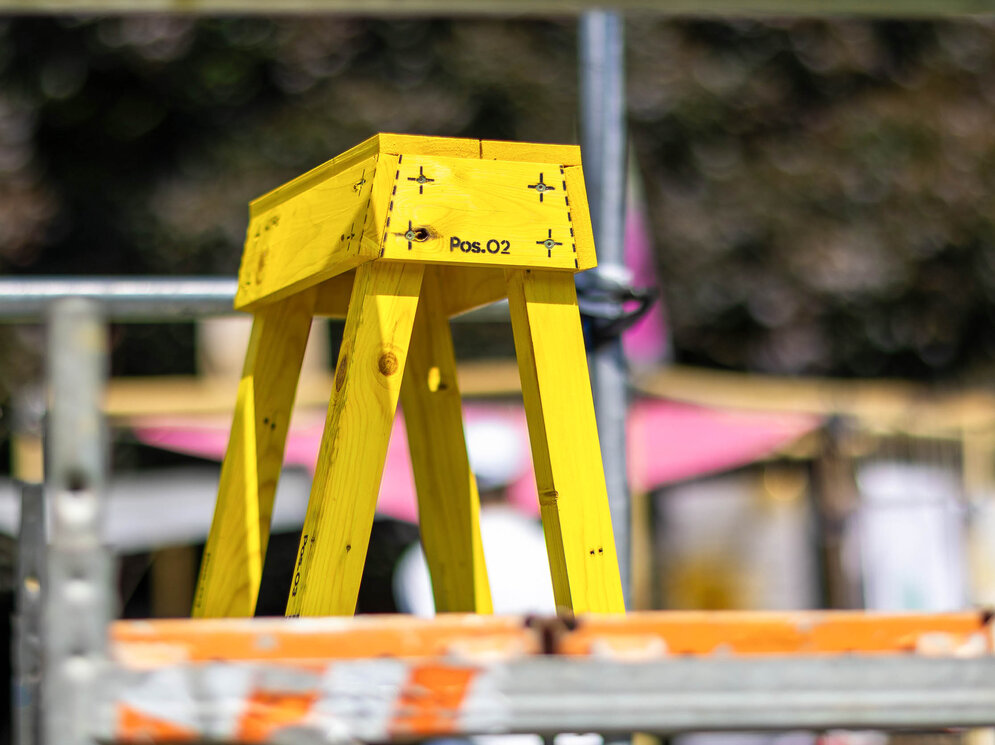
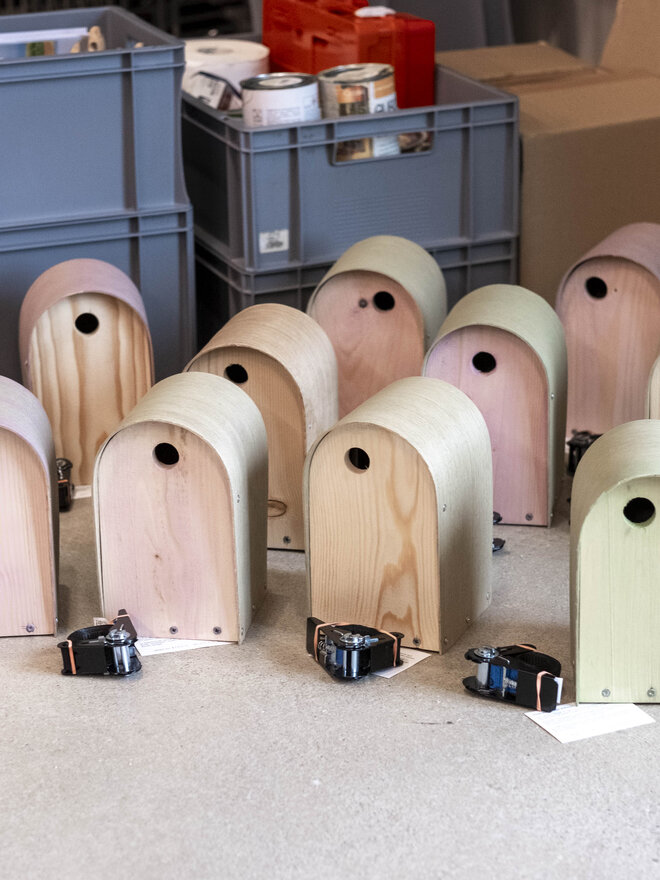
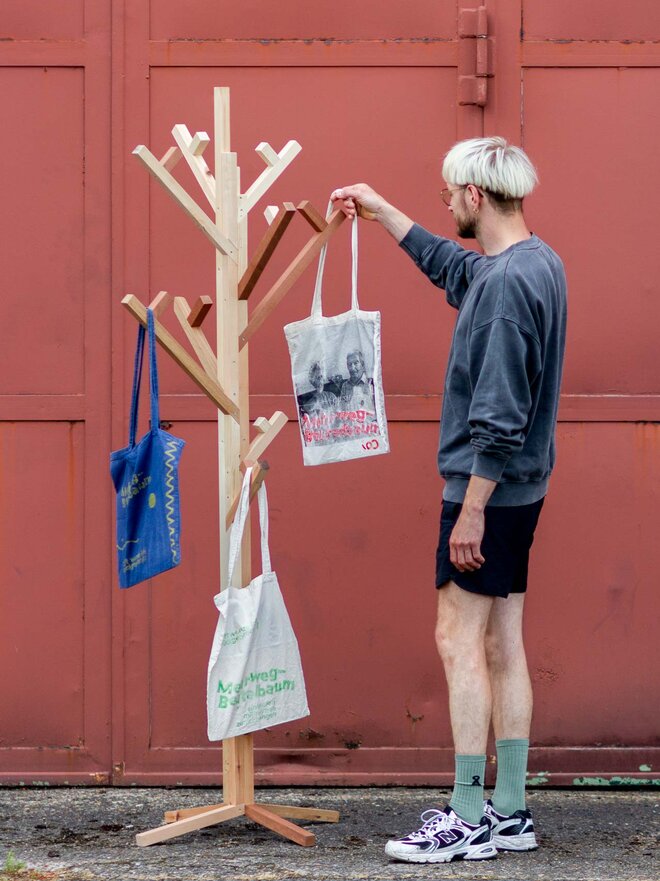
The WDC Hub is a classic design commission for Studio Formagora, which is rather unusual for them. The quartet – Finn Blankenberg, Esra Heuermann, Nick Potter and Nele Heise – are primarily known for combining participatory design with hands-on craftsmanship in public space. The images are familiar: students or civic initiatives building planters, benches or stools from timber together in real-world laboratories and installing them in the city to create so-called “third spaces” – spaces anyone can use, free of charge and without pressure to consume.
But can this operate as a business model? “Our books are full,” says Nick Potter. Although the studio has only existed since 2022 and the team are still relatively young, they can already look back on a number of projects. They have designed spaces and furniture with associations such as Vamos e.V. and B-Side e.V., built urban furniture for Münster and Witten, and run workshops – for example at the UmBauLabor in Gelsenkirchen, initiated by Baukultur NRW. In the early days, much of their work was funded through grants; today, commissions make up a larger share. “Companies are now also taking an interest in our work,” says Nele Heise. In 2024, they were recognised as finalists in the “Newcomer” category of the German Design Award. Studio Formagora sees this as a positive sign: the business sector, too, is becoming interested in approaches with social impact. “We understand this award from such a high-level institution as a symbol of change.”
Sufficiency Instead of Efficiency
“Thinking of a design process using recycled materials or involving public participation as an economically viable model – that wasn’t something we covered during my studies.”* says Nick Potter. After studying design at the Academy of Design Münster, the four of them simply “set off”. Voluntary work initially played a large role; today they are professionalising and building structures. “Idealism runs through every one of our projects, and design is our tool. We always aim to use materials as sustainably as possible and to work in socially responsible ways,” says Nele Heise, who, like her colleagues, trained as a cabinetmaker before studying. In their designs, sufficiency takes precedence over the much-praised notion of efficiency: do we actually need these chairs at all, even if they are made from reused materials? Such questions at the outset of a project can sometimes reduce the scope of a commission. “For us, that’s a complete success,” says Heise.
*This quote has been amended.
Resonant Relationships for Democracy
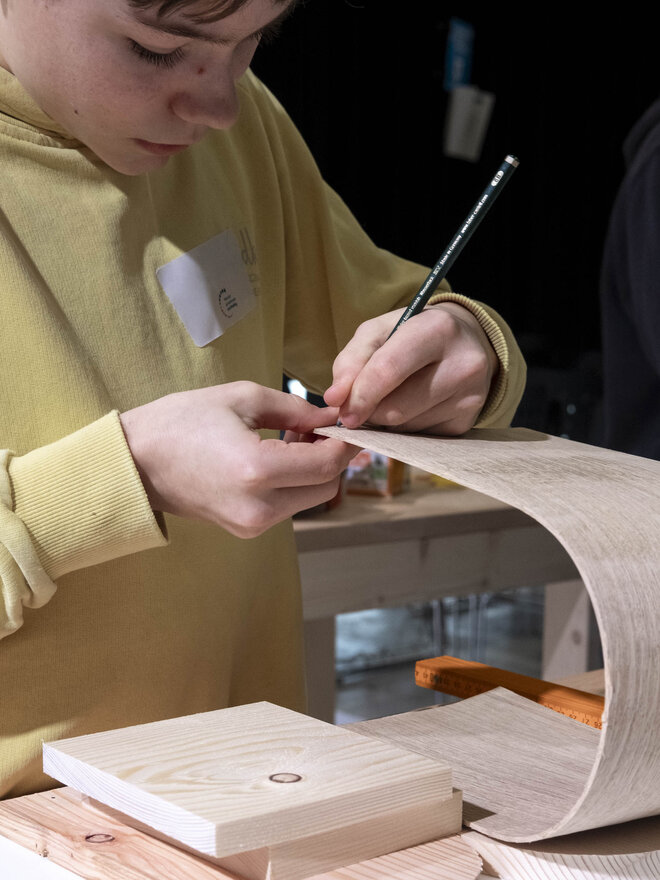
The process is often similar. It begins with a workshop involving the client to identify participants’ needs and objectives: what is this about? What is required to make this place function better, become more beautiful? This is followed by design iterations, with new proposals repeatedly presented and discussed. Finally comes the joint implementation. Co-building strengthens a sense of self-efficacy, breaks down barriers and creates resonant relationships. Studio Formagora is convinced that processes in which children, refugees, neighbours or association members get to know one another also foster cohesion. When people can participate in decision-making, democracy becomes tangible. The team at Studio Formagora are certain of this. “Our participatory processes are about tapping into existing knowledge and building structures for self-organisation,” says Nele Heise. What matters is a participatory approach in which people can contribute, while Studio Formagora retains responsibility for steering the design process. Recognising that a designer is needed – and that not everyone can do everything – is an important lesson.
A Cardboard Counter for B-Side
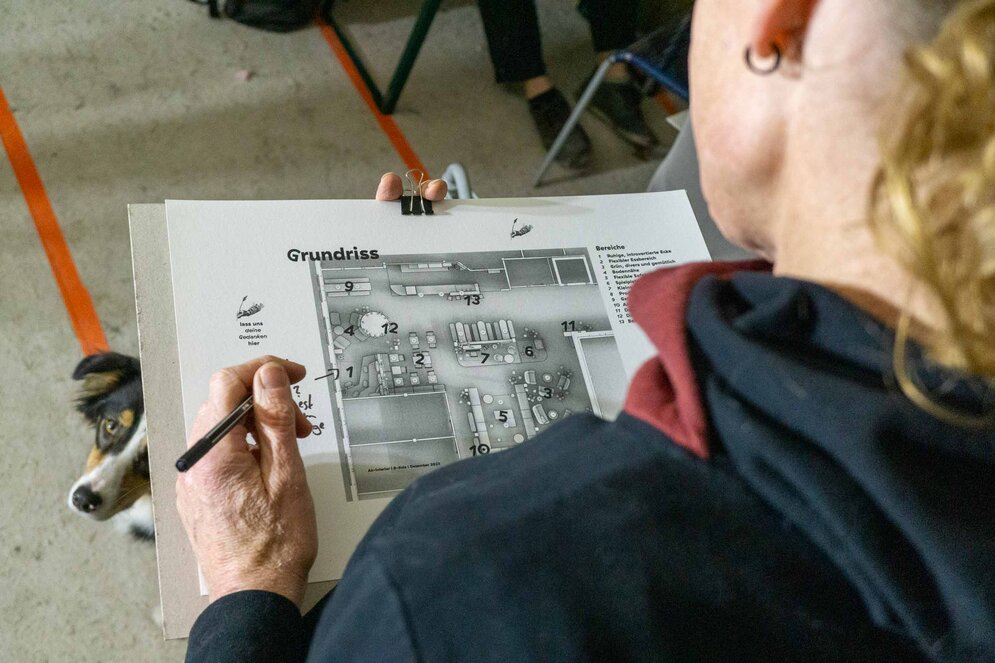
This becomes particularly clear in their most extensive project to date. Together with the B-Side collective, which runs a socio-cultural neighbourhood centre in Münster’s harbour district, Studio Formagora used a participatory process to design the catering area, the “living room” of the neighbourhood, the rooftop terrace and various items of furniture. The process began with a working group and ran over two years. Finn, Esra, Nick and Nele continuously advanced the design while enabling the collective to shape as much as possible. As the collective has around 200 members, many iterations took place digitally. At five in-person events, clay, cardboard models and Christopher Alexander’s emotional mapping were used. At the end of one event stood a cardboard bar at which mulled wine was served.
Nele and Nick point out: “You also have to organise it well. We announced the voting rounds in advance. There was a defined timeframe in which participation was possible.” They are particularly proud of the modular sofa, made from 95 per cent salvaged materials, which can be assembled into an 18-metre-long piece of furniture. “It’s incredibly cool.” They relativise the argument that participatory processes cost more and take longer, as factors such as acceptance and the duration or intensity of use are rarely factored in.
Hands-On and Theory
Activism and self-exploitation are issues that concern Studio Formagora deeply, though they now approach them realistically. “Social and ecological design means trying to provide care work, which our economic system does not reward. It means leaving established paths and going the extra mile to use reclaimed rather than new materials,” says Nick Potter. “That drains our capacities, so we have to renegotiate it every time – with ourselves and with our clients. Although the studio’s orientation is strongly hands-on, its theoretical foundation is equally substantial. Nick and Nele speak of participation pyramids, are well versed in the sociological effects of their projects and cite role models such as Hartmut Rosa, Lucius Burckhardt, Jan Boelen, Arno Brandlhuber and Raumlabor.”
Two Projects of Their Own for the World Design Capital
Studio Formagora is also involved in World Design Capital Frankfurt RheinMain 2026 with two self-initiated projects submitted through the open call. The four designers plan to redesign the Ada canteen for low-income people on the Kulturcampus in Frankfurt-Bockenheim together with all stakeholders. They will also work on the associated solidarity-based housing project “GündiWest”, which provides accommodation for people experiencing homelessness.
One thing is clear to the team at Studio Formagora: they do not work for everyone. For instance, they would not design for private individuals. As Nick Potter formulates their credo: “Design is always political. I have to decide which social structures and relations I want to reproduce through my work.”
Great talent deserves a platform! The Newcomer Award, organised by the German Design Council, celebrates young designers who have gained recognition for their exceptional achievements and creative talent. Past winners include designers who have since become household names, such as Eva Marguerre, Marcel Besau, Sebastian Herkner and Christian Zanzotti.