From Inner Mongolia to the World
What were the key tasks or challenges you faced during the planning and construction of the West Wusutu Community Centre?
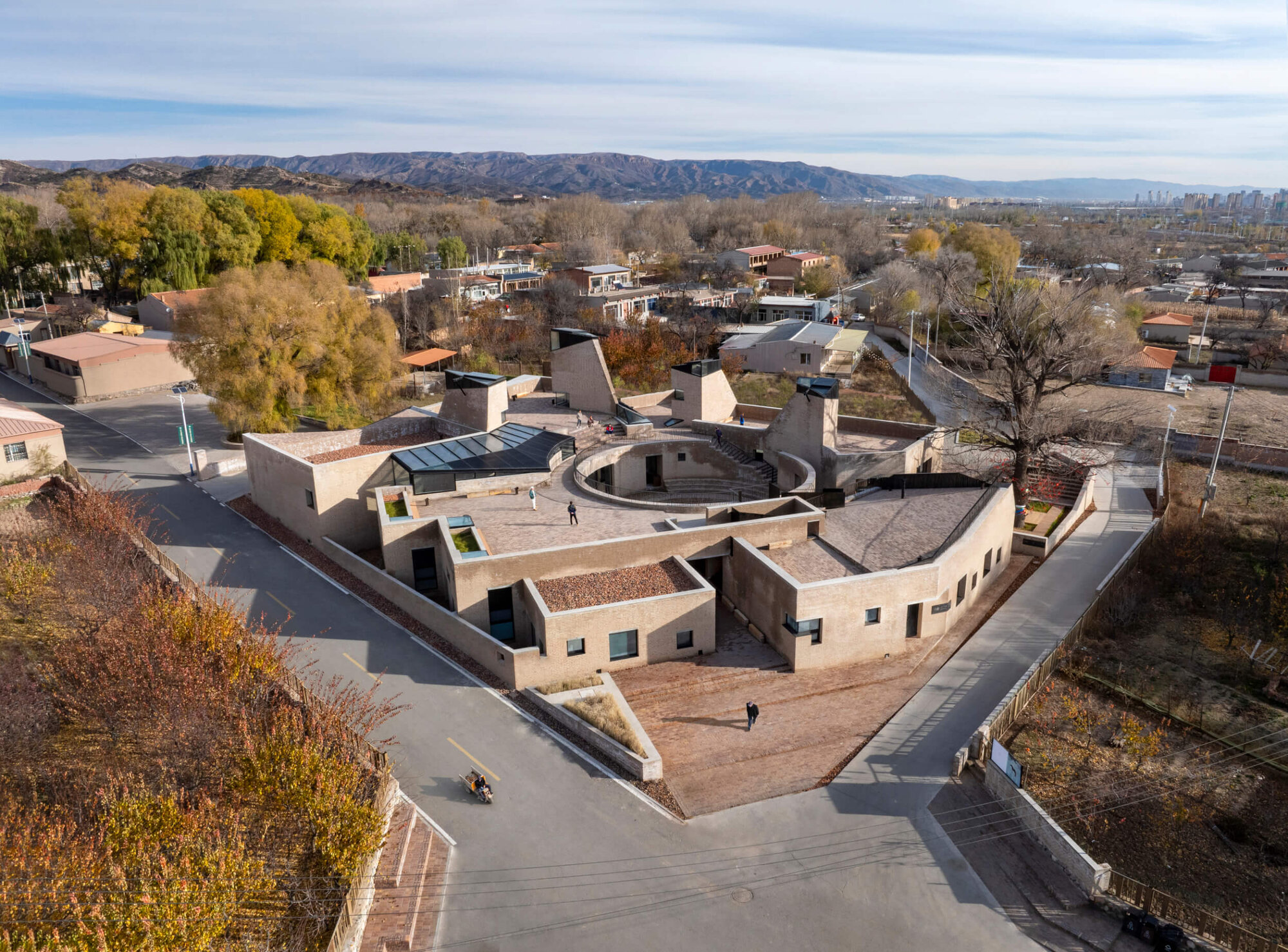
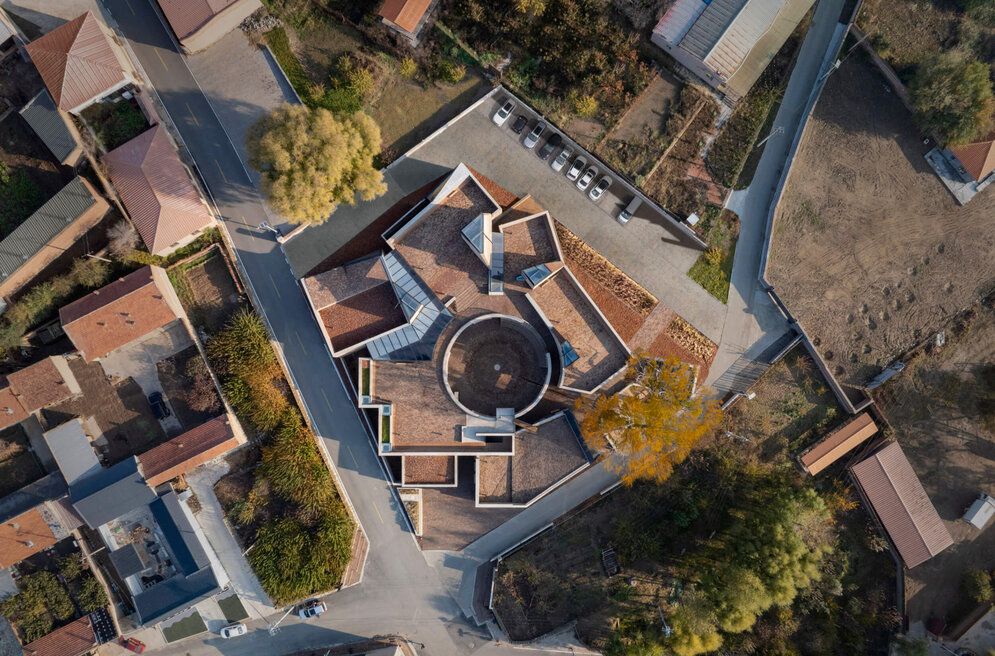
Zhang Pengju: The project arose from the village of West Wusutu’s need to create a community space. A few decades ago, the village still had such gathering places, but they disappeared over time. In addition, the centre was also intended to house exhibition spaces for local artists. Finally, the spatial programme also included commercial spaces. These are intended for young people who wish to return to the village to set up businesses there. Such facilities are vital for the village’s revitalisation. However, the new building also needed to be designed with flexibility to adapt to future changes. The greatest challenge was to accommodate all these diverse requirements and functions within a relatively small building and to integrate them effectively.
How did you translate this building project and the wishes of the residents of West Wusutu into architecture?
The spatial programme primarily envisaged interior spaces to accommodate the various functions the community centre was intended to fulfil. To me, however, the outdoor spaces were at least as important as the interiors. That is why we placed such great emphasis on the outdoor areas.
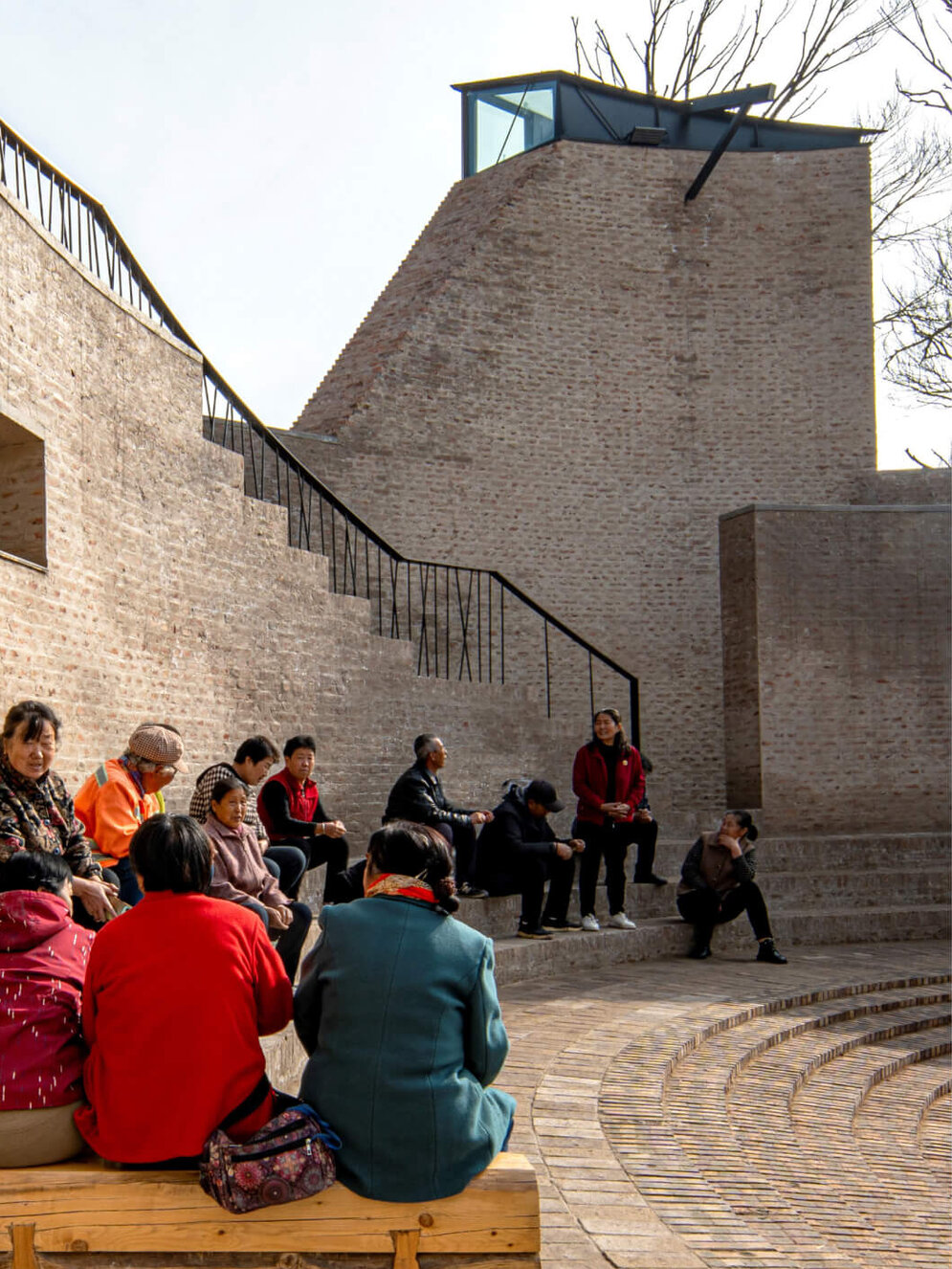
But the interior spaces are also exceptionally well designed. Why was lighting in particular so important to you?
In our region, with its cold climate, daylight plays a crucial role in the comfort of interior spaces, particularly in winter. The question of how light can be effectively brought into interior spaces was therefore a central aspect of the design. Incidentally, of course, you save on electricity and maintenance costs when little artificial light is required. The exhibition spaces, on the other hand, required a different type of lighting. They have hardly any windows and are instead lit by skylights. This is certainly where the project features the most complex lighting design.
The building is largely constructed from used and reused bricks. What prompted you to choose this material, and what other building materials did you use?
In West Wusutu, many old buildings have been demolished in recent years. This resulted in a huge quantity of used bricks. We recycled these and used them to build the community centre. This was not solely for sustainability reasons. On the one hand, the old bricks are part of the village’s cultural memory. On the other hand, recycling them also allowed us to reduce construction costs. This meant we only had to buy a small amount of cement and concrete. We used virtually no other building materials.
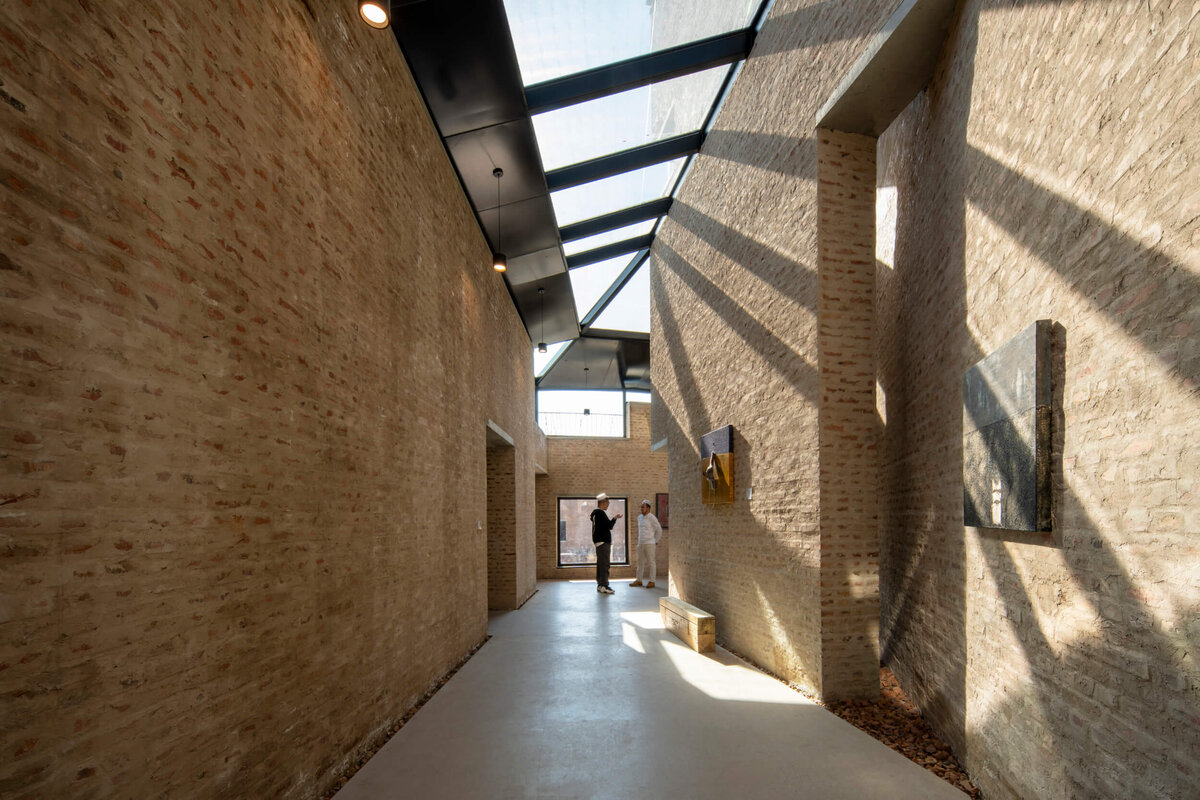
The central element of your building is the circular courtyard. What is its purpose? Is the shape typical of the region?
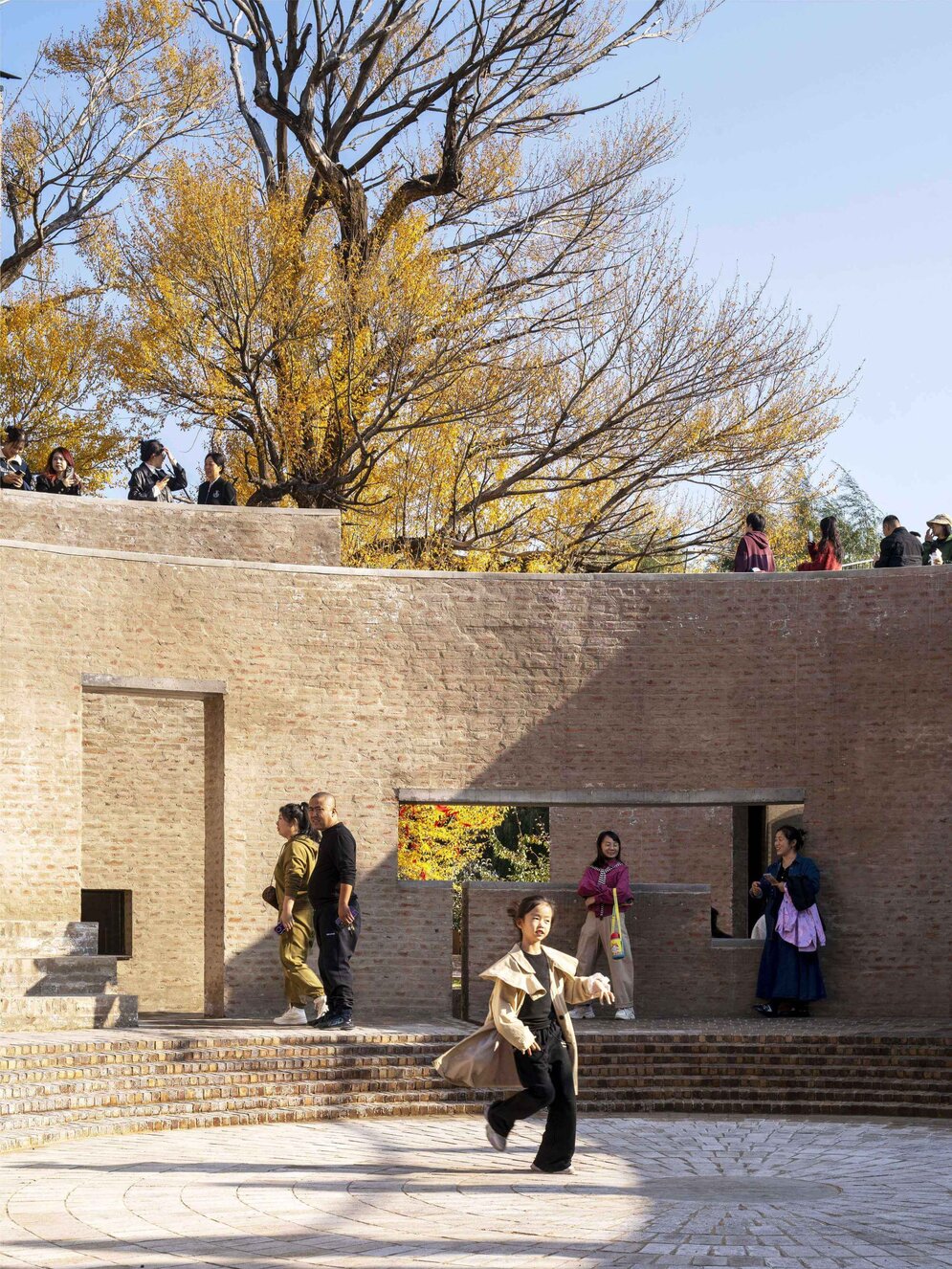
In my view, the courtyard is the most important element of the entire design. It serves as a central focal point for the various users of the community centre, thereby encouraging communication amongst them. At the same time, this circular space possesses a certain spiritual quality. The site where the courtyard stands today was originally the location of the village shrine. In the villagers’ memory, this place is therefore closely linked to spiritual experiences. We wanted to express this spirituality through an archetypal space. We also wanted to establish a connection to the tradition of the village and its inhabitants through the shape of the courtyard: most of the residents of West Wusutu have Mongolian roots. The Mongols’ round tents, the yurts, served as both dwellings and gathering places for them. Round spaces are thus part of the collective memory of this ethnic group. The courtyard’s shape also alludes to this.
Could you tell us a little about the architectural traditions of Inner Mongolia?
As mentioned, the yurt is the traditional dwelling of the nomadic Mongols. This way of life is still found today, primarily in the vast grasslands of Mongolia. The settled populations, on the other hand, adopted traditional Chinese building methods such as courtyard houses, cave dwellings and rammed-earth structures. Buddhist temples play an important role in the architectural history of Inner Mongolia. Tibetan Buddhism was the state religion in the Mongol empires. That is why there are significant temple and monastery complexes in Inner Mongolia, some of which draw on Tibetan building traditions. There are also examples of Islamic architecture in our region.
What factors shape the architecture of Inner Mongolia?
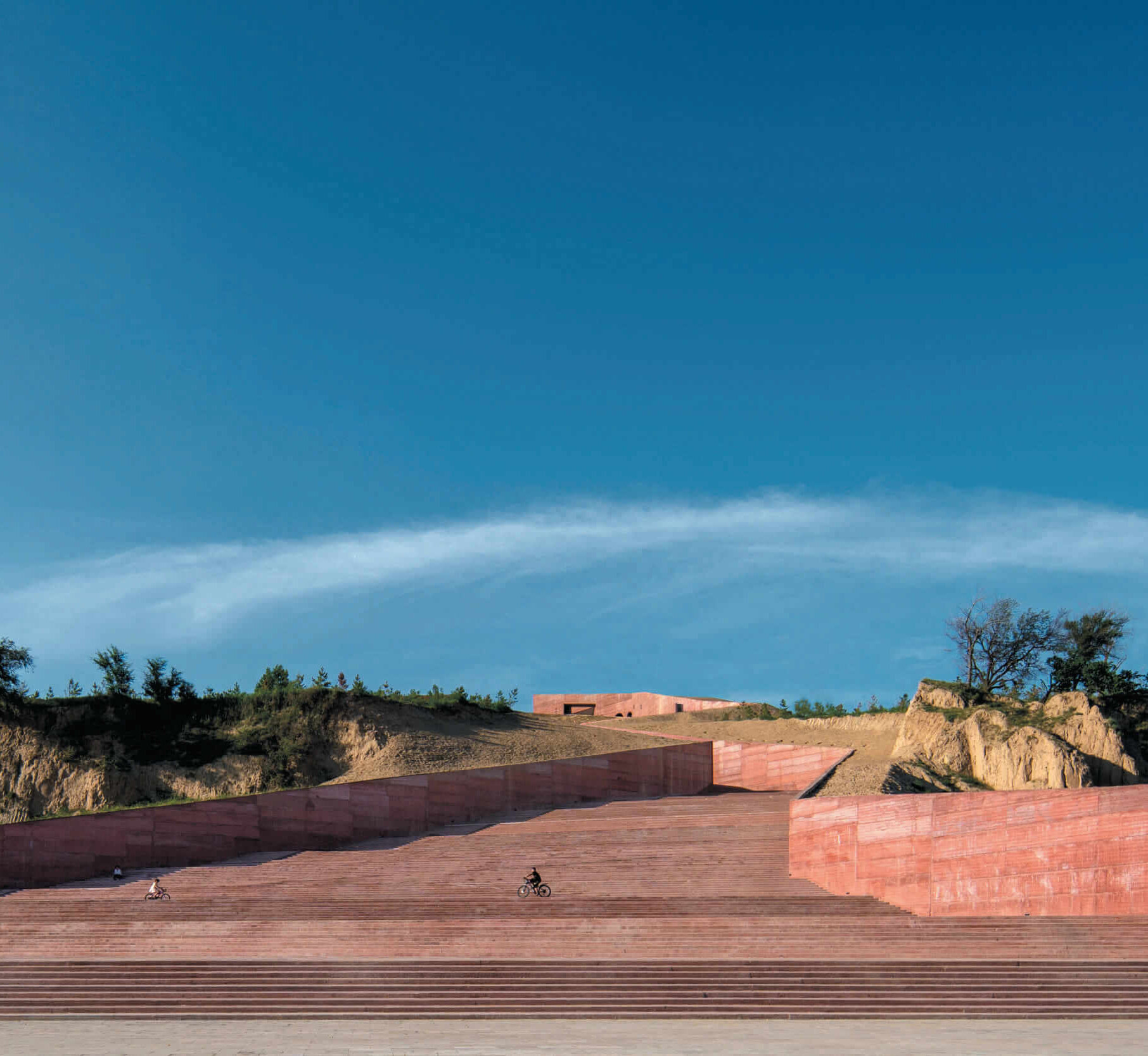
A key factor shaping construction in Inner Mongolia is the climate. This applies to both traditional and modern architecture. It is often very cold here. Although summers can be hot, they are short-lived. A second important factor is the economy. The region is one of the least developed in China – apart from a few economic and administrative centres. Thirdly, the topography and demography of the region play a decisive role: large parts of Inner Mongolia are desert or steppe areas with a low population density. The vast distances make transporting materials extremely expensive. That is why it is important to use locally available resources.
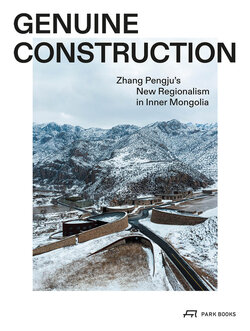
Your monograph “Genuine Construction. Zhang Pengju’s New Regionalism in Inner Mongolia” was recently published in Europe. What lies behind the title?
I chose this term to describe my design philosophy. I am concerned with authentic and sincere building. For me, this means taking full account of the external conditions: the local context, the economic framework, the locally available materials, resources and possibilities – all of this determines the type of house we build. Within this framework, we develop the most suitable solution. It’s about reconciling conditions and needs as effectively as possible. The result is inevitably unpretentious – a sincere house.
Your architecture often becomes part of the landscape. What is the idea behind this?
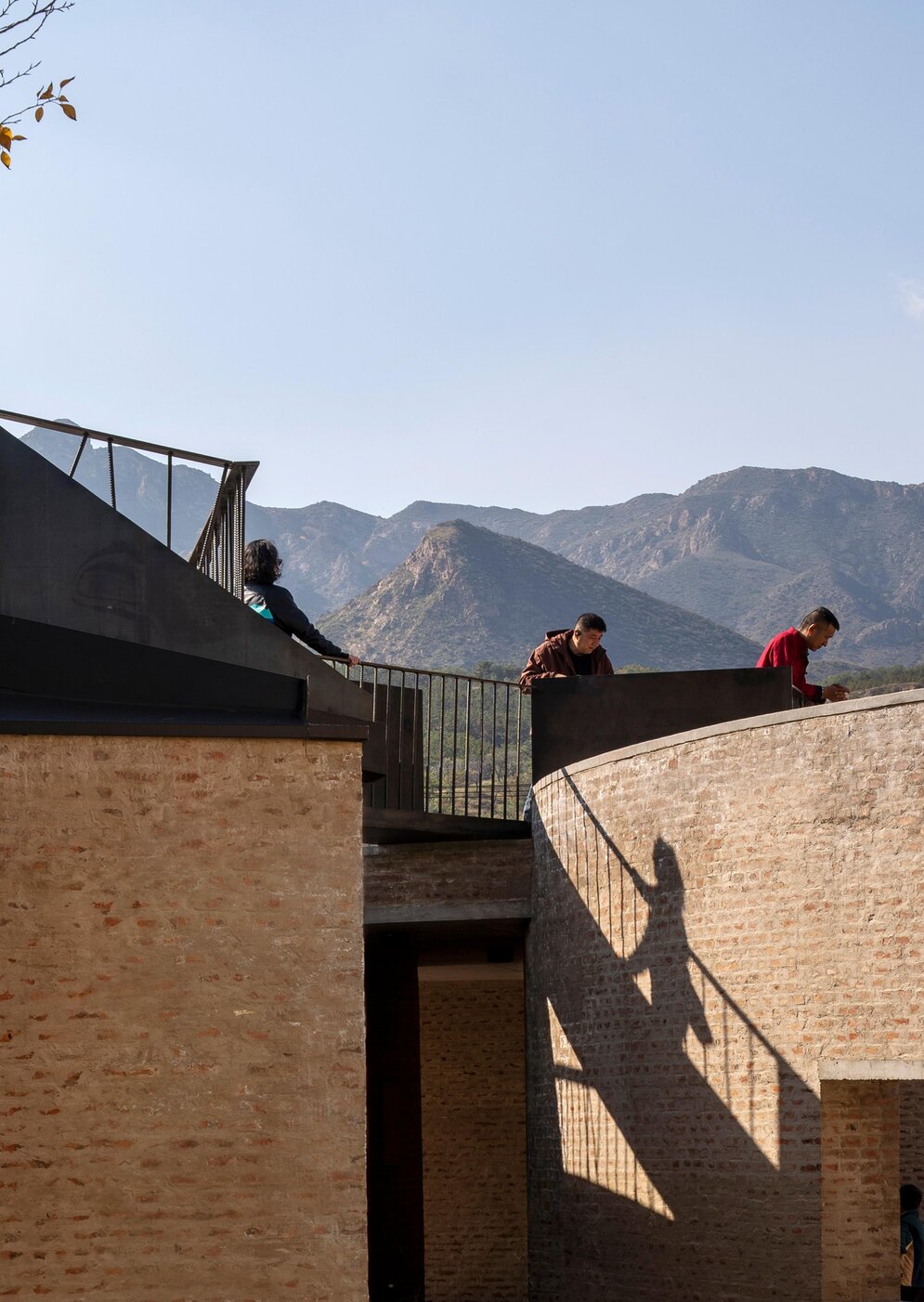
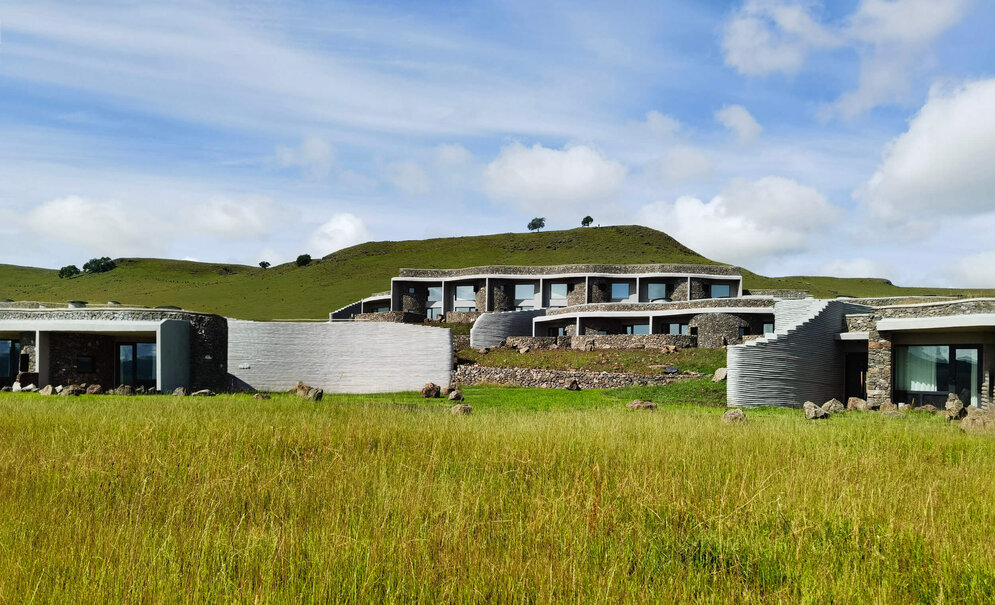
That is what people in Inner Mongolia have always done. For me, the integration of architecture into nature is a guiding principle. Nature enhances any architecture, and good building can even further enhance a beautiful place. We strive in every project not to damage nature. In fact, we sometimes come to the conclusion that in certain places, development would have too great an impact on the landscape. In such cases, we persuade our clients not to build there.
You have been teaching architecture as a professor at the university for many years. Is there a core message you would like to convey to your students?
I could talk for hours about my ideas on a wide variety of aspects. But if I had to sum it up in one sentence, I would say: architecture must be people-oriented and site-specific.
You have already received numerous awards as an architect. You were recently elected to the highly respected Chinese Academy of Engineering. Wouldn’t it make sense for you to also carry out projects in Beijing, Shanghai or abroad?
If that were my intention, it could certainly be achieved. And my work would undoubtedly be more visible there than here in Inner Mongolia. But I have never thought of leaving. I want to stay in Inner Mongolia and hope that I can continue to work on such projects and teach at the university as I have done so far.

More visibility, more opportunities – the new ICONIC AWARDS provide a stage for tomorrow's ideas and projects. They open up networking and business opportunities and pave the way to new markets. They are aimed at architects, interior designers, designers and companies who are shaping the future with visionary projects, innovative products and sustainable concepts.