
‘Innovation Is My Mission’
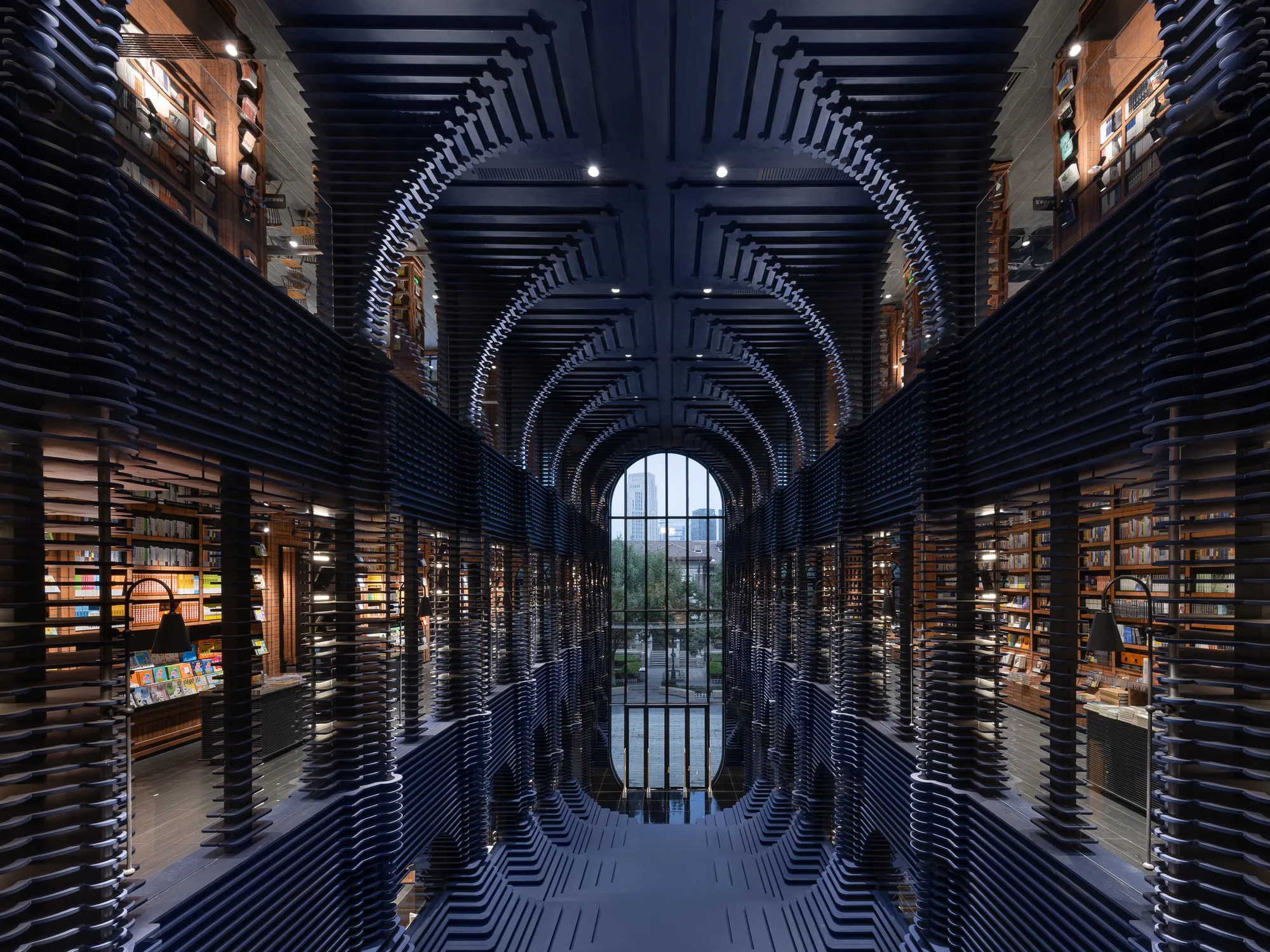
Chinese architect and interior designer Li Xiang designed a spectacular building for the Zhongshuge bookshop chain in the megacity of Tianjin, drawing inspiration from classical European architecture. At the ICONIC AWARDS 2025, this project was described by the jury as a 'cathedral for books' and received the 'Best of Best' award. Below, we explore the building that is setting new benchmarks for bookshop architecture and interior design.
Your architectural practice X+Living, which you founded, received an ICONIC AWARDS 2025 prize in the retail architecture category for the Zhongshuge bookshop in Tianjin. What does this award mean to you?
Li Xiang: This award is very significant for me – particularly because it recognises an architectural project. In recent years I have won awards for interior design, but this is my first architecture award. In fact, I originally studied architecture in the UK at Birmingham City University and founded the practice in 2011 as an architectural office. By chance I had the opportunity to work on interior design projects and quickly became successful in that field. Today my studio has almost 200 employees and I am at least as much a manager as a designer. We don’t only do interiors; we also work in product design. But it took more than ten years before I could work again as an architect. That’s why this recognition at the ICONIC AWARDS means so much to me.


Tell us more about the award-winning project!
The Zhongshuge book company commissioned me for my first interior design project, and we have now been working together for 13 years. The owner realised early on that the internet would threaten the very existence of traditional bookshops. In Europe he had seen bookshops that were more than simple retail outlets for literature, and he wanted to create something similar in China. By a fortunate coincidence, I was given the opportunity to contribute to the design. I knew nothing about rules or traditions; I simply wanted to design a beautiful space. The bookshop was a great success, and since then my office has designed more than a dozen additional Zhongshuge bookshops, for example in Dujiangyan and Hangzhou. The Tianjin shop is the latest. The basic principle, however, is always the same: each bookshop must offer an extraordinary experience.
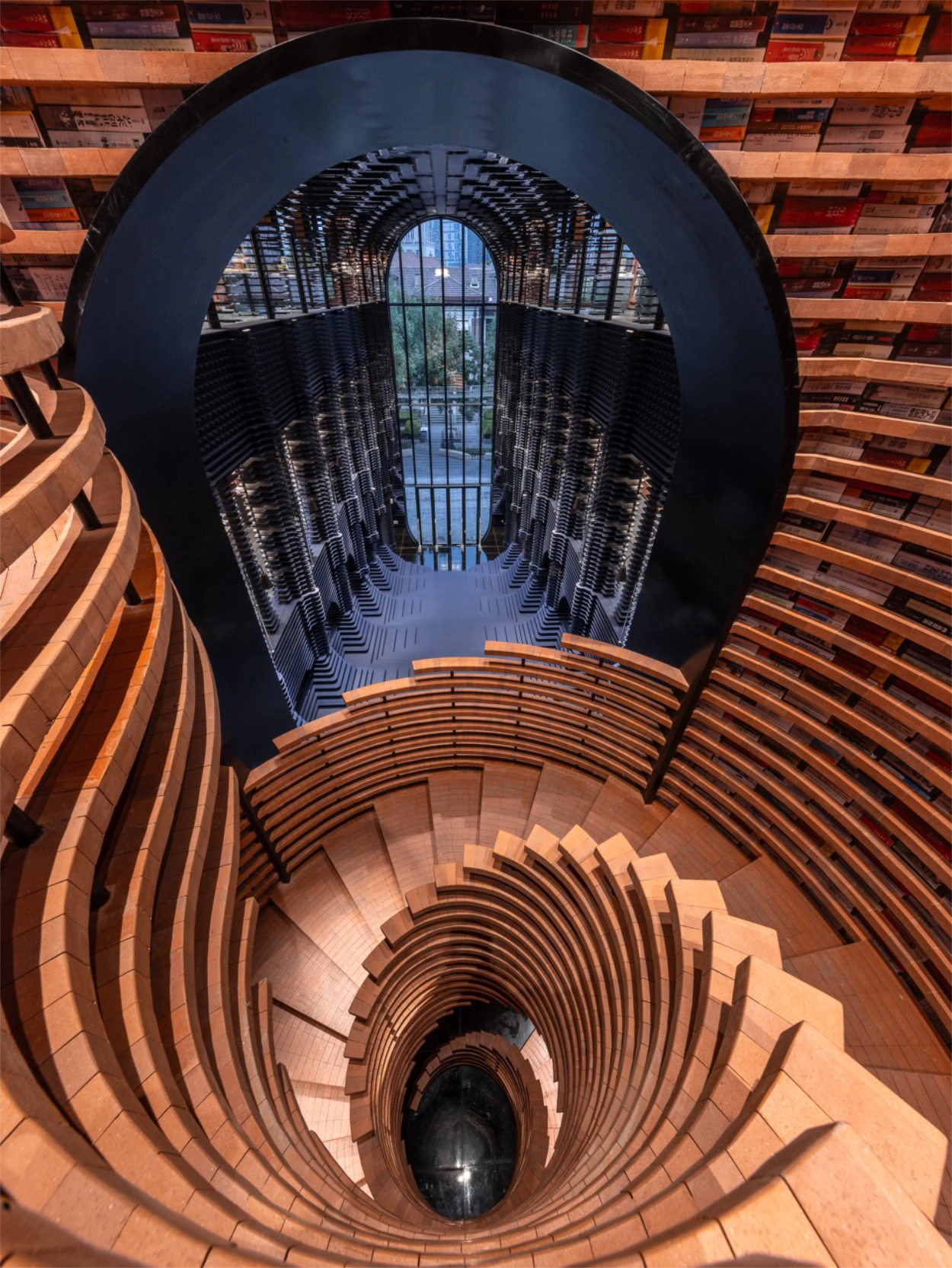
The building clearly references classical European architecture. What significance does this reference have?
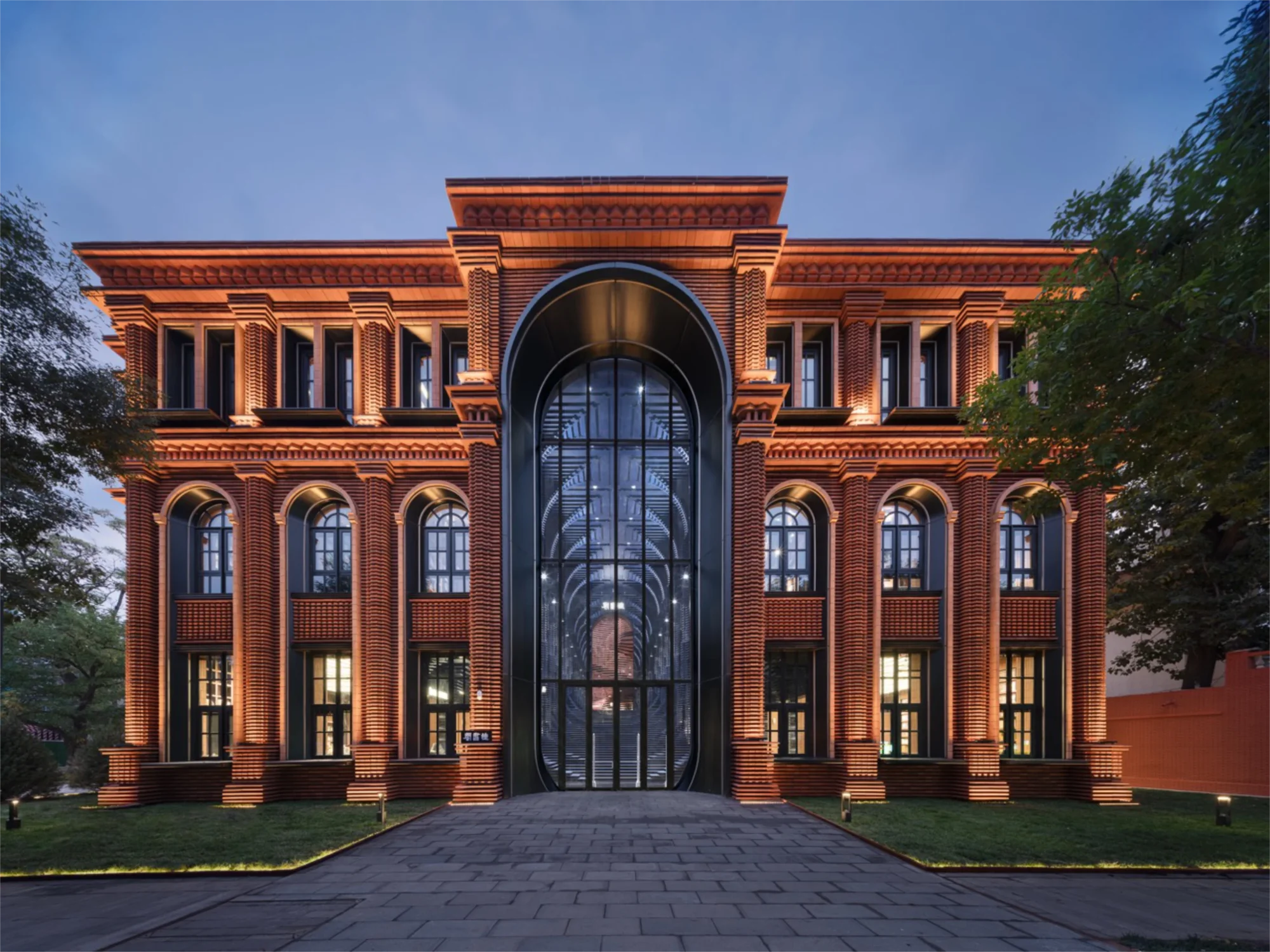
The district of Tianjin where the bookshop is located is the so-called Italian Quarter. In the 19th century, many European nations established trading concessions in Tianjin. Today the area is a popular tourist attraction. A primary school previously stood on the site, but unlike neighbouring buildings it had not been constructed in Italian historicist forms. We therefore transformed this building – which did not fit its surroundings – into a modern bookshop that nevertheless harmonises with the architectural language of the district.
What attracted you to designing a building inspired by historic forms?
The planning authorities required the new building to harmonise in both form and materials with the surrounding brick buildings to preserve the visual unity of the district. So the design had to respond to the historic context. The key question for me was how to create drama and tension with an innovative, contemporary architectural language despite these constraints. Although the building has a European appearance, many details differ markedly from classical European architecture. We effectively deconstructed the columns, window frames and external walls.
How did people respond to this form of “European” architecture?
When the building was completed it caused quite a stir. People wonder why it looks almost like a classical European building – yet not entirely. This ambiguity aroused enormous curiosity and encouraged many people to enter and explore it. It effectively became an internet sensation.
How challenging was it for you to design a building drawing on classical Western architecture?
During my studies in the UK I was constantly exposed to European architecture. In my early academic years we studied the principles and elements of classical architecture, so I wasn’t afraid when I was asked to engage with the so-called Italian style.
You abstracted the façade and it's decorative forms. Why?
There were two reasons. First, Chinese craftsmen often lack the technical know-how to reproduce such historical elements precisely. Second, I’m not a fan of imitation. I spent a long time considering how to approach the task. The idea came when I looked at my window blinds with their horizontal slats. We threaded bricks onto reinforcing bars, creating gaps between the layers. The façade becomes a linear composition, making it clear that this is a contemporary building. At the same time, the fragmentation lends the façade a certain lightness. Not least, the stacked brick layers evoke piles of books or sheets of paper, subtly referencing the building’s function.

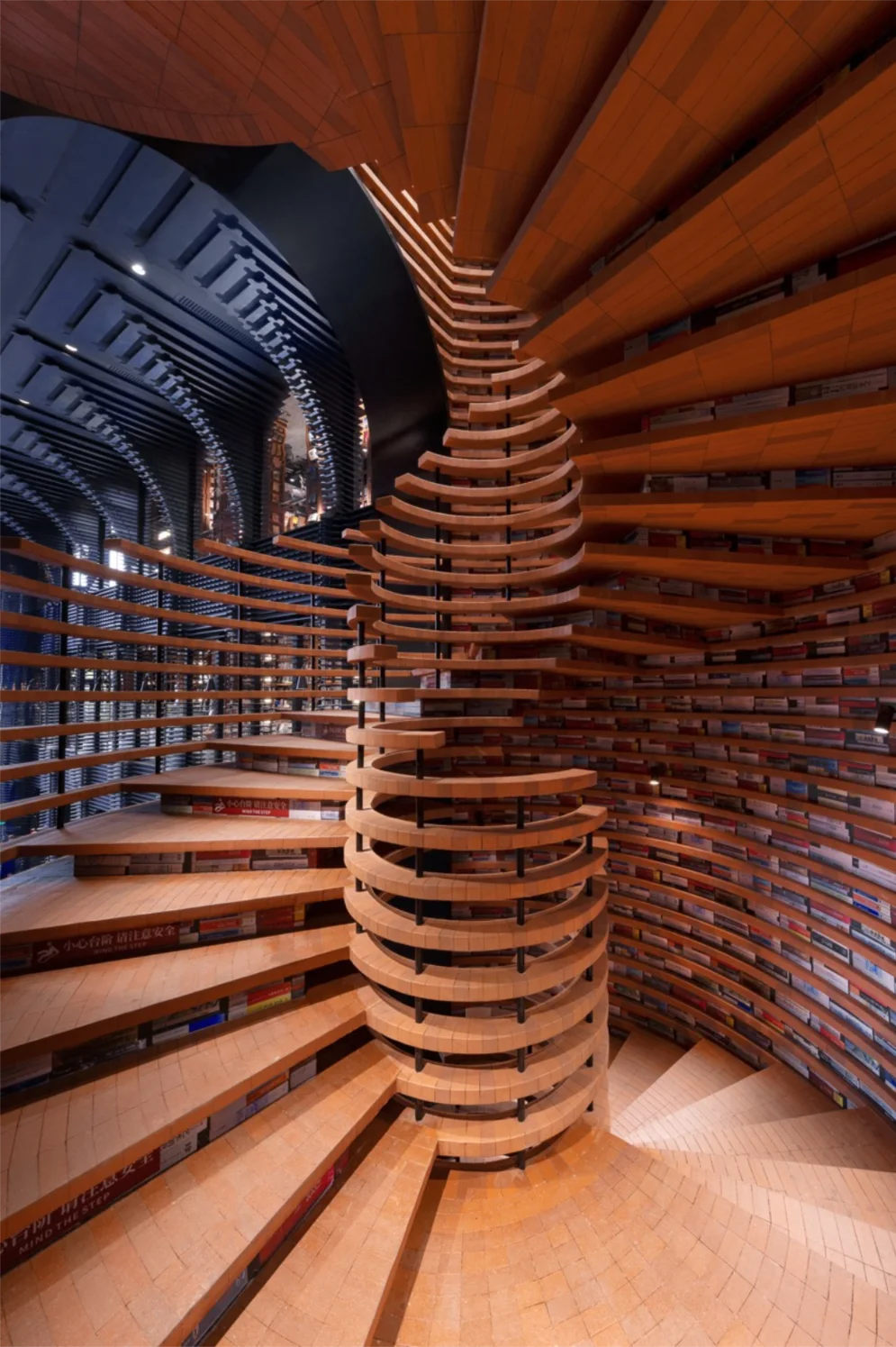
You also used brickwork extensively in the interior. Why?
I always want to challenge conventions and create an innovative visual experience. Innovation is my mission. Each of my designs should evoke a unique feeling unlike anything seen before. Admittedly, using masonry indoors was labour-intensive, but the result is entirely novel, which is immensely valuable to us. In the digital age, traditional designs are no longer enough. We must create distinctive spatial experiences that draw people back into physical spaces and keep them vibrant. Another reason was my desire for unity between exterior and interior architecture. The entire building should convey a deep sense of harmony.
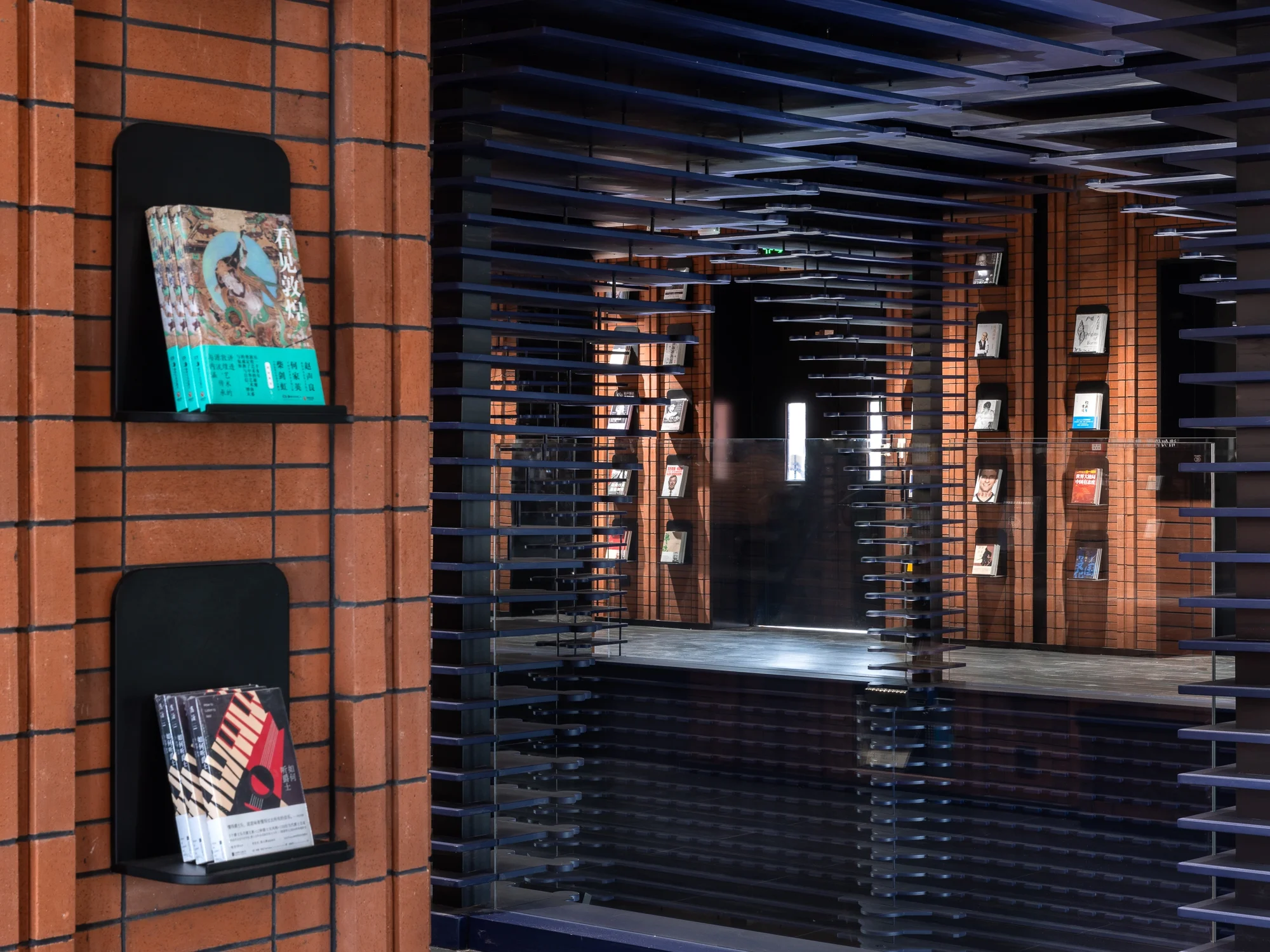
The 'sales areas' are arranged around the large atrium, which is not used for retail purposes. Isn’t that uneconomical?
Traditionally, commercial design aims to use every square metre for displaying goods. But consumer dynamics in China have changed: many people now prefer online shopping. If physical retail spaces serve only as storage for goods, they lose much of their appeal. Retail spaces must therefore offer an experience to encourage people to visit in person. Our core philosophy is to transform the bookshop into a space imbued with artistic sensitivity, even without exhibiting artworks. Take the large central atrium in Tianjin: we imagined a space that inspires awe upon entry. It reflects my belief that books possess an inherent sacredness. We want every reader entering the space to rediscover the reverence reading deserves. That’s why we chose not to use the vast atrium for sales, but for aesthetic and artistic experience.
You mentioned the bookshop went viral online. Does “Instagram-ability” play a role in your design process?
When I began working in interior design, it wasn’t a consideration. However, from the outset I wanted every project to have photographic quality. I often imagine holding a camera and photographing a space I’ve just completed, asking myself whether I could capture an exceptionally beautiful image. This pursuit of photographic impact arose from aesthetic considerations. In the internet age, photography has become a powerful medium of communication. “Photogenic” architecture acts as a bridge between my work and a wider audience.

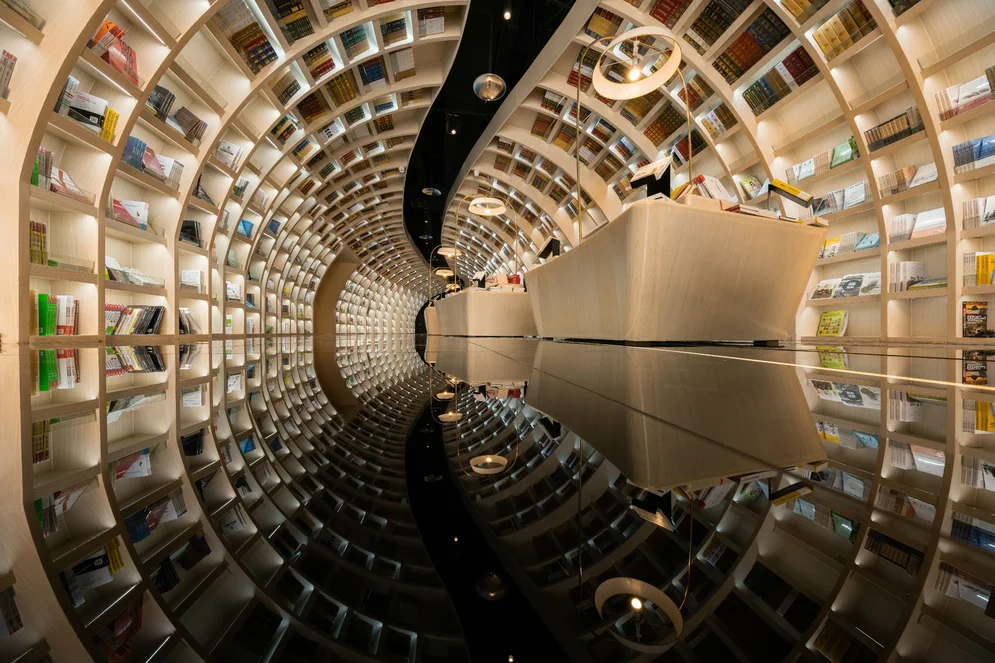


About Li Xiang
X+Living was founded in 2011 by Chinese designer Li Xiang shortly after she had completed her studies in architecture. From the very beginning, she surprised with refreshingly unconventional designs, which earned her a great deal of praise from both the media and customers and fans of her work. Li Xiang established her own furniture brand in 2015. And she again hit the spirit of the times with her mix of quality, sustainability and a touch of humour. For more than ten years, the studio has had people talking about it with fantastic, almost surreal projects such as the »Taiyuan FAB Cinema«, the »Dujiangyan Zhongshuge Bookstore« and the »Zhuyeqing Greentea Flagship Store«.

More visibility, more opportunities – the new ICONIC AWARDS provide a stage for tomorrow's ideas and projects. They open up networking and business opportunities and pave the way to new markets. They are aimed at architects, interior designers, designers and companies who are shaping the future with visionary projects, innovative products and sustainable concepts.