
Knowledge for All: ISOTYPE – the Picture Language from Vienna
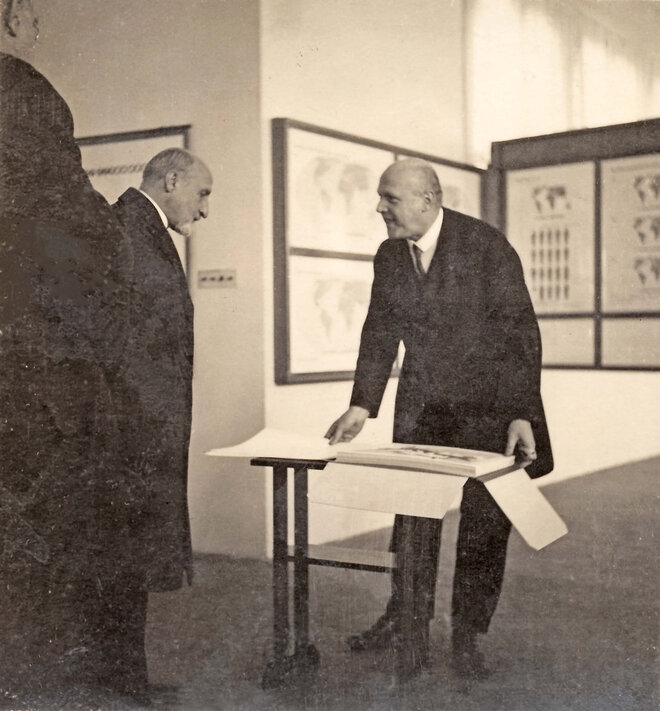
The starting point for the exhibition ‘Knowledge for All. ISOTYPE – the Picture Language from Vienna’ is the so-called Red Vienna, a period of profound social democratic reforms after the First World War. In 1925, Neurath founded the Society and Economy Museum with the aim of making social, economic and political contexts understandable to as many people as possible. Knowledge should not remain exclusive, but should serve as the basis for democratic participation. Central to this concern was the development of a new form of visual communication.
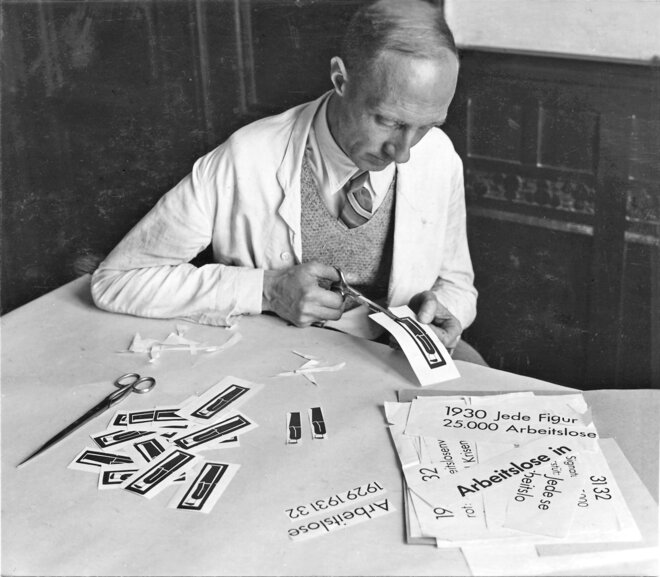
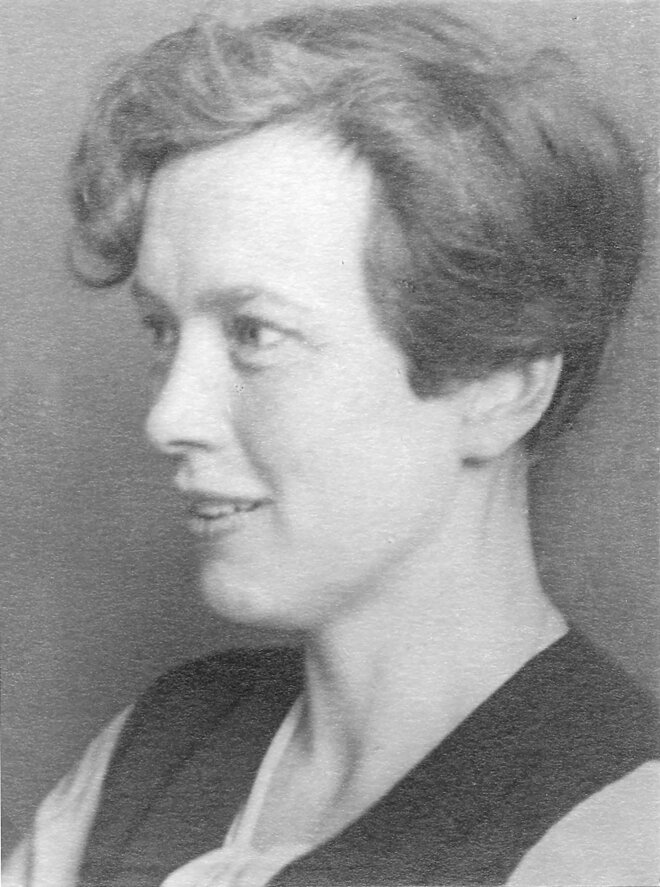
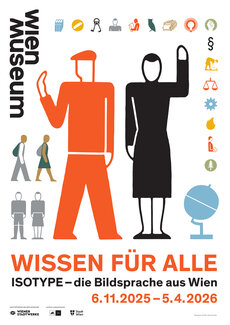
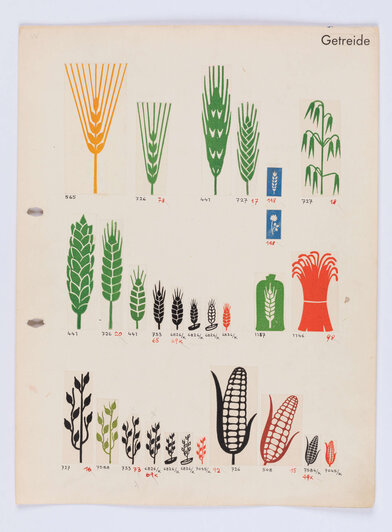
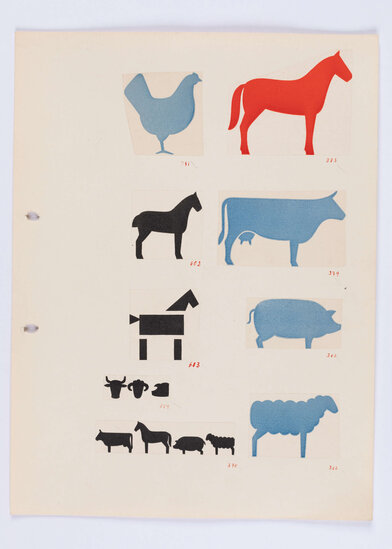
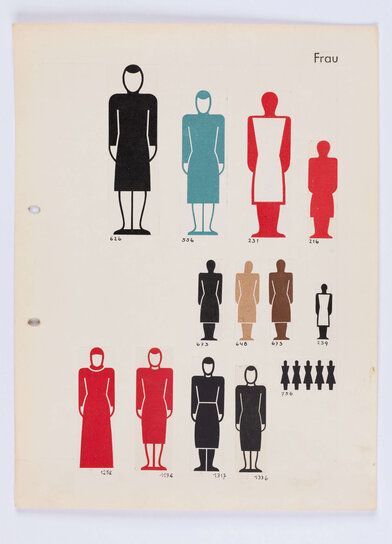
Together with graphic designer Marie Reidemeister and artist Gerd Arntz, the Vienna Method of Picture Statistics was developed, later known internationally as ISOTYPE (International System of Typographic Picture Education). A characteristic feature is the use of standardised pictograms, which represent quantities not by size but by repetition – an approach that continues to shape information design to this day.

Visual Education as a Political Project
The exhibition spans the arc from its beginnings in Vienna to the international spread of the method in cities such as Berlin, Moscow and London, and its significance for contemporary knowledge transfer, graphic design and art. It also addresses displacement and exile: after democracy was crushed in Austria in 1934, the museum was closed, and Neurath and his team continued their work first in the Netherlands and later in England. There, Marie Neurath continued to run the Isotype Institute after Neurath's death in 1945.
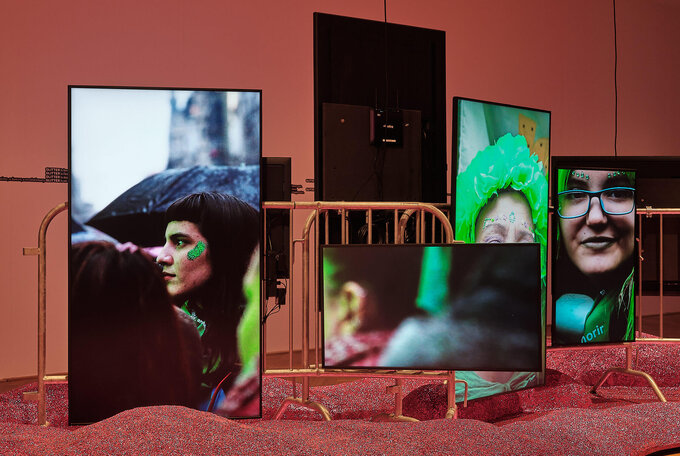
The historical perspective is complemented by artistic positions that deal with ISOTYPE as a political and design method. The exhibition makes it clear that this visual language was never just about form, but always about attitude – about clarity, accessibility and social responsibility in dealing with information.
An extensive catalogue with more than 40 contributions by international authors accompanies the exhibition. It is considered the first standard work in German on Otto Neurath and his milieu.