More Than Just a QR Code: The Digital Product Passport as a Design Opportunity
A sofa that recognises its own material composition. A bicycle that tells you about potential repairs and spare parts. A garment whose origin and care instructions can be traced: the Digital Product Passport (DPP) will accompany products throughout their entire life cycle. With the Ecodesign Regulation, the EU is creating the legal framework for this. Starting in 2027, the digital battery passport will be mandatory for certain types of batteries. Textiles, electronics, and other product groups will follow by 2030.
What does this mean for the design of products, brands and services? We spoke to Thomas L. Rödding, founder and CEO of Narravero, a software provider for the Digital Product Passport. As Co-Chair of EU standardisation (CEN/CENELEC JTC 24), he is involved in the European standards committee developing the foundations and system architecture of the Digital Product Passport. As Vice Chairman of German standardisation (DIN/DKE), he also supports this work at national level. His perspective combines the regulatory foundations with the practical question of how product data can be made understandable, accessible and useful for brands, companies and designers.

What exactly is the Digital Product Passport, and why is the European Union introducing it?
Thomas Rödding: The Digital Product Passport creates a digital record of a product's entire life cycle. All information about a product is collected in one place. Europe is one of the global pioneers in implementing an initiative of this kind. It will bring together various types of information, including that relating to product safety, market conformity and the circular economy. This is why the EU is incorporating the Digital Product Passport into the 'Ecodesign for Sustainable Products Regulation' (ESPR).
What will the introduction of the mandatory battery passport in February 2027 mean for companies?
The battery passport is the first concrete application of this legislation. It will apply to companies that sell large batteries used for vehicle propulsion, industrial energy storage, e-scooters, and e-bikes. From 18 February 2027, these batteries will require a product passport — a detailed digital record containing information for consumers, repair businesses, and recycling companies. Depending on the battery and user group, different information will be accessible. For example, the relevant information for a starter battery differs from that for a traction battery.
Which other product groups will follow, and when?
Following the introduction of the battery passport, the digital product passport will gradually be introduced for other product groups. The initial phase of the Ecodesign Regulation for Sustainable Products encompasses textiles, iron and steel, furniture, and tyres. The date on which the respective requirements will apply has yet to be determined. There are also other independent laws that aim to introduce a product passport, such as the Toy Safety Regulation. This legislation also incorporates a product passport, and the regulation is legally binding. However, companies have more time to prepare for it.
In what situations is the Digital Product Passport relevant to users?
I believe there are three main situations. The first is the point of sale – whether online or in a physical shop. Users do not yet own the product; they are making a purchasing decision and perhaps comparing two or three products. One question, for example, might be: Can I easily get hold of spare or accessory parts, and which ones are available at all? This may not all be apparent from the packaging. So the first point of contact comes before the purchasing decision: What information do I want to be able to access and compare in order to make the right decision?
The second point is after the purchase. Depending on the product, this concerns commissioning and the initial user experience. I do not need an instruction manual for a T-shirt, whereas an electric toothbrush may involve aspects that require explanation. For other products, this need is even greater.
The third point is ongoing support throughout the product’s life: maintenance, care, servicing, retrofitting, upgrading or suitable accessories. In fashion, for example, this could also involve styling advice, such as what might go with a particular garment next season.
Understanding these three points and implementing them in a user-oriented way is, in my view, the key to designing the Digital Product Passport.
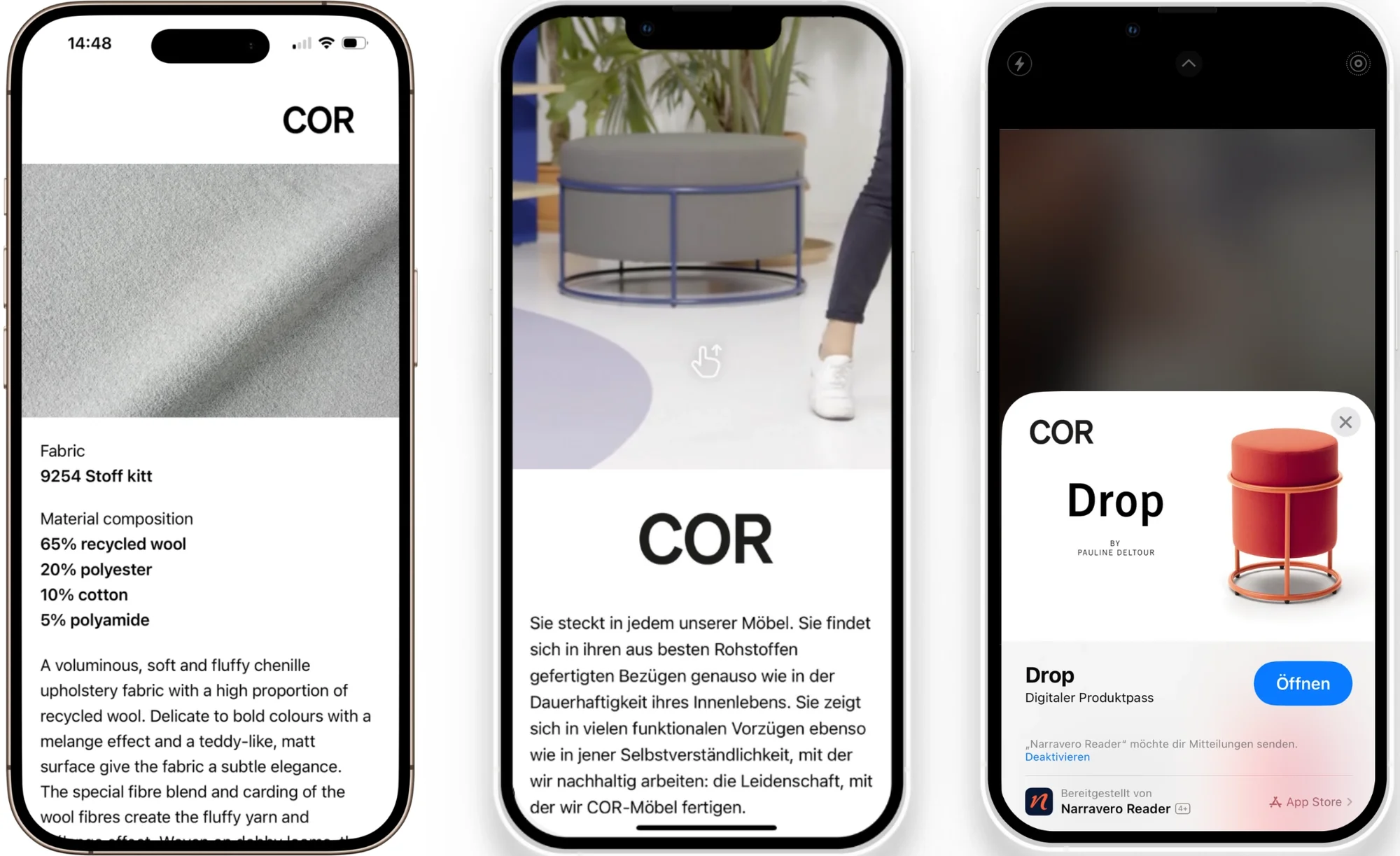
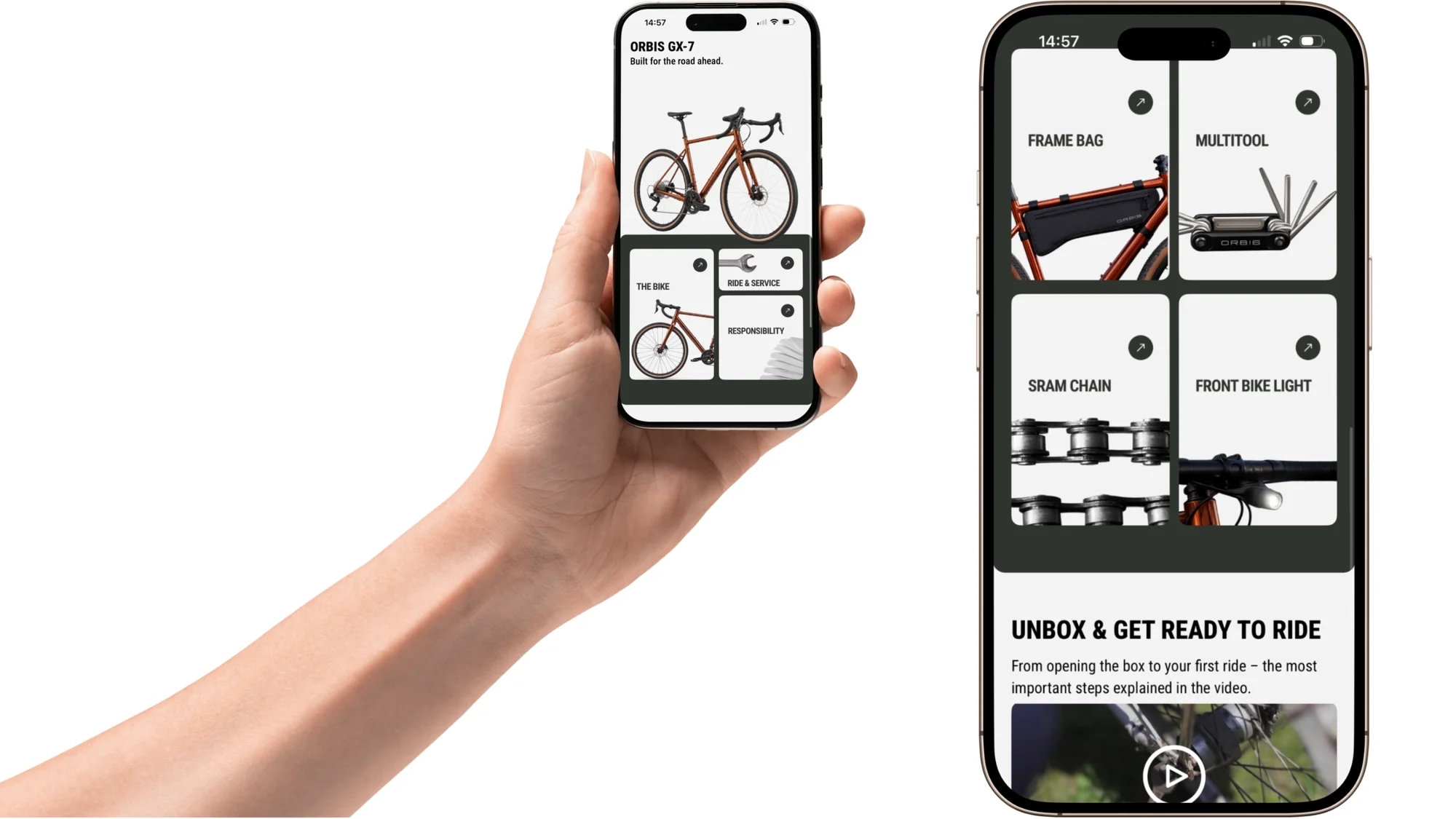
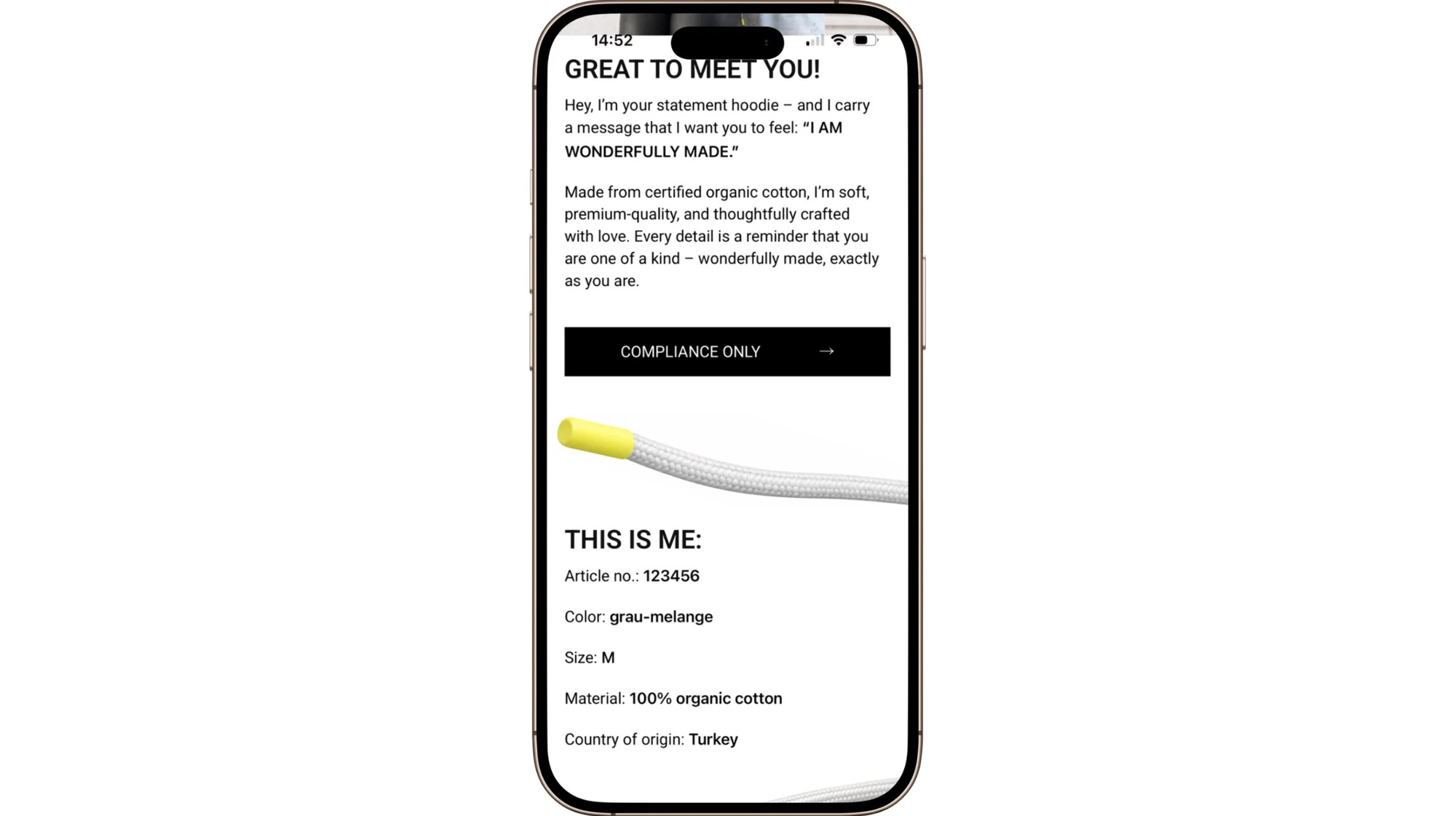
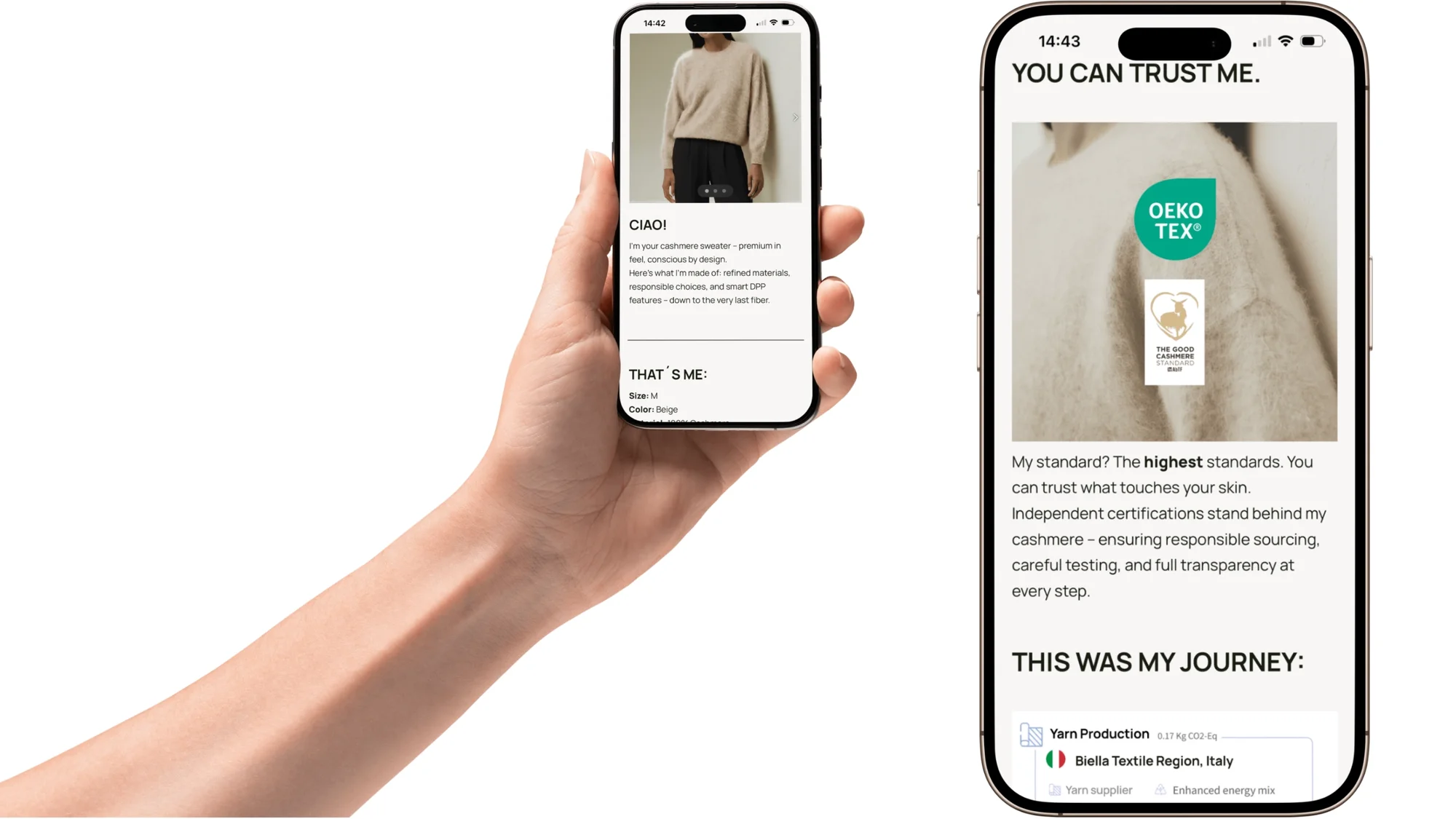
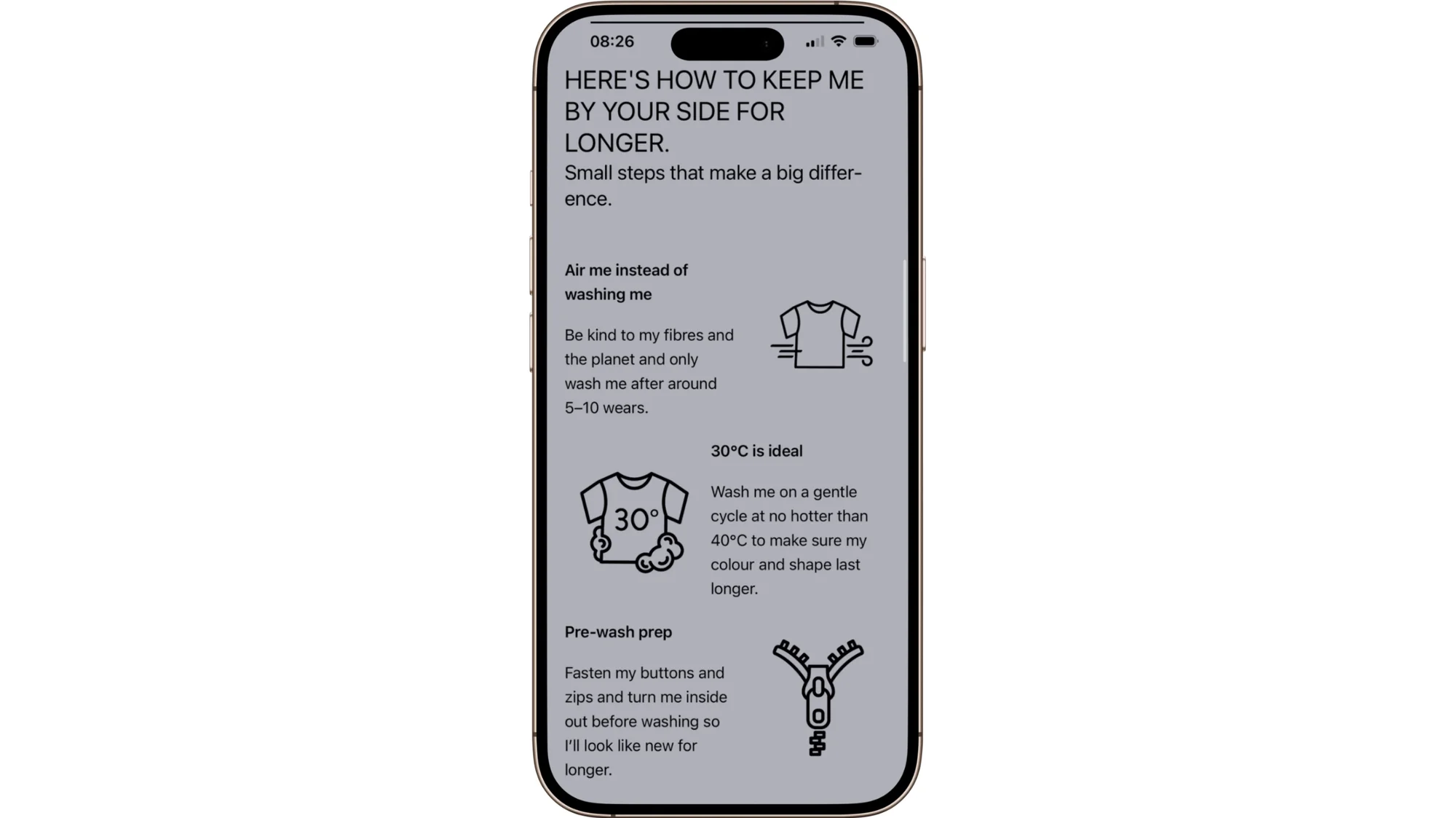
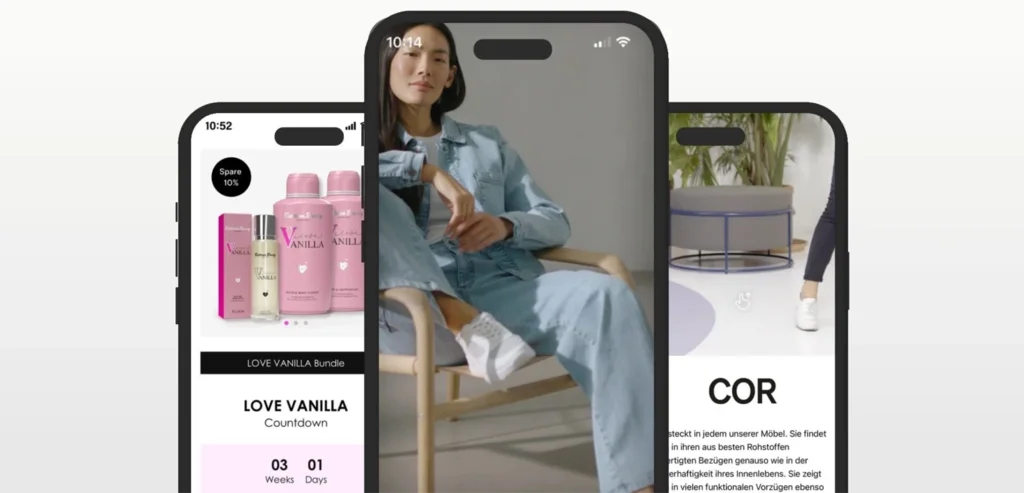
- COR’s digital product passport for Pauline Deltour’s ‘Drop’ furniture collection
- This is what a digital product passport for a bicycle might look like.
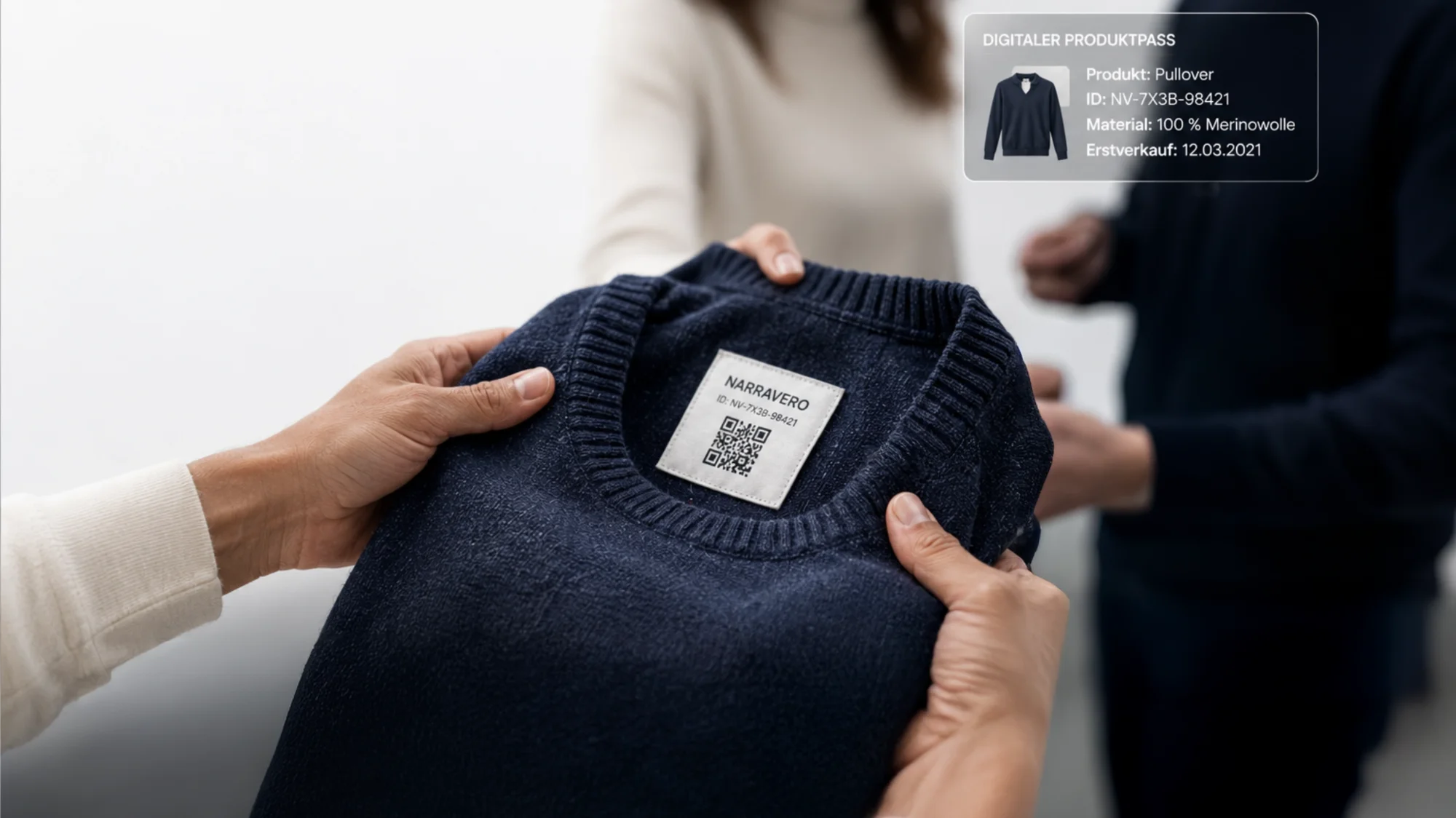
- Digital product passport from the Kings & Priests brand: the QR code on the hoodie links to material information, care instructions and proof of origin.
- Digital product passport for a cashmere jumper.
- The bonprix product passport: as well as providing material details, proof of origin and care instructions, bonprix promotes a sustainability initiative and collects user feedback.
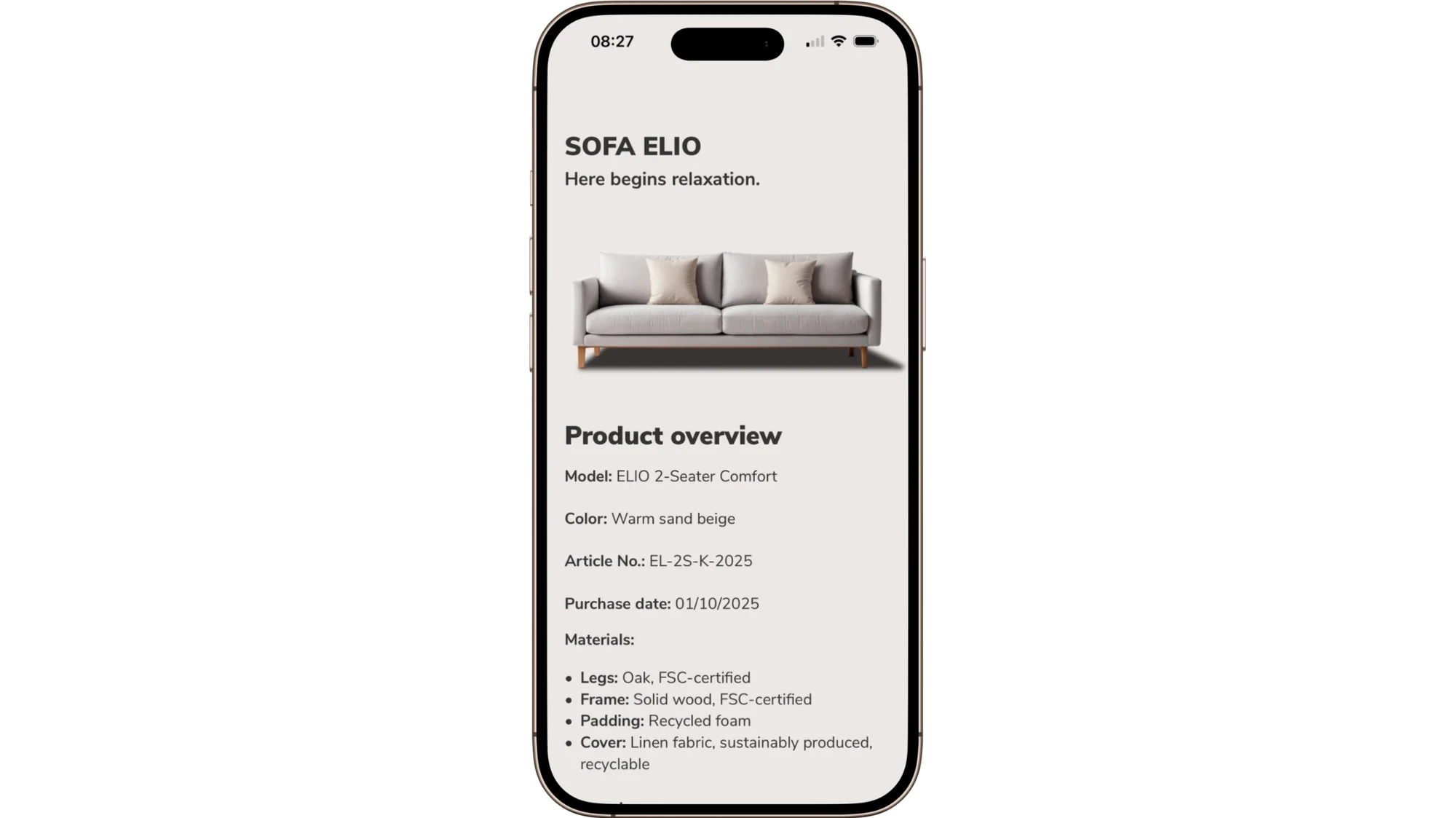
- Digital product passport for a sofa.
How will access look like in practice?
The EU stipulates that consumers should be able to access the product passport directly without the need for additional software. QR codes and NFC chips are possible solutions, as these are technologies that are already supported by today’s smartphones. A QR code can be scanned with a smartphone camera, while an NFC chip can be integrated into the product and read wirelessly.
Both lead to a website or comparable digital application. There, users will find the legally required information, as well as any additional information and value-added services provided by the brand. However, it is important that it remains clear which information is mandatory and which is voluntary brand information.
If the product passport is accessible via a website: How is it different from a conventional website?
A conventional website provides general information about a product type. By contrast, the Digital Product Passport is permanently linked to a specific product and documents its history, including repairs, battery replacements and changes of ownership. It is therefore a digital record of a specific product rather than an ordinary product detail page.
What information should be included in a Digital Product Passport?
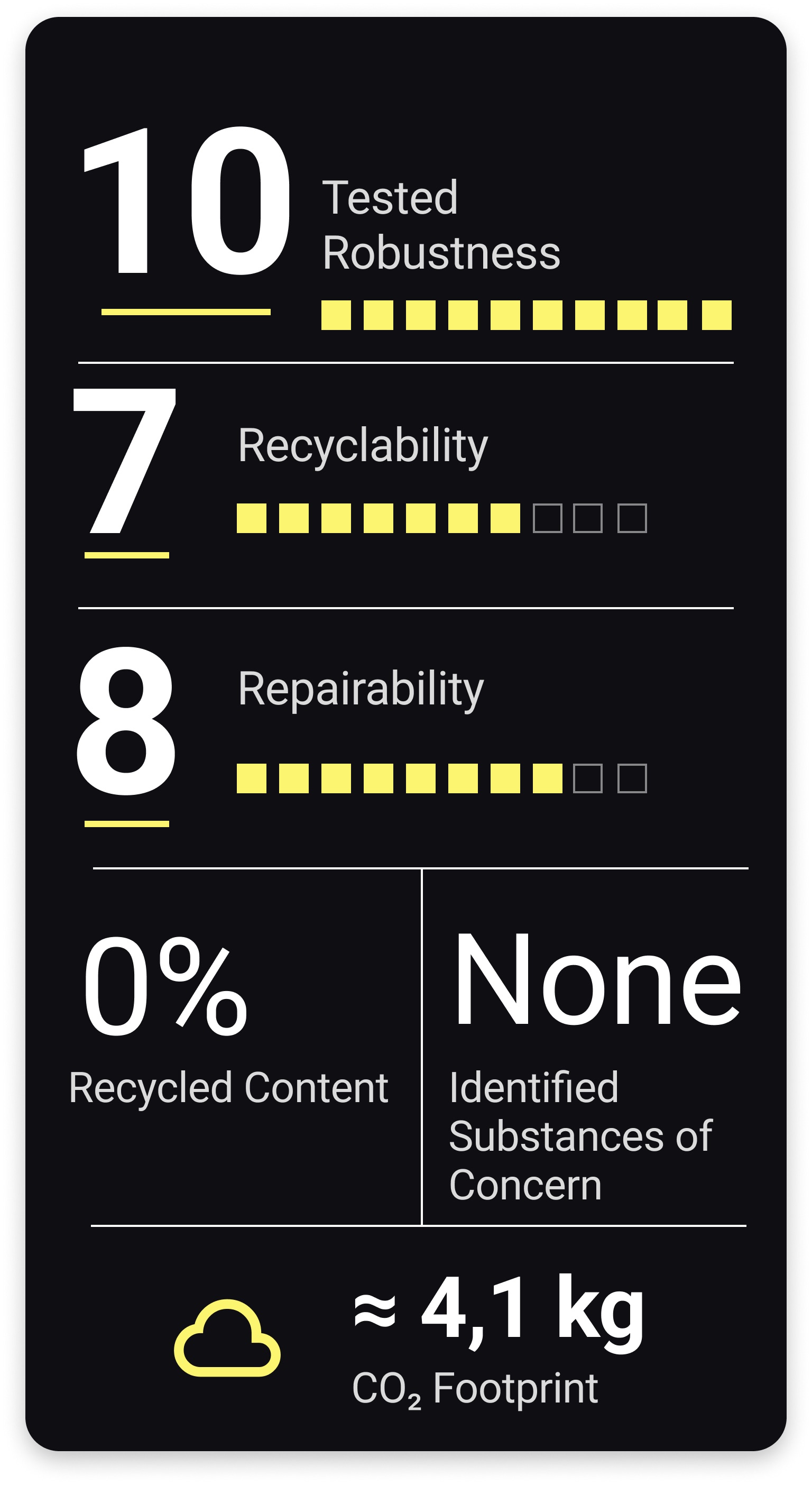
The requirements for a T-shirt, a table and a vehicle tyre are different. This is why the EU will not prescribe the same requirements for all products. Instead, the specifics for each product group will be established through what is known as a delegated act. This will also ensure that companies are not burdened with more requirements than necessary and that the process is introduced gradually.
The voluntary information section gives brands the opportunity to consider carefully what information they want to include. What do people need? For a bicycle, for example, this could include operating instructions, information about spare parts and repair shops, and the bicycle's repair history.
Why is the Digital Product Passport a design challenge as well as a technical and regulatory obligation?
It is certainly both a challenge and an opportunity for designers. Designers are constantly concerned with communicating information effectively and attractively. Rather than having to read a 100-page manual, people should be able to understand a product quickly.
The product now has a digital extension. This extension needs to be intuitive and easy to understand. Users should be able to find all the information they need in one place, rather than having to search elsewhere. This is a skill that goes beyond data and technical specifications. For people to enjoy using it, it needs to be well designed.
When should the Digital Product Passport be considered in the design process?
Ideally, it should be considered at an early stage of the design process, rather than only when the digital application is being developed. For example, a hair colouring product could use the passport to provide important application instructions and additional information. However, if the QR code is merely placed next to the barcode and mandatory information on the back, many users will be unaware of this added value.
Therefore, access to the product passport must be incorporated into the product and communication design. Companies should decide early on where the digital access point will be placed and how users will be made aware of it. Users need to immediately understand that this product offers more than can be seen on the packaging. It provides information that remains useful beyond the point of purchase. The product passport should therefore not be treated as an additional mandatory piece of information, but rather as an integral part of the overall product experience.
How can we prevent the Digital Product Passport from becoming just another QR code that nobody scans?
That is the key issue. The EU wants to avoid a future where products are covered in a multitude of different QR codes, making it impossible for users to tell which code serves which purpose. This is why a standardised designation and corresponding standards have been introduced: the Digital Product Passport serves as the access point. While it serves as a useful reference point for users, the most important factor is the added value that the product passport offers in its optional section. Companies must clearly communicate to users why scanning the code is worthwhile. Design and communication play a central role here.
What will product designers have to do differently in the future?
To be honest, the biggest challenge lies in answering the question: Why should I hold my smartphone up to a product? The QR code has always had the image of “there’s nothing great behind this”. You see them everywhere, and almost never is there anything worthwhile on the other side. NFC has the opposite problem: it can do much more, but hardly anyone knows that it exists. And you cannot see it either. So there are two access points, and neither initially invites anyone to use them.
This is a genuine design issue! People take out their phones when they want to know something at that particular moment. At what temperature can I wash this jumper? Which screw am I missing when assembling it? Will this brush head still be available in two years? In these moments, help is welcome.
And how do we make the shift from “I need help” to “I’ll scan the QR code”?
If it says “Digital Product Passport”, that is unlikely to make many people particularly interested. “Washing instructions”, “Assembly in five steps”, “Find spare parts” – these are much closer to an actual need.
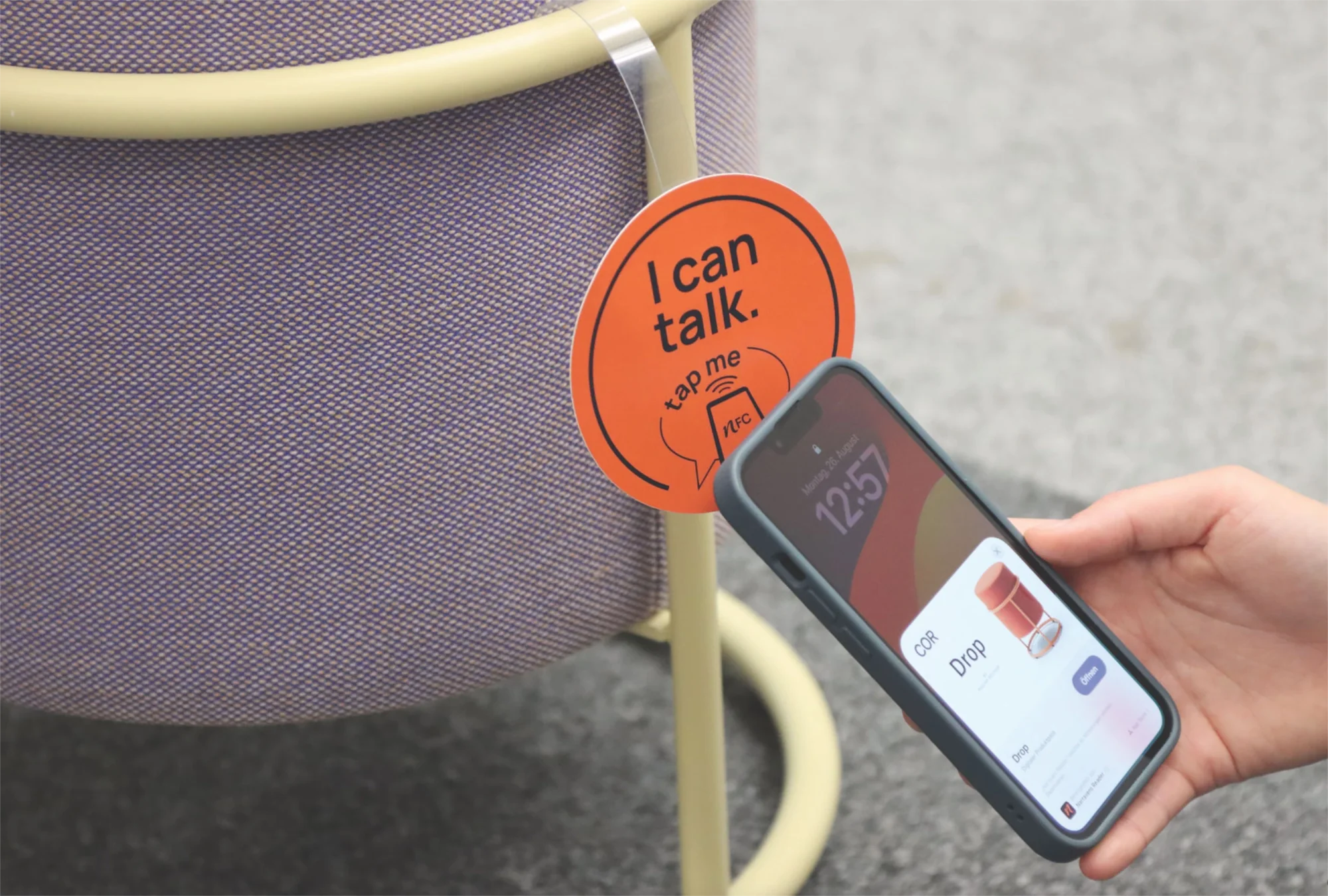
With NFC, things get really interesting because the chip is invisibly integrated into the product. The product itself therefore needs to reveal where to hold the phone. This could be done with an embossed mark at the relevant point, a coloured seam or a different material. So far, there is no universally recognised visual language for this. Someone now has to invent it. For designers, this is a rare opportunity: they are not only designing a product, but also a gesture that everyone will adopt. There is also considerable creative potential here, particularly when it comes to integrating a brand’s own identity.
So the Digital Product Passport is supposed to become part of brand identity. Wouldn’t a consistent and easily understandable design across brands be more trustworthy?
I find this either-or question somewhat difficult, because we definitely need both: the Digital Product Passport must provide a trustworthy and understandable framework so that users can verify information and compare products. At the same time, it is always a direct point of contact with the brand.
If a brand does not regard the digital touchpoint on the product – that is, access via a smartphone – as an integral part of its brand communication, this poses considerable risks to brand identity. Otherwise, a significant gap can emerge between the brand experience before purchase and what users experience with the actual product. The Digital Product Passport therefore needs to be designed in a way that is both universally understandable and trustworthy, while also clearly fitting the respective brand.
Is it already worthwhile for companies to engage with the subject today?
Absolutely! Because it is clear that this will come in all shapes and forms. Right now in particular, brands have a great opportunity to think about added value that benefits both customers and the brand. Even if it is simply feedback: What is good about the product, and what is not? What did I understand easily? What is missing? These are valuable insights for understanding what needs to be improved about the product. Service offerings and much more can round this off.
The real benefit for companies does not lie in fulfilling the obligation. Everyone will have to do that anyway. The voluntary section offers an opportunity to differentiate themselves.
Looking Ahead
What role does the Digital Product Passport play in a world increasingly shaped by artificial intelligence? The next article will explore the benefits the DPP offers as a verified and traceable source of information for AI applications – and the new opportunities this presents for businesses, brands and users, for example when shopping with AI.