‘Politicians Have a Design Problem‘
‘Design for Democracy’: that’s the motto of World Design Capital 2026 Frankfurt RheinMain, under which you’re also presenting the exhibition. A pretty difficult subject to digest …
Friedrich von Borries: I think it’s an absolutely central and important topic. If you look at the history of modern design, it has always been about improving living conditions – often by increasing comfort. For some years now, at least here in the West, we’ve reached a point where comfort can no longer be increased significantly. Perhaps quality of life is now created elsewhere, for example through participation, safeguarding democratic achievements, and so on. If we understand design as something that improves people’s everyday lives, it makes perfect sense for design to engage with democracy too.
The exhibition ‘Eagle, Cross of Merit, Ballot Box. Redesigning Democratic Representation’, which opens at Museum Angewandte Kunst in Frankfurt on 27 August, is part of a larger research project at HFBK Hamburg, where you are a professor. How did you come to focus on this subject?
The relationship between design and politics has interested me for a long time. Through Philipp Cartier, who is also involved in the project, I met Sven Siefken, a political scientist at the Hochschule des Bundes für öffentliche Verwaltung in Brühl. We got on well and thought, okay, let’s see if we can do a research project together. Shortly afterwards, the Volkswagen Foundation put out a call for projects concerned with strengthening or safeguarding democracy. So we’ve now been working on it for two and a half years, together with Philipp Cartier and Juliane Baruck.
Your credo is: design is always political. But in most cases, it is simply a service. Do designers really have an influence on political means and processes?
Design is used at many different levels within political processes, whether it’s an election poster or what we associate with the ballot box. Or the staging and dramaturgy of a transfer of power. Here, it’s relatively free of pathos, but in the US it’s a huge show. That is, of course, designed. Our skills as designers are used, needed and employed in politics. Sometimes they’re not up to date, sometimes they’re a little clumsy, and sometimes they’re very targeted and skilfully applied. As designers, we should at least reflect on this. And if you see designing an election poster as the same kind of service as designing an advertising brochure, then we’re getting to the heart of the problem. We don’t understand how political communication needs to be designed in order to succeed. Part of political disenchantment is, after all, that many people feel they are being sold a product.
In the exhibition, you look at things such as the ballot box, the federal eagle and the Order of Merit of the Federal Republic of Germany …
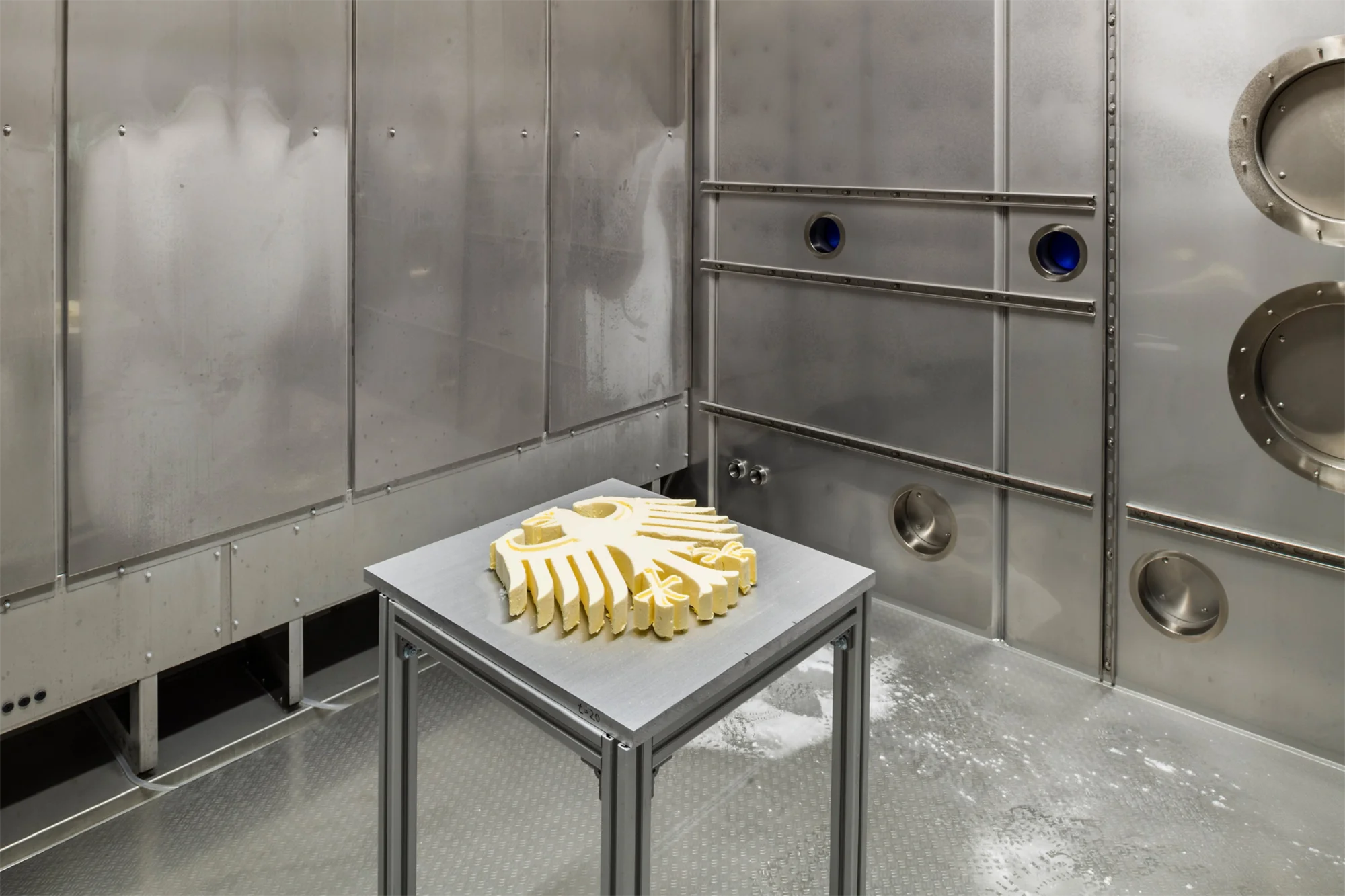
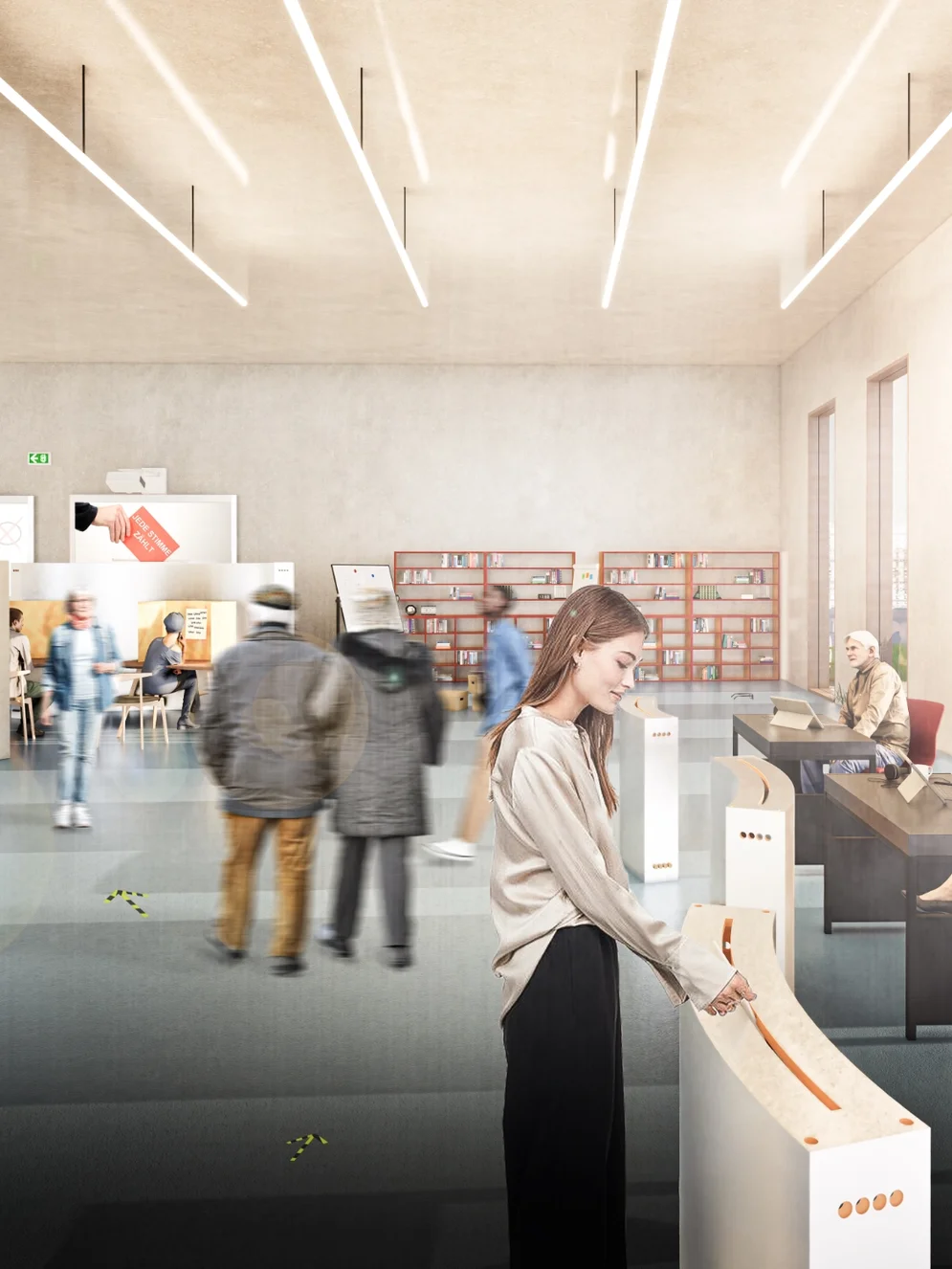
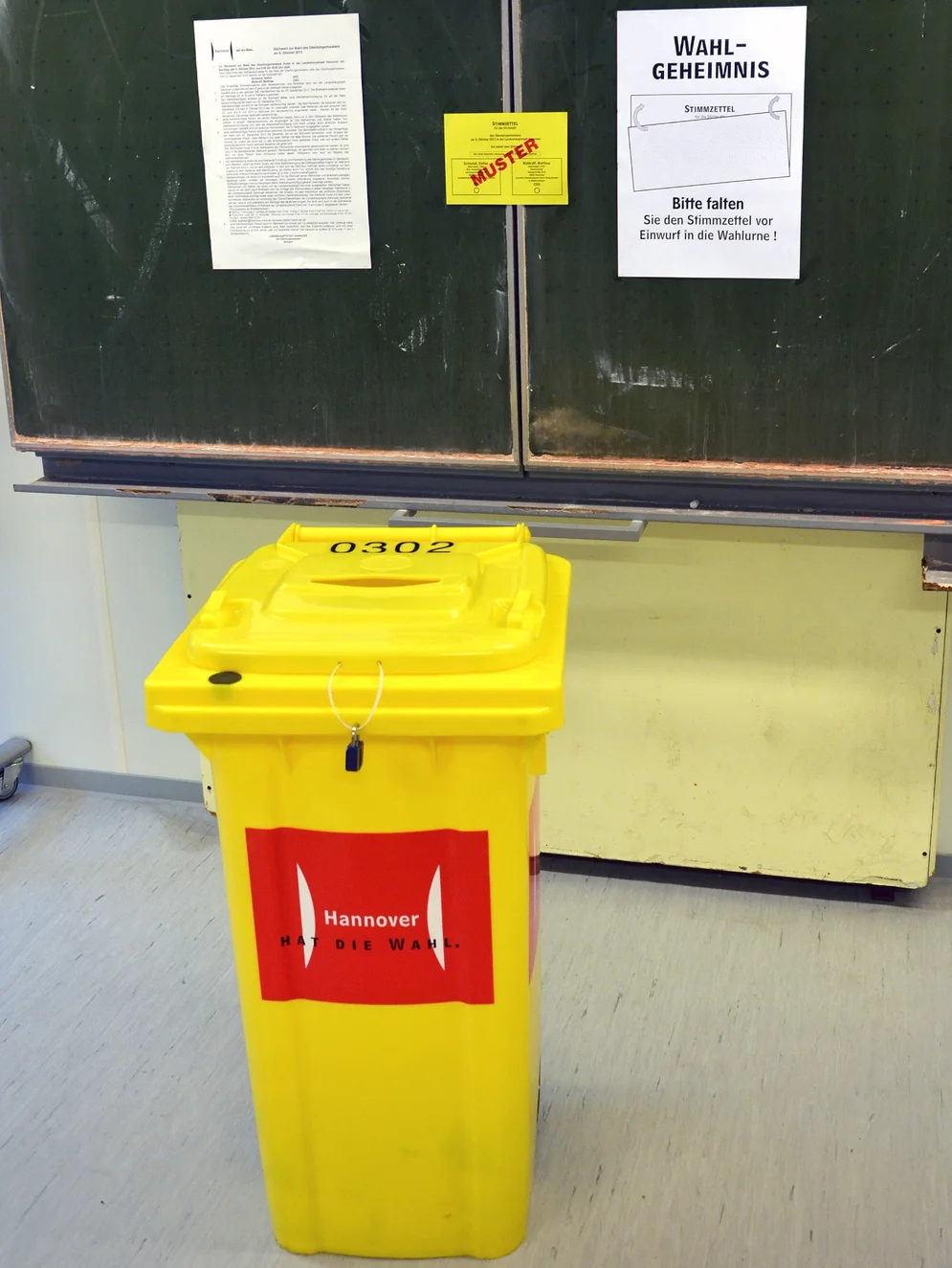
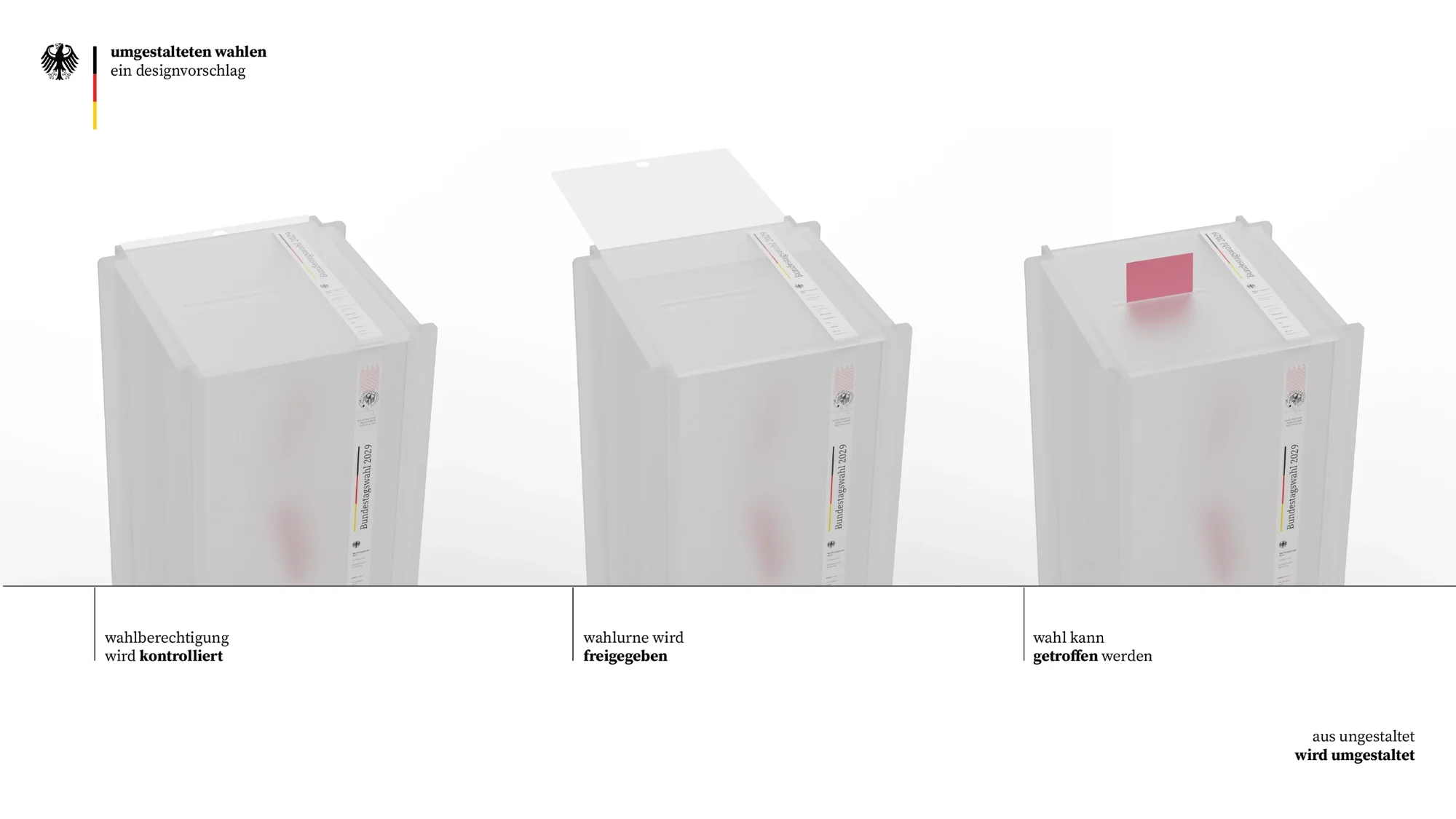
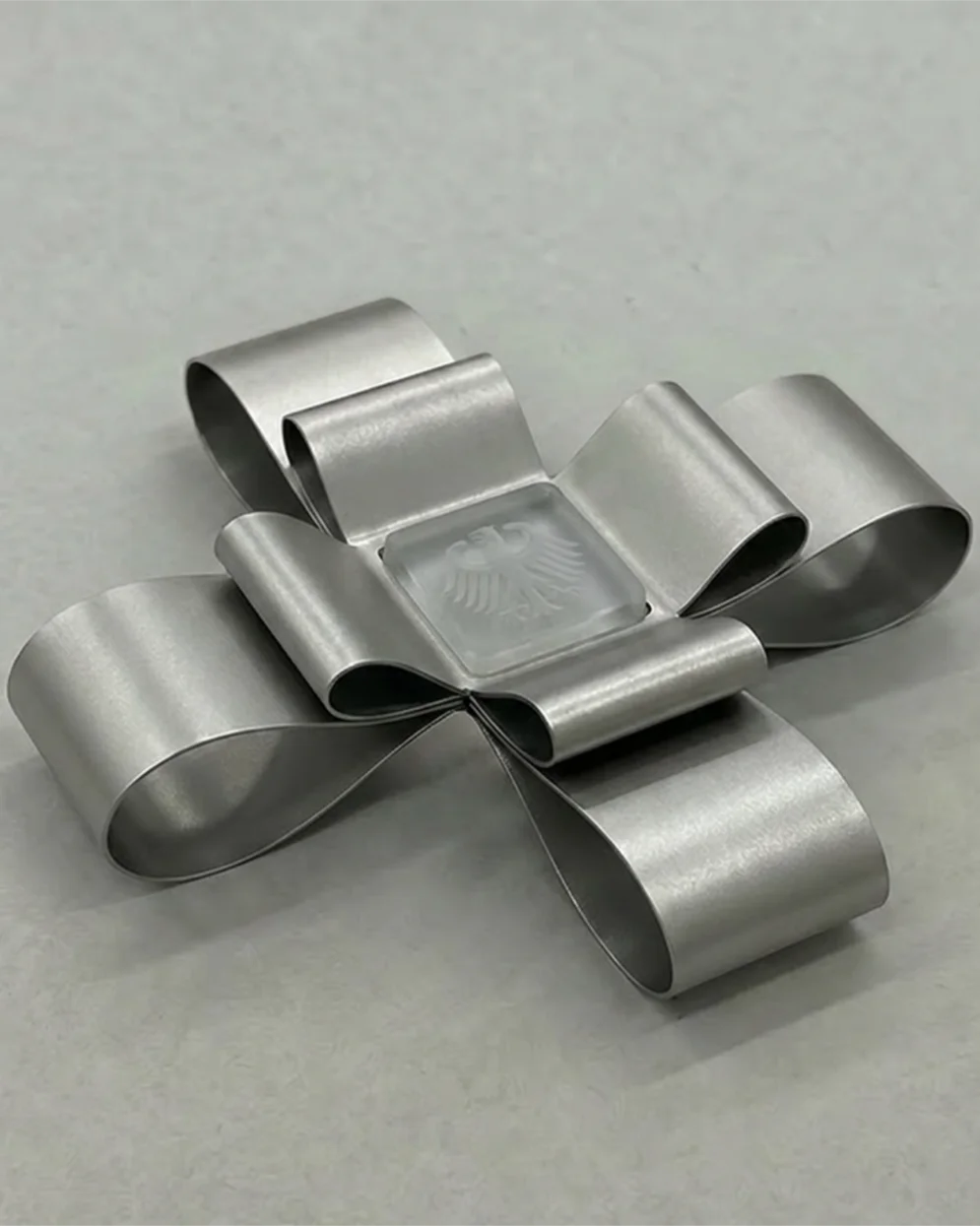
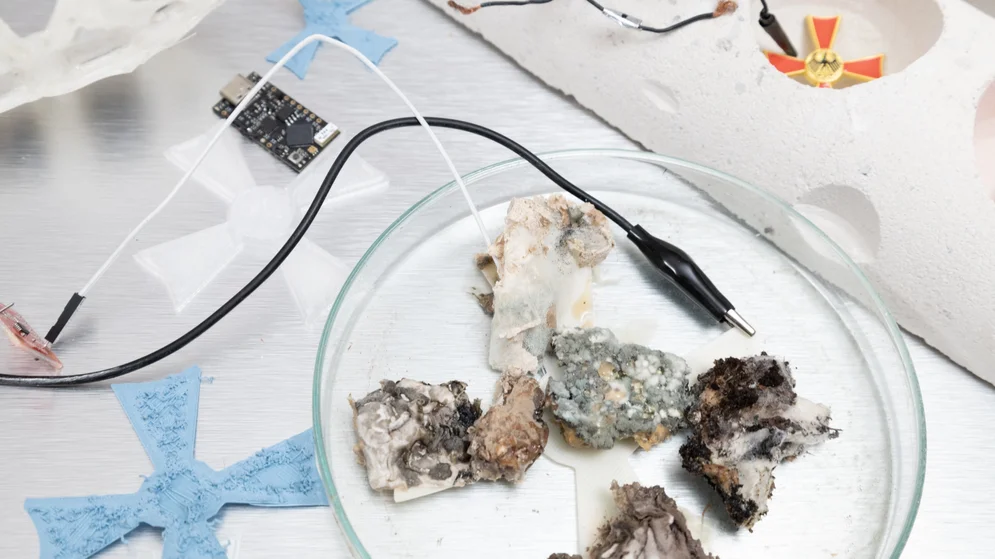
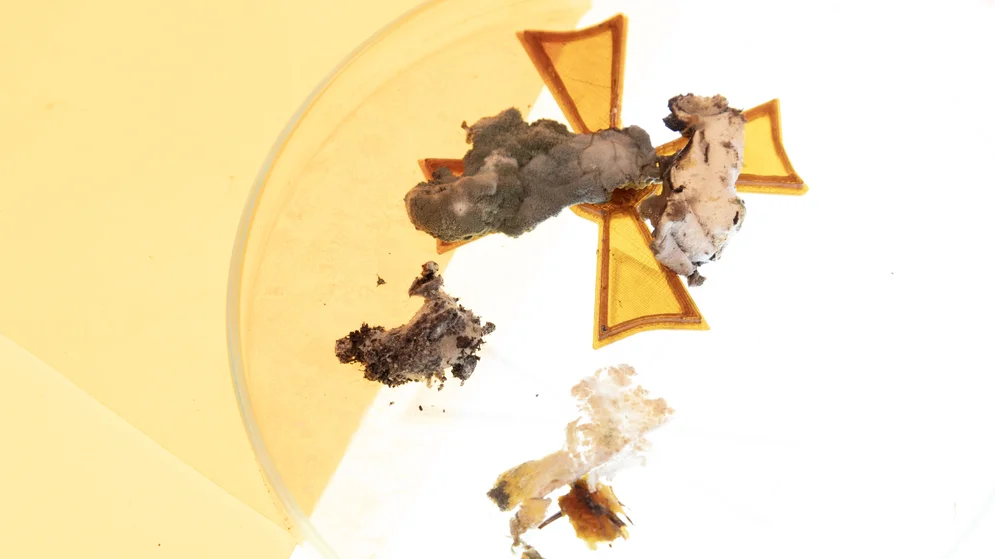
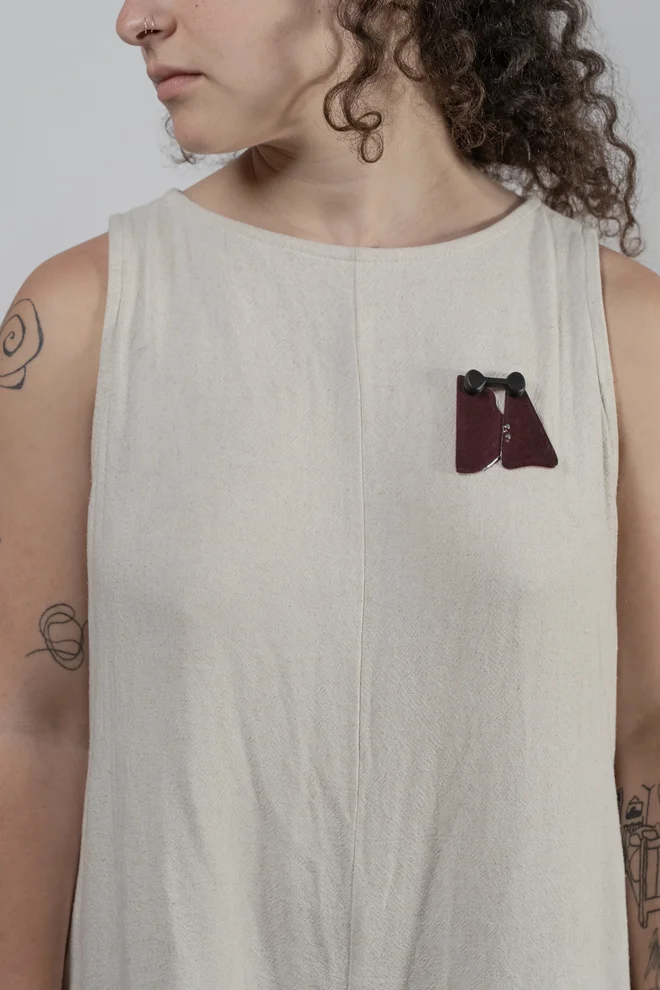
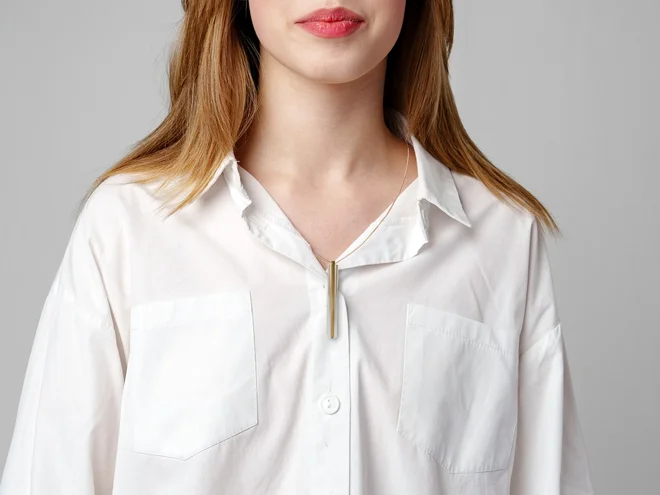
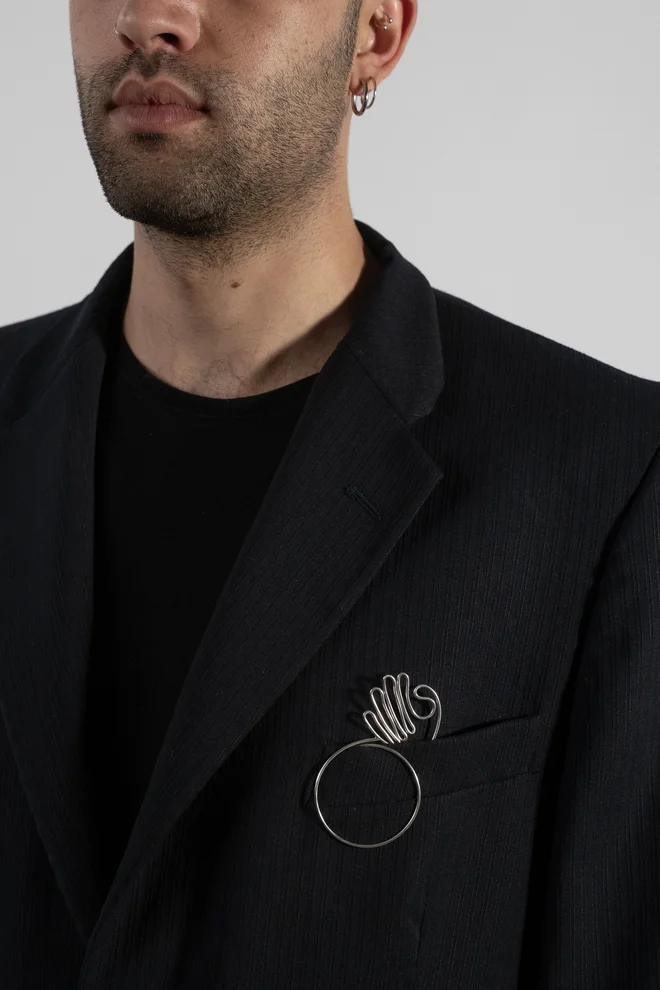
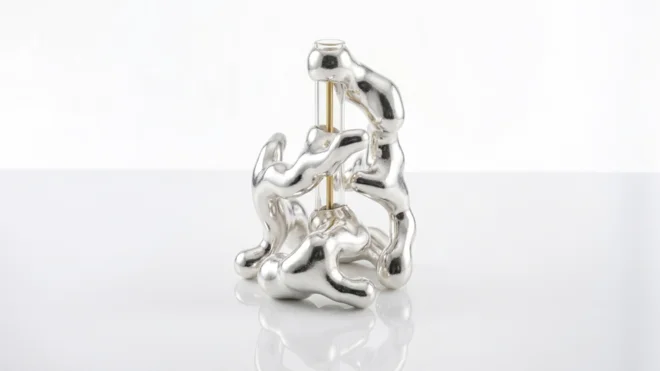
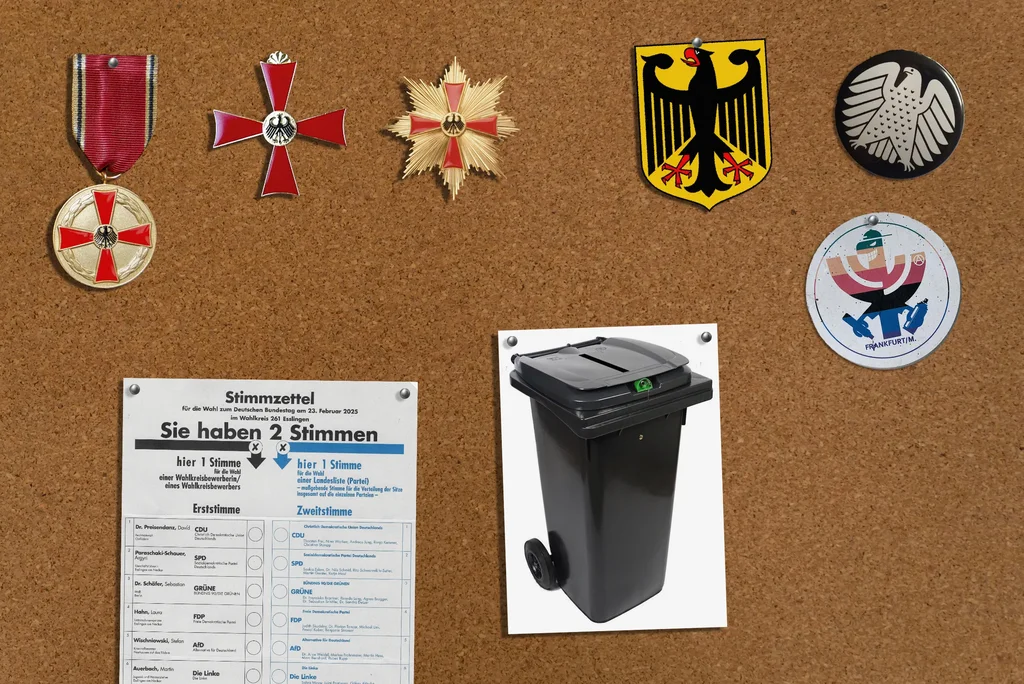
We chose examples that make it immediately clear that democracy can also be designed. They are symbols of democracy, such as the ballot box. In many municipalities, people put their ballot papers into a repurposed rubbish bin. You can understand anyone who comes away from that feeling that their vote is worthless. So, as part of a competition, we asked how the ballot box could be designed differently. The second example is the Order of Merit of the Federal Republic, which is a great achievement. Colloquially, it is known as the Federal Cross of Merit. It is a Christian symbol that no longer feels appropriate for everyone and, above all, has a history as a military honour. So you can ask: is this really the right thing? And the third example is our national emblem, the eagle, a bird of prey. It has also been instrumentalised historically. Think of the symbolism of the eagle during the so called Third Reich, holding the swastika in its talons. It was subsequently redesigned into what is known as the Fette Henne – a heavier, more rounded version of the eagle. But does it have to be an eagle at all? With these examples, we’re trying to get something started: namely, the idea that democratic representation uses design – from constituency offices and everyday clothing to staging, events, flyers, pens, stands and social media. We want to turn this into a handbook.
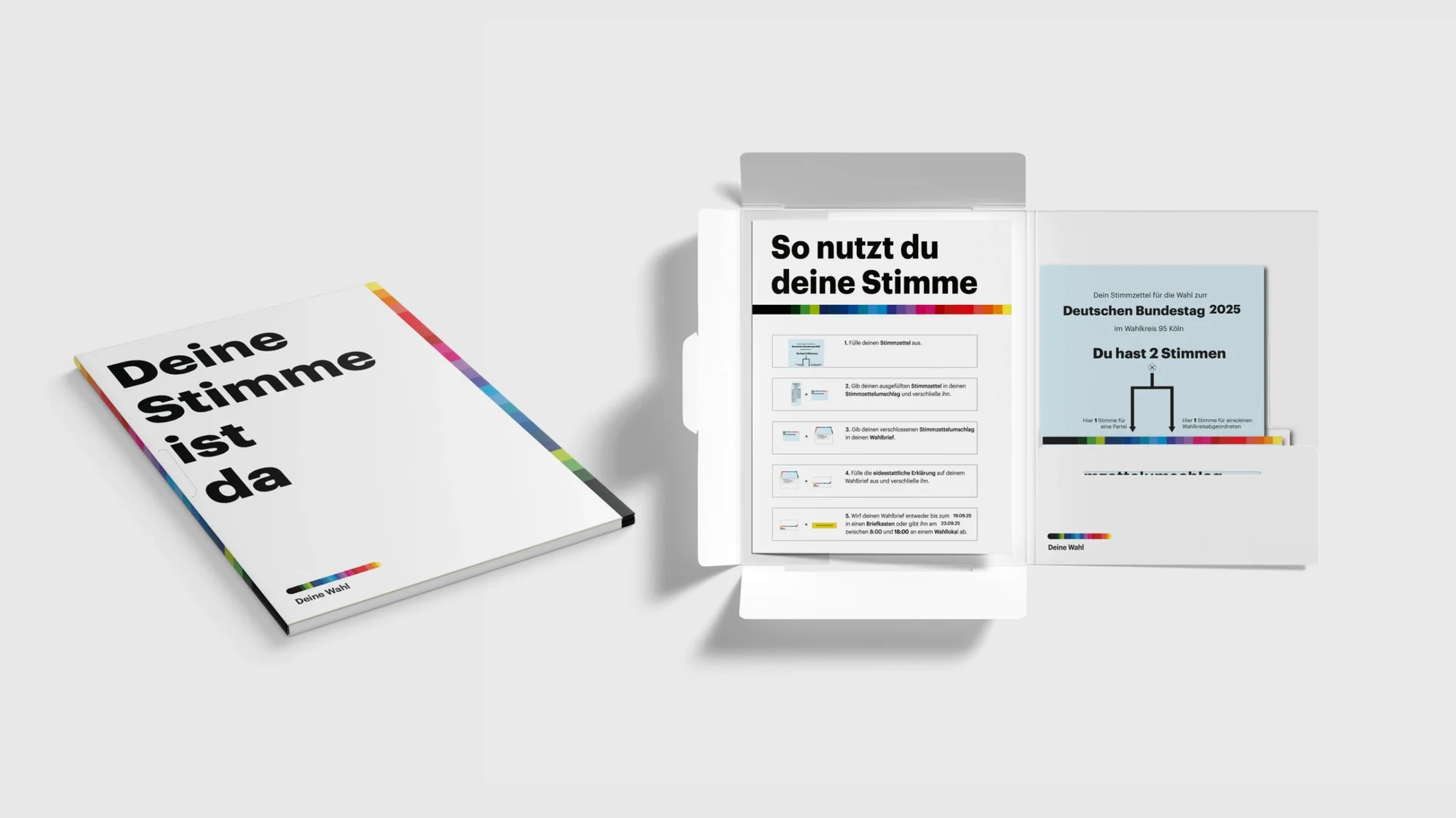
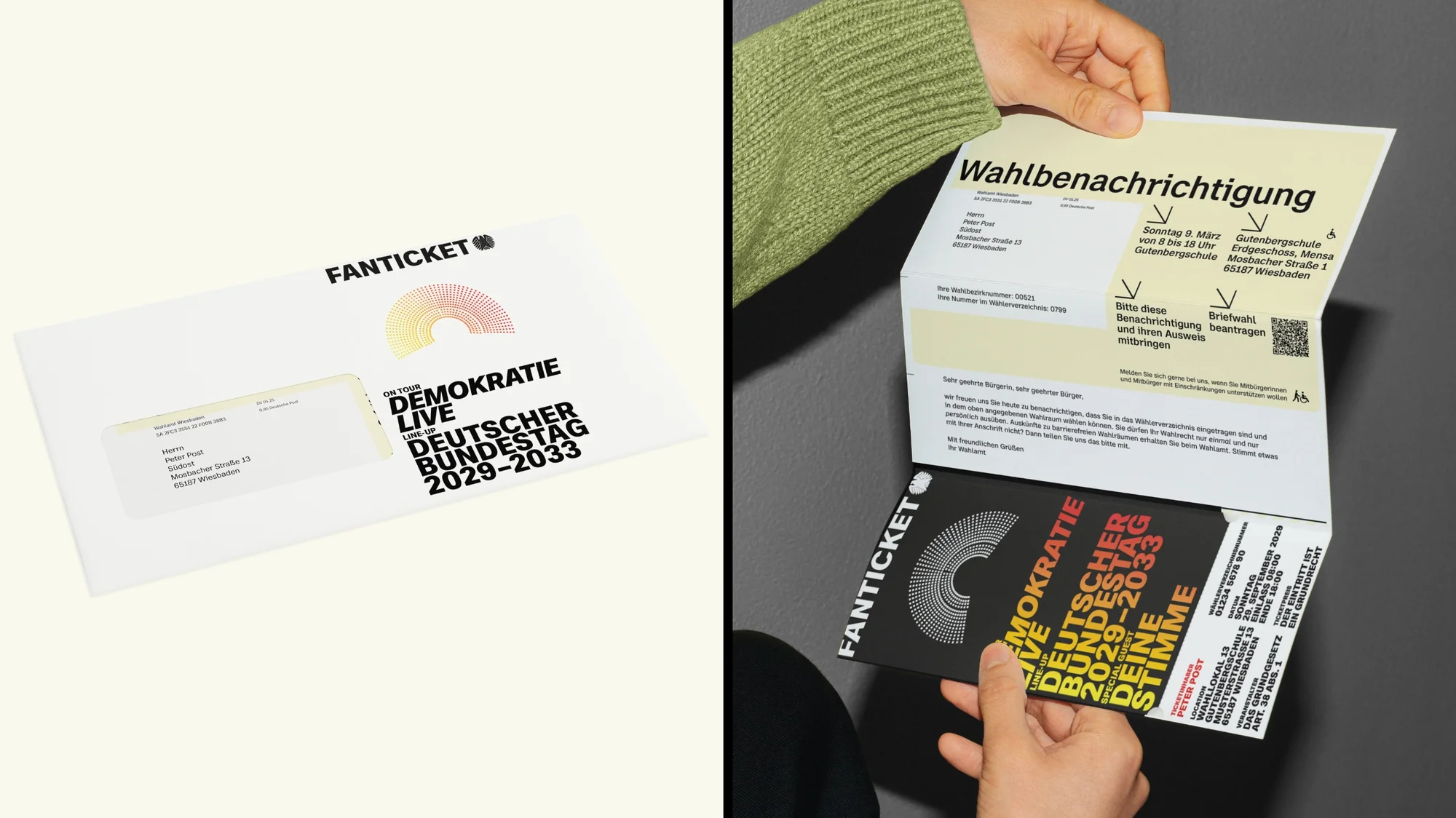
As part of “ReDeRe”, you are also working with three members of the Bundestag to observe how they use design …
Armand Zorn of the SPD, whom we are working with, is one of the few Black members of the Bundestag. His problem is that he represents his constituency of Frankfurt am Main, but is also seen as a representative of the entire Black community in Germany. Another example is Hanna Steinmüller of the Greens, the first member of the Bundestag to give a speech in parliament with her baby, something that is technically not permitted because only elected representatives are allowed in the Bundestag. There are no baby-changing facilities in the Bundestag either, and so on. Then there’s the CDU politician Sepp Müller from Saxony-Anhalt. Politicians always want to demonstrate that they are close to the people, so they take selfies with members of the public at their events. Everyone knows the politician, but they can’t always know who they are having their picture taken with – or whether there might be far-right individuals among them who then use the photos to construct their own narratives. They all have design problems.
You have been concerned with the relationship between design and politics for a long time: with “Updating Germany” at the Architecture Biennale, with the books RLF. Das Richtige Leben im Falschen and Weltentwerfen. Then there was the exhibition Politics of Design, Design of Politics at Die Neue Sammlung. You move between formats such as books, fiction, teaching, academia and exhibitions. What do you hope “ReDeRe” will achieve that your other projects could not?
All the projects have different effects. The novels reach certain people who might otherwise have no interest in design at all. Then you suddenly receive emails from school leavers who are reading the book at school – which is great. Updating Germany was a discourse with a specialist audience. Weltentwerfen is read by many students. What’s exciting about ReDeRe is that we are working within and with the political system itself. And perhaps we can encourage politicians to engage with design as a result.
Almost ten years separate your book Weltentwerfen from “ReDeRe”. Has your understanding of political design theory changed since then, or is “ReDeRe” a logical practical continuation?
I would say it’s a continuation. I wrote Weltentwerfen to articulate what I understand design to be. In many lectures and in my teaching, I repeatedly encountered the response: “But that’s not design!” Because the notion of design as a product was still so firmly established. Ultimately, it was always about the physical, material object. A lot has changed since the book was published in 2016; the concept of design has become broader and more fluid. With ReDeRe, we are now moving into the political sphere – not with an expanded concept of design, but with very concrete examples of design: the ballot box, the cross of merit and the eagle.
What is your personal motivation for engaging with this subject?
Many, many years ago, I studied architecture because I was moved by the idea that design could change and improve society. As someone who thinks in material terms and likes beautiful things and beautiful spaces, I felt it made more sense to place design within a context that had an emancipatory purpose. But the reality of architecture in the 1990s was different from what had initially inspired me to study it. So I moved into theory, artistic practice and, ultimately, I have retained the ideal that we as designers should improve society.
And what would you say to visitors who leave the exhibition thinking: “Nicely designed, but it won’t change anything”?
Then change it yourself!
„ReDeRe – Redesigning Democratic Representation"
Led by: Friedrich von Borries (HFBK Hamburg) and Sven T. Siefken (Federal University of Public Administration). Funded by the Volkswagen Foundation, in cooperation with the German Design Club (DDC) and the Democracy Innovation Association.