
Redefining The Last Mile
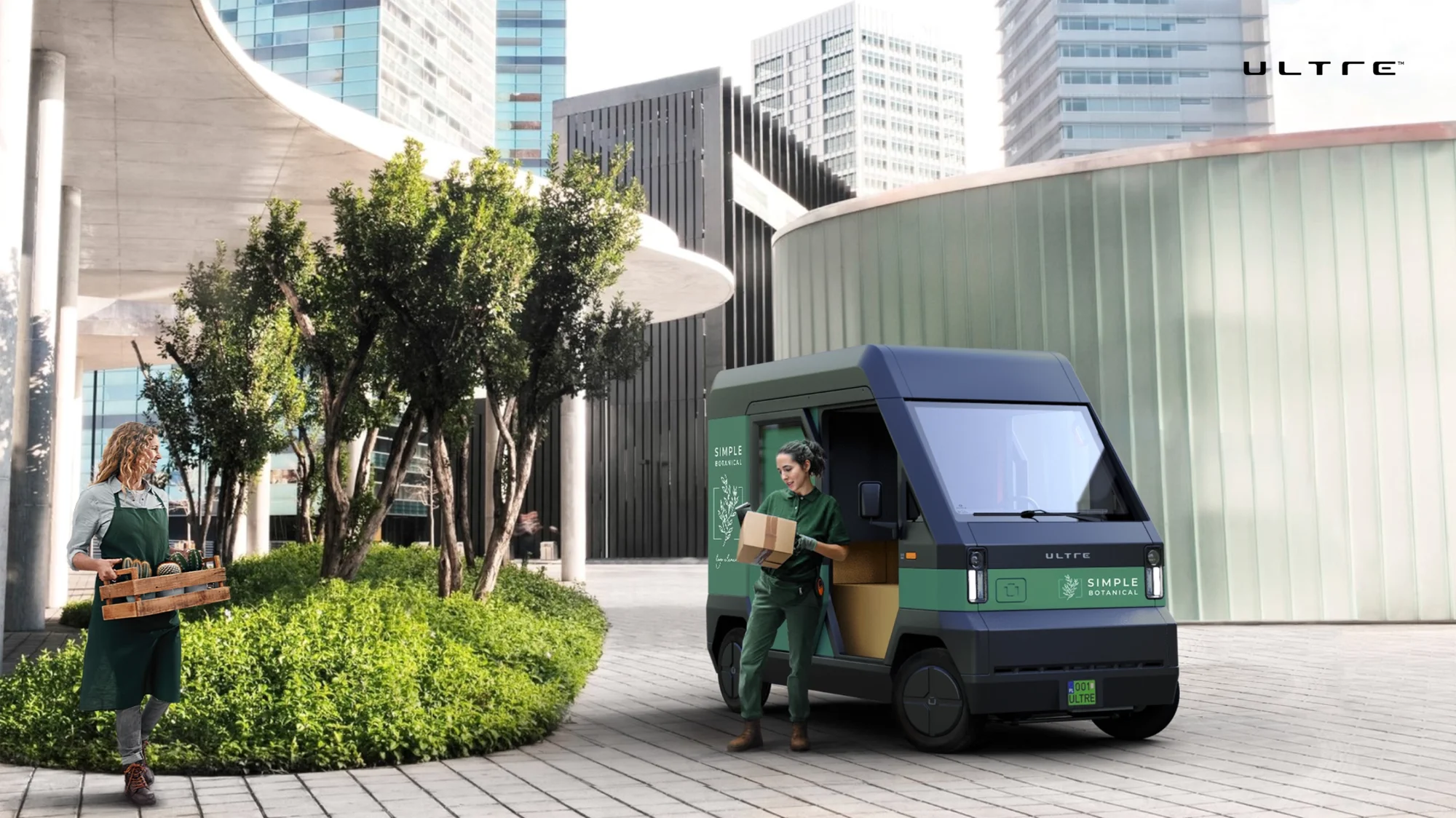
To put it bluntly, the Ultre4Cargo compact light vehicle is unlikely to win any awards for its aesthetic design. But that is not the point. The Ultre development team set out to solve a problem that is becoming increasingly pressing year after year. Online retail is booming and parcel volumes are steadily rising, yet the final link in the chain is no longer fit for purpose. Delivery vehicles sit in traffic, clog narrow streets, and emit considerable exhaust fumes in cities. Many delivery vans are also not designed for rapid distribution work involving frequent stops and constant entry and exit.
Expansion Without Tools
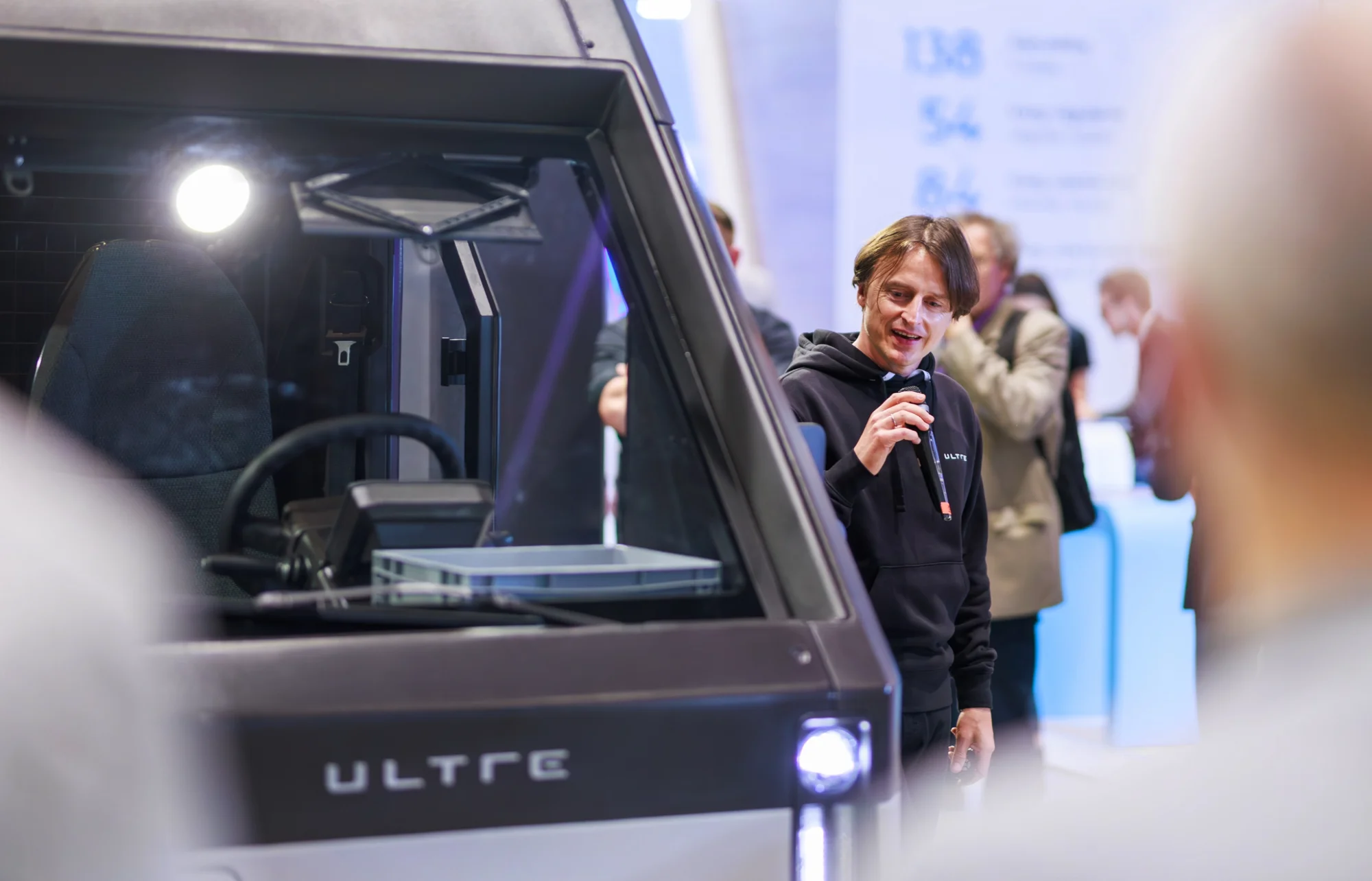
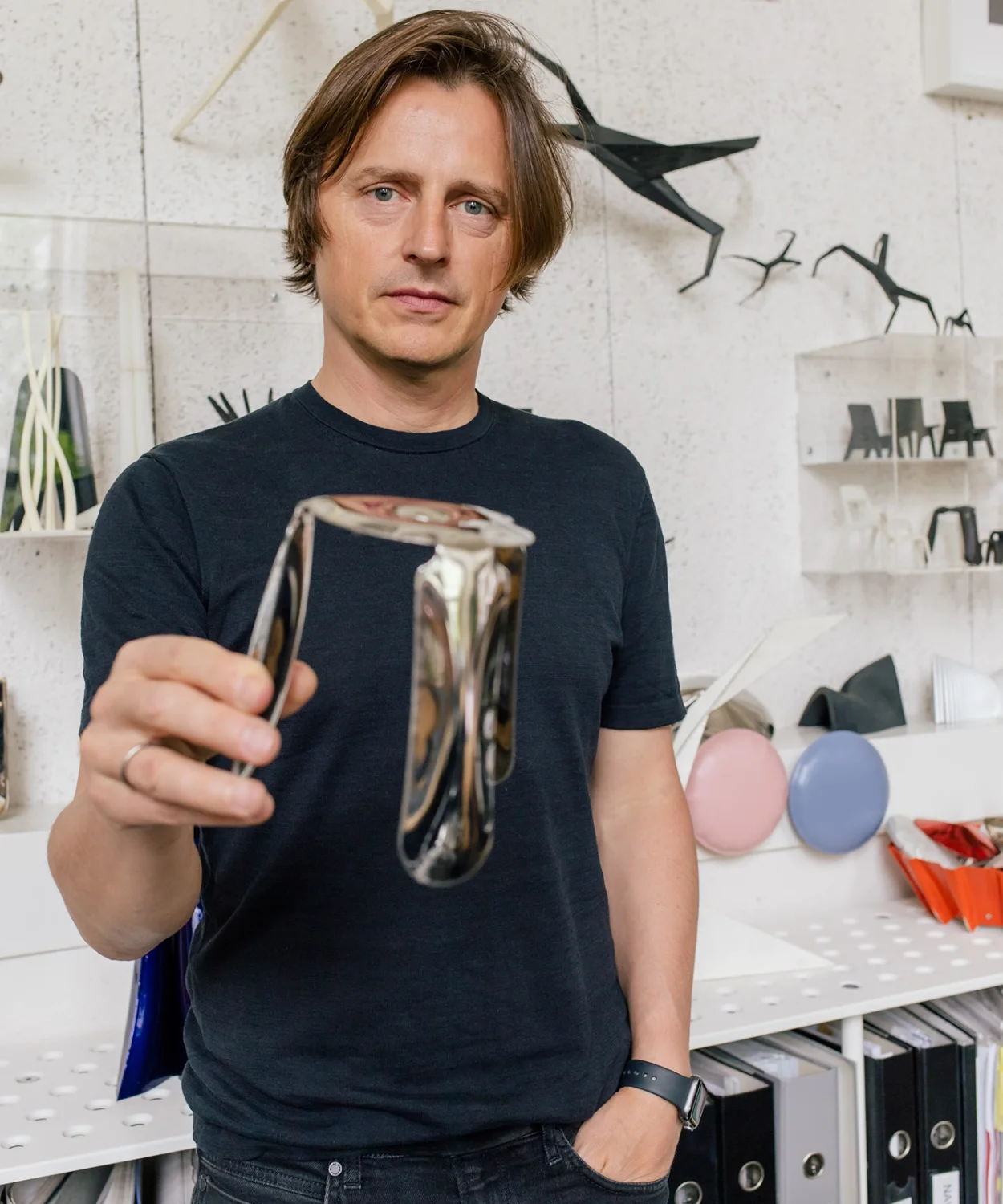
Admittedly, numerous attempts have already been made to address this situation with new vehicle concepts. Many of these have failed because they were either too expensive or not well thought through in terms of functionality. Ultre, a Wrocław-based start-up founded by Oskar Zięta, is taking a different approach. This is hardly surprising, given that Zięta studied architecture at ETH Zurich and has become renowned for his ability to transform two-dimensional metal sheets into three-dimensional objects by inflating them. He has been exploring the deformation behaviour of metal and the possibilities of free internal pressure forming — the so-called FiDU process — for more than two decades.
The idea is as compellingly simple as it is technically demanding. It forms the basis of the lightweight Ultre4Cargo vehicle: in the FiDU process, two flat metal sheets welded together around the edges are transformed into three-dimensional, biomorphic shapes by means of precisely controlled internal pressure. The result is not components defined by rigid tooling, but structures that find their optimal form through the behaviour of the material itself. “We don’t work with tool-based manufacturing,” says Zięta, highlighting one of the concept’s greatest advantages. In conventional vehicle production, at least 50 to 70 tools are required, necessitating a significant upfront investment that can only be recouped through high production volumes. Niche vehicles struggle under such conditions and rarely make it beyond the concept phase. Zięta does not optimise these traditional processes – he simply bypasses them. “FiDU is our answer,” he enthuses.
FiDU technology is not entirely new: under the zieta.pl label, the Polish designer offers expanded furniture, sculptures and other objects. Meanwhile, Ultre is an interdisciplinary team of creative specialists, with Oskar Zięta as one of its driving forces.
From Furniture to Vehicles
Ultre is now bringing a well-established and proven forming technology to the world of vehicle manufacturing. This is both obvious and revolutionary for an industry that seems reluctant to abandon its traditional ways of thinking. The final form is determined by the properties of the material itself, together with the cutting patterns and the course of the weld lines. It may sound like magic, but it is not. 'Thanks to AI-supported simulations, we can explore and control all parameters very precisely,' says Zięta. In other words, deformation is first simulated on the computer and then tested virtually. If the result is satisfactory, the process moves into the real world. The component is produced and compared with the simulation, and optimised if necessary. This iterative process is deliberately driven forward by the Ultre team.
The result is a manufacturing method that can be scaled up with comparatively little capital investment, favouring short supply chains, local suppliers and flexible production volumes. The remarkably stiff and crash-optimised frame of the compact delivery vehicle consists of just 30 welded elements. Weighing only 88 kilograms, it is lighter than the frame of the small, two-seater Renault Twizy, which comprises over 250 parts.
The Weak Link of E-Commerce
Zięta has been considering the idea of using FiDU as the basis for a vehicle since as early as 2003. However, attempts to inspire established manufacturers to adopt the technology proved unsuccessful. Rather than seeing its potential, his counterparts “always saw more problems”, he says.
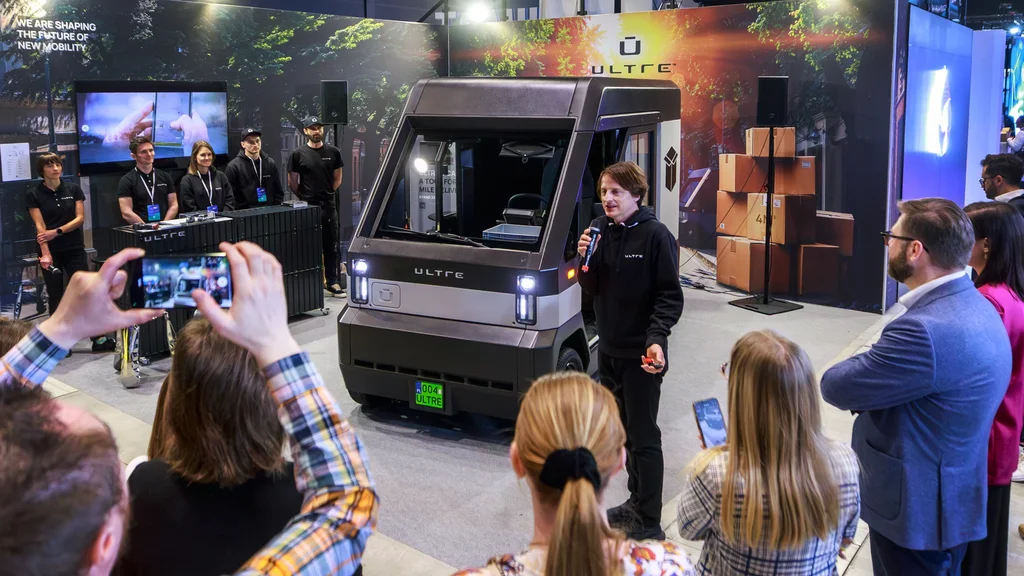
In 2025, the Ultre team presented the Ultre4Cargo compact delivery vehicle. Thanks to its modular base structure, it is flexible enough to serve as a platform for a wide range of use cases. For now, however, the focus is on the delivery variant, as pressure in this segment is mounting.
There is a striking gap in urban logistics. In response to rising demand, major manufacturers have developed ever heavier vehicles, which has effectively manoeuvred them into a dead end. Electric vans now often exceed four tonnes in weight, yet a standard category B driving licence only permits vehicles up to 3.5 tonnes. The EU has therefore introduced a special provision extending N1 homologation for electric drivetrains to 4.25 tonnes. This is a questionable solution, and certainly not a sustainable one. This is not least because Europe’s historically shaped cities are ill suited to such dimensions.
Developed With Users
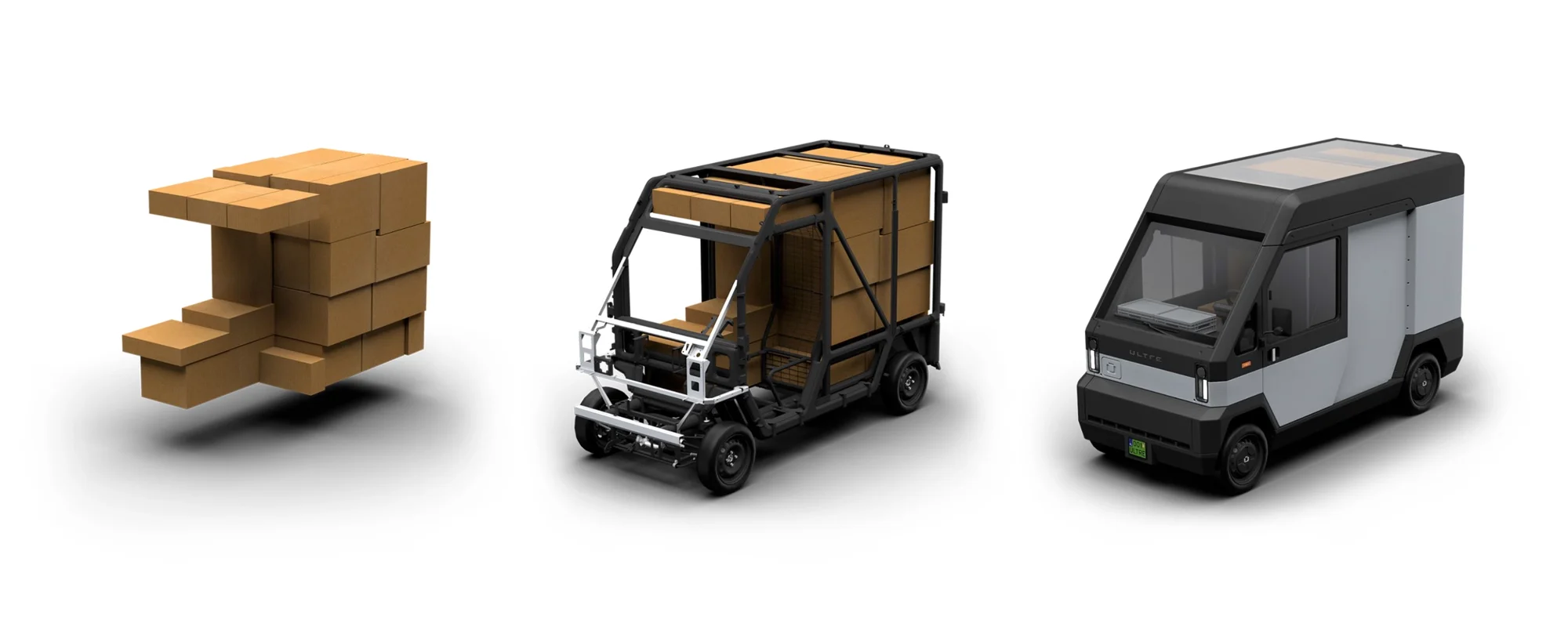
Ultre4Cargo specifically addresses this issue. The 3.4-metre-long vehicle weighs 750 kilograms when fully loaded along with its battery, and has a payload capacity of 500 kilograms. This enables it to be homologated and registered under the L7e-CU category. With an impressive load volume of four cubic metres, it surpasses the capacity of a Renault Kangoo or a VW ID Buzz. “We developed the Ultre4Cargo in close collaboration with users,” says Zięta. “It’s not necessarily beautiful, but it’s exactly what’s needed for everyday work. It's like a cordless drill – no frills and maximally functional.” Load volume and the ability to stand upright inside the vehicle were key requirements among the surveyed user group. With a turning circle of 4.2 metres and a width of 1.5 metres, it can easily manoeuvre through narrow old-town streets without blocking other traffic. Parcels up to 2.8 metres in length are no problem either. Sliding doors on both sides and large rear doors provide easy access, simplifying the work of delivery drivers operating under constant time pressure.
Thought Through Down to the Drivetrain
The body is made from thermoformed plastic components. Damaged parts can be melted down and reprocessed to create new ones, requiring minimal tooling. The drivetrain was developed entirely in-house. With a 22 kWh battery, not accounting for recuperation, the vehicle achieves a range of around 200 kilometres. The rated output is 15 kilowatts, and the top speed is 80 km/h. Thanks to its low weight, the electric drivetrain operates with exceptional efficiency. While heavy vans require a substantial proportion of battery capacity just to move their own weight, the Ultre4Cargo can devote a significantly larger proportion of energy to its payload. Since ROI is paramount in the B2B sector, the target price was set at €20,000 from the outset of development.
Looking for a Partner
The Ultre4Cargo project has taken around ten years to develop and has required substantial capital investment. Over 40 prototypes have been built, tested and driven, and have been subjected to crash tests. Ultre is currently seeking a manufacturing partner capable of bringing the vehicle into series production. Zięta is open-minded in this regard and does not necessarily want a traditional automotive manufacturer – quite the opposite, in fact.
After all, this concerns a new mobility segment and manufacturing principle. “Production isn’t actually difficult; there are a maximum of 800 parts to assemble,” Zięta explains. “It’s not comparable with the complexity of a conventional vehicle.” And what about Ultre? “We want to remain a development company that is fast and open to new technologies and user requirements.”
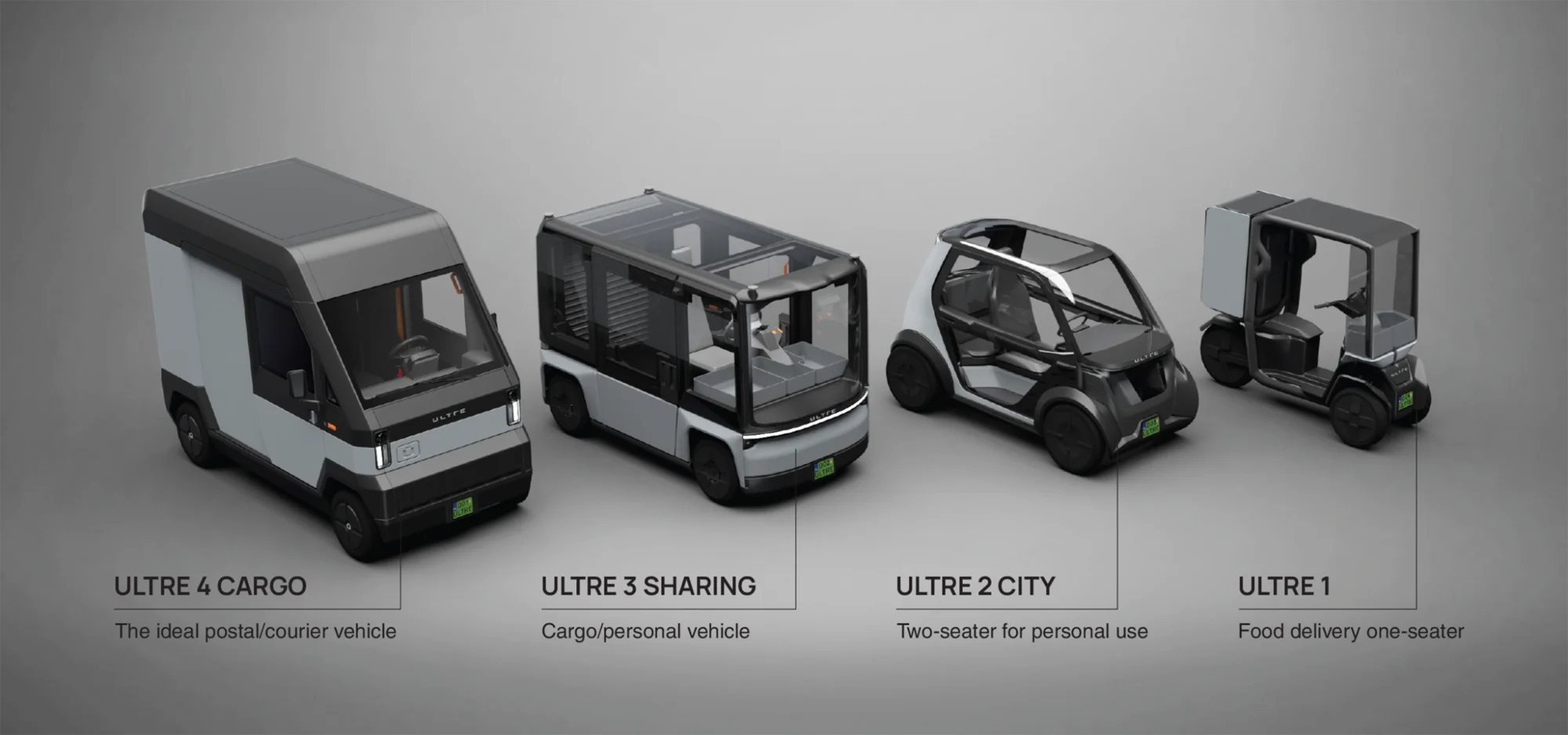
Renderings illustrate what these ideas might look like: two-seater urban runabouts and three-wheeled micro-vehicles for food delivery services, for example. All of these are based on the FiDU frame, including the Ultre3Sharing, which is designed for car-sharing and cargo applications. The roof is prepared at all four corners for the integration of radar sensors and LiDAR systems. Depending on the application, the modular body can be configured with bench seats, shelving or roller shutters. Even a removable roof for contactless drone deliveries is feasible.