All Together
There are countless products and services designed for the statistically ideal person. The world is tailored to this individual, who is usually young and male. It starts with the height of drawer handles, extends to the amount of force required to open containers or doors, and even influences the way we communicate. Clear, straightforward language is rare; instead, we are confronted with bureaucratic jargon, unnecessarily complicated expressions and excessive nominalisations. In this way, design becomes an instrument of exclusion, whether intentionally or not. Life is about more than a set of standards. It requires practical, local solutions that include and empower those who fall outside the so-called 'average'.
Universal Design seeks to shift perspectives by considering the needs of people who depend on assistance, whether temporarily (following an accident such as a skiing injury) or permanently (due to old age, serious illness, or a condition present from birth). Even those who do not require assistance today may urgently need it tomorrow. After all, we are living longer. These so-called marginal cases, in all their diversity, are part of everyday life.
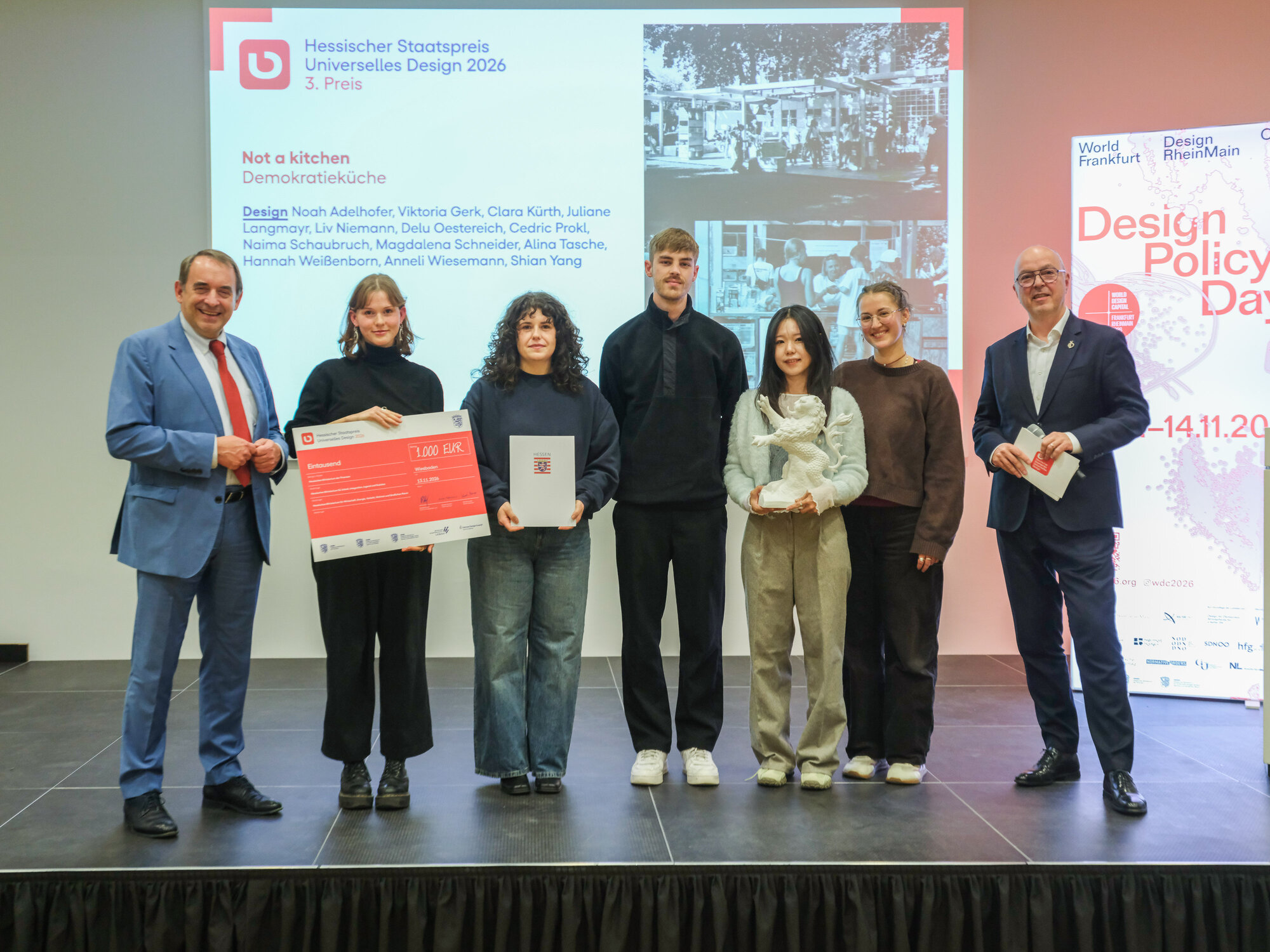
At the Hessischer Staatspreis Universelles Design awardceremony, Andreas Winkel, Commissioner of the Hessian State Government for People with Disabilities (Hessischen Landesregierung für Menschen mit Behinderungen) , emphasised this point in his welcome address: ‘The idea behind the Hessian State Award is to keep the concept of Universal Design in the public consciousness. It is an idea that will make our society more inclusive and future-proof in the long term.’
This calls for tolerance and a sense of togetherness, both of which have come under increasing pressure in recent years from groups seeking to address tomorrow's challenges with yesterday's solutions and showing little regard for a free and democratic society. 'Inclusion and innovation belong together,' says Lutz Dietzold, CEO of the German Design Council. The Hessischer Staatspreis Universelles Design recognises projects that address a wide range of design challenges, including those relating to medical devices, seating furniture and communal living concepts.
Strengthening Self-Determination
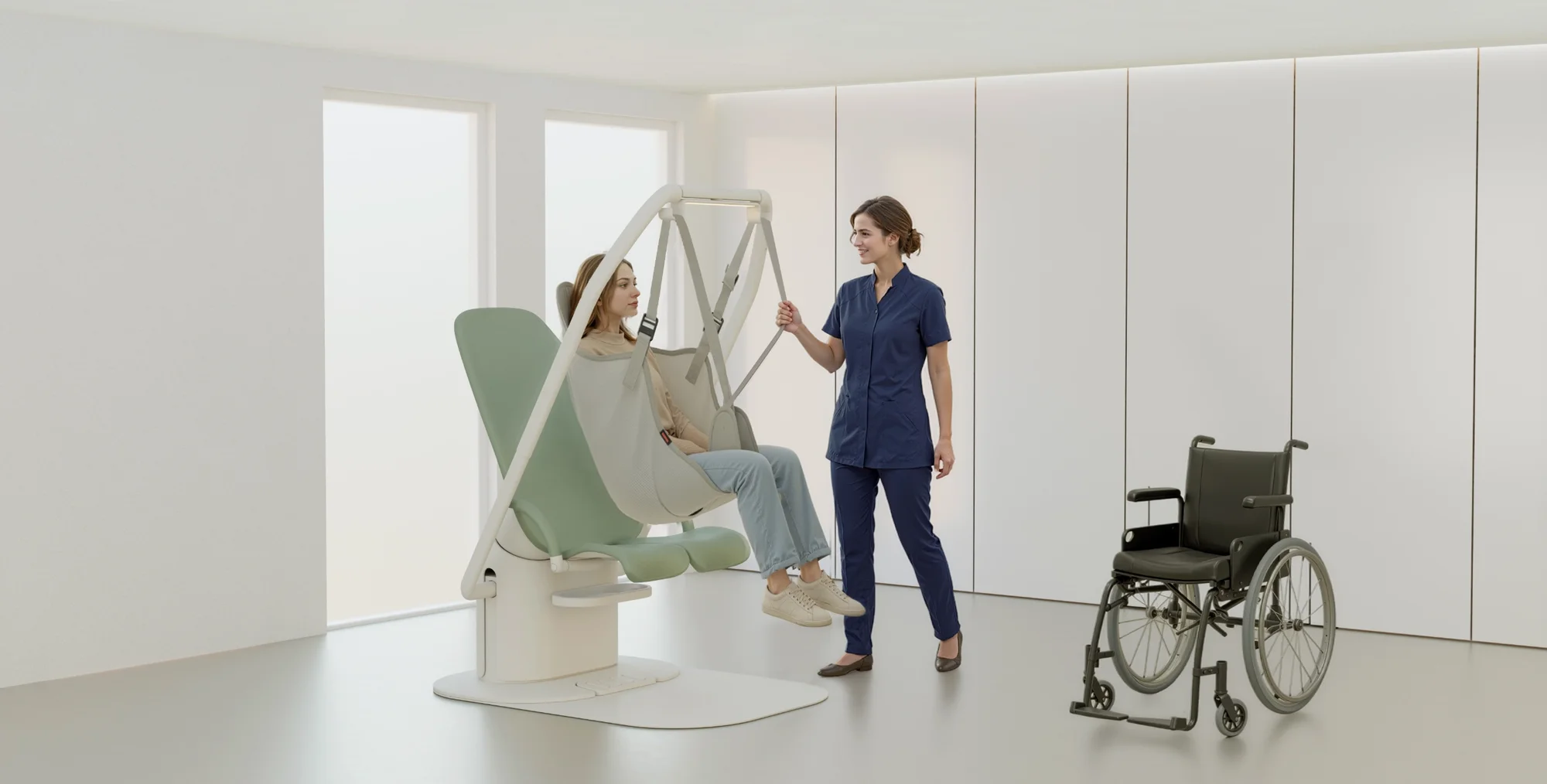
The impact that a shift in perspective can have is evident in ANEA, a gynaecological examination chair designed by Suvi Lener of Darmstadt University (Hochschule Darmstadt). It was awarded first prize in the 'Emerging Talent' category. The chair's innovation lies in its simple height adjustment mechanism, which enables women with physical disabilities to transfer independently from their wheelchair into the raised examination position without assistance. This is made possible by a swivelling support resembling a ski lift. The support carries a fabric seat that can accommodate people from either the floor or a wheelchair, transferring them onto the examination chair itself. ‘Its compact, highly functional design gives all patients a safe, dignified and self-determined examination experience,’ concluded the jury.
We all know that dignity is closely linked to independence. However helpful assistance may be, we want to be able to manage on our own. ANEA addresses precisely this sensitive issue: the flexible examination chair becomes an enabler. It allows patients to exercise greater control over an uncomfortable situation while also reducing the physical strain on medical staff. ANEA shows that universal design is about more than just adding a ramp afterwards. Instead, it considers the benefits for everyone from the outset, taking the diversity of human abilities into account. The result is products, spaces and services that as many people as possible can intuitively use and that adapt to a wide range of life situations. At their best, these products, spaces and services feel entirely natural and elegant – just like ANEA.
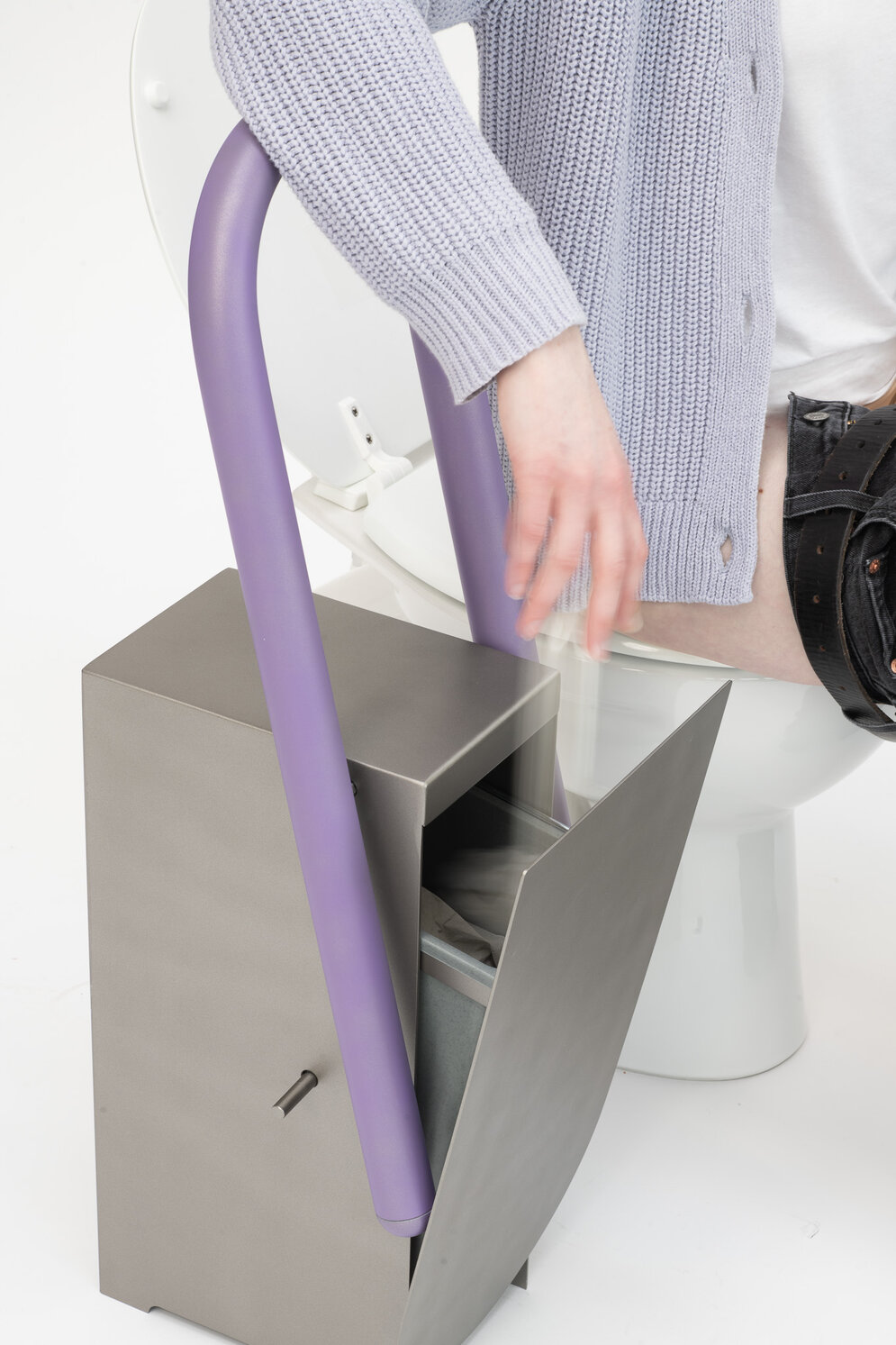
Maike Burghoff, from the Folkwang University of the Arts in Essen (Folkwang Universität der Künste Essen), received second prize in the 'Emerging Talent' category for her project ‘Ubo’, which focuses on waste disposal units for public toilets. The purple lever makes its purpose clear at a glance: Ubo can be operated with minimal effort, even when seated. Hygiene products can be easily disposed of. The jury praised the design for 'solving an everyday hygiene and waste disposal problem in public sanitary facilities in a remarkably simple and accessible way', and also highlighted its robust, durable, and easily repairable construction.
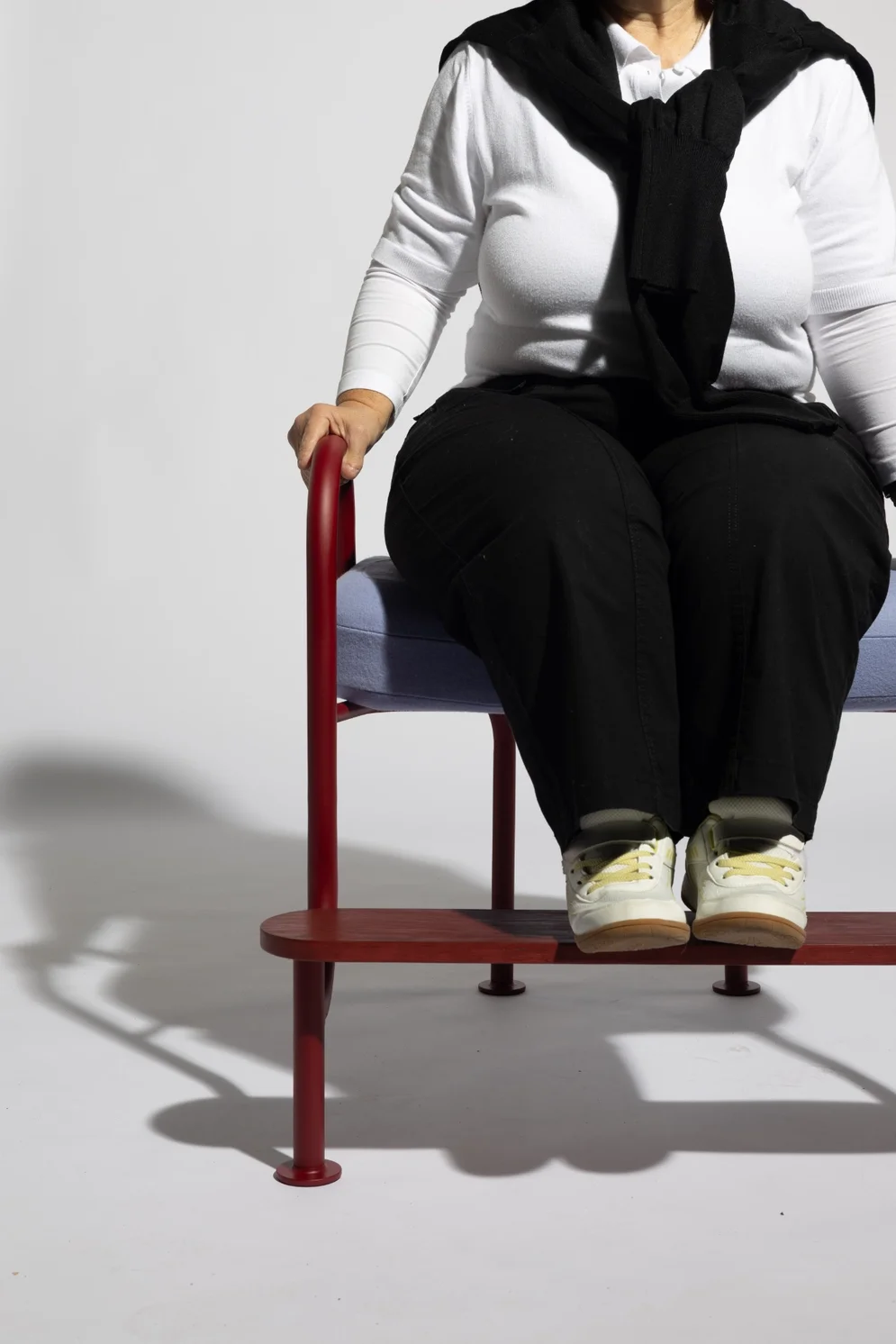
The first of the joint third-place winners shows that universal design rarely emerges from behind a computer screen. Instead, it develops when designers go out into the world and recognise everyday problems as design challenges. The '1,7 FT' seating collection by Anneruth Westhoff from the Kassel Art College (Kunsthochschule Kassel)is sturdy and accommodates every body type. It includes an optional standing aid and footrest. Taking inspiration from the indestructible step ladders found in swimming pools, Westhoff developed this small collection of seating furniture for semi-public spaces. ‘The two seating objects, the Grip Seat and the Step Seat, respond to different needs, including those of people with dwarfism, obesity, mobility impairments and older people. The seating can be used from both sides, encourages open interaction and provides seating options for a more diverse group of users.’ The jury also recognised these qualities, expressing its enthusiasm for the 'participatory development process and the sensitive consideration of different physical needs'.
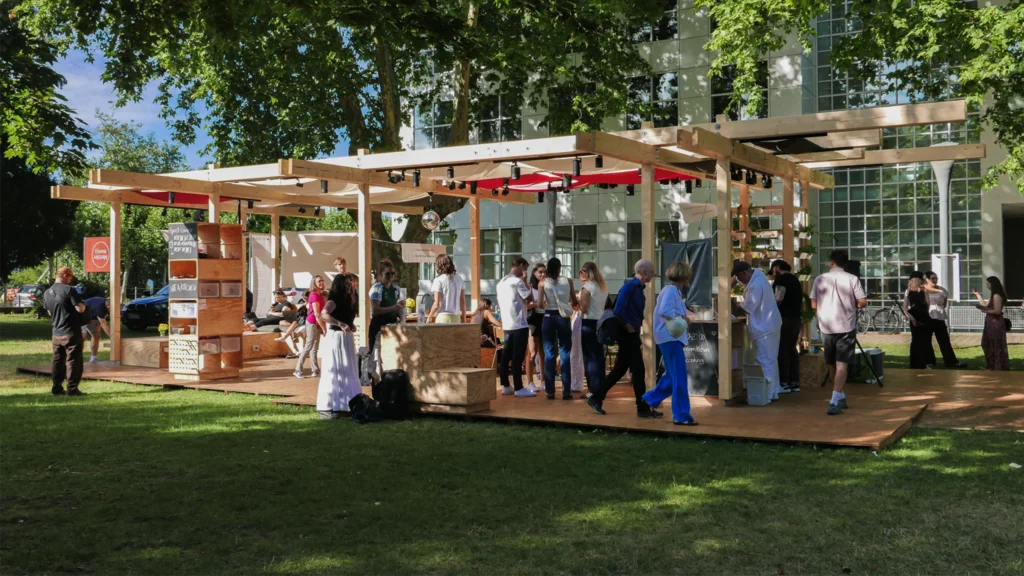
Is it a kiosk, a market stall or a communal space? 'Not a Kitchen' by Hannah Weißenborn from Mainz University (Hochschule Mainz) is all of these things and more. This 'open living structure', consisting of transformable shelving, a sink and drawers, creates a place for shared activities. It "encourages exchange, participation and mutual support in everyday life". It's no surprise that the jury awarded the designer one of two third prizes in the 'Emerging Talent' category. She has created both a product and an activity: a versatile open space for interaction.
The jury praised the 'consistent approach of making social interaction and participation tangible within an open living structure'. The key feature is that, by sharing functional spatial elements, the design encourages mutual support and lived democracy in everyday life. The high-quality construction, which uses maritime pine, combines aesthetic design with sustainable materials.' Universal Design indeed promotes social interaction regardless of our individual circumstances, creating the foundations for democracy within a shared space.
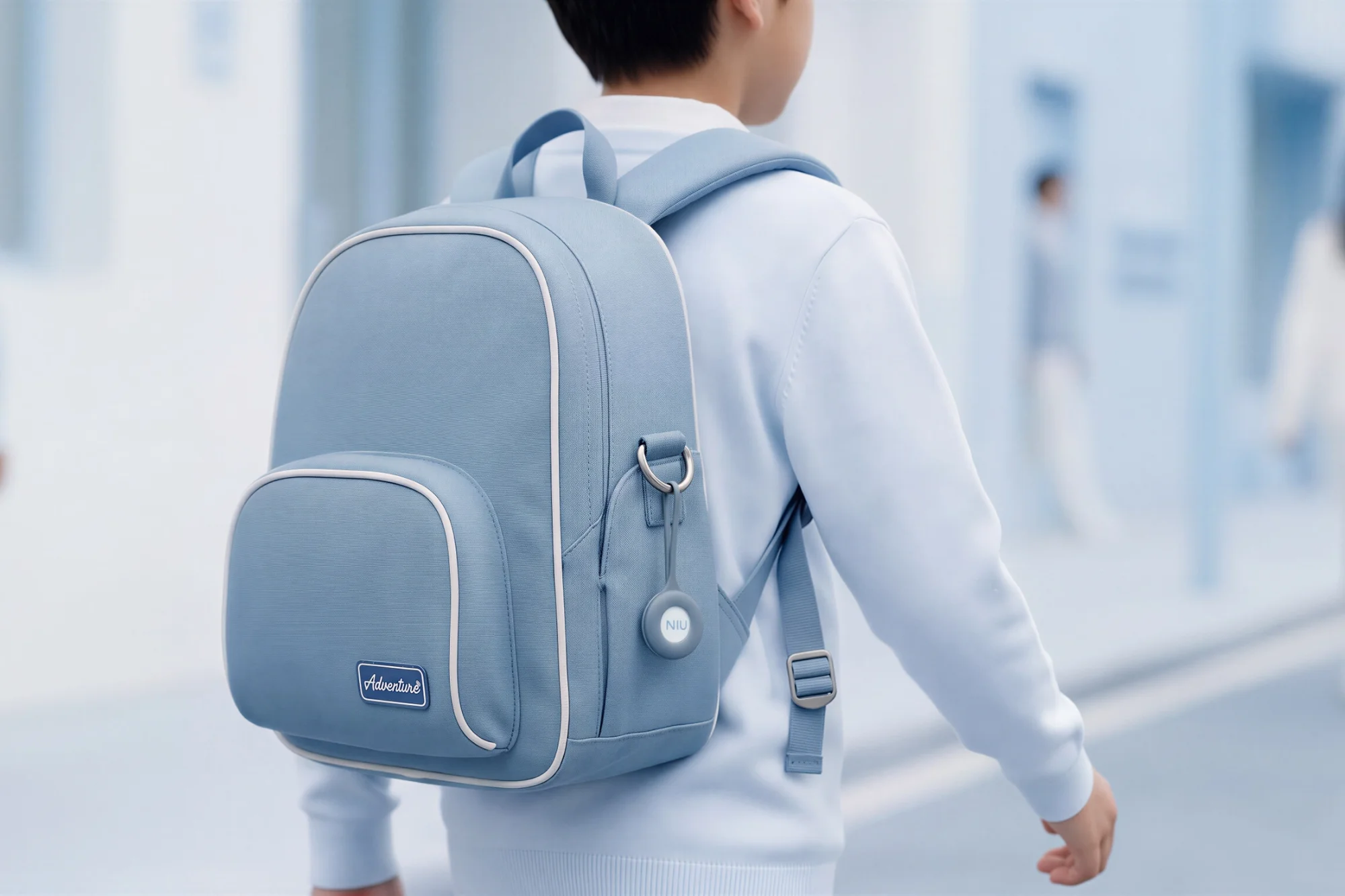
Two commendations rounded off the 2026 Hessischen Staatspreis Universelles Design: Laura Kindervater (FH Aachen) developed 'NIU', a system that monitors the vital signs of children born with congenital heart defects. This system includes an app for parents. The jury recognised the successful combination of ergonomics, aesthetics, and accessible information, which helps to reduce the 'medical stigma' associated with such conditions. Design becomes particularly important in the context of chronic illnesses. It determines whether and to what extent medical interventions allow people to lead carefree lives.
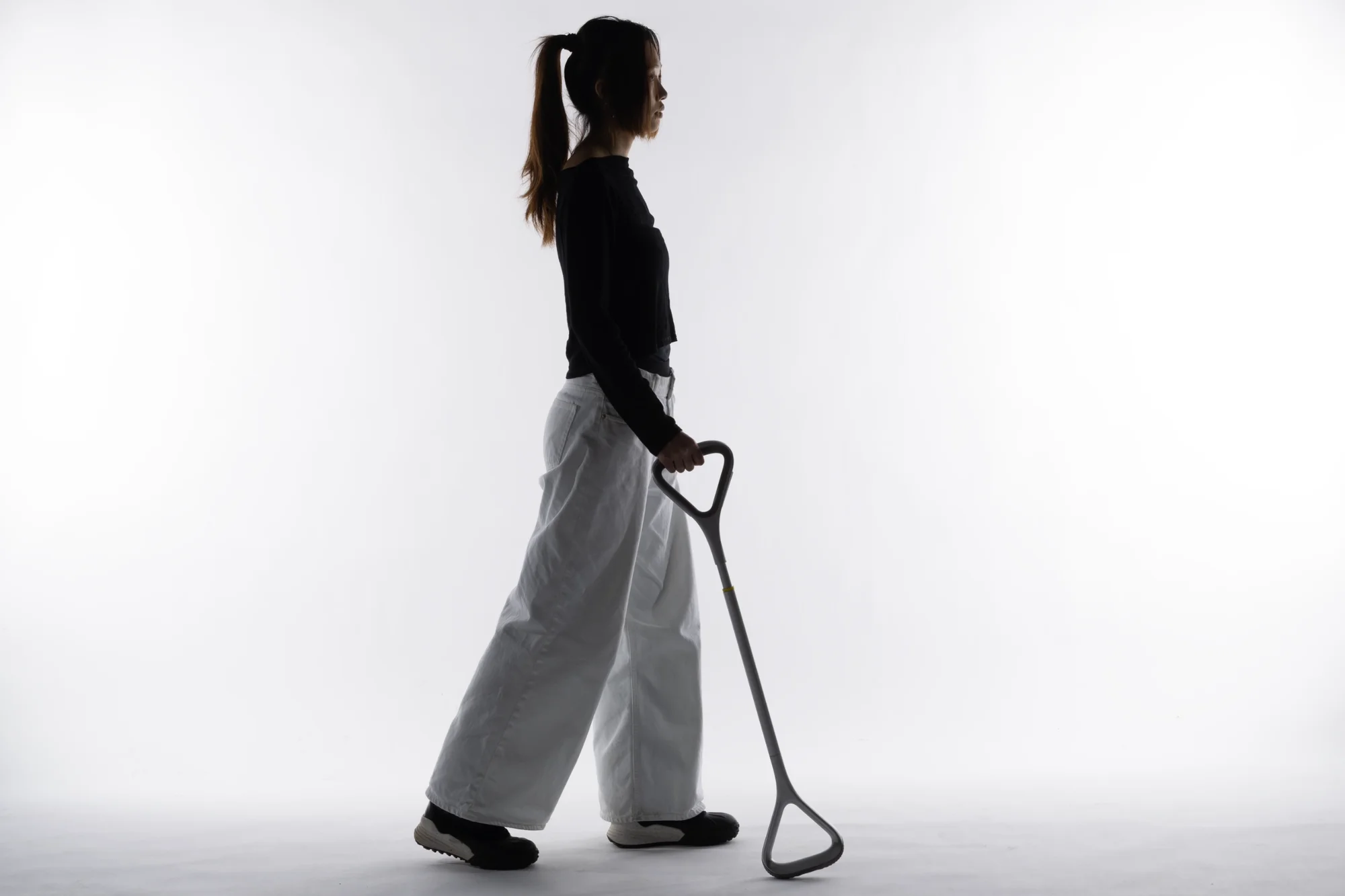
Kuangxiao Liu (Bauhaus University Weimar) demonstrates this with 'PIVOT', a modern take on the traditional walking stick. A stable yet lightweight construction is promised by aluminium and thermoplastic polyurethane (TPU). PIVOT features variable grip zones and an adjustable height, and can be used with either the left or right hand. Interchangeable technical modules provide additional functions. The jury also recognised the achievement of challenging stigmatisation through design, which goes beyond radii and materials. Excellent ergonomics and adaptability are further strengths.
Our Understanding of Humanity
Good design begins with an understanding of humanity that embraces a diverse world – one that places diversity and inclusion, exchange and togetherness above profit maximisation and brand differentiation.
'The award-winning projects demonstrate how Universal Design removes barriers and opens up new perspectives on products, services and living environments,' says Lutz Dietzold (CEO of the German Design Council).
Although the projects differ in scale and materials, they share a common quality: they respect the richness and diversity of everyday life and improve our physical and cognitive circumstances, creating access and connections that would otherwise remain out of reach. Universal Design is understood as an investment in the future: barriers cost time and money. Once removed, they create new opportunities for civic engagement. ‘Everywhere, at all times, universally, in every respect – for EVERYONE.’ With this, the Hessischer Staatspreis Universelles Design aligns itself with the motto of World Design Capital Frankfurt RheinMain (WDC 2026), which, together with the World Design Organisation (WDO), is directing attention towards social cohesion under the theme 'Design for Democracy'.